1951 Chevrolet Cars and Trucks for Sale
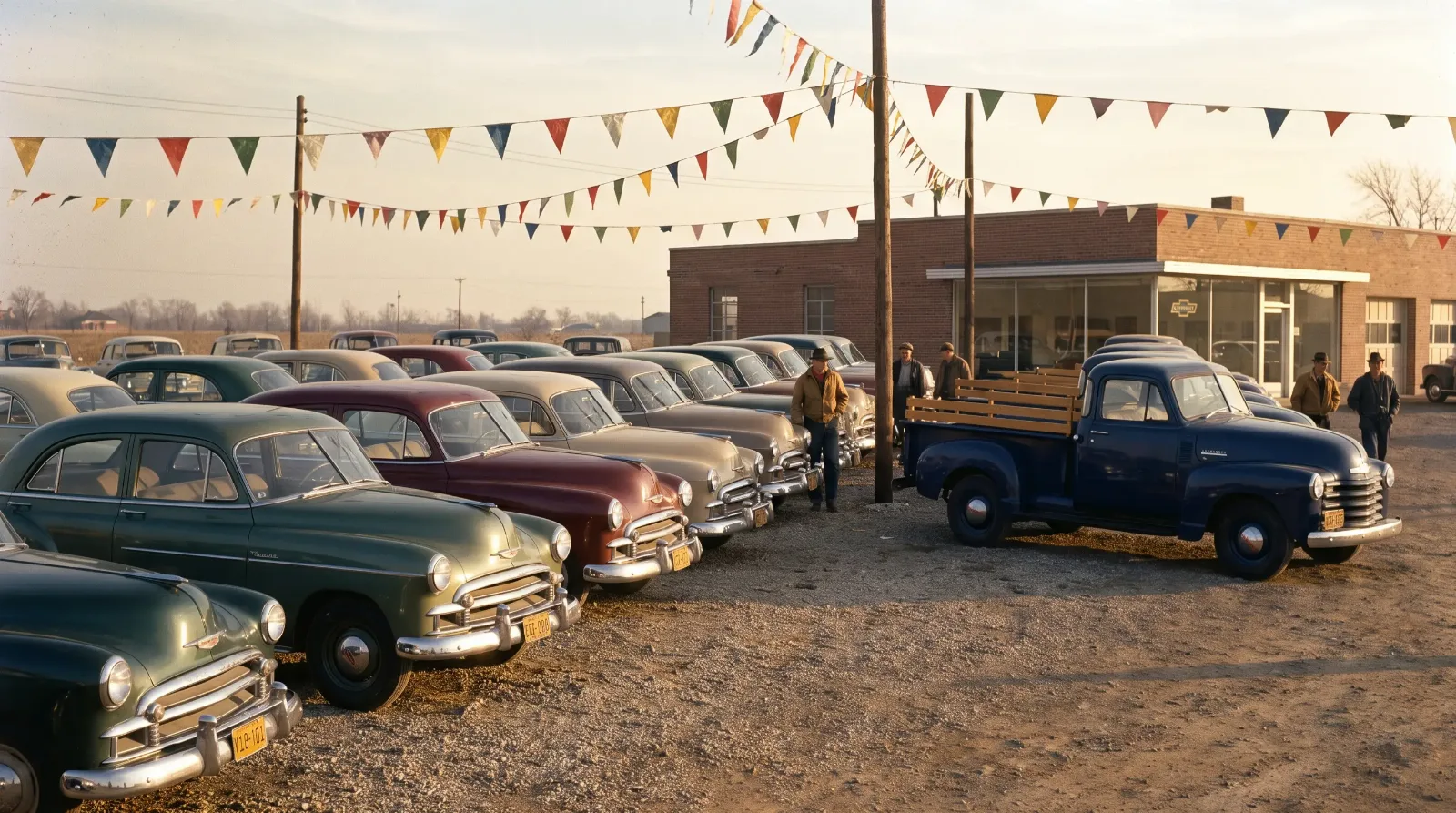
A 1951 Chevrolet is one of the few genuine postwar classics you can still buy without a second mortgage, and that is exactly why the good ones move fast and the bad ones sit forever. I have watched this corner of the market for four decades, and the story has not changed much: there is a lot of iron out there, the asking prices are all over the map, and the seller who says "runs and drives" is often stretching the truth. If you know what you are looking at, a 1951 is a smart first classic. If you do not, you can hand a stranger real money for someone else's abandoned project.
This page is about buying, not admiring. What the cars and trucks actually trade for, where they hide, and what will bite you after the check clears. If you want the full background on the model itself, start with what Chevrolet built in 1951 and come back here when you are ready to shop.
What a 1951 Chevrolet costs today by condition
Condition is everything with these cars, and the spread between a rough project and a finished driver is wider than most first-time buyers expect. The engine and running gear are cheap to fix. The sheet metal, the trim, and the bad bodywork somebody already hid are what empty your wallet. Here is roughly where the passenger cars sit right now, sorted by the condition tiers I actually use when I write a check.
| Condition tier | What you get | Typical asking range |
|---|---|---|
| Project | Not running, rust in the floors, incomplete trim, needs everything | around $3,000 to $8,000 |
| Driver | Runs, stops, honest older paint, usable interior, some flaws | roughly $12,000 to $22,000 |
| Show | Restored or well kept, correct trim, strong paint and chrome | around $28,000 to $45,000-plus |
Two notes on that table. First, body style moves the number. A four-door sedan is the cheapest way into a 1951, while a convertible or the fastback Fleetline pulls a premium at every tier. Second, a running car is worth far more than the difference in parts cost, because a car that starts and moves proves the expensive stuff is not hiding a surprise. Do not overpay for a project on the theory that you will "just" get it running. That word does a lot of lying. Treat these ranges as a snapshot, not gospel, because condition, body style, and the auction of the week move the numbers, and values drift over time.
Cars versus trucks: what you are actually shopping for
The 1951 lineup splits into two very different buys. On the car side you have the Styleline and the Fleetline. Styleline is the notchback with the conventional trunk, offered as sedans, coupes, and the convertible. Fleetline is the fastback, that long sloping roofline, and the Fleetline body was in its final years by 1951, which is part of why the fastbacks draw extra attention now. Both rode on the same Stovebolt inline-six and the same basic chassis, so mechanically you are shopping the same car under different skins.
The trucks are a separate world. The 1951 pickup is the Advance Design series, and the half-ton you will see most is the 3100. These have their own following, their own parts market, and often their own price logic, because a truck buyer and a car buyer want different things. Trucks tend to have led harder lives, so a straight, honest one is worth chasing. Whichever way you lean, it pays to compare a local asking price against several cars in the same condition before you decide whether it is fair or fantasy.
Where to find them and how to read a listing
The cars surface in the usual places: online classifieds, local Facebook groups, estate sales, and the back rows of swap meets. The Sun Belt cars are worth a longer drive because dry-state metal survives in ways a rusted-out northern car never will. Wherever you look, the listing is a sales pitch, not a condition report, so learn to read between the lines.
Price the completeness, not the promise. A running driver with all its brightwork is a better buy at a higher number than a cheap project missing grille teeth, taillight bezels, and interior hardware you will spend a year hunting.
What to inspect before you buy
These are simple, honest cars, which means the problems are simple and honest too. Rust and hidden bodywork are what separate a fair deal from a money pit. Go in with a flashlight, a magnet, and a willingness to walk away.
Check this first
- Frame rails and floor pans. Get underneath. Surface scale is fine, but flaking layers, soft spots, and patched-over holes mean structural work. Floors and trunk pans are the number-one hiding place on these cars, and repairing them right is the most expensive job on the list.
- The Stovebolt six. The 216 and later 235 inline-sixes are tough, but check for oil pressure once warm, listen for a knock, and watch for smoke. A tired six is cheap to rebuild compared to bodywork, so weigh it as a bargaining point, not a dealbreaker.
- 6-volt electrics. These cars are 6-volt negative-ground from the factory, unlike the GMC trucks of the same era that ran positive ground. Weak, slow cranking is often just bad grounds and corroded cables, not a dead car, but budget for a full rewire on anything that has been sitting.
- Trim completeness. Grille, bumpers, emblems, glass, and interior hardware. Reproduction support exists but it is not free, and some pieces are hard to find in good shape. A complete car saves you the worst part of the hobby: chasing small bright parts for months.
Why a 1951 Chevy is a sensible first classic
Here is the buyer's case, plain. The mechanicals are about as simple as an old car gets, the parts network is still alive because Chevrolet built so many, and the entry price on a solid driver is lower than almost anything else with this much charm. You are not buying a car that punishes beginners. You are buying one that teaches them.
"Buy the best driver you can afford, not the cheapest project you can find. I have watched too many people spend twenty thousand dollars turning a three-thousand-dollar car into a fifteen-thousand-dollar one. The math never works, and the good driver was cheaper all along."
— Hal Brennan
My advice has not changed in forty years of doing this. Shop slow, inspect hard, and let a few cars go before you buy. There are plenty out there, the market is not going to run away from you, and patience is the cheapest tool in the box. Get the one that already runs, drives, and has its trim, and you will spend your weekends driving it instead of funding it. Once you know which body you are after, Chevrolet Styleline for sale shows the national spread instead of whatever happens to sit within an hour of you.
Sources and notes
- Hagerty Valuation Tools, 1951 Chevrolet Styleline Deluxe — condition-tier value guide for the passenger cars.
- Conceptcarz, 1951 Chevrolet Model 3100 auction results — recorded truck sale prices and condition-based value spread.
- Conceptcarz, 1951 Chevrolet DeLuxe Series — production figures, Styleline versus Fleetline volume, and 216 and 235 engine details.
- Wikipedia, Chevrolet Fleetline — confirms the fastback ran 1949 to 1952, with 1951 near the end of the line.
- Wikipedia, Chevrolet Advance Design — 3100 half-ton designation and the 1947 to 1955 production run.
- Vintage Chevrolet Club of America forum, ground polarity — factory Chevrolets were 6-volt negative ground, while GMC used positive ground.