1951 Chevrolet Identification
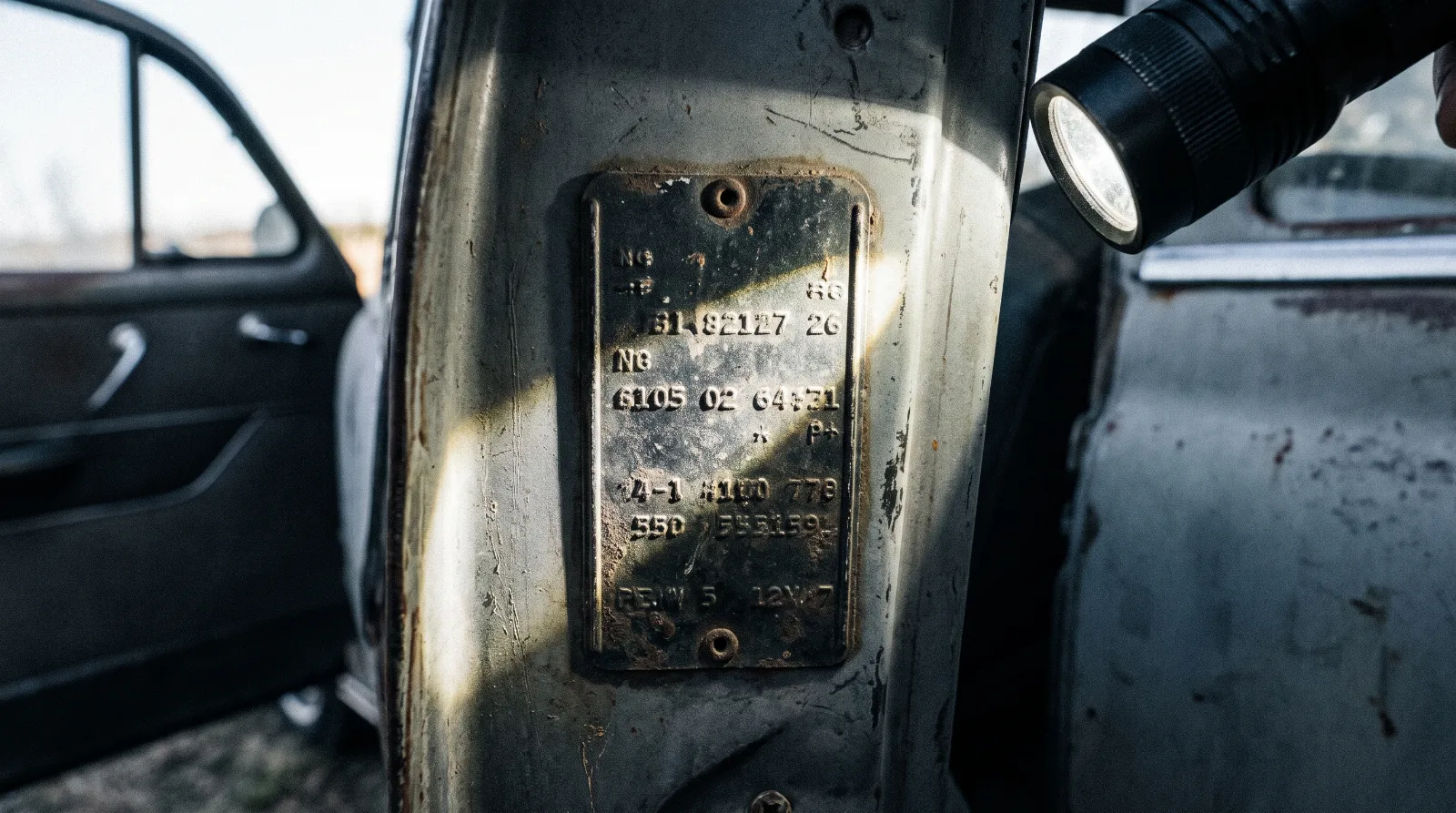
Somebody is standing in a barn with a torch, looking at a black sedan, and the question is not whether it is a Chevrolet. The question is which one, from which year, in which series, and whether the plate on the door pillar agrees with the plate on the cowl and with the number on the engine.
On a 1951 Chevrolet there are three separate places to look, and they were put there by three different departments for three different reasons. Read together they tell you nearly everything. Read one at a time and misunderstood, they have started a great many arguments over cars people had already paid for.
The three numbers, and who wrote them
The serial number. This is the car's identity as far as Chevrolet Motor Division was concerned. On a 1949 to 1952 car the plate is on the driver's side front door pillar, visible with the door open. It encodes the assembly plant, the model year, the series, and the sequence in which the car came down that particular line.
The Fisher Body plate. Fisher built the body, and they kept their own record of it. Their plate is fitted to the cowl under the bonnet and it carries the style number, the body sequence number, the trim code and the paint code. It says nothing about the engine, because at the point Fisher stamped it the engine had not been fitted yet.
The engine number. Stamped on the block, and the odd one out, because it belongs to the engine rather than to the car. Old titles frequently recorded the engine number instead of the serial number, which is why paperwork and plates on these cars sometimes disagree in a way that alarms people needlessly.
| Number | Where | What it tells you |
|---|---|---|
| Serial number | Driver's side front door pillar | Plant, year, series, sequence |
| Fisher Body plate | Cowl, under the bonnet | Style, body number, trim, paint |
| Engine number | Stamped on the block | Where and when the engine was built |
| Frame | Nothing stamped | Frame numbering starts in 1955 |
What identification can prove, and what it cannot
Between the two plates you can establish the year, the series, the body style the car left the factory as, the plant that built it, the colour it was painted, and the trim that was in it. For a car of this era that is a great deal of information, and it is enough to catch most of the ways a car gets misrepresented.
What none of it proves is the engine. Fisher did not care about engines and Chevrolet did not tie the engine number to the serial number in the way that later cars do. A 1951 Chevrolet with an engine that does not match the paperwork is not automatically a fraud, it is a car that has had an engine changed at some point in seventy five years, which is close to normal.
The second thing the plates cannot do is tell you about the sheet metal. That is where the year by year trim changes come in, and on Chevrolet the most reliable of those is the badge on the front of the bonnet, which was altered often enough that it works as a date stamp all by itself.
"A man told me he had a numbers matching 1951. I asked him which numbers he thought were matching. He did not have an answer, and neither does the car, because Chevrolet was not doing that yet."
— Earl Dawson
Where to start on a car you do not know
Open the driver's door first. If the serial plate is there and readable, everything else is easier, because it fixes the year and the series and gives you something to check the rest against. If it has gone, and on a car that has been repainted badly it often has, then the Fisher plate on the cowl becomes the primary evidence and you are working backwards from the body.
Then decide what you are actually trying to establish. Somebody buying a car wants to know that the year, series and body style are what the advertisement said. Somebody restoring a car wants the paint and trim codes so they can put back what was there. Somebody registering a car wants a number that agrees with a document. These are three different jobs and only the first one needs all three plates to agree.
Check this first
- The driver's door pillar. If the serial plate is present, start there and everything else is corroboration.
- The cowl, under the bonnet. Fisher's plate, and the only place the original paint and trim codes are recorded.
- Whether the two agree on body style. A serial that says De Luxe and a body plate for a Special is worth a conversation.
- The number on the title against the number on the engine. On old paperwork these are often the same thing, which explains a lot of confusion.
- The badge on the front of the bonnet. Trim changed nearly every year and it is the fastest visual check there is.
- Whether the plates look right. Fresh rivets, wrong fasteners, or a plate that sits proud of the pillar are all worth a second look.
Where this fits
Each of the three has its own page. How the plate on the door pillar breaks down, plant by plant and letter by letter, is in the 1951 Chevrolet serial numbers. What Fisher recorded and where to find it is in the cowl tag. The badge that dates the car from twenty feet away is in the badge on the bonnet. What the series actually were is in the De Luxe Styleline and the plainer Styleline, the trucks number themselves differently and are in the 1951 truck line, and the car as a whole is in the 1951 car.
Sources and notes
- Chevrolet model identification 1946-1954, The Old Car Manual Project - the serial number plate on the driver's side front door pillar for 1949 to 1952 models, the J year code for 1951, and the K and J series letters for De Luxe and Special.
- 1951 serial number location, Vintage Chevrolet Club forum - the plate visible at the left pillar with the door open, frame numbers beginning in 1955 rather than earlier, and the warning that the number on an old title is often the engine number.
- Fisher body tags and serial number plates, Vintage Chevrolet Club forum - the Fisher body tag used only on Fisher bodies and attached to the firewall under the bonnet, and the separate serial number plate carried by the car itself.
- Fisher Body number plates, preface, Chevellestuff - the plate as a permanent record of how the body was built for later servicing and warranty work, the several names it goes by, and the point that it covers the body only because engine decisions came later in final assembly.
- 1951 Chevrolet Styleline De Luxe Series 2100 JK, Classic Car Database - the 2100 JK series designation, the model number 2134 for the convertible coupe, Fisher as the body maker, and production of 20,172 at a base price of $1,730.
- 1947-1959 Chevy truck model years identification guide, Classic Industries - the year by year identification features that do the same job for the trucks, including the details unique to 1951.
More from the garage
Rebuilding a Chevy 216
Rebuilding a 216 is not like rebuilding anything made after about 1955, and the difference is not the tools. It is that on most engines the botto...
The 1951 Chevrolet Apache
There is no 1951 Chevrolet Apache. The Apache name belongs to the generation of Chevrolet trucks that came after the one built in 1951, and it do...
The 1951 Chevrolet Impala
There is no 1951 Chevrolet Impala. The name did not exist in 1951, the car did not exist in 1951, and nothing Chevrolet built that year was ever...