1951 Chevrolet 3800
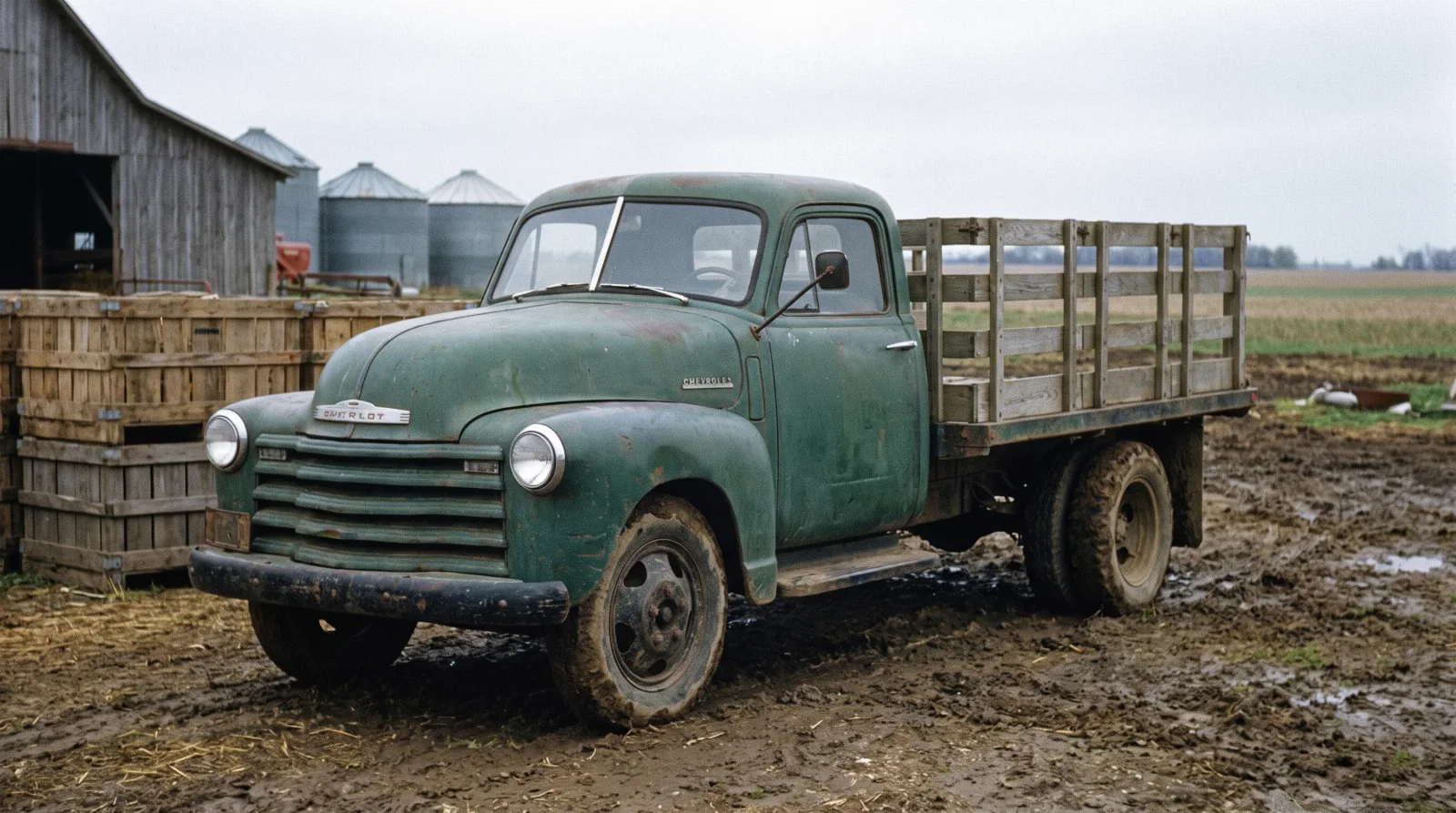
The 3800 is the one ton, the heaviest of the three light Advance Design chassis, and it is the truck people walk past at shows on their way to the half-ton. That is a mistake if what you actually want is something that will carry a load, tow a trailer without arguing, or serve as the base for a flatbed you intend to use.
It is also the cheapest way into a 1951 Chevrolet truck, most of the time, for the simple reason that it is 137 inches of wheelbase and nine feet of bed and nobody is trying to lower one.
What a 3800 is
Chevrolet's factory code for the 1951 one ton is JS. Below it sit JR, the three-quarter ton badged 3600, and JP, the half ton badged 3100. Above it there is a whole medium-duty range, but the 3800 is the top of the light line and the last one that uses the same cab you see on a pickup.
| Series | Code | Rating | Wheelbase | Bed length |
|---|---|---|---|---|
| 3100 | JP | Half ton | 116 in | 78 in |
| 3600 | JR | Three-quarter ton | 125.25 in | 87 in |
| 3800 | JS | One ton | 137 in | 108 in |
The bed is 50 inches wide with 16 and a quarter inch sides, the same as the other two. What is different is everything you cannot see from the driver's seat: a heavy duty frame, a full floating rear axle rated at 7,200 pounds, a ten and three-quarter inch clutch, and a payload rating of 4,100 pounds against a gross weight of 8,800. Dual rear wheels were an option, which is where you get the dually stake beds people still use for hauling to this day.
Base price in 1951 was around $1,682, which put it above the half-ton pickup and well below anything in the medium-duty range.
What was built on the 3800 chassis
More than most people realise. The one-ton chassis carried the full range of commercial bodies, which is why so many surviving 3800s are not pickups at all.
- Pickup. The nine-foot bed. Long, useful, and awkward to park in a modern town.
- Stake bed. Removable wooden sides on a platform. The classic farm and nursery truck, and frequently a dually.
- Panel. The enclosed one-ton delivery body, 137 inch wheelbase and just under 224 inches overall, weighing about 4,220 pounds with a gross rating of 7,000 on single rear wheels and six-ply tires.
- Canopy express. A low tailgate with waterproof roll-up curtains on the back and sides, the last descendant of a very old style of light truck.
- Chassis and cab. Sold bare for a body builder to finish. Wreckers, fire apparatus, dump bodies and every kind of local trade body sat on these.
The Carryall Suburban is the one body that did not use this chassis. That was restricted to the half-ton line, which is covered in the 1951 Chevrolet Suburban.
Living with the biggest one
It drives like what it is. The engine is the same 216.5 cubic inch six the whole light line used, 92 horsepower and 176 pound-feet, so you have exactly the same power moving considerably more truck. Loaded it is fine, because that is what the gearing and the torque curve were arranged for. Empty on a hill you will be in third for longer than you expect and you will not mind after a while.
Six volt electrics with a negative ground, the same as everything else Chevrolet built. Hydraulic brakes, and the heavy chassis means bigger drums, which is one of the genuine advantages of the one ton if you intend to use it.
"Nobody is bidding against you on a one ton. That is the whole appeal. You get the same cab, the same nose and the same one-year doors as the truck everybody wants, on a chassis that will still be working when the pretty ones are on trailers."
— Earl Dawson
Dating a 3800 is exactly the same job as dating any 1951 Advance Design, because the cab is the same. Vent windows in the doors with turndown outside handles is the 1951 combination and no other year has it. The speedometer reads to 80, not 90. The chrome inside window and wiper knobs are in their last year. If somebody is guessing at the year, those three checks settle it in a minute.
Check this first
- Frame rails behind the cab. A one ton that spent its life with a body bolted to it can have corrosion and old drilling right where you want to mount something new.
- Rear spring hangers, shackles and the axle housing. This truck carried loads. The heavy-duty parts wear too, and they are less commonly reproduced than the half-ton equivalents.
- Cab mounts and cab corners. Same weak points as every Advance Design, and no different for being on a bigger frame.
- Bed cross sills under the wood. A nine-foot bed has more sills to hide rot under, and new boards over bad sills is the oldest trick in this corner of the hobby.
- Wheels and tires if it is a dually. Six matching wheels in the correct size is a real shopping job, and the inner tires are what people neglect.
- What body it is wearing now. A great many 3800s have had their original body replaced. That is not automatically bad, but it changes what the truck is worth.
Why buy one
Three honest reasons. It is the cheapest 1951 Chevrolet truck with the same cab as the expensive ones. It will do real work without complaint, which matters if you have a farm, a business or a habit of moving furniture for people. And it is the one nobody has cut up, because there is no fashion for lowering a one ton, so the ones that survive tend to be complete and original in a way half-tons rarely are.
The reason not to buy one is equally simple. It is a long, heavy, firm-riding truck with nine feet of bed behind the cab. Empty, on modern roads, it asks something of you. If what you want is a truck to drive to breakfast on Sunday, buy a 3100 and pay the premium.
The enclosed body version of this chassis, and its half-ton sibling, is covered in the 1951 Chevrolet panel truck. The three-quarter ton that sits between this and the half-ton is the 1951 Chevrolet 3600, the cab that sits on all three of them is in the five window cab, and the half ton at the head of the branch is the 3100.
Sources and notes
- 1951 Chevrolet 3800 truck, New Old Cars - the 4,100 pound load capacity, 8,800 pound gross weight, full floating axle rated at 7,200 pounds, the ten and three-quarter inch heavy duty clutch, optional dual rear wheels, the 216 Thriftmaster at 92 horsepower and 176 pound-feet, and a base price around $1,682.
- Comprehensive history of the 1947-1955 first series Advance Design, DevesTechNet - the JP, JR and JS series with their wheelbases and bed lengths, all beds 50 inches wide with 16.25 inch sides, the four-speed synchromesh as the only gearbox on the one ton, and the Carryall Suburban restricted to the 3100 line.
- 1950-1958 Chevrolet model series identification, The Old Car Manual Project - the 1951 factory truck series chart placing JS at 137 inches and one ton, with the Dubl-Duti forward control variants alongside.
- Car of the week: 1952 Chevrolet 1-ton panel truck, Old Cars Weekly - the one-ton panel on the 137 inch wheelbase at 223.88 inches overall, 4,220 pounds standard weight and a 7,000 pound gross rating on single rear wheels with six-ply tires, and JS as the 1951 series letter.
- 1947-1959 Chevy truck model years identification guide, Classic Industries - the 1951 cab details that date any Advance Design regardless of chassis: vent windows with turndown handles, the 80 mph speedometer, and the last year of chrome knobs.
- Chevrolet 3800 listings, ClassicCars.com - live inventory showing how one-ton pickups, stake beds and panels are asked against the half-ton.
More from the garage
Rebuilding a Chevy 216
Rebuilding a 216 is not like rebuilding anything made after about 1955, and the difference is not the tools. It is that on most engines the botto...
The 1951 Chevrolet Apache
There is no 1951 Chevrolet Apache. The Apache name belongs to the generation of Chevrolet trucks that came after the one built in 1951, and it do...
The 1951 Chevrolet Impala
There is no 1951 Chevrolet Impala. The name did not exist in 1951, the car did not exist in 1951, and nothing Chevrolet built that year was ever...