1951 Chevrolet Sedan Delivery
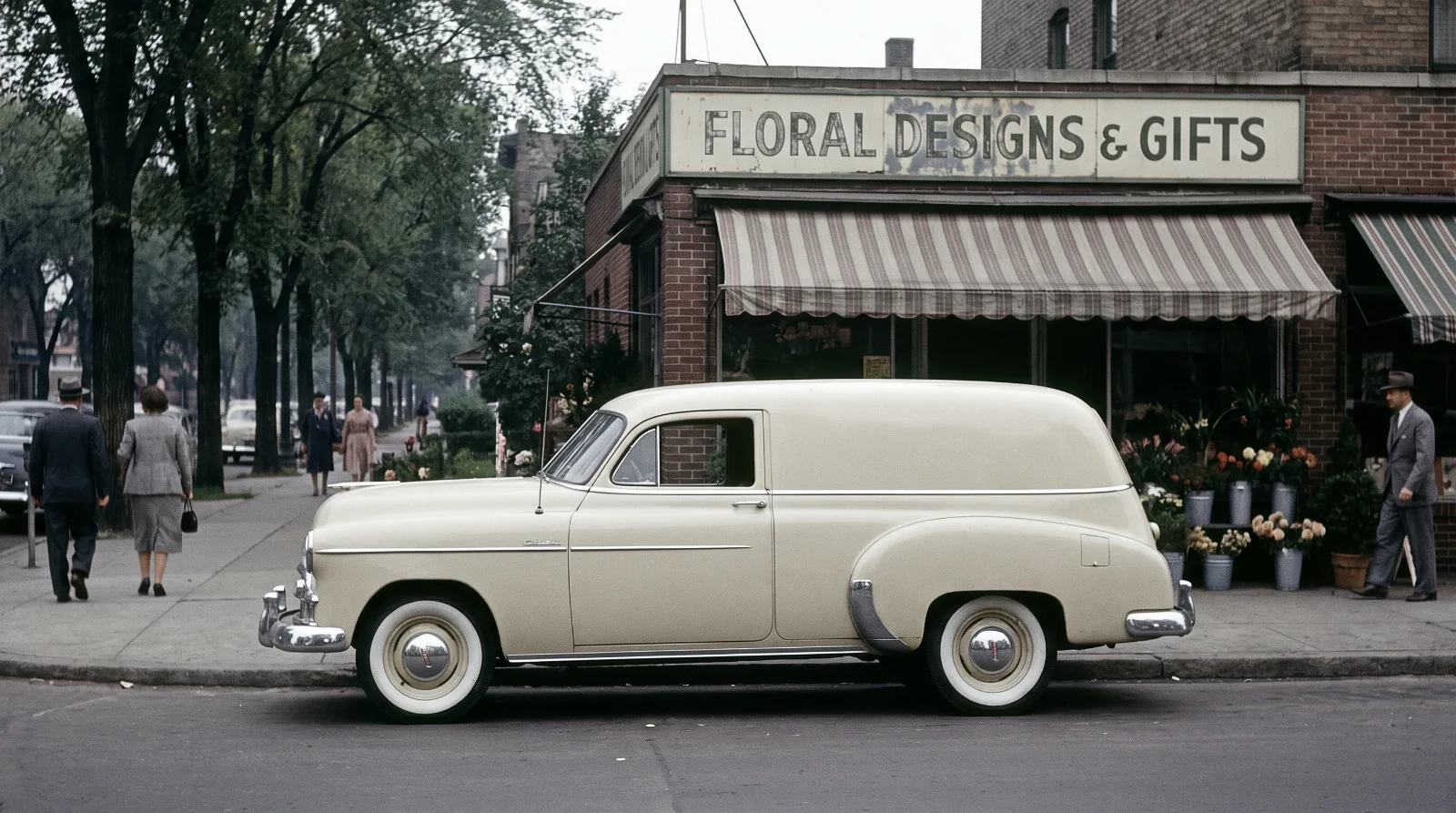
A sedan delivery is a car from the windshield forward and a delivery van from the doors back. Chevrolet built them for decades, and the 1951 is the one people mean when they talk about the shape: the Styleline nose, the car doors, the car dashboard, and then a long steel flank with no rear side windows and one door at the back.
It is the vehicle a florist bought when a panel truck was too crude and a station wagon was too dear. And it is the reason a great many of them no longer exist, because a working vehicle that is also a good-looking car gets used up first and cut up second.
What Chevrolet built, and where it sat
The 1951 sedan delivery is model 1508, body style number 1271, and it lives in the Styleline series 1500. That is the Special series, the cheaper of the two, which is exactly what you would expect from a commercial vehicle. There was no De Luxe sedan delivery.
That single fact settles several arguments at once. Powerglide was a De Luxe option in 1951, priced at $159 and paired with the 235.5 cubic inch six and its hydraulic lifters. A Special could not be ordered with either, and a sedan delivery is a Special. So a 1951 sedan delivery left the factory with the 216.5 cubic inch six, 92 horsepower, and a three-speed manual on the column. Anything else in one today was fitted later, and there is nothing wrong with that as long as nobody is charging you for originality.
| 1951 Chevrolet sedan delivery | |
|---|---|
| Model | 1508, body style 1271 |
| Series | Styleline, series 1500 (Special) |
| Chassis | Passenger car, 115 in wheelbase |
| Engine | 216.5 six, 92 hp |
| Gearbox | Three-speed manual, column shift |
| Built in 1951 | About 20,817 |
Roughly twenty thousand out of about 1.25 million Chevrolets that year. That is one and a half percent of production, and a far smaller share of what survives, because these were bought to work.
Sedan delivery or panel truck
People use the two words as if they mean the same thing and they do not. Both are enclosed delivery bodies. Everything else is different.
| Sedan delivery | Panel truck | |
|---|---|---|
| Based on | Passenger car | Advance Design truck |
| Wheelbase | 115 in | 116 in half ton, 137 in one ton |
| Rear access | Single door at the back | Twin side-hinged doors |
| Ride and driving position | Car | Truck |
| Payload | Light | Half ton or one ton |
| Front sheet metal | Styleline, shared with the sedans | Advance Design, shared with the pickups |
If you want to carry weight, buy the enclosed truck body. If you want something that drives like a 1951 Chevrolet car and happens to have a load space, this is the one.
"A sedan delivery is the only 1951 Chevrolet where the back half is worth more than the front half. The nose is a Styleline Special and you can find any of it. The rear quarters are their own thing and nobody makes them."
— Earl Dawson
Why they are scarce and what that means for buying
Three things happened to sedan deliveries. They were worked hard, because that is what they were for. They were then sold cheap to somebody else who worked them hard. And when they finally stopped being useful, the good ones were turned into street rods, because a car with a long flat flank, a car chassis and no rear seat is exactly what a rodder wants.
The result is a market where an original, unmodified 1951 sedan delivery is genuinely rare and priced accordingly, and where a great many of the ones offered for sale have small-block engines and no interior. Both are legitimate purchases. They are simply not the same purchase, and you should know which one you are making before you get in the truck.
Check this first
- The rear quarter panels, low down and inside. This is the part nobody reproduces. Rot here is fabrication, not shopping, and it is the single biggest cost on a bad one.
- The load floor and its supports. Sixty years of things being dragged over it. Look under the floor as well as at it.
- The rear door, its frame and its hinges. A door that does not sit right is telling you about the body around it.
- Front floors, under the mats. Same as any 1951 Chevrolet car. The windshield channel leaks and the floor pays.
- The serial plate on the driver's door post. J for 1951, then J for Special. A K in that position on a vehicle claiming to be a sedan delivery means something has been swapped.
- What is under the hood and what is under the floor. A V8 and a modern axle are common and fine. They are not original, and the price should reflect which one you are buying.
Living with one
It drives like a Styleline Special, which is to say pleasantly. The 216 six is unhurried, the column shift is fine once the linkage is set right, the drums want planning ahead of them and the six volt electrics have a negative ground, unlike the Fords and Chryslers of the same era.
What is different is behind you. No rear side glass means the blind spots are real, and mirrors on both sides are not optional. The load space is long and low and a great deal more usable than a modern estate car, and it is dry and lockable, which is why people who buy one for a business keep it.
Where it fits in the 1951 range
The sedan delivery is the bridge between the two halves of what Chevrolet sold in 1951. It is listed with the commercial vehicles, it was bought by businesses, and it wears a truck's job description. Underneath it is a passenger car, and the series it belongs to is documented in the 1951 Styleline Special.
If you are working out what parts are shared with what, and where the hard pieces are across the whole commercial range, that is in 1951 Chevrolet truck parts. The truck-based vehicle that carried people instead of freight, and the one buyers cross-shop against this, is the Carryall Suburban.
Sources and notes
- 1951 Chevrolet passenger car models chart, The Old Car Manual Project - the factory identification table listing model 1508, body style 1271, as the sedan delivery within the Styleline series 1500.
- Call for delivery: 1951 Chevrolet sedan delivery, Barn Finds - about 20,817 sedan deliveries built for 1951 against over a million Chevrolets, how few survived, and the effect of street rodding on the ones that did.
- Secrets of the Chevy Powerglide 1950-73, Mac's Motor City Garage - Powerglide offered exclusively on De Luxe models from 1950, priced at $159, and paired with the 235 cubic inch six with hydraulic lifters at 105 horsepower against the standard 216.5.
- Chevrolet Deluxe, Wikipedia - the Special and De Luxe series split, Styleline as the notchback range, and Powerglide restricted to De Luxe and Bel Air models.
- 1951 Chevrolet Special Series specifications, Conceptcarz - the Special series total of 185,090 cars, its body styles and prices, and the 115 inch passenger car wheelbase the sedan delivery shares.
- Chevrolet sedan delivery listings, ClassicCars.com - live inventory showing the spread between original examples and street-rodded ones.
More from the garage
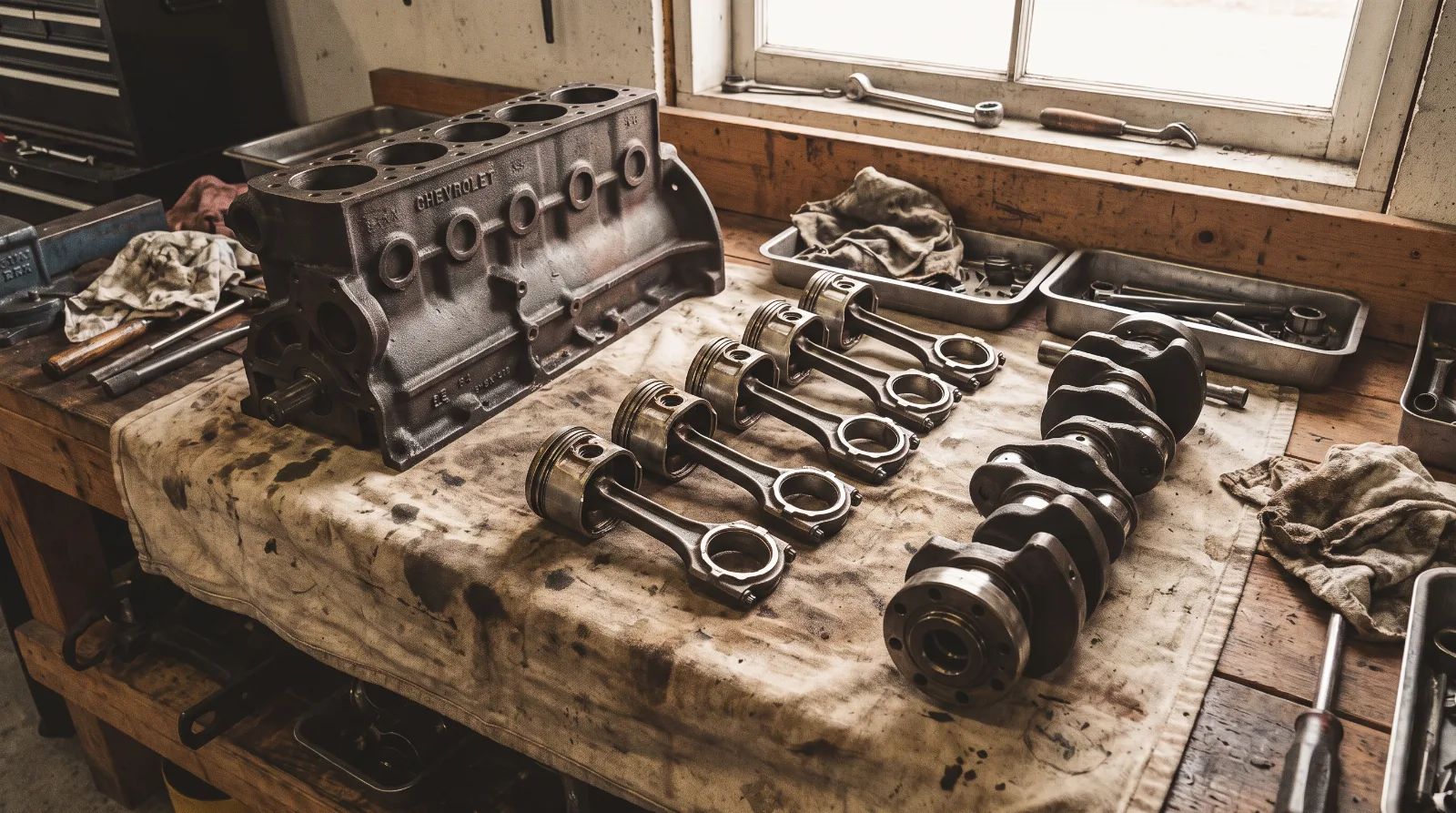
Rebuilding a Chevy 216
Rebuilding a 216 is not like rebuilding anything made after about 1955, and the difference is not the tools. It is that on most engines the botto...

The 1951 Chevrolet Apache
There is no 1951 Chevrolet Apache. The Apache name belongs to the generation of Chevrolet trucks that came after the one built in 1951, and it do...
The 1951 Chevrolet Impala
There is no 1951 Chevrolet Impala. The name did not exist in 1951, the car did not exist in 1951, and nothing Chevrolet built that year was ever...