1951 Chevrolet Engines: The Stovebolt Six
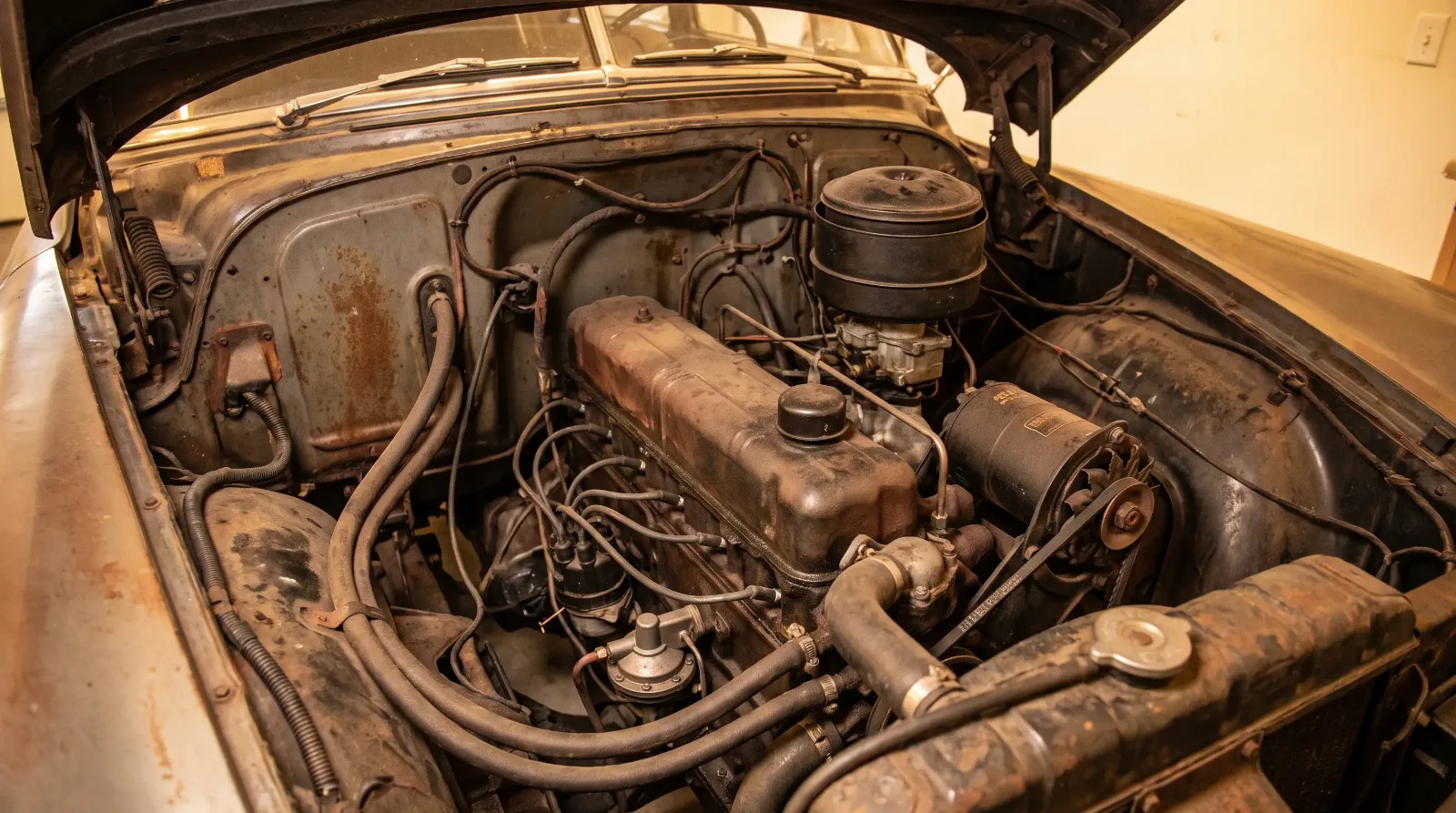
The 1951 Chevrolet engine was a valve-in-head inline six, the engine folks came to call the Stovebolt, and it is the heart of what makes these cars the honest, dependable machines they are. For 1951 there were really two of them. The standard car ran the 216 cubic inch Thrift-Master six, while the cars ordered with the new Powerglide automatic got a larger 235 cubic inch six to pull the extra load the transmission asked of it. Both were the same basic design, an overhead valve six that Chevrolet had been refining since the late 1920s, and both earned their keep by running a long time on plain maintenance. If you want the whole car in context, start with the whole 1951 model guide and come back here for what lives under the hood.
I have had my hands inside more of these sixes than I can count, and the thing to understand first is that they were built for durability and low cost, not for speed. That character runs through every choice the factory made, from the lubrication to the bearings to the modest compression. Get to know how the engine was put together and you will know how to keep one alive.
Two sixes for 1951
The base engine in the 1951 line was the 216 cubic inch six, advertised by Chevrolet as the Thrift-Master. It was the standard powerplant behind the three-speed manual transmission, and it is what most 1951 Chevrolets left the showroom carrying. Chevrolet rated it at around 92 horsepower at 3400 rpm, a figure that sounds small today but moved these cars along just fine at the road speeds of the era.
The second engine came in with the Powerglide automatic. Cars ordered with Powerglide got the larger 235 cubic inch six, rated at roughly 105 horsepower at 3600 rpm, because the automatic pulled more from the engine and the extra displacement made up for it. So the quick way to tell what a 1951 was born with is to look at the transmission. Three-speed manual, expect the 216. Powerglide, expect the 235. Here is how the two sixes compared on paper.
| Spec | 216 Thrift-Master (standard) | 235 (Powerglide) |
|---|---|---|
| Configuration | Inline six, overhead valve | Inline six, overhead valve |
| Displacement | 216.5 cu in | 235.5 cu in |
| Advertised horsepower | ~92 hp @ 3400 rpm | ~105 hp @ 3600 rpm |
| Advertised torque | ~176 lb-ft @ 1500 rpm | ~193 lb-ft |
| Bore and stroke | 3.50 x 3.75 in | 3.56 x 3.94 in |
| Compression ratio | ~6.6:1 | ~6.7:1 |
| Fuel | Single one-barrel carburetor | Single one-barrel carburetor |
| Paired with | Three-speed manual | Powerglide automatic |
| Electrical | 6-volt, negative ground | 6-volt, negative ground |
Treat every number above as a starting point to confirm against a 1951 specification chart before you machine anything, because figures drifted year to year and the advertised ratings did not always match what a shop measured. For the rest of the car's numbers, the numbers in one place lay them out alongside the engine data.
Why they called it the Stovebolt
The nickname came from the hardware. Early versions of this six were assembled with slotted-head quarter-inch bolts, on covers like the valve cover and timing cover, that looked like the common stove bolts you would buy at a hardware store, and the name stuck to the whole engine family and, in time, to the cars themselves. By 1951 the design had been in production for more than two decades, so the "Stovebolt Six" was already a term of affection, not an insult. It stood for an engine that was simple, cheap to fix, and hard to kill.
The other half of the story is the valvetrain. While plenty of low-cost engines of the 1920s and 1930s used flathead designs, Chevrolet went with valves in the head, an overhead valve layout, from early on. That gave the six better breathing and a reputation for pulling well at low speed. It is the same basic architecture, refined and enlarged, that would carry Chevrolet through to the famous 235 of the mid-1950s and beyond.
How the engine was built
The detail that surprises people most is the lubrication. The 216, and the early 235 that came with Powerglide in this period, used what is often described as a splash and low-pressure oiling system rather than the full pressure system a modern engine uses. In plain terms, troughs in the oil pan and dippers on the connecting rod caps flung oil up into the cylinders and onto the rod bearings, with the pump feeding the main bearings at modest pressure. It worked, and it worked for a long time, but it asks two things of the owner. Keep the oil clean and keep it full, because this system is far less forgiving of neglect than a full pressure design.
That lubrication choice ties directly to the bearings. These early sixes ran poured babbitt bearings rather than the modern replaceable insert bearings that later engines used. Babbitt is a soft bearing metal cast in place, and while it holds up well under gentle service, it does not take abuse, high revs, or dirty oil the way an insert bearing does. Full pressure oiling reached the 235 in 1953, but only on Powerglide cars, and it was 1954 before every 235 got aluminium pistons, full pressure oiling and insert bearings on both mains and rods. That is one of the biggest reasons an early Stovebolt gets treated more gently than its later cousins, and it is covered in detail in the Chevy 235 engine. If you are buying or building one of these, knowing which style of bearing you are dealing with changes how hard you can lean on the engine.
Reliability and common wear points
Left alone with regular oil changes and reasonable driving, these sixes last. That is the whole point of them. But seventy-plus years takes a toll, and there are a handful of spots that show wear first. Low oil pressure at idle when the engine is hot is common and usually points to worn bearings or a tired pump. A light tap that comes and goes is often a rod bearing starting to complain, and on a babbitt engine that is a sign to slow down and investigate, not to keep driving. Valve train noise, burned valves, and hardened valve seats also turn up, since these engines were built long before unleaded fuel and were never designed for it.
Cooling matters too. The six is not a hot-running engine by nature, but a clogged radiator, a tired water pump, or a partly blocked block passage will push temperatures up, and heat is hard on old babbitt and old gaskets alike. Oil leaks from the rear main and the valve cover are almost expected on an unrestored car and are more nuisance than crisis. The real questions are oil pressure, bearing condition, and whether the block has ever been overheated or cracked.
"People hear ninety-odd horsepower and think the engine is the weak part of the car. It is not. It is the most honest part. Feed a Stovebolt clean oil, do not lug it or over-rev it, and it will outlast the sheet metal around it. The ones that die young got run low on oil or run hot, and both of those are the owner's fault, not the engine's."
— Earl Dawson
Rebuild it or keep it original
When a 1951 six is worn out, you have two honest roads. You can rebuild it correctly to what the factory built, keeping the numbers and the character intact, which is what I would do on a car worth preserving as a 1951. A proper machine shop can pour new babbitt or, more commonly today, line-bore for modern insert bearings on the 235 while keeping the outside of the engine looking correct. That path holds the value and the honesty of the car. The other road is to keep the tired engine running gently as a driver and simply live with its manners, which is fine if the car is a weekend cruiser and not a show piece.
What I steer people away from is dropping in a later 235 or a V8 and calling the car original. There is nothing wrong with a swap if that is the build you want, but be honest about what it is. A correctly rebuilt period six in a 1951 Chevrolet is worth keeping, both for how the car drives and for what it is. If you are taking the whole car apart anyway, my notes on restoring one walk through how the engine work fits alongside the rest of the job so you are not pulling the six twice.
The Stovebolt six is not fast and it was never meant to be. It is dependable, simple, and easy to understand, and that is exactly why these cars are still on the road. Learn the two engines, respect the lubrication and the bearings, and a 1951 Chevrolet will keep doing what it was built to do. And when the engine is back in and it will not crank, the answer is nearly always in the wiring, not the engine.
Sources and notes
- Wikipedia: Chevrolet Stovebolt engine - overhead valve six history, oil-trough and dipper lubrication, poured babbitt rod bearings, and the 1953 move to full-pressure oiling with shell main bearings.
- Conceptcarz: 1951 Chevrolet DeLuxe Series - 216.5 cu in at 92 hp and the optional 235.5 cu in at 105 hp, with bore, stroke, and compression figures.
- Engine Facts: Chevy 216 inline six - 3.50 x 3.75 bore and stroke, 6.6:1 compression, 92 hp at 3400 rpm, 176 lb-ft at 1500 rpm, and the spray-and-dipper oiling design.
- Engine Facts: Chevy 235 inline six - 3.5625 x 3.94 bore and stroke, 6.7:1 compression, 105 hp for 1950-1952, and the 1953 full-pressure lubrication upgrade with Powerglide.
- Restore An Old Car: Stovebolt Six history - the nickname traced to the quarter-inch slotted-head bolts on the valve, lifter, and timing covers.
- Conceptcarz: 1951 Chevrolet Special Series - confirms both six-cylinder options, four main bearings, and Rochester one-barrel carburetion for 1951.
More from the garage
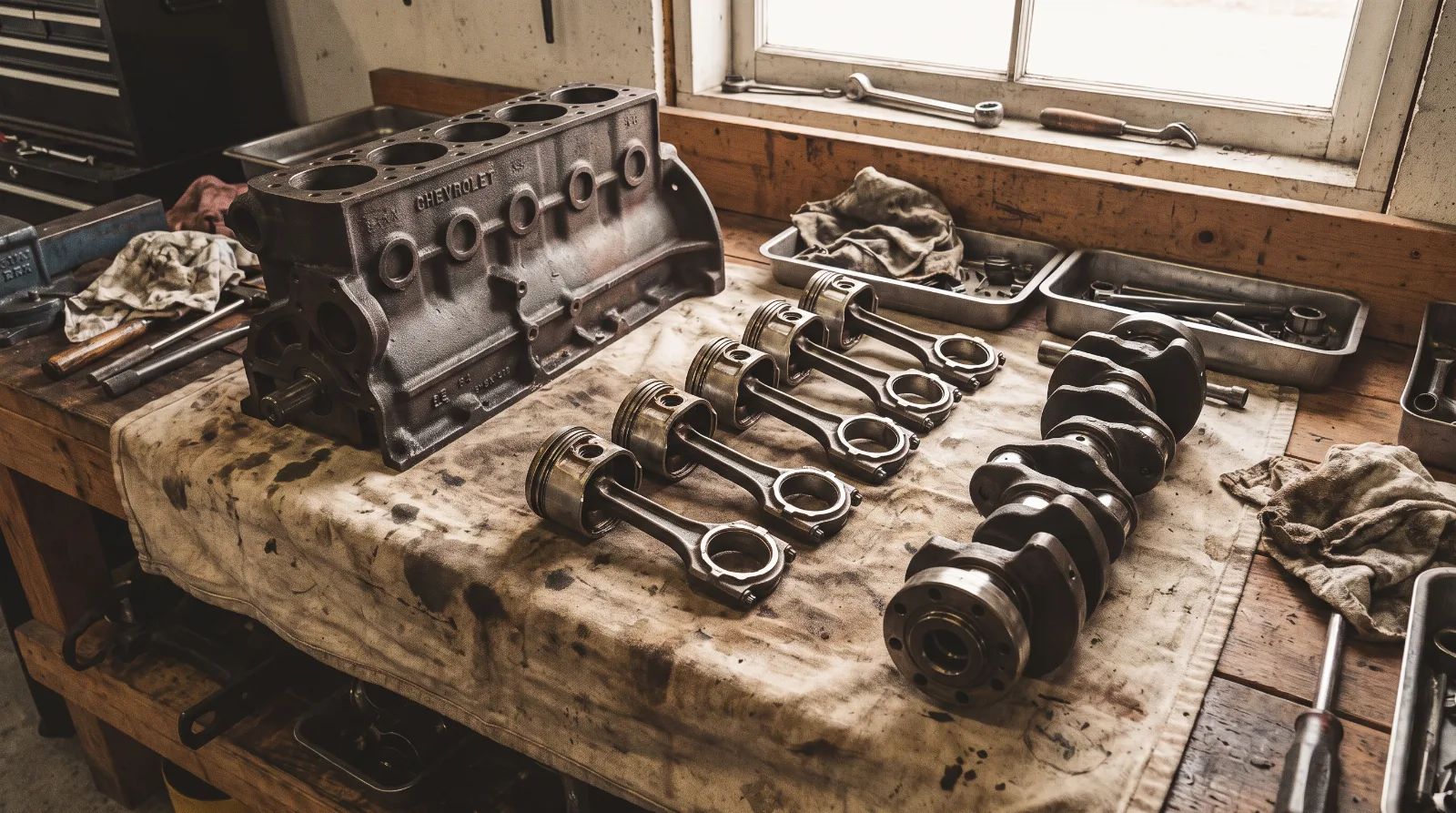
Rebuilding a Chevy 216
Rebuilding a 216 is not like rebuilding anything made after about 1955, and the difference is not the tools. It is that on most engines the botto...
The 1951 Chevrolet Apache
There is no 1951 Chevrolet Apache. The Apache name belongs to the generation of Chevrolet trucks that came after the one built in 1951, and it do...
The 1951 Chevrolet Impala
There is no 1951 Chevrolet Impala. The name did not exist in 1951, the car did not exist in 1951, and nothing Chevrolet built that year was ever...