6 Volt to 12 Volt Conversion
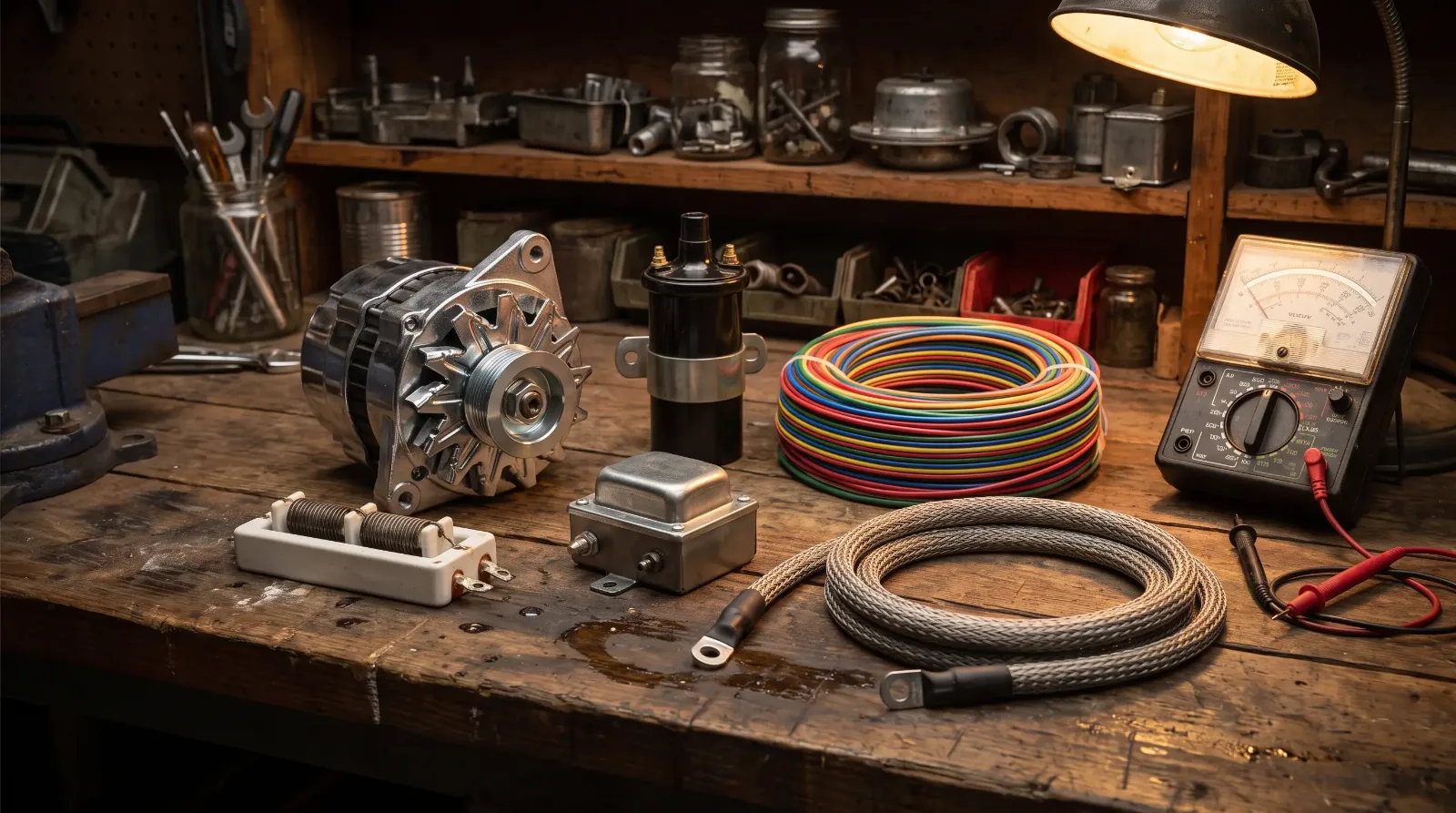
The six volt to twelve volt conversion is the most argued-about job on an early Chevrolet, and most of the argument is between people who have never had a properly sorted six volt system. A 1951 Chevrolet leaves the factory six volt, negative ground, and when the cables are the right size and the grounds are clean it starts and runs perfectly well. Plenty of cars get converted to fix a problem that was really a bad ground strap.
That said, there are honest reasons to go to twelve volts, and if you are going to do it, do it properly rather than piecemeal. Half-converted cars are where the fires start.
First, is your six volt system actually bad
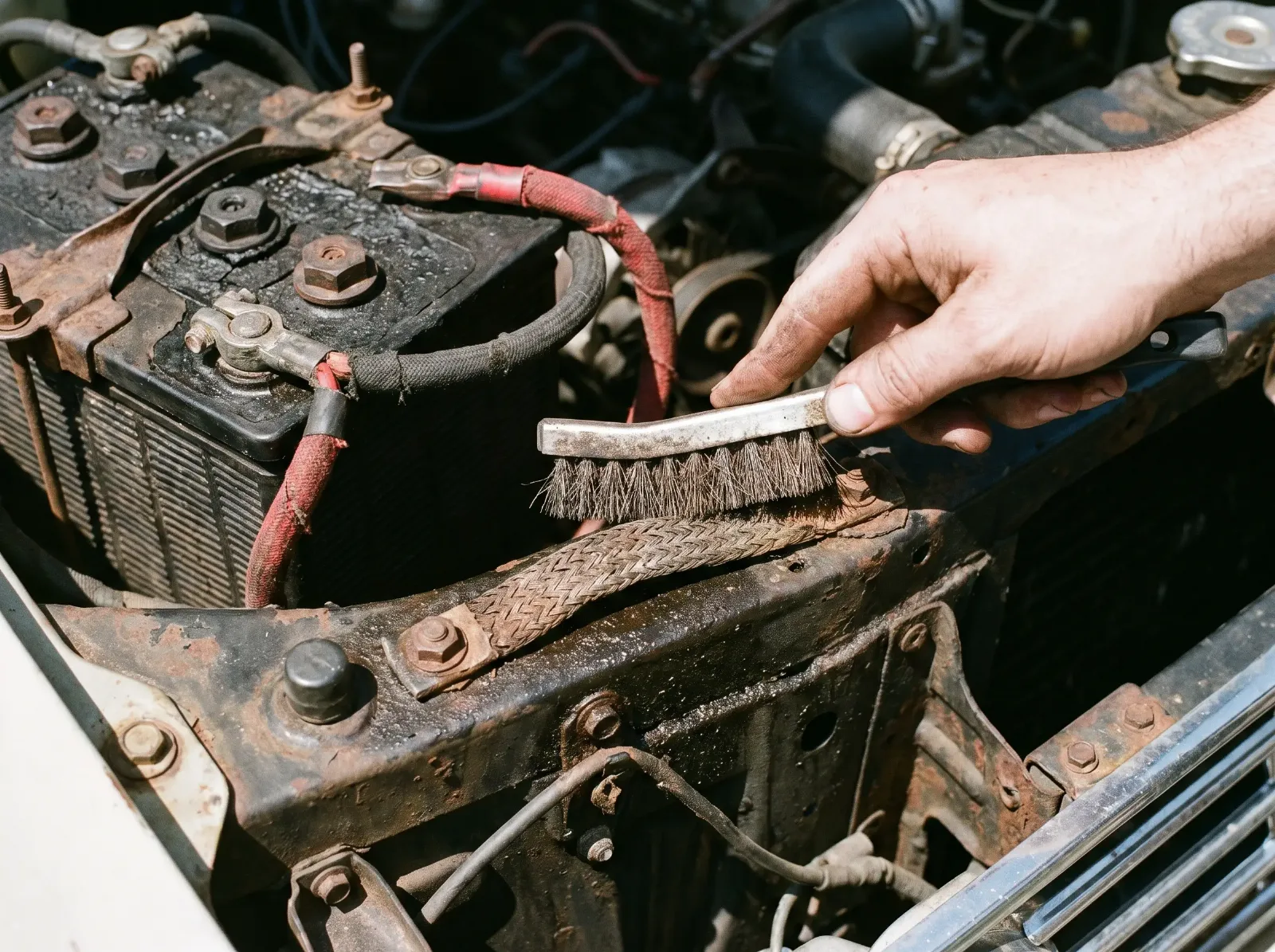
Before you spend a penny, rule out the three things that make a healthy six volt car act sick. Six volts pushes twice the current of twelve for the same work, which means the system is far less forgiving of resistance anywhere in it.
Check the battery cables. They should be heavy, noticeably heavier than a twelve volt car's, and if somebody has fitted modern thin cables the car will crank like the battery is flat. Check every ground: engine to frame, frame to body, body to battery. Then check the connections at the starter and the switch for corrosion. I have fixed more slow-cranking early Chevrolets with a wire brush and a new ground strap than with an alternator.
Also check the polarity, because this is where people go wrong on Chevrolets specifically. Chevrolet ran negative ground. Ford and Chrysler and some GMC trucks ran positive ground in this era, so the assumption travels around and gets applied to the wrong car. If somebody has wired a 1951 Chevrolet positive ground, that alone will cause misery.
What the conversion actually requires
If the six volt system is genuinely sorted and you still want twelve volts, usually for modern accessories, brighter lights or an easier time finding parts on a Sunday, here is the real list. It is longer than the kit sellers imply, but not frightening.
| Component | What happens |
|---|---|
| Battery | Replaced with a twelve volt unit. Cables can usually stay, and the heavy six volt cable is a bonus. |
| Generator | Replaced with a twelve volt alternator plus bracket, or a twelve volt generator and regulator. |
| Ignition coil | Twelve volt coil, or the original coil kept behind a ballast resistor feeding the points. |
| Starter | Usually kept. These starters were built heavy and tolerate twelve volts for short cranking. A solenoid, if fitted, gets changed. |
| Gauges and senders | Kept, behind a voltage reducer. Feeding the original fuel and temperature gauges twelve volts directly will ruin them. |
| Heater and wiper motors | Kept, behind a heavy ceramic dropping resistor, mounted where it can shed heat. |
| Bulbs | Every one replaced with the twelve volt equivalent, including instrument and courtesy lamps. |
| Flasher and horn relay | Twelve volt flasher. Horn relay usually changed or added. |
| Radio | Original tube radio needs a proper converter or a rebuild. This is the part people forget. |
| Wiring | Seventy-year-old cloth harness should be replaced regardless. Twelve volts is not an excuse to keep it. |
The parts that catch people out
Gauges. This is the most common casualty. The fuel and temperature gauges are the sensitive items, and there is no undo. Fit the reducer before you turn the key, not after you notice the needle sitting hard against the stop.
The heater and wiper motors. A dropping resistor for these gets genuinely hot, which is why it wants mounting in the engine bay on metal rather than tucked behind the dash against a wiring loom.
The starter and flywheel. If you are also swapping in a later engine, the starter drive and the ring gear have to match. The later starters are matched to the 168 tooth ring gear used on the newer 235 and 261 engines, and this is exactly where a combined engine swap plus voltage conversion goes wrong.
Grounds, again. Twelve volt systems are fussier about poor grounds than six volt systems are, which surprises people who expected the conversion to make electrical gremlins go away. If you did not fix the grounds before, you now have the same faults with different symptoms.
"Every car I have seen converted because it cranked slowly had a bad ground and thin cables. The owner spent six hundred dollars and got a car that cranks fine and has a resistor cooking behind the dash. Fix the six volt system first. If you still want twelve volts after that, at least you are choosing it."
— Earl Dawson
What you lose, and what you keep
The honest trade. You lose originality, and on a car being judged or sold as correct, that is money. You also lose the simplicity of a system that has exactly one voltage in it, because a converted car ends up with reducers and resistors feeding original components, and every one of those is a future fault.
What you gain is real too: brighter headlights, accessories that work, bulbs and parts available anywhere, and easier starting in cold weather. On a car that gets driven at night and in winter, that is not nothing.
My own line is simple. A car being restored to original stays six volt, and the money goes into cables, grounds and a correct new harness. A driver that gets used hard, or one that already has a later engine in it, is a reasonable candidate for conversion.
Check this first
- Confirm negative ground before touching anything. A 1951 Chevrolet is negative ground. If it is wired positive, that is the fault, not the voltage.
- Battery cable size and every ground strap. Do this before deciding the six volt system is beaten. It fixes most cases.
- Fit gauge voltage reducers before first key-on. Original fuel and temperature gauges do not survive twelve volts direct.
- Plan where the dropping resistor mounts. It runs hot and it must not sit against the harness or the dash padding.
- Account for the radio. A tube radio needs a converter or a rebuild, and it is the item most often discovered after the fact.
- Replace the cloth harness while you are in there. Seventy-year-old insulation is a fire risk at either voltage.
- Check starter drive against ring gear if an engine swap is part of the plan.
Whichever way you go, start from what the car actually had. The factory circuits, colour by colour, are in the factory circuits, and why the polarity confusion around these cars exists at all is in the polarity question. What charges the system in the first place is in the charging system. If a later engine is part of the plan, read up on the Chevy 235 first, because the starter and flywheel question is easier to solve before the engine is in the car than after. And the wider order of operations on a restoration sits in the whole restoration.
Sources and notes
- 6V to 12V conversion, a complete guide for classic cars, Watson's StreetWorks - the component list including twelve volt battery, alternator and bracket, bulbs and fuses, voltage reducers for gauges, and the note that many six volt starters tolerate twelve volts for short cranking.
- Instructions to convert 6V vintage vehicles to 12V, Vintage Auto Garage - the ceramic dropping resistor for heater and wiper motors, the ignition ballast resistor for the points, and running original gauges and senders behind a reducer.
- Chevrolet 216 and 235 high torque starters, Vintage Auto Garage - Chevrolet moving to twelve volt for 1955, Chevrolet's negative ground practice against early Cadillac and some GMC positive ground, and the 168 tooth ring gear matching on later starters.
- 6 volt to 12 volt conversion wiring harness, Chevs of the 40s - replacement harnesses made specifically for converted early Chevrolets.
- 6 volt to 12 volt conversion book, Chevs of the 40s - the dedicated conversion manual for these cars, including bulb interchange numbers.
- 6 to 12 volt conversion thread, Vintage Chevrolet Club of America forum - owner experience on what survives the change and what does not, and the recurring advice to fix cables and grounds first.
More from the garage
Rebuilding a Chevy 216
Rebuilding a 216 is not like rebuilding anything made after about 1955, and the difference is not the tools. It is that on most engines the botto...
The 1951 Chevrolet Apache
There is no 1951 Chevrolet Apache. The Apache name belongs to the generation of Chevrolet trucks that came after the one built in 1951, and it do...
The 1951 Chevrolet Impala
There is no 1951 Chevrolet Impala. The name did not exist in 1951, the car did not exist in 1951, and nothing Chevrolet built that year was ever...