1951 Chevrolet Sedan
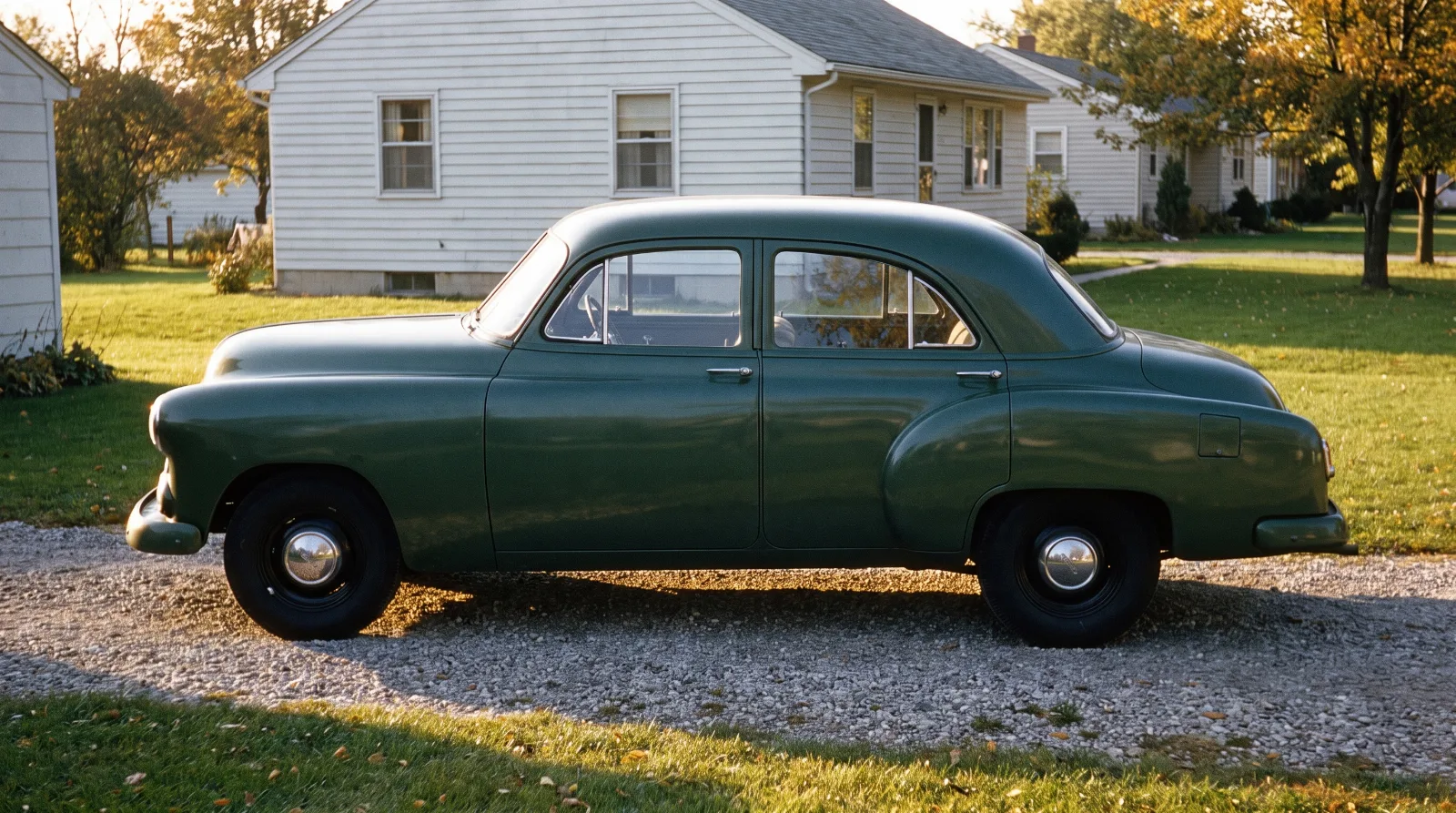
Almost every 1951 Chevrolet was a sedan. Chevrolet built about 1.25 million cars that year and roughly 980,000 of them had a fixed post, four seats you could actually use and no pretension of being anything sporting. That is close to four cars in five. The coupes and the convertibles get the magazine covers, but the sedan is what people bought, what people kept, and what you are most likely to find in a barn today.
The trouble is that Chevrolet offered eight of them. Two roof shapes, two door counts, two trim series, and the names do not tell you which is which unless somebody explains the system. So here is the system.
Notchback or fastback: Styleline and Fleetline
Every 1951 Chevrolet body carries one of two names. Styleline is the notchback: a roof, a step down, and a separate trunk lid you can see from the side. Fleetline is the fastback, where the roof runs in one unbroken line all the way to the rear bumper. Same chassis, same nose, same doors from the beltline down. Completely different shape above it.
Then each of those comes in two trim series. Special, series 1500, is the plain one. De Luxe, series 2100, is the one with the stainless side molding, the better interior and access to the option list. Put the two together and you get four sedan families, each in two-door and four-door form.
| Model | Body | Series | Price | Built |
|---|---|---|---|---|
| 2103 | Styleline 4-door sedan | De Luxe | n/a | 380,270 |
| 2102 | Styleline 2-door sedan | De Luxe | $1,630 | 262,933 |
| 2152 | Fleetline 2-door sedan | De Luxe | $1,635 | 131,910 |
| 2153 | Fleetline 4-door sedan | De Luxe | $1,690 | 57,693 |
| 1502 | Styleline 2-door sedan | Special | $1,535 | 75,566 |
| 1503 | Styleline 4-door sedan | Special | n/a | 63,718 |
| 1552 | Fleetline 2-door sedan | Special | $1,550 | 6,441 |
| 1553 | Fleetline 4-door sedan | Special | $1,600 | 3,364 |
Read that table for a minute and the shape of 1951 comes out of it. The De Luxe Styleline four-door outsold everything Chevrolet built. The Fleetline Special four-door sold 3,364 copies in the whole country. Both are sedans, both cost within a few dollars of the same money, and one of them is a hundred times rarer than the other.
Which sedan to buy
People ask me this at shows and my answer disappoints them, because the honest answer is that the differences that matter are not the ones on the badge.
Two doors or four. The two-door is worth more today and always has been, because it looks better and because the hobby prefers it. The four-door is easier to live with, cheaper to buy, and often a straighter car because it was the family car that stayed in the garage. If you want to drive it, the four-door is more car for the money by a wide margin.
Styleline or Fleetline. The fastback is the one people stop and look at. It is also the one where the rear glass is a specific part, where the trunk opening is small and awkward, and where a rusty lower quarter is a genuine repair rather than a patch panel. The Styleline is easier in every practical way. The Fleetline De Luxe page goes through the fastback in detail.
Special or De Luxe. This one is straightforward. De Luxe gets you the side molding, the better cloth, the nicer dash and, more importantly, eligibility for Powerglide and the bigger engine. Special gets you a cheaper, plainer car that is honest about what it is. There is a full account of what the plain series included in the 1500 series Styleline.
"A four-door sedan is the last car anybody restores and the first car anybody should buy. Nobody hot-rodded them, nobody raced them, nobody parted them out. That is why the good ones are still good."
— Earl Dawson
What is under all eight of them
Mechanically there is one 1951 Chevrolet sedan. All eight sit on the same 115 inch wheelbase, all eight have the six up front, hydraulic drums at all four corners and six volt electrics with a negative ground, which catches out people who assume everything old was positive ground. Ford and Chrysler were. Chevrolet was not.
The standard engine is the 216.5 cubic inch Thrift-Master six, 92 horsepower, splash lubricated with babbitt bearings. The 235.5 cubic inch engine at 105 horsepower came only bolted to Powerglide, and Powerglide was a De Luxe option at around $159. That means no Special sedan of any kind left the factory with an automatic or the larger six. It is a quick and useful test when a seller starts describing what his car came with.
Check this first
- Floors, front and rear, both sides. Pull the mats. These cars rot from the inside out because the windshield and rear glass channels leak and the water sits.
- Lower rear quarters and the trunk drop. On a Fleetline this is expensive. On a Styleline it is annoying.
- The serial plate on the driver's door post. J is the year, then J for Special or K for De Luxe, then the plant sequence starting at 1001.
- Side trim against the interior. De Luxe molding gets bolted onto Special cars. The dash and the cloth do not lie the way the trim does.
- Door bottoms and the rear of the front fenders. Mud packs in behind and rots them from the back.
- Two pedals or three. A Special with an automatic is a converted car, whatever the seller believes.
Living with one
A 1951 Chevrolet sedan is genuinely usable if you are honest about what usable means. Fifty to fifty-five miles an hour all day, no trouble. Sixty-five with a headwind and you are working the engine harder than it wants. The brakes are drums with no servo, so you leave room and you plan ahead, and after a week that stops feeling like a compromise and starts feeling like driving.
Parts are the good news. These cars sold in such numbers that the mechanical side is well served, and the interior soft trim is reproduced for the common bodies. The body panels are harder than the trucks of the same year, which is worth knowing before you buy something rusty, and the Fleetline-specific pieces are the hardest of all.
The plainest body Chevrolet built that year, and the one people confuse with the two-door sedan more than any other, is covered in the 1951 Chevrolet business coupe. Where this body sits in the 1951 range as a whole is the wider picture. It has the same doors and roof as the two-door sedan and no rear seat at all.
Sources and notes
- 1951 Chevrolet passenger car models chart, The Old Car Manual Project - the factory identification table with all eight sedan model numbers across the Styleline and Fleetline bodies in the 1500 and 2100 series.
- 1951 Chevrolet Special Series specifications, Conceptcarz - prices, weights and production totals for the four Special sedans, including the 3,364 Fleetline four-doors.
- 1951 Chevrolet De Luxe Series specifications, Conceptcarz - production and pricing for the De Luxe sedans, the 92 and 105 horsepower engine ratings, and the 115 inch wheelbase shared across the range.
- Chevrolet Deluxe, Wikipedia - Styleline as the notchback and Fleetline as the fastback, Fleetline offered as sedans only, and Powerglide restricted to the De Luxe and Bel Air.
- Chevrolet Fleetline, Wikipedia - the four-door Fleetline dropped after 1951, the range cut to a single De Luxe two-door for 1952, and the name discontinued after that.
- 1951 Chevrolet Styleline Special listings, ClassicCars.com - live inventory showing the spread between two-door and four-door asking prices.
More from the garage
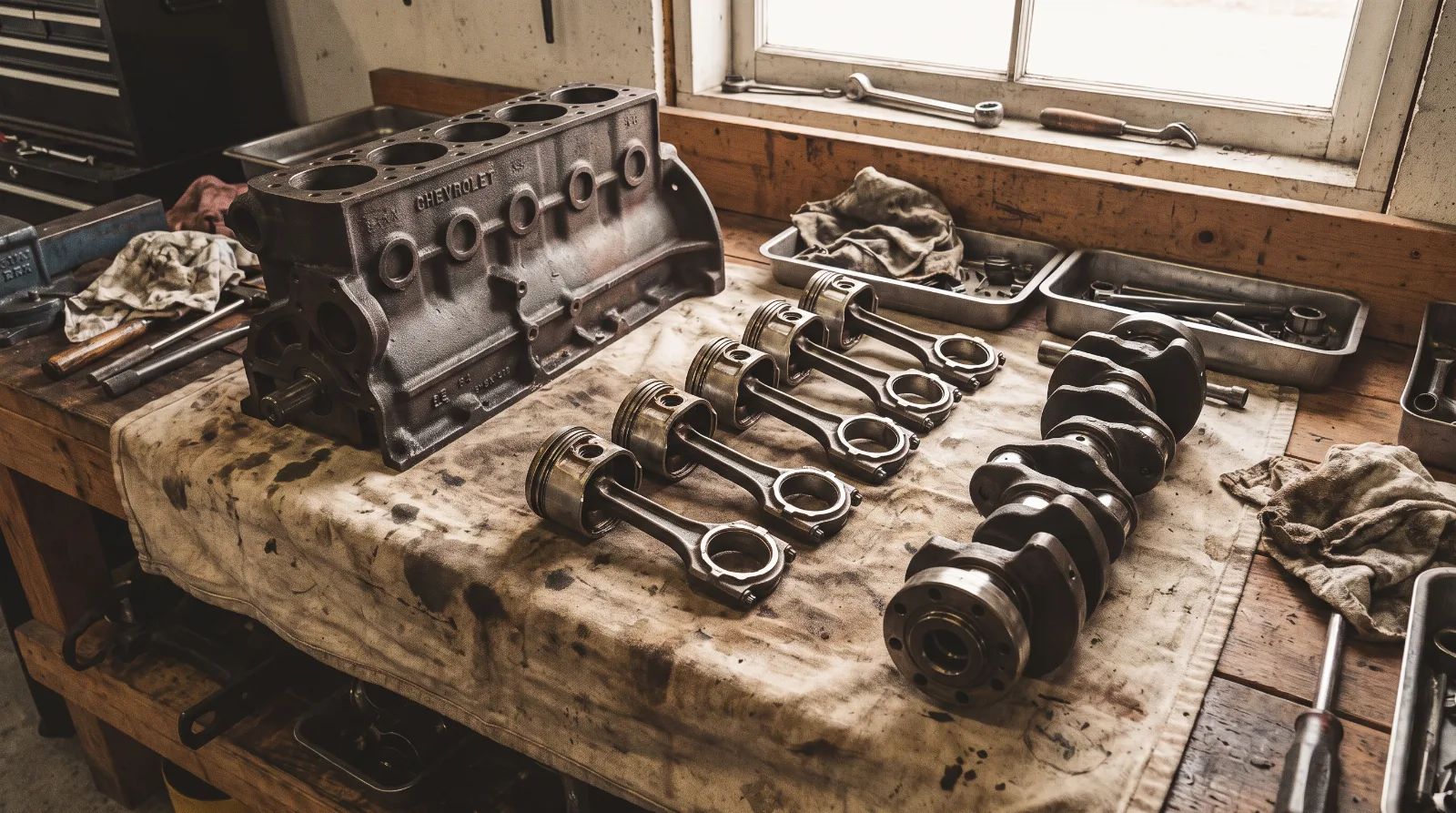
Rebuilding a Chevy 216
Rebuilding a 216 is not like rebuilding anything made after about 1955, and the difference is not the tools. It is that on most engines the botto...
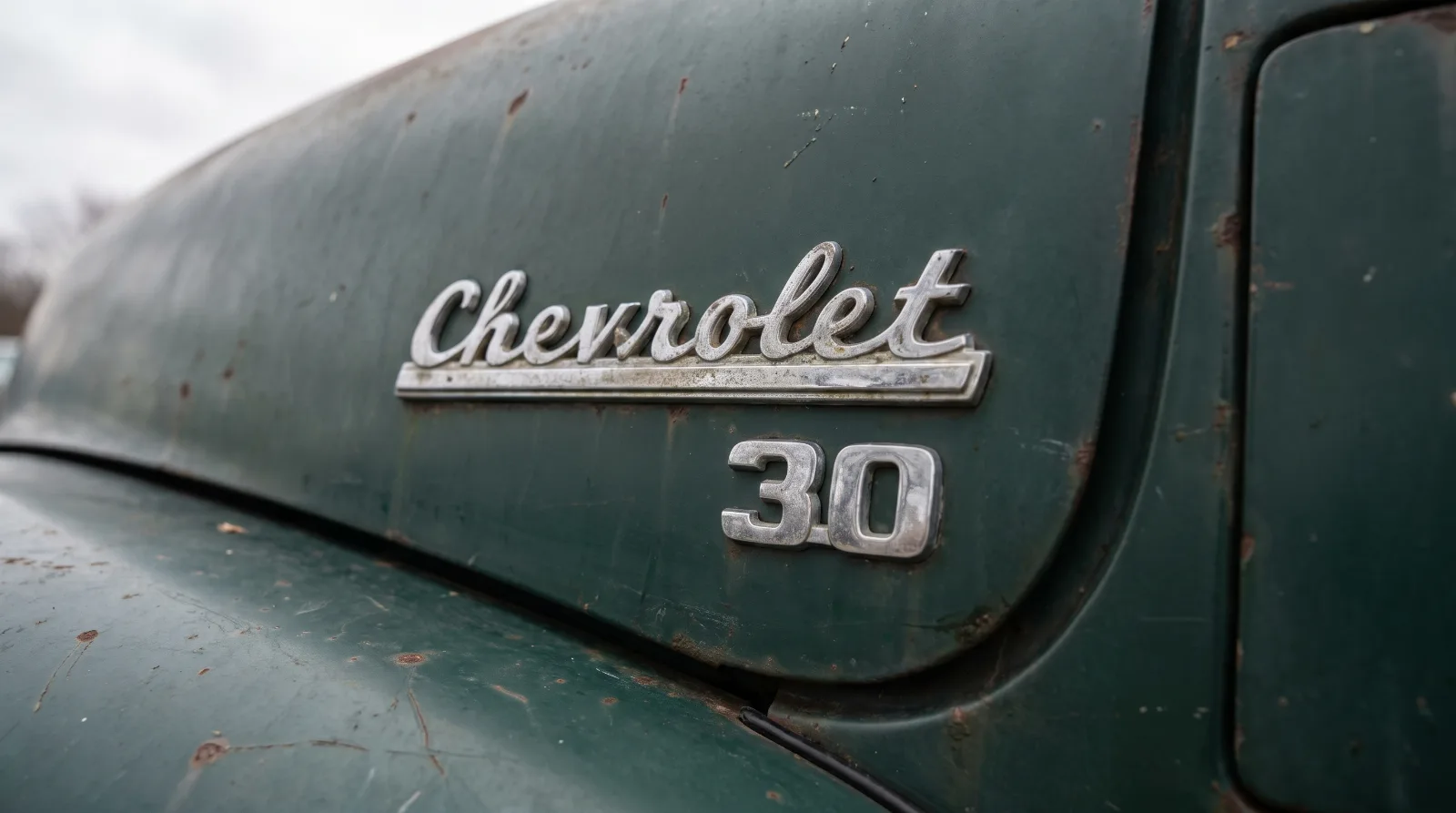
The 1951 Chevrolet Apache
There is no 1951 Chevrolet Apache. The Apache name belongs to the generation of Chevrolet trucks that came after the one built in 1951, and it do...
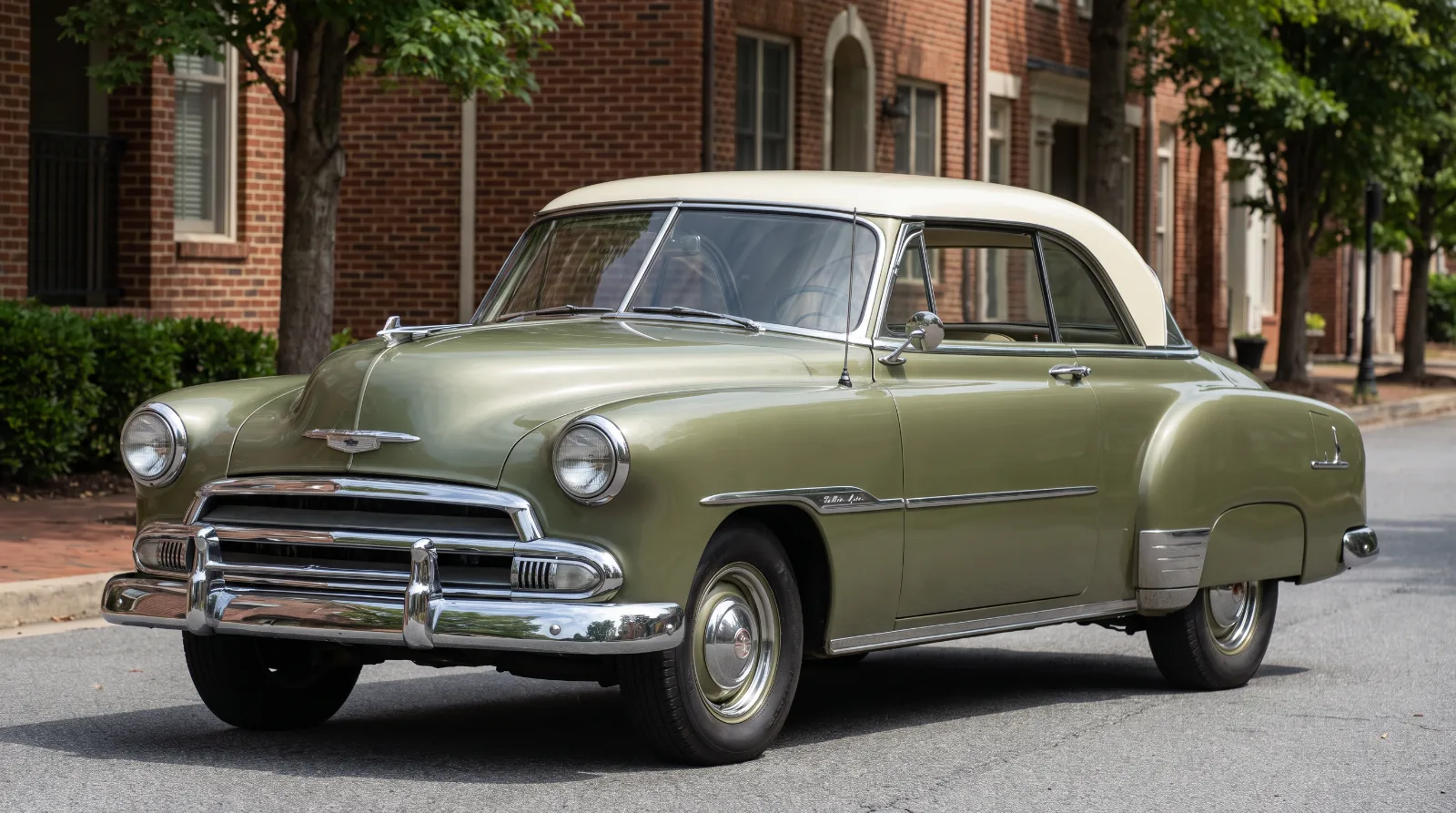
The 1951 Chevrolet Impala
There is no 1951 Chevrolet Impala. The name did not exist in 1951, the car did not exist in 1951, and nothing Chevrolet built that year was ever...