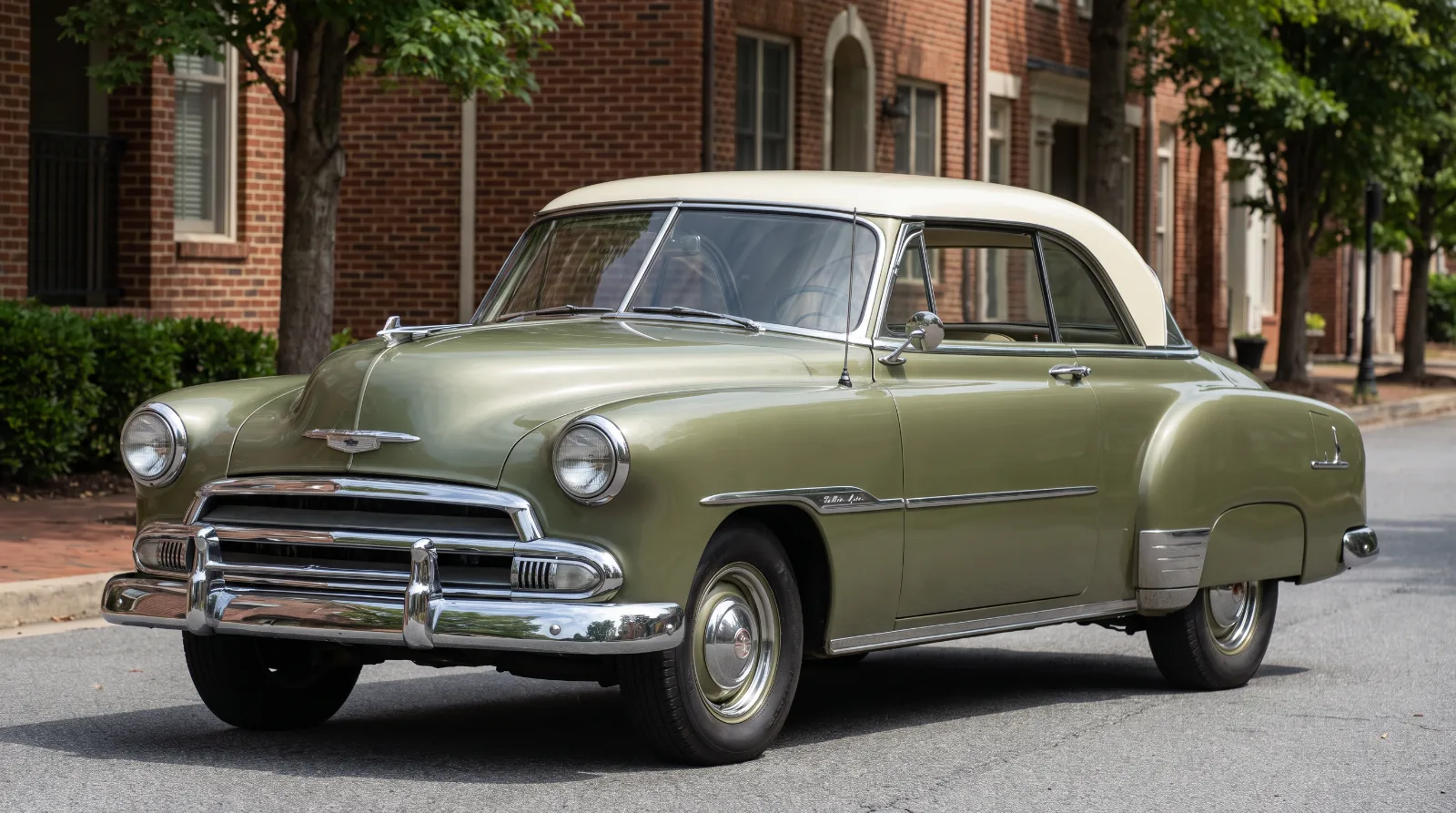
1951 Chevrolet Fastback
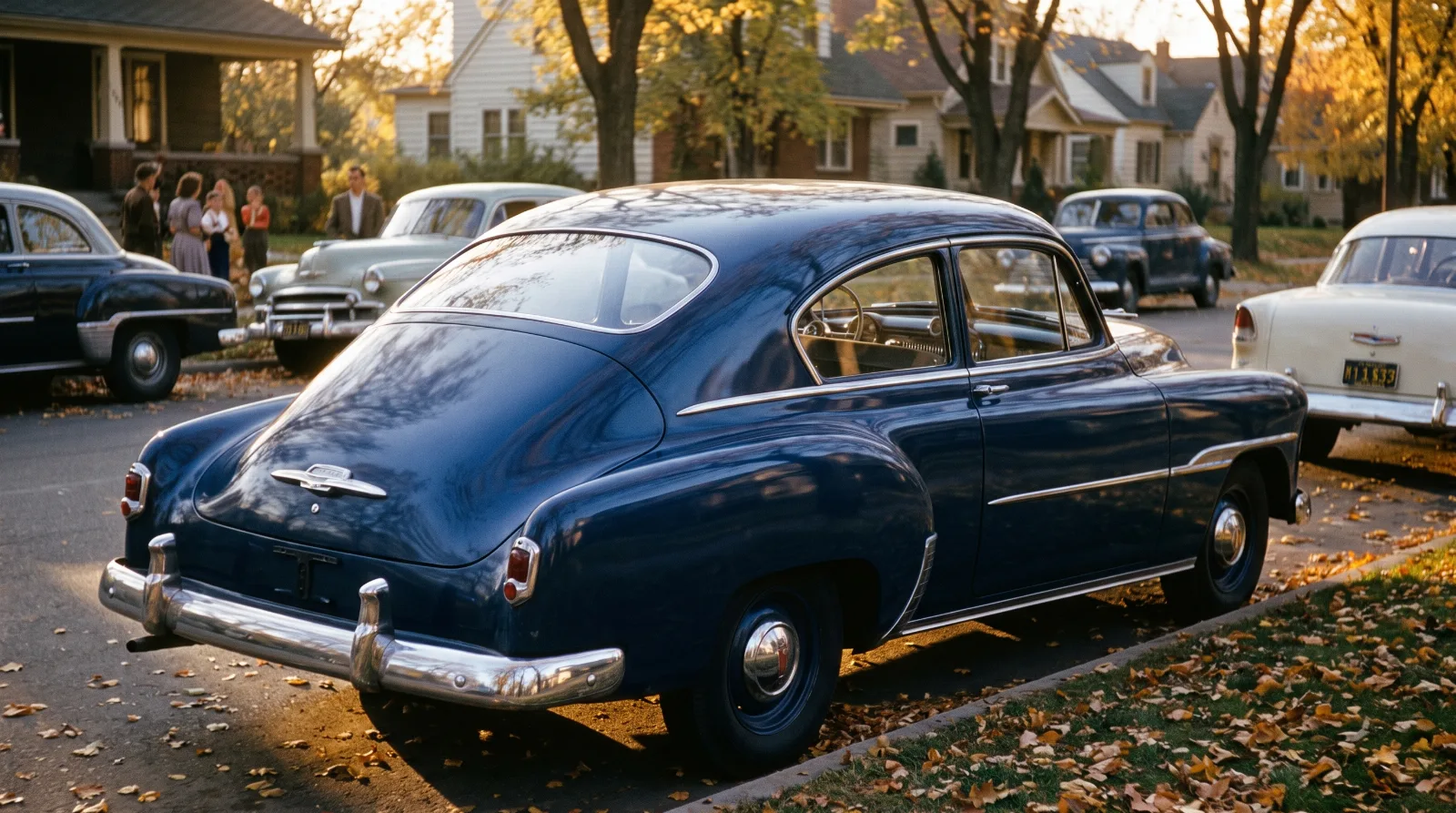
The fastback 1951 Chevrolet is the Fleetline, and 1951 is the year to pay attention to, because it is the last one that makes any sense. After 1951 the body was cut back to a single model, and after 1952 the name was gone altogether. If you want a fastback Chevrolet with the full range of choices still on the table, this is the year.
People call it a lot of things. Fastback, torpedo back, aerosedan, sloped back. Chevrolet called it Fleetline, and it meant one specific thing: a roof that runs in one continuous line from the windshield header all the way down to the rear bumper, with no separate trunk lid interrupting it.
Where the shape came from
The fastback was a 1930s idea. General Motors had been drawing streamlined bodies since before the war, and Chevrolet put a fastback two-door in the catalogue for 1942 under the name Aerosedan. It came back after the war and it sold extremely well through the late 1940s, because it looked modern in a way a three-box sedan did not.
By 1951 that had reversed. The notchback Styleline was the new-looking car and the fastback was starting to read as prewar. The production figures tell the story better than any magazine of the day did.
| Model | Body | Series | Price | Built |
|---|---|---|---|---|
| 2152 | Fleetline 2-door sedan | De Luxe | $1,635 | 131,910 |
| 2153 | Fleetline 4-door sedan | De Luxe | $1,690 | 57,693 |
| 1552 | Fleetline 2-door sedan | Special | $1,550 | 6,441 |
| 1553 | Fleetline 4-door sedan | Special | $1,600 | 3,364 |
That is 199,408 fastbacks for the whole 1951 model year, against something over 780,000 notchback Styleline sedans. Four to one against the shape, in a year when the two cost within a few dollars of each other. Chevrolet read those numbers and acted on them fast: for 1952 the fastback was reduced to the De Luxe two-door alone, about 37,000 cars, and for 1953 there was no Fleetline at all.
What is actually different about a fastback body
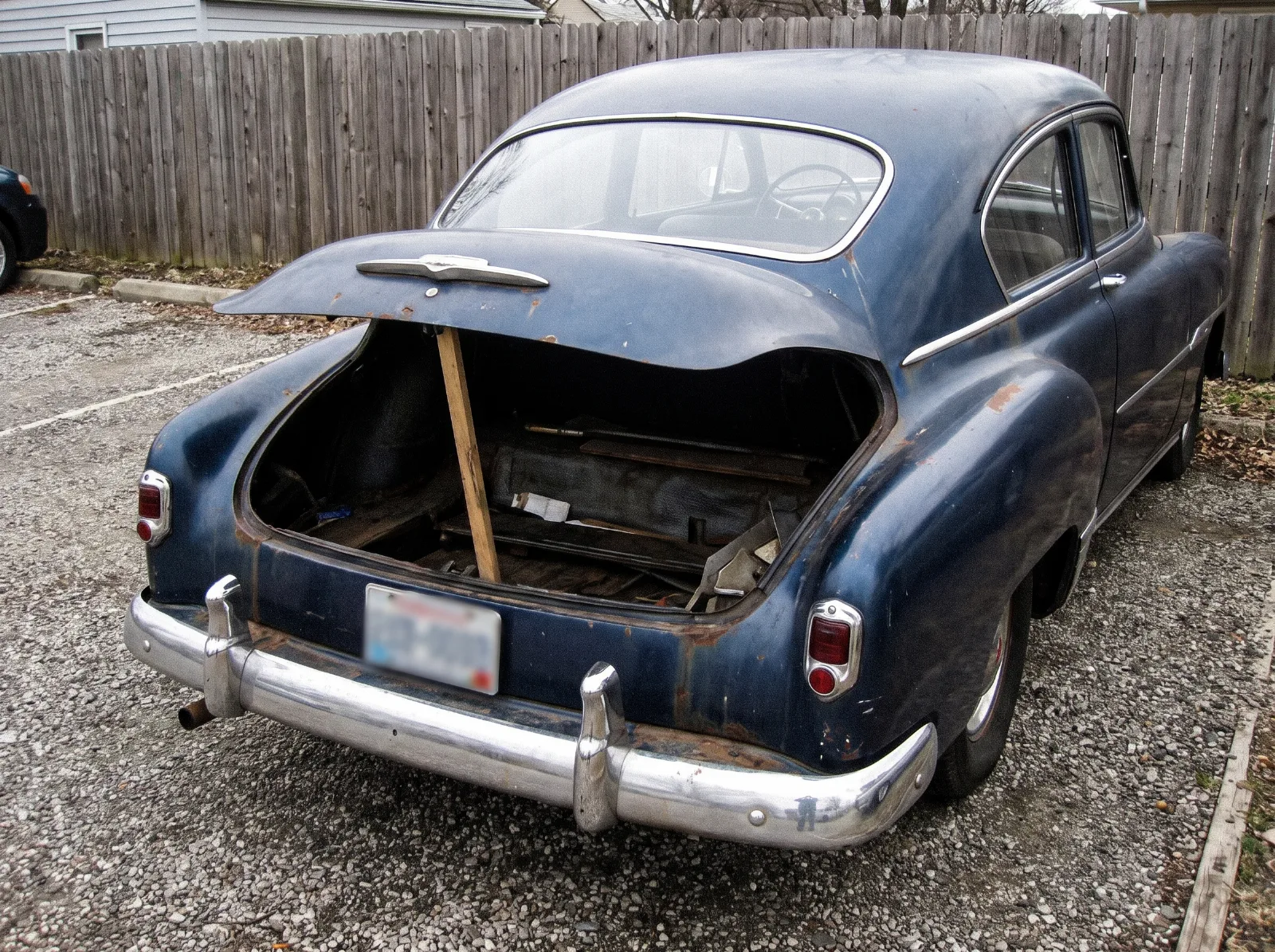
More than people expect. From the beltline down, a Fleetline and a Styleline share a great deal, including the lower part of the doors. Above the beltline they share almost nothing.
The roof and rear quarters are their own stampings, and there is no separate trunk lid in the Styleline sense. You get into the luggage space through a much smaller opening low in the tail, and once you have loaded it you will understand why the notchback won.
The rear glass is a Fleetline part. So are the rear quarter windows on the four-door and the upper door frames. None of it interchanges with the notchback car, which is worth knowing before you buy a project on the assumption that Chevrolet parts are Chevrolet parts.
The rear seat area is tighter overhead than the Styleline, because the roof is already on its way down by the time it reaches the back of the rear seat. Tall passengers notice it. Nobody who has ridden in the back of a fastback needs to be told this.
"A Fleetline looks a foot longer than a Styleline standing next to it and it is not. That is the whole trick of a fastback, and it is the reason people bought them and the reason people still want them."
— Earl Dawson
Buying a 1951 fastback
The shape is the reason to buy one, and the shape is where the problems are. Water that gets past the rear glass rubber on a notchback runs into the trunk. On a fastback it runs down inside the quarter panel, sits on the wheel arch and the trunk floor, and rots the car from a place you cannot see without taking the interior out.
So the inspection order on a Fleetline is different from any other 1951 Chevrolet. Start at the back and work forward.
Check this first
- Rear window rubber and the metal around it. This is the source of most fastback rot. If the rubber is hard and cracked, assume the metal under it needs looking at.
- Inside the lower quarters, through the trunk opening. Take a torch and a mirror. The outside can look fine while the inner arch is gone.
- The trunk floor and the spare well. Water that comes past the glass ends up here and stays, because the drainage on these was never good.
- Door tops and the upper frames. Fleetline specific, and not available off a Styleline donor car.
- Front floors under the mats. Same as every 1951 Chevrolet: the windshield channel leaks and the floor pays for it.
- Serial plate on the driver's door post. J for 1951, then J for Special or K for De Luxe. On a four-door Fleetline the series letter is the difference between a common car and a genuinely rare one.
Underneath it is the standard 1951 Chevrolet, and that is entirely good news. The 115 inch wheelbase, the six up front, hydraulic drums all round, six volt electrics with a negative ground. Standard engine is the 216.5 cubic inch six at 92 horsepower. The 235.5 at 105 horsepower came only with Powerglide and Powerglide was a De Luxe option, so a Special Fleetline is a three-pedal car by definition.
Which Fleetline you are looking at
Same test as the rest of the range. De Luxe cars carry the stainless side molding above the front fender running back onto the front door, with the name spelled out over the front wheel opening. Special cars carry nothing. The interior backs it up: better cloth and more bright trim in a De Luxe, plain in a Special.
The two you are most likely to meet are covered in detail elsewhere on the site. The volume car, the one Chevrolet kept for 1952 and the one most people mean by Fleetline, is the De Luxe Fleetline. The plain-series version, the one that sold in the thousands rather than the hundreds of thousands, is the 1951 Chevrolet Fleetline Special.
Sources and notes
- Chevrolet Fleetline, Wikipedia - the fastback shape dating to prewar GM streamliners, the 1942 Aerosedan two-door, both body counts offered from 1949 to 1951, the four-door dropped after 1951, 1952 cut to a single De Luxe two-door at about 37,000 cars, and the name gone for 1953.
- Chevrolet Deluxe, Wikipedia - Fleetline as sedans only against the Styleline notchback range, under 200,000 Fleetlines built for 1951 against over 780,000 Styleline notchback sedans, and Powerglide restricted to De Luxe and Bel Air.
- 1951 Chevrolet passenger car models chart, The Old Car Manual Project - the four Fleetline model numbers, 2152 and 2153 in the De Luxe series and 1552 and 1553 in the Special.
- 1951 Chevrolet De Luxe Series specifications, Conceptcarz - prices, weights and production for the De Luxe Fleetline two-door and four-door, and the 115 inch wheelbase shared across the range.
- 1951 Chevrolet Special Series specifications, Conceptcarz - the Special Fleetline pair at 6,441 two-doors and 3,364 four-doors, the smallest 1951 Chevrolet passenger car figures.
- 1951 Chevrolet Fleetline listings, ClassicCars.com - live inventory showing how fastbacks are asked and what the four-doors do against the two-doors.
More from the garage
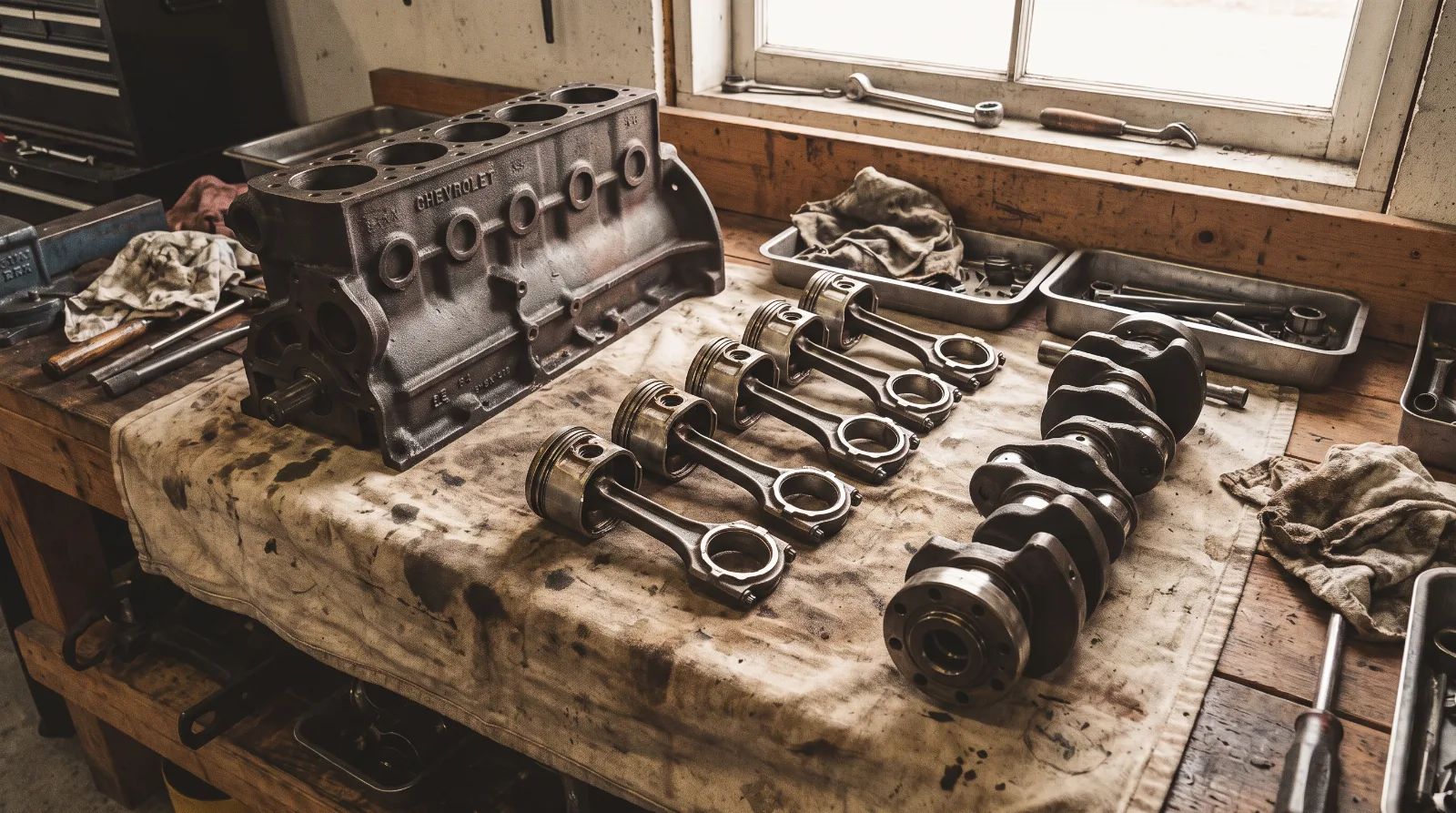
Rebuilding a Chevy 216
Rebuilding a 216 is not like rebuilding anything made after about 1955, and the difference is not the tools. It is that on most engines the botto...
The 1951 Chevrolet Apache
There is no 1951 Chevrolet Apache. The Apache name belongs to the generation of Chevrolet trucks that came after the one built in 1951, and it do...
The 1951 Chevrolet Impala
There is no 1951 Chevrolet Impala. The name did not exist in 1951, the car did not exist in 1951, and nothing Chevrolet built that year was ever...