1951 Chevrolet Restoration Guide
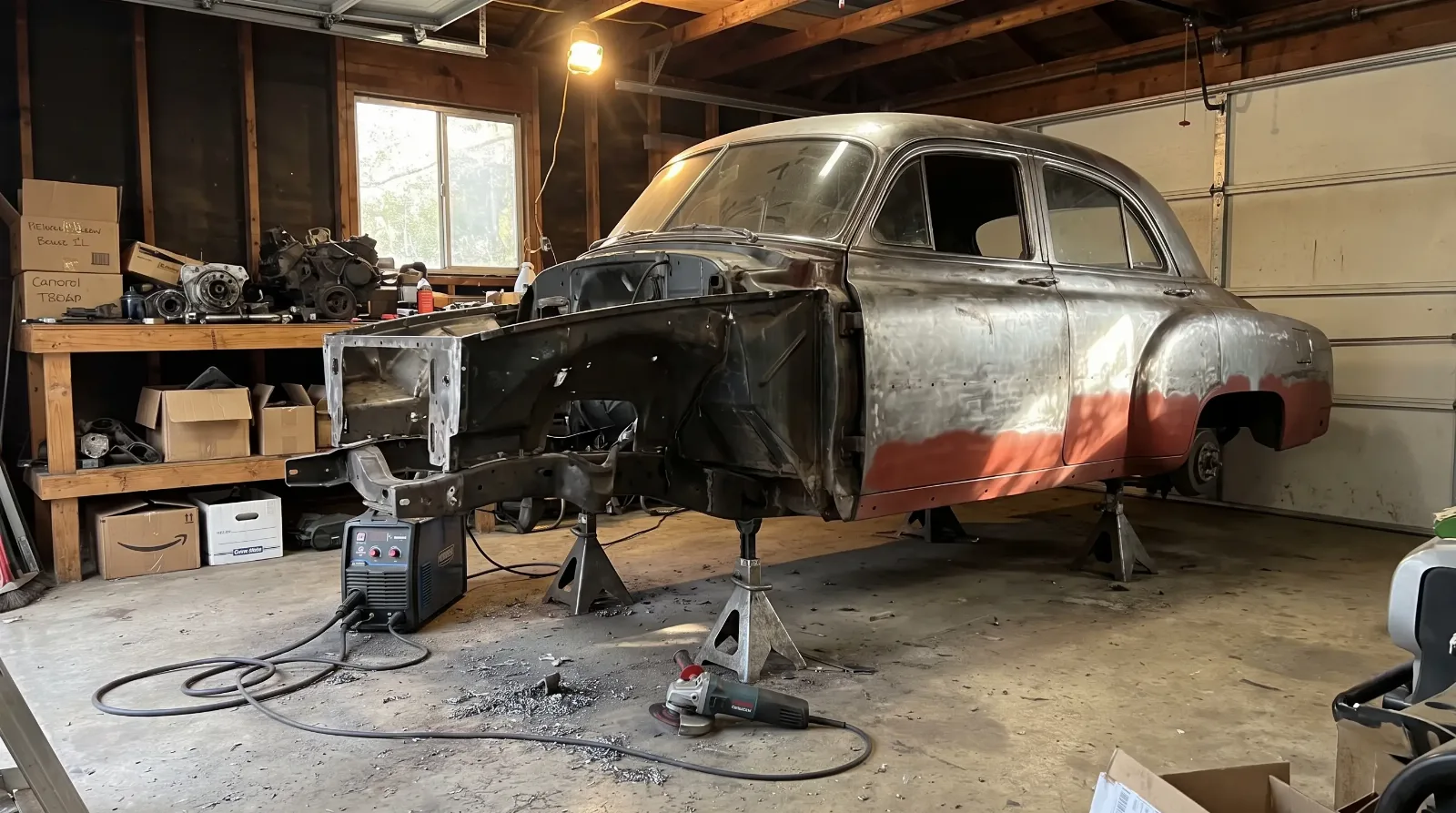
A 1951 Chevrolet restoration is one of the friendlier old-car projects a person can take on in a home garage, and I say that after decades of doing exactly that. The car is simple. The body sits on a frame, the engine is a straight six you can practically stand inside the engine bay to work on, and the electrics are basic. What makes or breaks the job is not the mechanical work. It is rust, honest math on parts, and deciding early what kind of car you actually want at the end. Get those three right and the wrenching is the fun part. Get them wrong and you have a driveway full of boxes and a checkbook that keeps getting lighter. Before you tear into anything, it helps to know the car itself, so read up on the car itself first and then come back here for the garage plan.
This guide walks the whole job the way I would talk a friend through it at a swap meet. Where the rust hides, what parts you can actually buy and what you cannot, the six and its old 6-volt wiring, the chrome and the seats, and where the money quietly disappears. I will flag the dollar figures so you check them against today, because prices move and I am not going to hand you a number and pretend it is gospel.
Start with the decision, not the wrench
The first choice is the one most people skip, and it is the one that decides your budget: driver or show car. A driver is a solid, honest 1951 you clean up, make safe, make reliable, and enjoy on a Sunday. A show car is a full nut-and-bolt restoration where every finish, every fastener, and every stitch has to read correct. The gap between those two is enormous, both in hours and in dollars. A driver-quality restoration might run roughly a few thousand into the low five figures if you do the labor yourself. A true show restoration can climb well into the tens of thousands of dollars in parts, plating, paint, and upholstery before you count your own time. Same car, very different jobs.
My honest advice for a first Chevrolet of this era is build a good driver. These were not rare or exotic cars. Chevrolet built them by the hundreds of thousands, so you are not saving the last one of anything. A clean driver you actually take out beats a trailer queen you are scared to park at the grocery store. Decide this on day one, because it changes which parts you buy, how far you chase originality, and how deep you go on the paint and plating.
Where the rust hides
Rust is the whole ballgame on a car this old. Mechanical parts you can rebuild or replace. Rotten steel you have to cut out and weld in, and that is where the hours and the money go. On a 1951 Chevrolet the rot follows the same map every time, and you want to find it before you buy, not after. Get under the car with a good light and a screwdriver, and do not trust a shiny floor mat or a fresh coat of undercoat hiding a patch job.
Check this first
- Floor pans and trunk floor. These sit under mats and carpet where water collects, and they rot from the top down. A full pan and trunk floor replacement is real cut-and-weld metalwork. Lift the mats and the spare and look at bare metal, not covering.
- Rocker panels. The rockers are structural on a body-on-frame car and they rust from the inside out, so surface bubbling means worse behind it. Bad rockers throw off your door gaps and sag the body.
- Lower fenders and the front lower cowl. The bottoms of the front and rear fenders trap mud and hold moisture, and the cowl area where the fenders meet the body is a classic rot spot. Patch panels help here but fit takes work.
- Frame rails and crossmembers. Surface scale is normal on a seventy-year-old frame. Flaking, holes, or a soft feel under the screwdriver is a different problem and can end a project. Check before anything else on a car you are buying.
- Lower doors and trunk lid edges. Doors rot along the bottom seam where the inner and outer skins trap water. Skins are available but a good door swap is often cheaper than a bad repair.
Where you find rust changes the whole plan. A dry-climate car with solid floors and rockers is a driver you can enjoy this summer. A rusty Midwest car with soft pans and rotten rockers is a metalwork project first and a car second, no matter how good the chrome looks in the photos.
Parts: repro, NOS, and used
Here is good news for the 1951 owner. Parts support for these early 1950s Chevrolets is decent, better than a lot of orphan cars from the same era, because the drivetrain and much of the running gear carried across the 1949 to 1954 bodies. That shared design means one part often fits several years, which widens your used pool and keeps the reproduction folks interested. You will be sourcing from three buckets, and knowing which to use where saves real money.
Reproduction parts are new manufacture. Rubber seals, weatherstrip, brake and fuel lines, floor pans, patch panels, wiring harnesses, and interior kits are all reproduced and easy to buy. Use repro for anything that wears out or seals, because a fresh part beats a tired original every time on a driver. NOS, new old stock, means factory parts still in the box, unused. NOS trim and chrome pieces can be worth chasing when a show restoration needs the correct part and the repro does not exist or does not fit right, but expect to pay for the privilege and expect a hunt. Used parts pulled from a donor car or a swap meet fill the gaps, especially for trim, glass, and mechanical bits, and they are your friend on a budget driver. A good used stainless piece straightens and polishes up far cheaper than new plating.
The six, the 6-volt electrics, chrome, and seats
The engine is a straight six, the Stovebolt, and it is about as honest as an engine gets. In 1951 that is the 216 in most cars, with the larger 235 arriving in the Powerglide automatic cars. Splash-and-pump oiling on the early 216 means you treat it gently and keep the oil clean, and it will run a long time. A rebuild is well within reach of a home mechanic because there is nothing exotic in there. Parts, gaskets, and rebuild kits are available, and any old-time machine shop knows these engines cold.
The electrical system is where newcomers trip. The 1951 Chevrolet is 6-volt and negative ground, not the 12-volt system you know from modern cars, so batteries, cables, and polarity all matter and a wrong hookup can cook parts. Do not assume positive ground just because the car is old, since Chevrolet ran negative ground while Ford, Chrysler, and GMC of the era went positive ground, and mixing them up is a classic newcomer mistake. A fresh reproduction harness solves most gremlins in these old cars, since seventy years of brittle insulation and hack repairs cause more trouble than the design ever did. Keep the correct 6-volt battery, heavy clean cables, and good grounds, and the system works fine. If you ever consider a 12-volt conversion, do it on purpose and know it moves the car away from correct.
Chrome and stainless are two different problems people lump together. The stainless trim, the window surrounds and body spears, can be straightened, sanded, and polished at home or by a trim shop, and it comes back beautifully for far less than plating. The chrome, the bumpers and grille pieces, is real triple plating and there is no cheap shortcut. Good rechroming of a bumper is expensive, often running into the hundreds of dollars and beyond, and the price climbs with how pitted the base metal is. Budget the chrome as its own line, because it surprises people. On the inside, upholstery for these cars is reproduced in kit form, and the fabrics and patterns are available to redo seats, door panels, and headliner correctly. For how the cabin should look and what the factory offered, putting the cabin back is worth studying before you order a kit, and the same goes for pinning down the right Chevrolet's factory paint colors before any bodywork gets sprayed.
The budget and where the money disappears
Now the honest talk. The purchase price of the car is almost never where the money goes. A rough but complete driver project might be had for roughly a few thousand dollars, and a nice running driver for more, but the restoration is where the real spending lives. The money disappears in three places, and they are the same three every time. Metalwork and welding come first, because floor pans, rockers, and lower fenders eat hours whether you do them or pay a shop. Paint and body prep come second, and a proper bare-metal respray with block sanding runs into serious money at a shop, often five figures for good work. Chrome plating comes third and hits harder than anyone expects.
The trap is doing the fun mechanical work first because it is satisfying, then running out of money when the metal and paint bills land. Flip the order. Fix the rust, sort the body, handle the chrome, and only then enjoy the rebuild. That sequence keeps you honest about whether you can finish. And be realistic about return. A 1951 Chevrolet is a wonderful car to own and drive, but you will almost always spend more restoring one than it is worth on the open market, so build it because you love it, not as an investment. When you are ready to shop for a starting point or a finished car, what the market is asking teaches you fast what solid cars and finished restorations actually bring.
"Everybody wants to start with the engine because it is the fun part, and I understand it. But the engine is not what stops these projects. Rusty floors and a chrome bill nobody planned for, that is what stops them. Do the ugly, expensive work first while you still have the money and the will. If you can survive the metal and the plating, the rest of a 1951 is a joy to put together."
— Earl Dawson
Restore a 1951 Chevrolet with your eyes open and it rewards you. Decide driver or show up front, hunt the rust down before you commit, use repro where it seals and NOS or used where it shows, respect the 6-volt system, and budget the metal, paint, and chrome as the real costs they are. Do that, and you end up with a straight, honest Chevrolet that starts on the button and looks the way Chevrolet meant it to. That is worth more than any trophy.
The two jobs that decide whether the car starts and stops the way it should are the six and the loom. Both have their own pages: what is under the hood for what is under the hood, and the wiring for everything behind the dash.
Sources and notes
- Vintage Chevrolet Club of America forum: all Chevrolets are negative ground
- Classic Chevy: negative 6-volt battery cable, 1949 to 1954
- Restore An Old Car: Stovebolt six history, 216 and 235, splash-oiled babbitt bearings
- VehicleHistory: the 235 six and its Powerglide pairing
- Classic Industries: reproduction floor pans and patch panels for early 1950s Chevrolets
- Tri-Five forum: real-world bumper rechroming costs and pitting
More from the garage
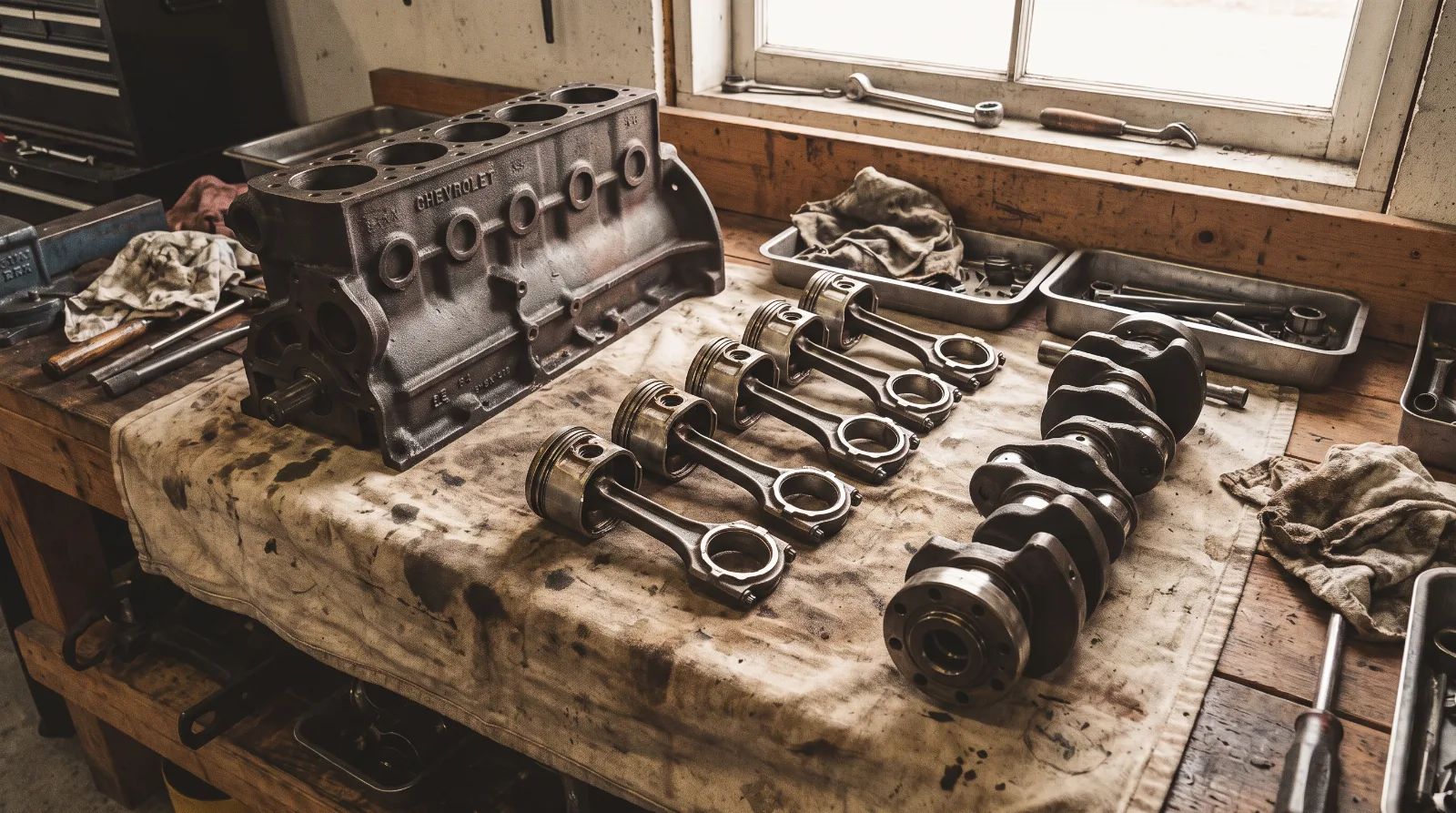
Rebuilding a Chevy 216
Rebuilding a 216 is not like rebuilding anything made after about 1955, and the difference is not the tools. It is that on most engines the botto...

The 1951 Chevrolet Apache
There is no 1951 Chevrolet Apache. The Apache name belongs to the generation of Chevrolet trucks that came after the one built in 1951, and it do...
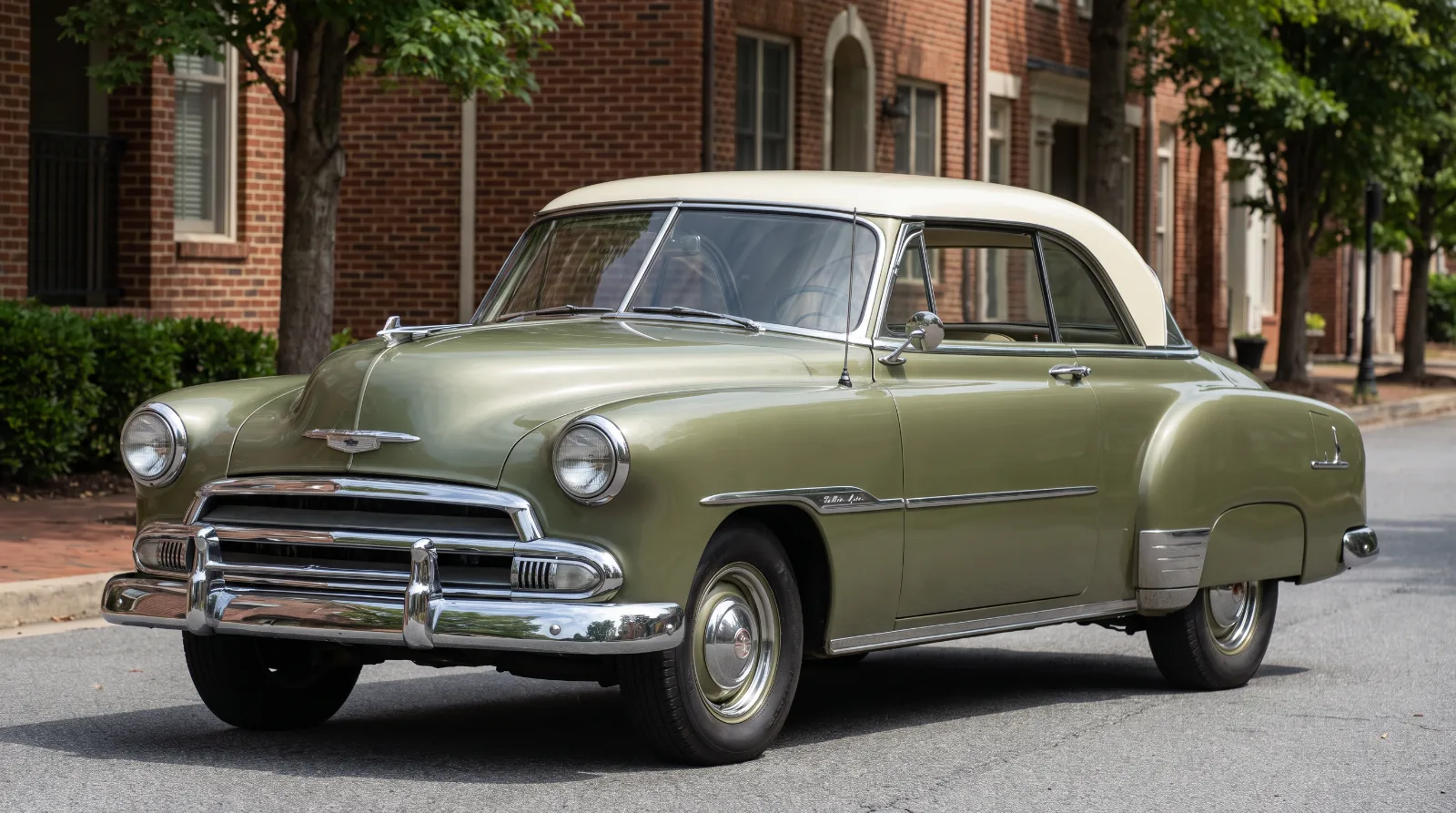
The 1951 Chevrolet Impala
There is no 1951 Chevrolet Impala. The name did not exist in 1951, the car did not exist in 1951, and nothing Chevrolet built that year was ever...