The 1951 Chevrolet Custom
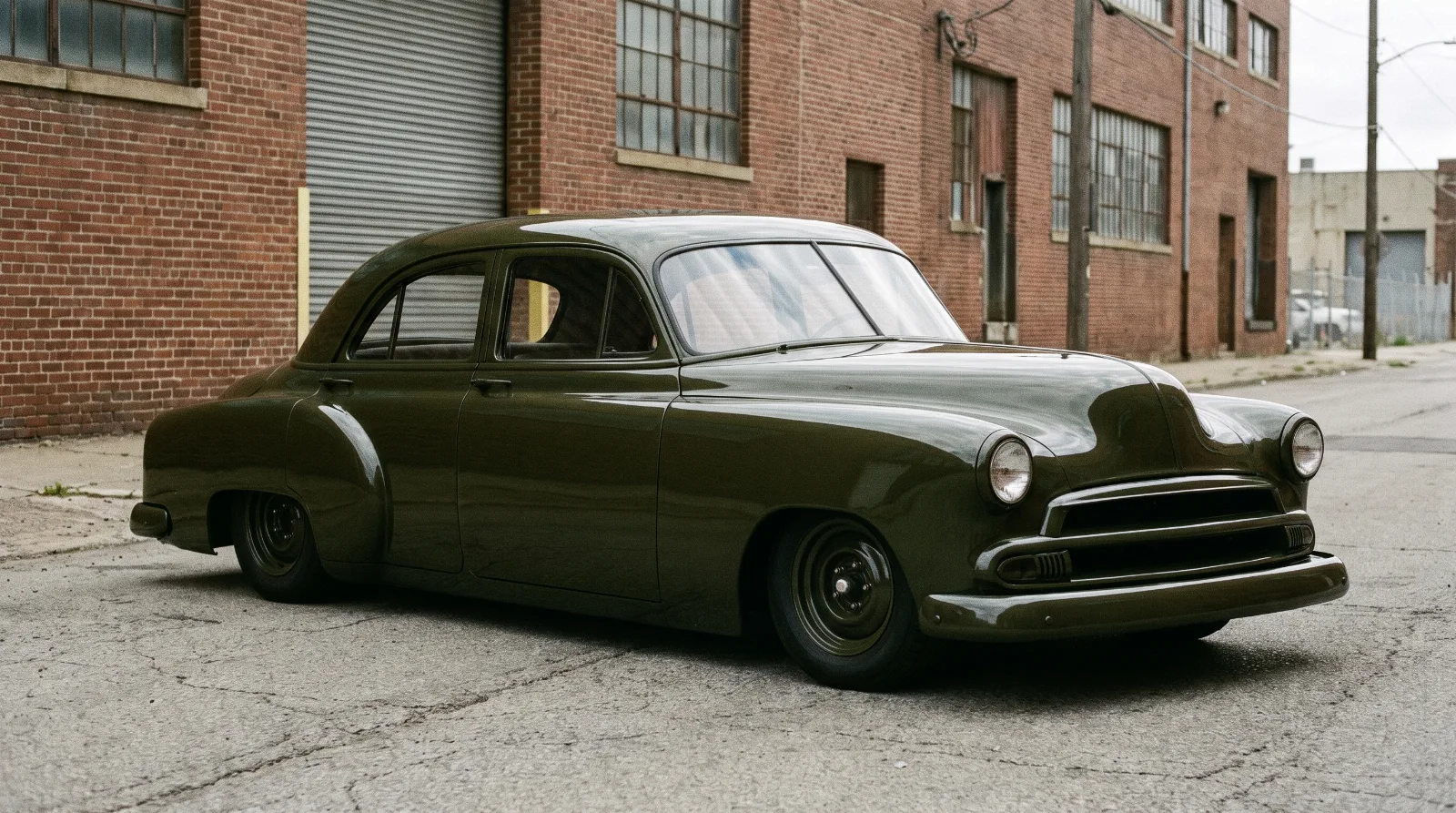
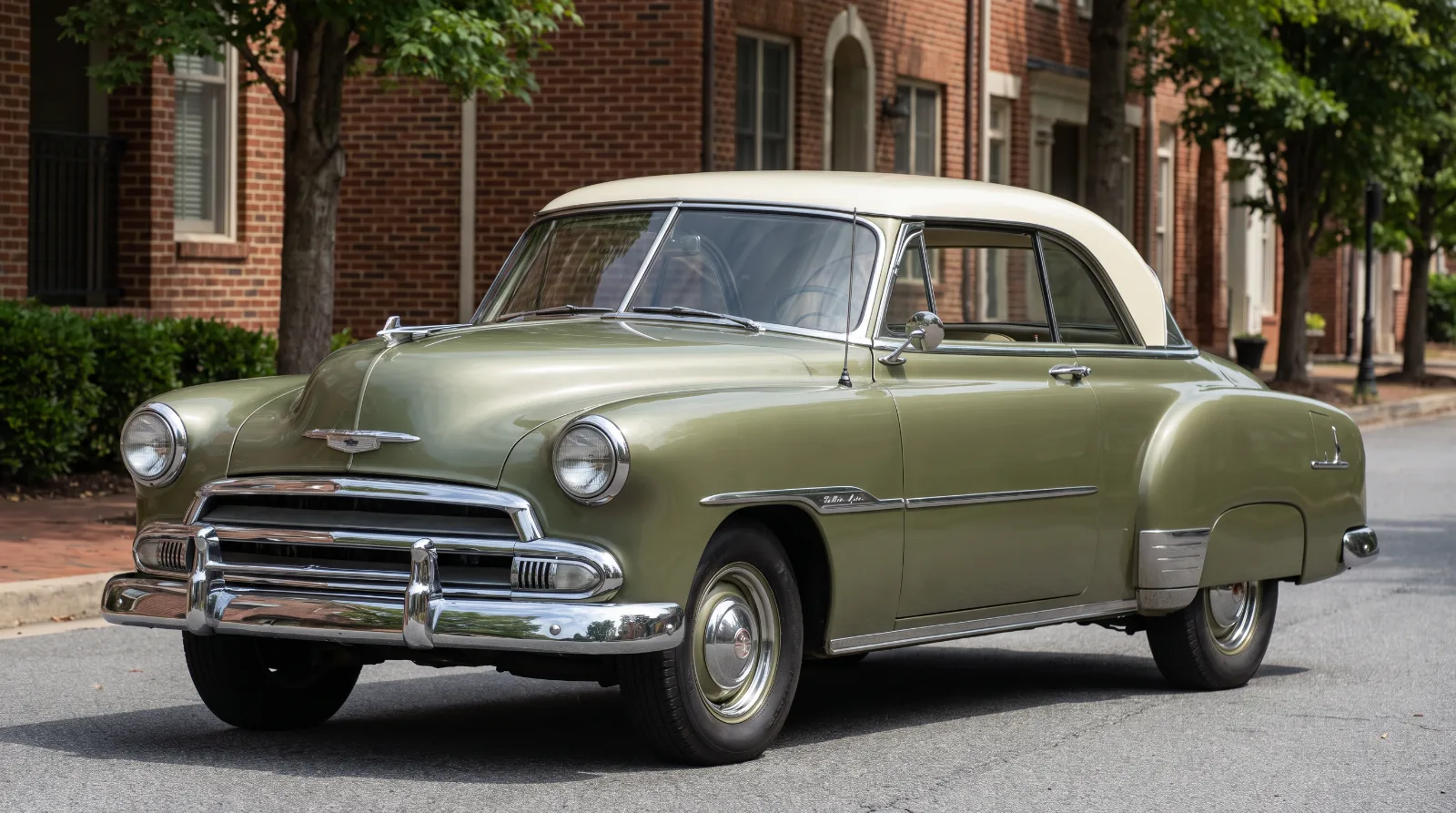
More 1951 Chevrolets have been modified than restored. That is not a complaint, it is arithmetic: Chevrolet built well over a million cars that year, they were cheap and plentiful within a decade, and every custom movement of the last seventy years has used them because they were the car you could afford to cut up.
What follows is a map of the four traditions that took this car and did something else with it, and an honest word about what each one does to what you own.
Why this car, specifically
Three reasons, and they all come from the same place. There were enormous numbers of them, so they were cheap. They shared their mechanical parts with millions of other Chevrolets, so they were easy to feed. And the bodies, particularly the Fleetline fastback, have a shape that responds well to being lowered and simplified.
That last point is the one that keeps them in demand. The fastback roof running unbroken from the windscreen to the rear bumper is a line that customisers have been working with since the early 1950s, and it is the reason the Fleetline in particular became a staple of both the custom and the lowrider scenes, lowered over wide whitewalls with skirts, spot lamps and deep lacquer.
| Tradition | Era | What it does to the car |
|---|---|---|
| Lead sled and kustom | Early 1950s onward | Chopped, lowered, trim removed, bodywork smoothed |
| Lowrider | Mid 1940s onward | Lowered, then hydraulics, paint and chrome |
| Gasser | Roughly 1958 to 1968 | Straight axle, weight stripped, big V8 |
| Rat rod | 1990s onward | Deliberately unfinished, patina kept, parts repurposed |
The four traditions
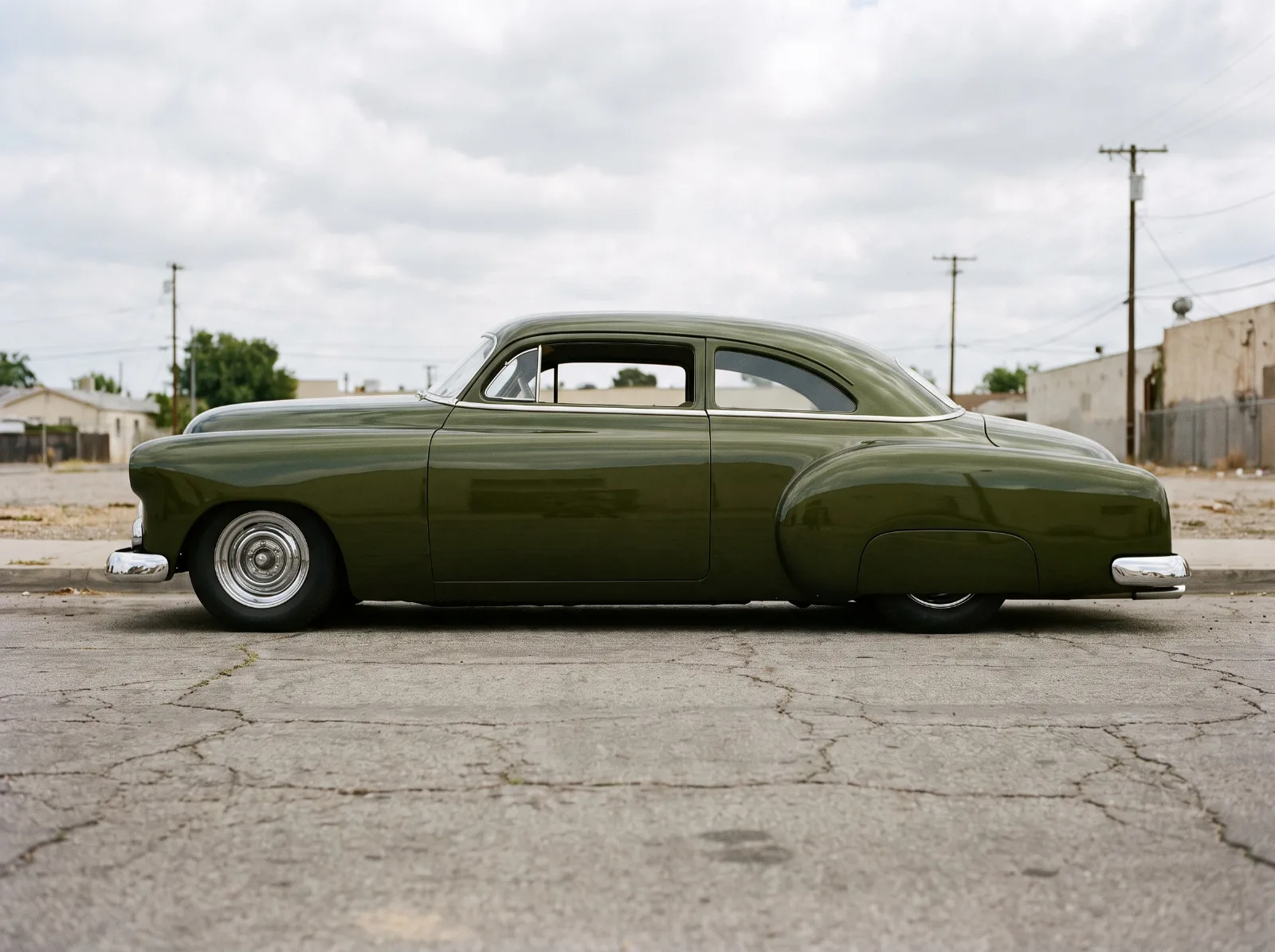
The kustom, or lead sled. The oldest of the four and the one that started while these cars were still new. Chopped roofs, lowered suspension, badges and handles removed, headlights frenched into the wings, and the seams filled with lead, which is where the name comes from. A 1951 Chevrolet restyled in period by one of the famous shops is a historic object in its own right, and the surviving examples are treated as such.
The lowrider. Older than most people assume. Mexican American youth in Southern California were lowering cars from the mid to late 1940s, and the pre 1955 cars they used are still called bombs. The early methods were crude, cut coils, lowering blocks, and bags of sand in the boot, until California outlawed cars sitting below the rim in 1958 and hydraulics arrived a year later to get round it.
The gasser. A drag racing class rather than a style, run in the NHRA gas categories through roughly 1958 to 1968. Strip the weight, fit the biggest engine the class formula allows, put a straight axle under the front to raise the centre of gravity, and launch. Everything that looks strange about a gasser is there for traction.
The rat rod. The newest, from the early 1990s, and the only one that is defined by what it refuses to do. A deliberately unfinished car, rust and original paint left alone, built from cast off parts, sometimes with things on it that were never automotive at all. It began as a reaction against expensive customs that never got driven.
"Every one of these movements started because somebody could not afford the thing everybody else wanted. Then thirty years later the thing they built by hand costs more than the thing they could not afford. Same story every time."
— Earl Dawson
Before you cut anything
The honest position is that all four of these are legitimate and the hobby would be poorer without them. But the calculation has changed since 1962, and it is worth stating plainly.
Unmodified 1951 Chevrolets are no longer common. They were once endless and they are not now, and every year the number of cars that have never been cut goes down and never up. A car that has survived seventy five years unaltered is a genuinely finite thing, and it is worth more as itself than most modifications will add.
The corollary is that a car that has already been modified is the right car to modify further. There are plenty of them, they are cheaper, and nothing is lost. If you want a lowrider, start with a car somebody already lowered in 1974 rather than with the one dry original in the county.
And whatever you do, be honest about it when you sell. A well built custom sold as a custom is a good thing. A custom sold as an original is how people end up in arguments.
Check this first
- Whether the car has already been modified. It decides whether you are continuing something or starting it.
- What the frame has had done to it. Drilled, cut, Z'd or boxed, and it is not always visible from above.
- Which tradition you actually want. They pull in opposite directions and mixing them satisfies nobody.
- Whether the work already done was any good. Undoing somebody else's bad chop is worse than starting fresh.
- What is left of the original parts. Trim, glass and brightwork removed in 1968 is rarely still in the boot.
- What you want at the end. Answer that before you buy, not after.
Where this fits
Each tradition gets its own page. The lowered car is in the 1951 Chevrolet lowrider, with the fastback version in the Fleetline lowrider. The drag racing side is in the gasser and the modern reaction is in the rat rod. The engine question that runs through all of them is in the V8 swap. The car they all start with is in the standard car, the shape they favour is in the fastback body, and the chassis underneath is in the 1951 chassis.
Sources and notes
- 1949-1952 Chevrolet Styleline and Fleetline, specs and history, Motogallery - the Fleetline fastback as a staple of the custom and lowrider scenes, lowered over wide whitewalls with skirts, spot lamps and deep jewel tone lacquer, alongside the Styleline notchback family and the shared six cylinder drivetrain.
- Lowrider, Wikipedia - lowriding beginning in the mid to late 1940s among Mexican American youth, the low and slow ethos set against hot rod culture, production cars from the 1930s to early 1950s known as bombs, the lowering blocks, cut spindles and shortened springs, and the 1958 California Vehicle Code section 24008 followed by Ron Aguirre's hydraulic pumps in 1959.
- What is a gasser, Speedway Motors - the name coming from the NHRA gas coupe and sedan classes of the 1950s and 1960s, the weight divided by displacement formula, the straight axle raising the centre of gravity to transfer weight to the slicks, and the era running from roughly 1958 to 1968.
- Rat rod, Wikipedia - the deliberately worn and unfinished car built from cheap or cast off parts, the term coined in the early 1990s and popularised in 1998, the range of finishes from primer to bare metal and natural patina, and the reaction against expensive customs that were seldom driven.
- A brief history of lowriders, CarParts - the Southern California origin with claims from Tijuana, Texas and New Mexico, the post war 1940s and 1950s emergence, the bricks and bags of sand and cement in the boot, and the 1958 law followed by Pesco hydraulics in 1959.
- 1951 Chevrolet De Luxe Series, conceptcarz - the De Luxe line alone totalling 1,064,896 cars for 1951, which is why these were cheap and plentiful within a decade.
More from the garage
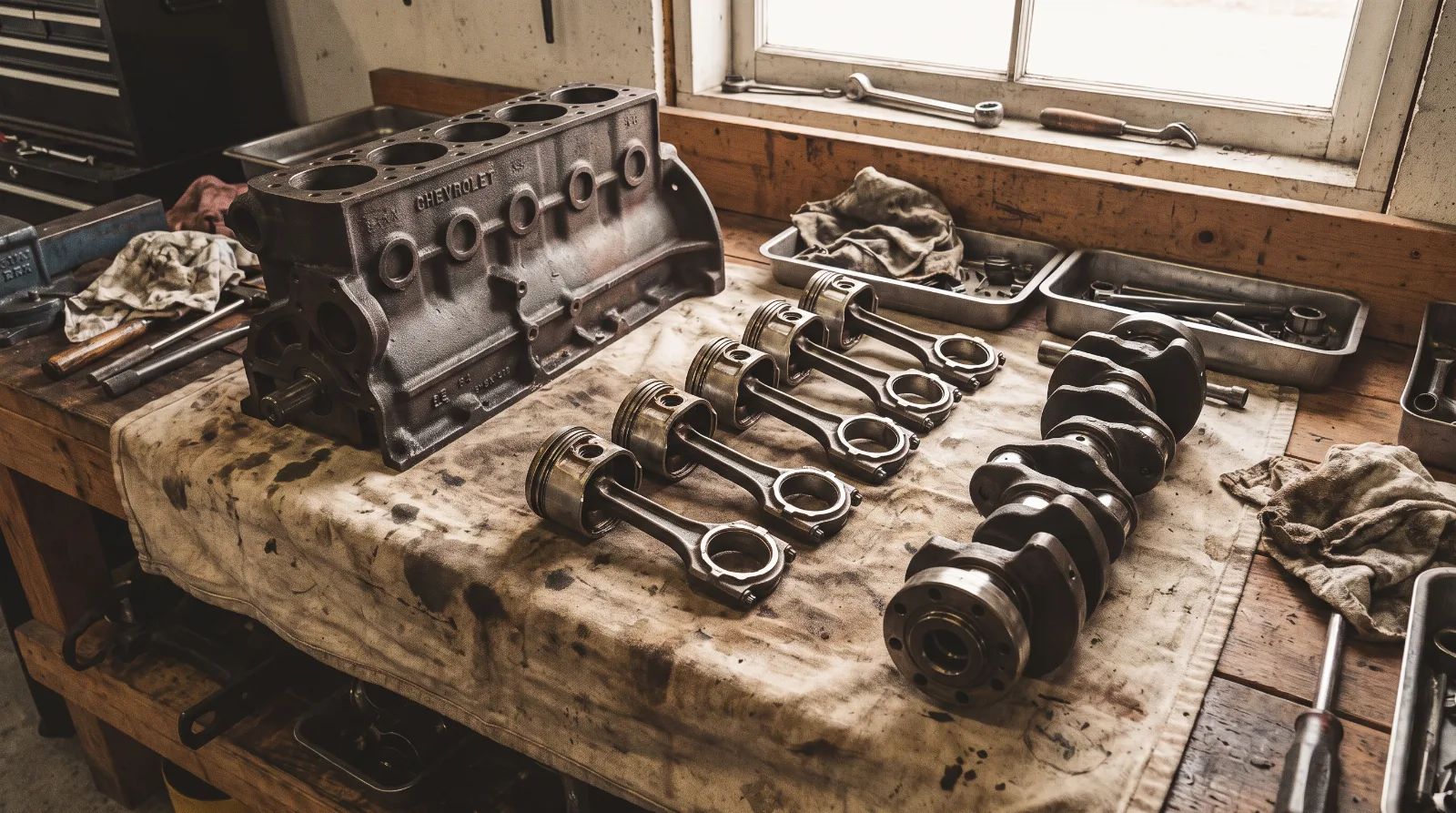
Rebuilding a Chevy 216
Rebuilding a 216 is not like rebuilding anything made after about 1955, and the difference is not the tools. It is that on most engines the botto...
The 1951 Chevrolet Apache
There is no 1951 Chevrolet Apache. The Apache name belongs to the generation of Chevrolet trucks that came after the one built in 1951, and it do...
The 1951 Chevrolet Impala
There is no 1951 Chevrolet Impala. The name did not exist in 1951, the car did not exist in 1951, and nothing Chevrolet built that year was ever...