1951 Chevrolet 5 Window Pickup
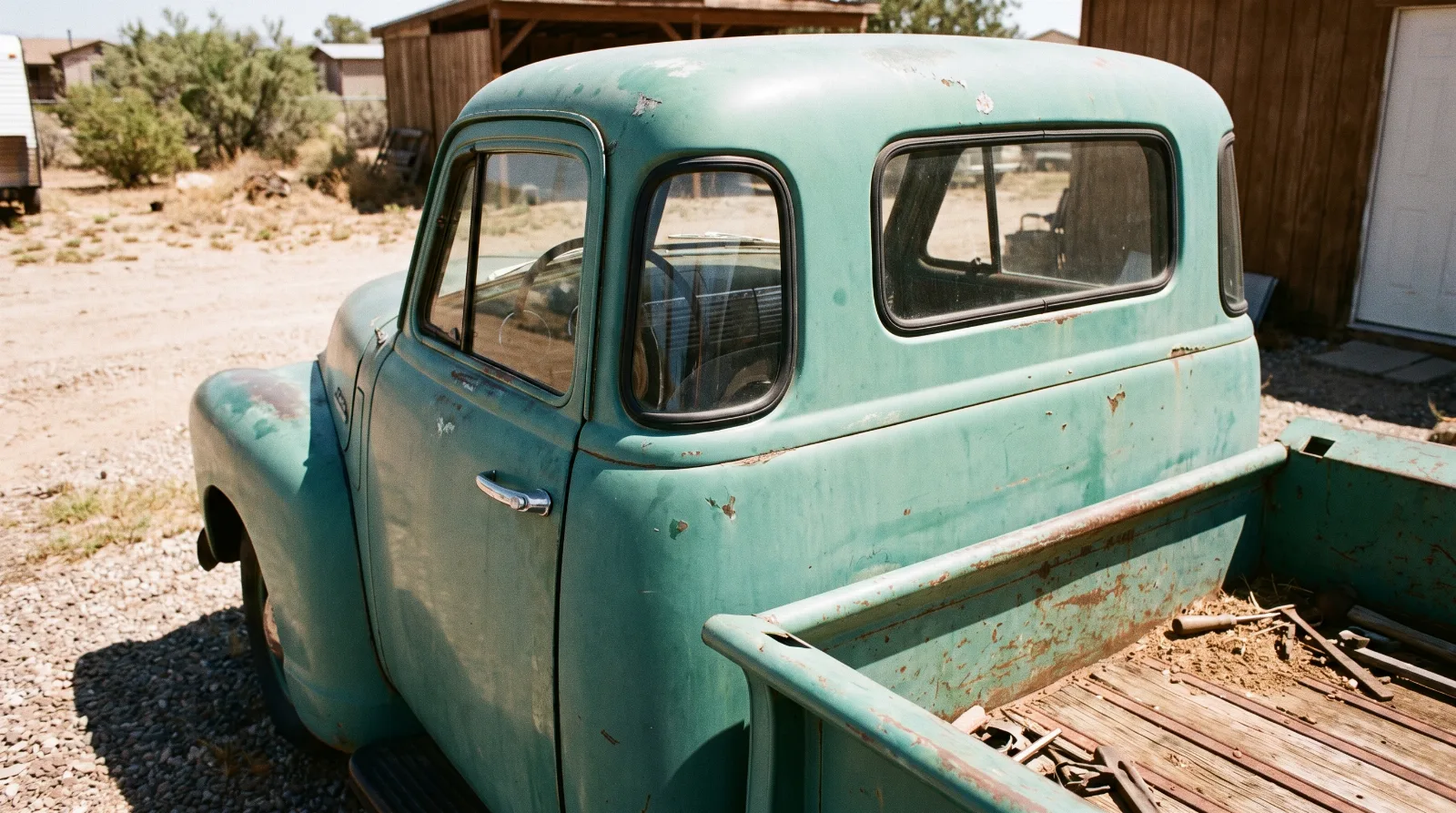
A 1951 Chevrolet five window pickup is not a different truck from a 1951 Chevrolet pickup. It is the same truck with an option box ticked, and the option was called the Deluxe Cab. Understanding that one sentence will save you money, because plenty of people are paying for a model that never existed.
What the option added was a pair of curved glass panes in the back corners of the cab. Chevrolet marketed them as Nu-Vue rear corner windows. They filled in the blind spot over your shoulder, they made a small cab feel a great deal less like a box, and seventy-five years later they are worth a premium that would have astonished the man who ticked the box.
Count the windows properly
This is where most of the arguments start, so let us settle it. The windshield does not count. On a truck of this era the window count means the glass around you, not the glass in front of you.
| Cab | Windows counted | Total |
|---|---|---|
| Standard cab | Two door windows, one rear window | Three |
| Deluxe Cab | Two door windows, one rear window, two Nu-Vue corner windows | Five |
So a three window and a five window are the same cab shell with two extra openings cut and glazed. The windshield on both is the split two-piece unit that Chevrolet used right through until the one-piece curved screen arrived for 1954.
The Deluxe Cab was available across the Advance Design run, from 1947 through to the early part of 1955, and it was always an option and never standard. That is why so few of them exist relative to the number of trucks built, and it is why the corner glass is worth what it is.
Proving it is a 1951
Advance Design trucks all look alike to somebody who has not spent time around them, and sellers are frequently wrong about the year in complete good faith. Here is the short list I use, and it works without a single document.
Doors. Two-piece glass with a vent window and a turndown outside handle you press with your thumb. A 1950 has one-piece door glass and no vent. A 1952 has the vent window but a push-button handle.
Speedometer. A 1951 reads to 80 miles an hour. From 1952 it reads to 90.
Knobs. 1951 is the last year for the chrome inside window handle knobs and the chrome wiper knob. For 1952 they went maroon.
Cowl vent. 1950 was the last year for the driver's side cowl vent. A 1951 has only the vent on top of the cowl.
Bed boards. Chevrolet went from a nine-board floor to an eight-board floor partway through 1951, so an early and a late 1951 do not have the same count and neither is wrong. If a seller tells you the bed is incorrect because it has the other number, ask which half of the year the truck was built in before you believe him.
"The corner windows are the first thing anybody sees and the last thing anybody checks. I have watched a man pay a five window premium for a truck with two panes of the wrong glass siliconed into holes somebody cut with a grinder."
— Earl Dawson
The trap in the corner glass
Because a five window is worth more than a three window, and because the cab shell underneath is identical, people cut them. It has been going on for decades. A cab with holes cut in the corners is not a Deluxe Cab, it is a standard cab with holes cut in the corners, and it is worth less than the plain truck it started as.
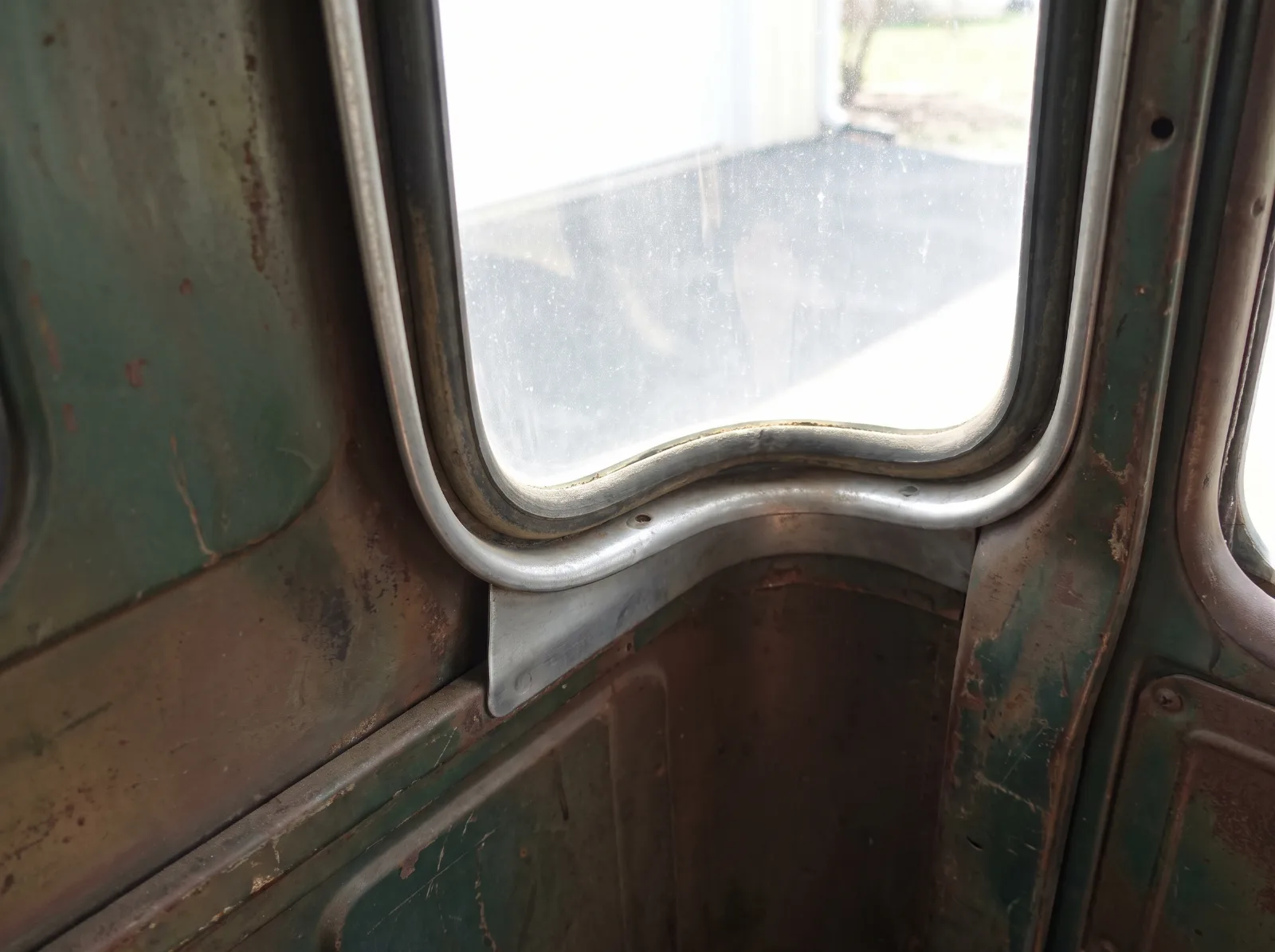
What tells you the difference is the metalwork around the opening, not the glass. A factory opening has a pressed return around its edge that the seal sits in, and the shape of that return is consistent. A cut opening usually has a raw edge, a bead of sealant doing the work the seal should be doing, and often a slightly different curve on each side. Get your hand inside the cab and feel the back of the opening. You will know within a few seconds.
Check this first
- Both corner openings from inside the cab. Feel the pressed return around the edge. Raw metal and sealant mean somebody made this a five window with a grinder.
- The corner glass itself. It is curved and it is a specific part. Cracked or missing is a genuine search, and it is most of the reason people fit flat glass and hope.
- Cab corners and the cab mounts. The classic Advance Design rot. A cab that has dropped off its mounts throws every panel gap out and no amount of filler fixes it.
- The cab floor and the metal under the rear cab wall. Water comes past the rear window seal and sits there. On a five window there are two more seals letting it in.
- Door bottoms, and whether the doors are 1951 doors. A 1951 door carries a vent window and a turndown handle together. A 1952 door has the vent and a push button, so it is not a straight swap unless somebody has already mixed the handles.
- Bed cross sills under the wood. New boards on rotten sills is the oldest trick in this corner of the hobby. Look under the floor, not at it.
What it costs and whether it is worth it
A genuine Deluxe Cab commands a premium over a standard cab in the same condition, and it always will, because the supply was fixed in 1955 and the demand keeps growing. Whether that premium is worth paying depends entirely on the glass and the seals.
A five window with good corner glass and sound openings is a better truck than a three window and worth the money. A five window with cracked panes, hardened seals and rot in the corners is a worse truck than a plain one, because you have all the standard Advance Design work to do plus two more openings to make watertight, and the parts for those two openings are the expensive ones.
Which chassis is under it
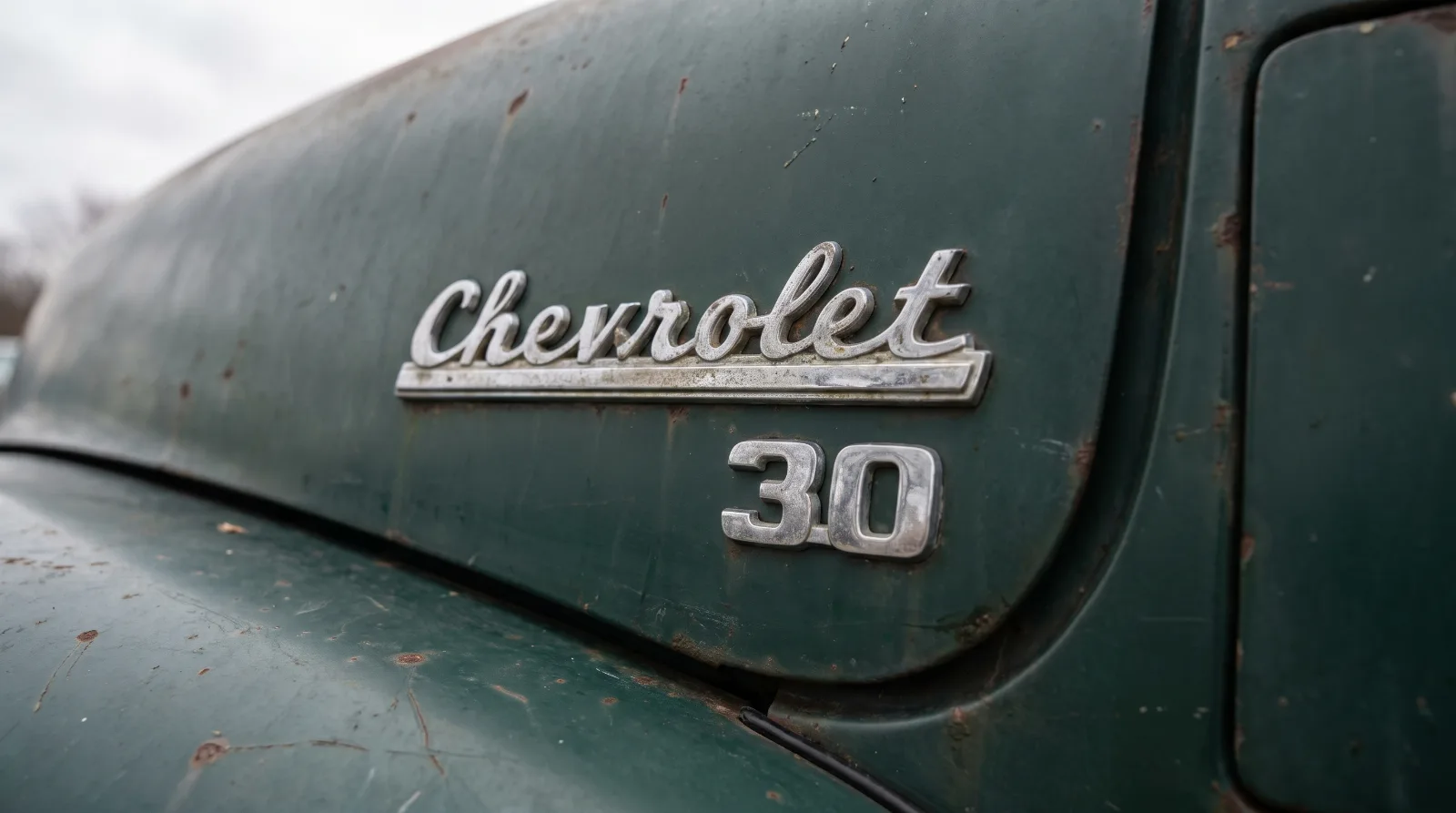
The Deluxe Cab was a cab option, so it could sit on any of the three light chassis. The hood badge tells you which: 3100 is the half ton on a 116 inch wheelbase, 3600 is the three-quarter ton on 125 and a quarter, 3800 is the one ton on 137 inches. Most five windows you meet are 3100s, because that is the truck people wanted to dress up, but a five window 1951 Chevrolet 3600 exists and is a genuinely useful thing to own.
The engine under all of them is the 216.5 cubic inch six, and there is no automatic in a 1951 truck at all. The half ton chassis this cab normally sits on is the half ton. The broader picture of what Chevrolet built that year, cars and trucks together, is in the car itself, and the full year-by-year account of the truck line is in the year-by-year truck guide. If what you want has no bed on it at all, the closed bodies are in the 1951 panel truck.
Sources and notes
- What are Chevy 5-window pickup trucks and which years were they made, SlashGear - five windows counted excluding the windshield, the three window having a single rear window, the Deluxe Cab as an option rather than standard equipment, and its availability from 1947 to early 1955.
- 1951 Chevy 3100 restored 5-window, Classic Industries - the Deluxe Cab option introduced with the Advance Design series and its pair of curved Nu-Vue corner windows at the back of the cab.
- 1947-1959 Chevy truck model years identification guide, Classic Industries - 1951 as the only year with vent windows together with turndown exterior handles, the 80 mph speedometer against 1952's 90, the last year for chrome window and wiper knobs, and the mid-year nine-board to eight-board bed change.
- Comprehensive history of the 1947-1955 first series Advance Design, DevesTechNet - the 1950 to 1951 change from one-piece door glass to two-piece with vent windows, the driver's side cowl vent discontinued for 1951, and the JP, JR and JS series with their 116, 125.25 and 137 inch wheelbases.
- 1950-1958 Chevrolet model series identification, The Old Car Manual Project - the 1951 truck series letters and wheelbases as the factory listed them.
- Chevrolet Advance Design, Wikipedia - the 1947 to 1955 run, the 216 cubic inch six through 1953, three and four-speed manual transmissions only until 1954, and Chevrolet trucks leading United States sales throughout the period.
More from the garage
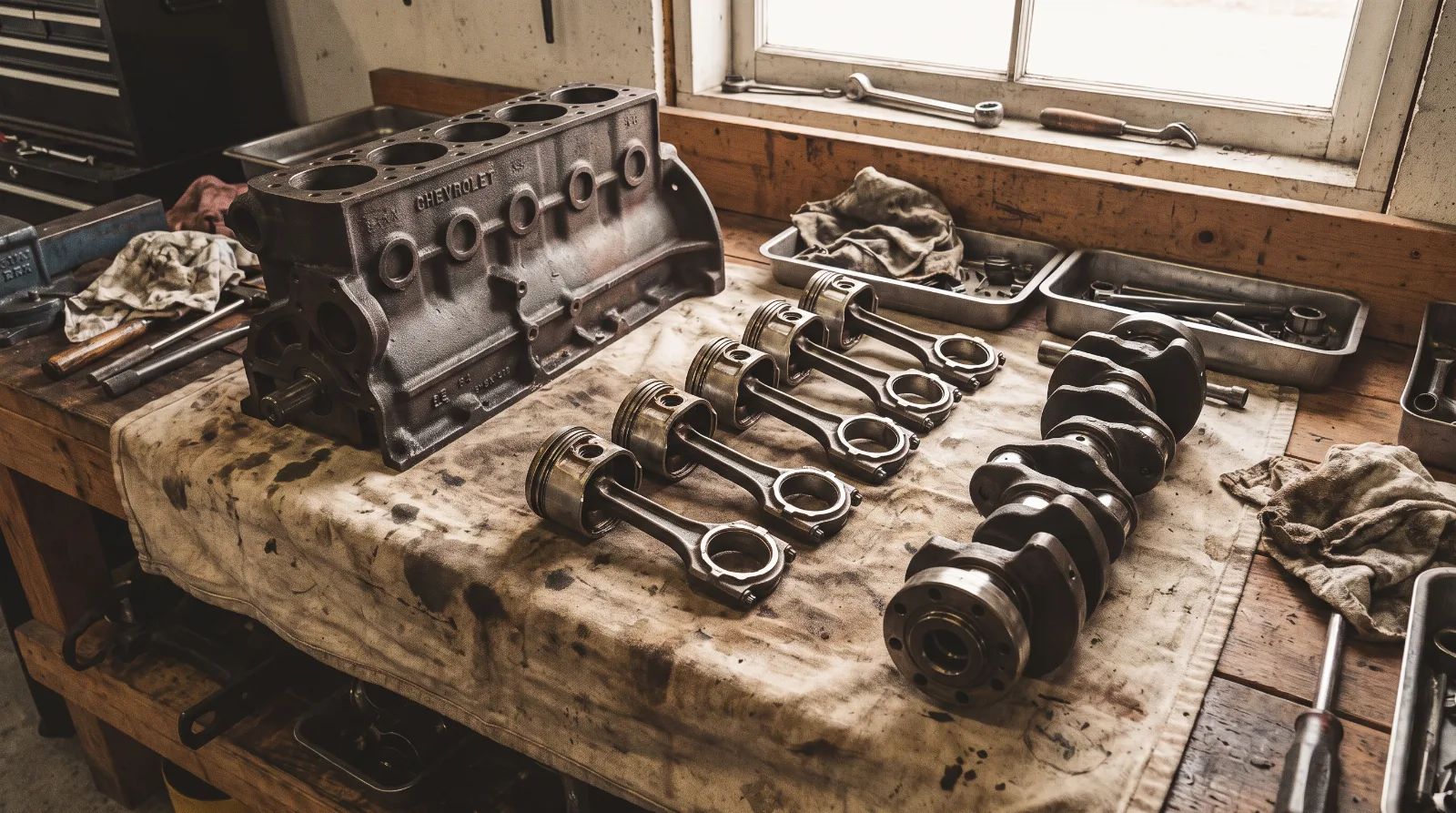
Rebuilding a Chevy 216
Rebuilding a 216 is not like rebuilding anything made after about 1955, and the difference is not the tools. It is that on most engines the botto...
The 1951 Chevrolet Apache
There is no 1951 Chevrolet Apache. The Apache name belongs to the generation of Chevrolet trucks that came after the one built in 1951, and it do...
The 1951 Chevrolet Impala
There is no 1951 Chevrolet Impala. The name did not exist in 1951, the car did not exist in 1951, and nothing Chevrolet built that year was ever...