Rebuilding a Chevy 216
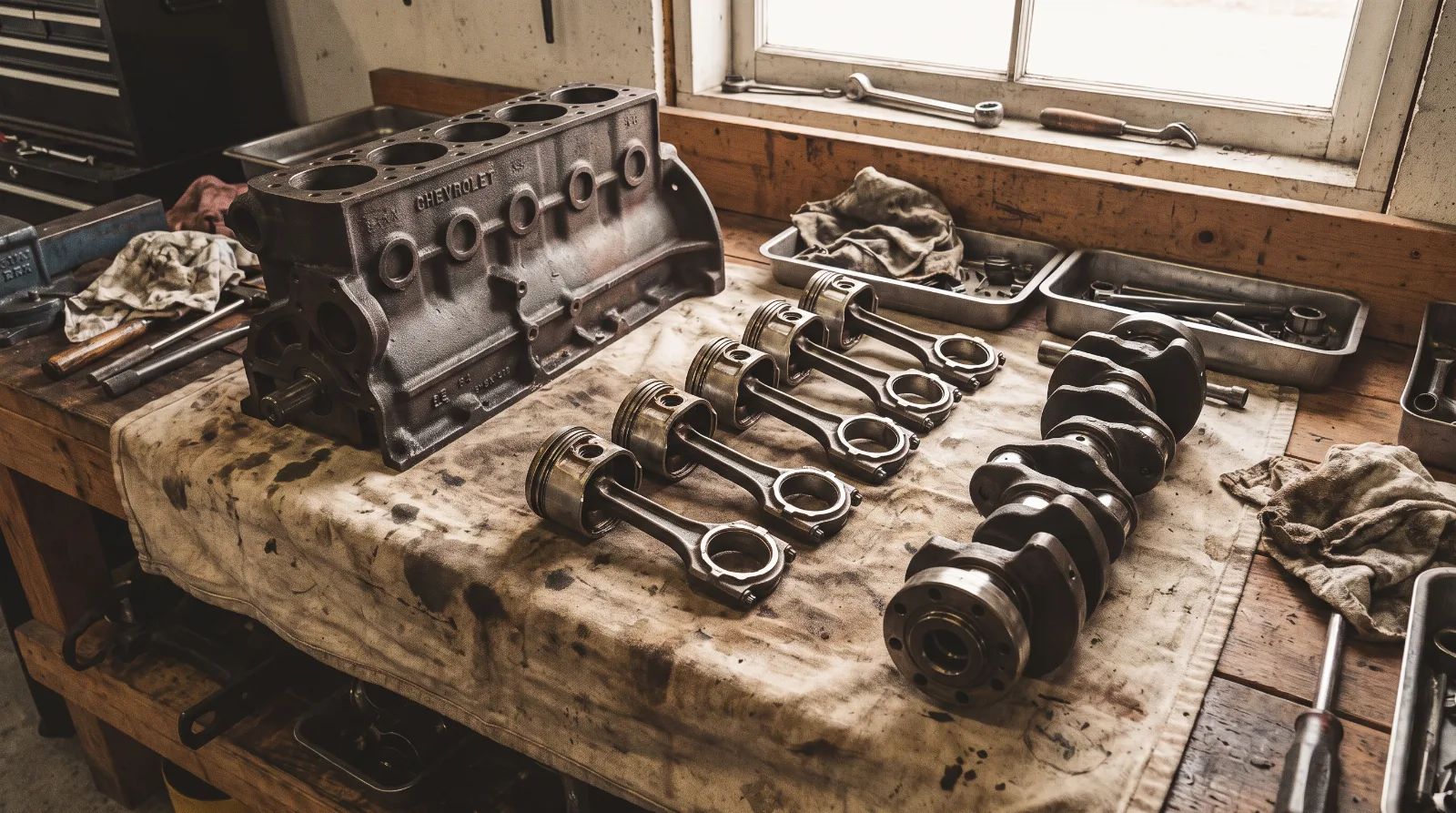
Rebuilding a 216 is not like rebuilding anything made after about 1955, and the difference is not the tools. It is that on most engines the bottom end is a shopping exercise, and on this one it is not. The rod bearings are babbitt cast into the connecting rod. You cannot order a set in a box. That single fact decides the shape of the whole job, the cost of it, and who does which part.
So before anything comes apart, work out which of three jobs you are actually doing. They are very different amounts of money.
Three jobs, not one
| Job | What it is | When it is the right call |
|---|---|---|
| Shim and hone | Take copper shims out from between the rods and their caps, pull the clearance back into range, hone the bores, new rings | The engine runs, the crank is standard, the shims are still there to remove |
| Full rebuild | Crank ground, rods rebabbitted and line bored to the new size, bores bored, new pistons, valve job | Knocking, low compression, an engine that has already been shimmed to the end of its adjustment |
| Swap | Fit a later full-pressure 235 instead | You want a highway car and are honest about it not being original |
The middle one is the real rebuild and the one this page is about. The first is a service, and there is nothing wrong with it if the engine has the adjustment left. The third is covered at the end.
Finding somebody who still rebabbitts
This is the part that catches people, so deal with it first. Ring round and find a machine shop that pours babbitt and line bores rods before you take the engine apart. Not after. There are fewer of these shops than there were, they are not always local, and the ones that do this work well have a queue.
What you are asking for is: the old babbitt melted out, new poured, then the rod bored to match the journal size your crank ends up at. Which means the crank has to be ground first, or at least measured and a target size agreed, because the rods are made to fit the crank rather than the other way round. Get that sequence wrong and you will pay for the rods twice.
"On a modern engine you measure the crank and then buy the bearing to suit. On a 216 you grind the crank and then have the bearing made to suit. Same result, completely different phone calls, and one of them takes six weeks."
— Earl Dawson
The order of work
Nothing exotic here, but the sequence matters more than usual because of the rods.
Check this first
- Establish which engine you have. Block casting numbers. A great many 1951s are running a later six, and if yours is one of them this whole page is the wrong page.
- Measure the crank before you commit. Journal size against the standard 2.311 to 2.312 inches. If it has already been ground, that changes the rod job and the price.
- Book the machine shop. Rods and crank together, in that order of decision, before the car is off the road.
- Check the bores and the ridge. Whether you are honing or boring decides whether you are buying rings or pistons.
- Look at the oil trough and the nozzles. A blocked nozzle or a distorted trough starves a rod no matter how well the bearing was poured. This is the part of the job nobody photographs and everybody should.
- Valve seats and guides. Sixty years of leaded fuel then thirty of unleaded. Have the seats looked at while the head is off, because it is never cheaper later.
Beyond the bottom end it is an ordinary old six. Timing gear, water pump, oil pump, fuel pump, carburettor kit, gaskets throughout: all of it is on the shelf and none of it is expensive. That is genuinely the good news about these engines and it is why so many survive.
What to change while you are in there
A short list, because most of what people want to change on a 216 is not worth changing.
Worth doing. A full-flow oil filter conversion if the engine does not have one, because clean oil going into the trough is clean oil reaching the dippers. New core plugs, since you will not want to chase one later. A rebuilt distributor and a new coil, matched to six volt.
Not worth doing. Chasing compression. The head can be shaved, and the engine will still be an engine designed around 6.5 to one, and you will have moved the goalposts on fuel for very little. Fitting a modern multigrade oil on the assumption it is better. Fitting an oil pressure gauge with a big face and then worrying about what it says.
Decide deliberately. Six volt or twelve. If the car is otherwise original, keep six and sort the cables properly instead. If you have already gone the other way, the whole job is laid out in converting to twelve volt.
Or fit a later 235 instead
This is the most common modification made to a 1951 Chevrolet and it has been for sixty years. The full-pressure 235 arrived in 1953 on Powerglide cars and in 1954 across the board, with insert bearings, aluminium pistons and oil fed properly to the rods. It bolts in, it looks close enough that most people never notice, and it turns the car into something you can drive at highway speed without counting the miles.
It also stops being an original car, and you should say so when you sell it. Which 235 you want and how to tell the two apart is in how to identify a 235, and what the rebuild looks like on that engine is in rebuilding a 235.
If you are still deciding, the case for keeping what Chevrolet fitted is in the Stovebolt 216, and every figure you will need on the bench is in every number for the 216. Where this engine sits among the choices for the year is in the 1951 engines, and for where engine work belongs in the order of a whole car, see the guide to restoring one.
Sources and notes
- Chevrolet Stovebolt engine, Wikipedia - rod bearings of babbitt cast integral with the connecting rod and adjusted for wear by copper shims between rod and cap, and the oil trough with spray nozzles feeding rod dippers rather than a pressure circuit.
- Stovebolt 6 engine history and information, Restore An Old Car - no pressurised rod journal oiling on the 216, the reputation of its babbitt bearings, every pre-1953 engine splash-oiled, and what the later 235 brought: stronger crank and rods, aluminium pistons and full-pressure lubrication.
- Chevrolet 216 specs, It Still Runs - rod journal 2.311 to 2.312 inches, bearing clearance 0.0010 to 0.0025 inch, side play 0.004 to 0.007 inch, rod bolt tension 35 to 45 lb-ft and the quoted 14 psi oil pressure.
- 1947-55 Chevrolet GMC Advance Design trucks, Jim Carter Truck Parts - the breadth of the reproduction and used parts supply for these engines, and how readily these vehicles accept a later engine.
- 1947-1959 Chevy truck model years identification guide, Classic Industries - 1953 as the last year for the 216 babbitt bearing engine, and the high-pressure insert-bearing 235 arriving for 1954.
- Secrets of the Chevy Powerglide 1950-73, Mac's Motor City Garage - the 235 with hydraulic lifters at 105 horsepower supplied alongside Powerglide against the standard 216.5.
More from the garage
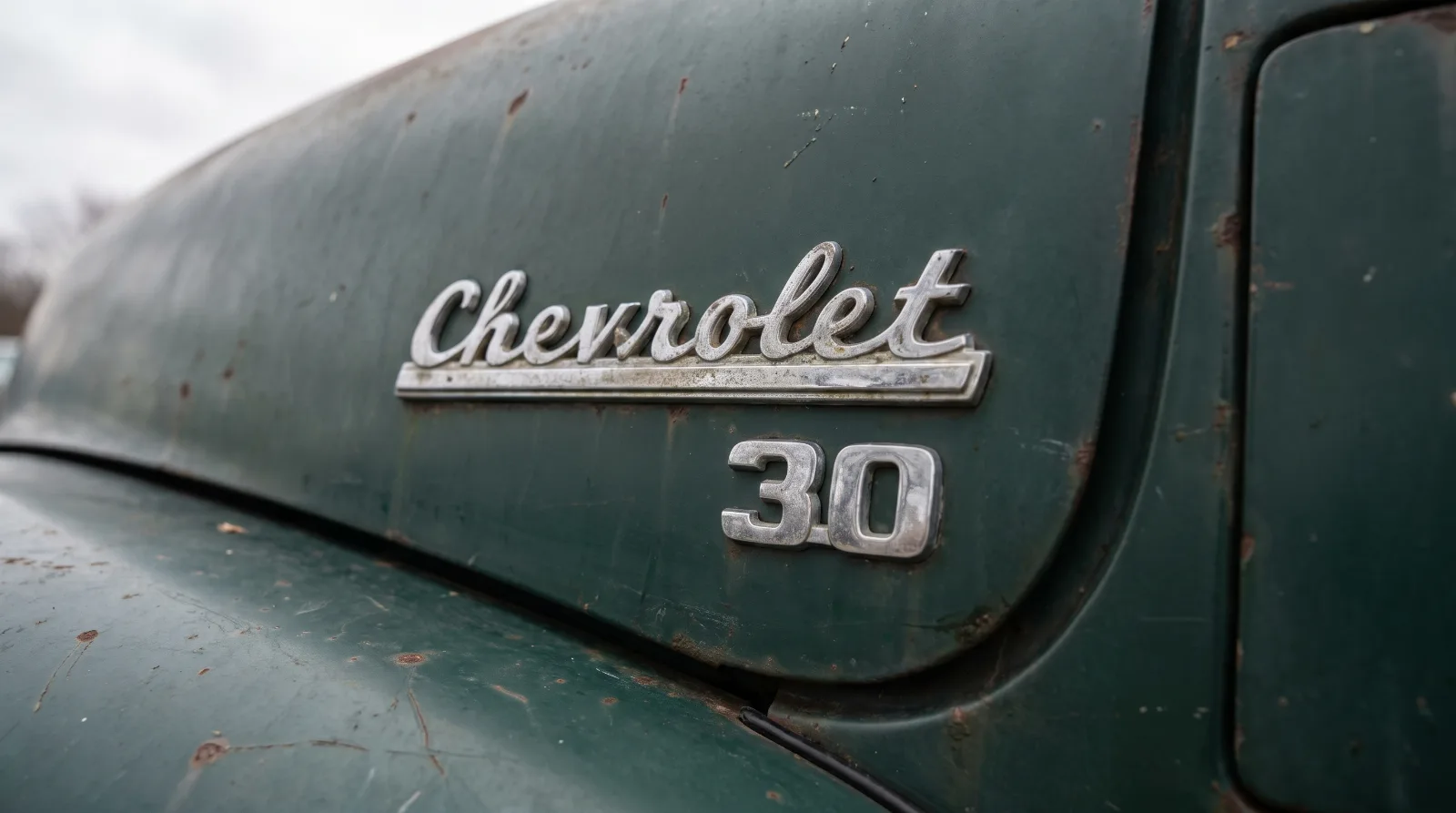
The 1951 Chevrolet Apache
There is no 1951 Chevrolet Apache. The Apache name belongs to the generation of Chevrolet trucks that came after the one built in 1951, and it do...
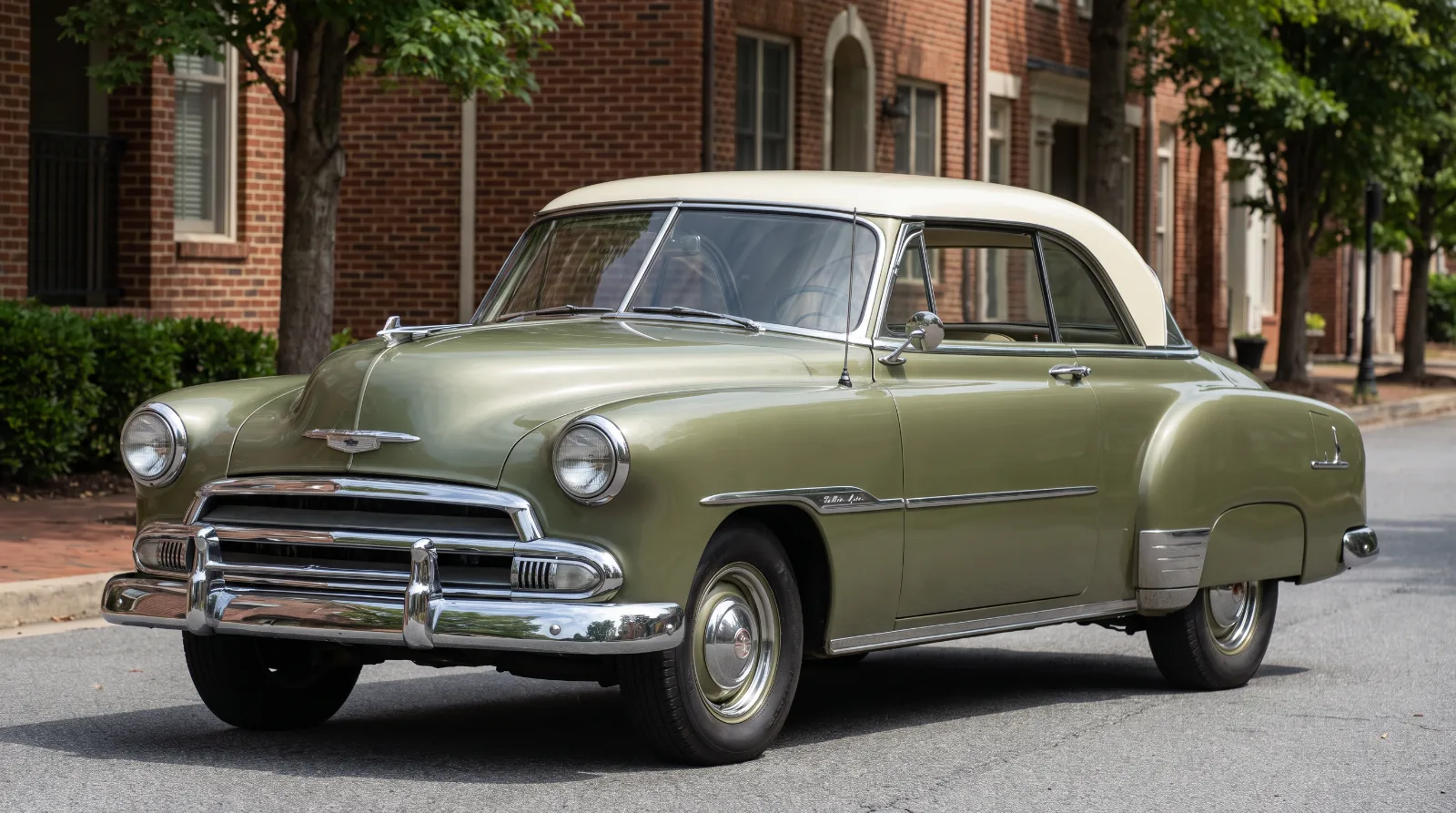
The 1951 Chevrolet Impala
There is no 1951 Chevrolet Impala. The name did not exist in 1951, the car did not exist in 1951, and nothing Chevrolet built that year was ever...
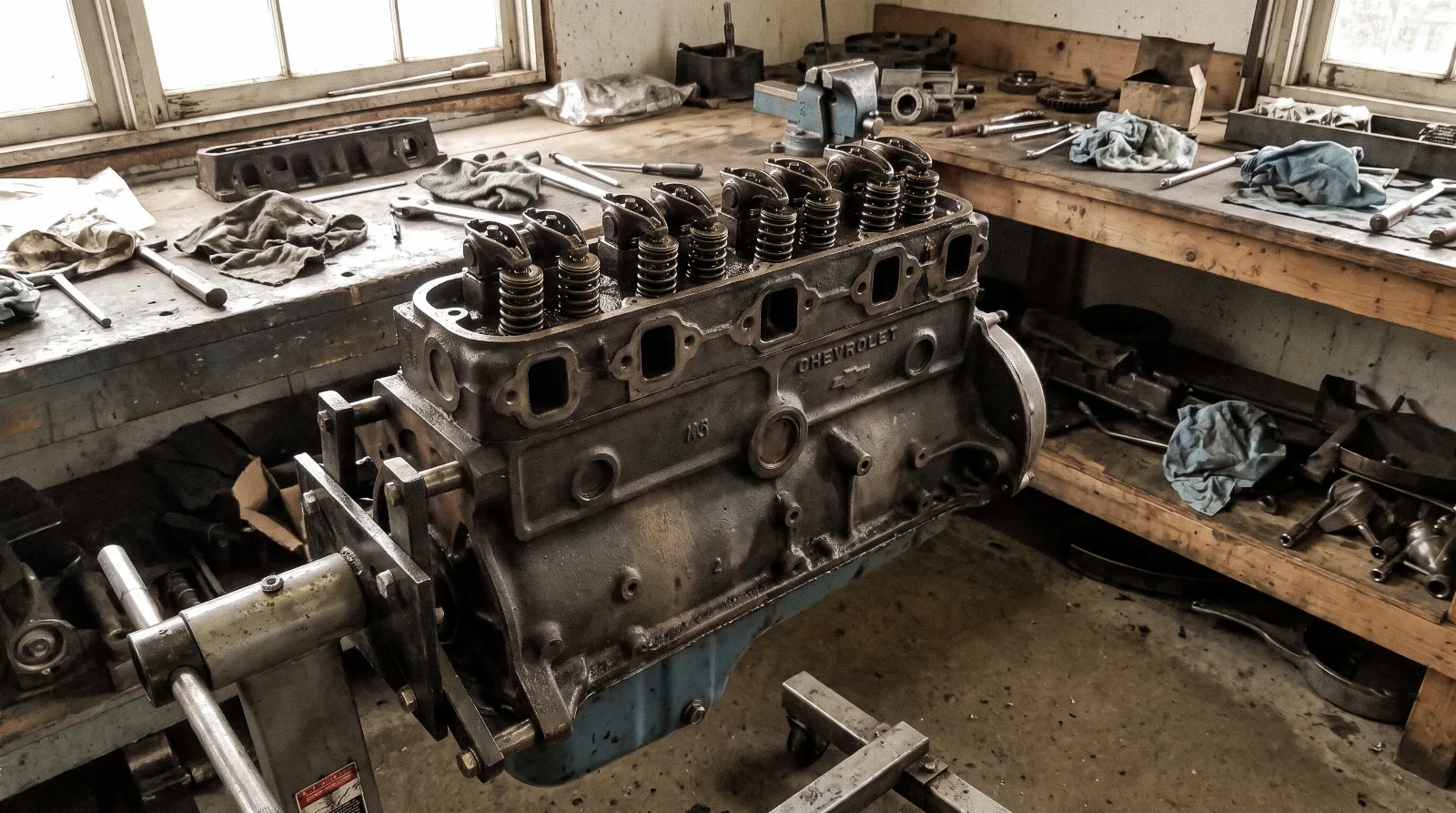
Chevy 216 Engine Specs
This is the page I keep in the toolbox. Not the history, not the argument about whether the 216 or the 235 is the better engine, just the numbers...