The Chevy 216 Engine
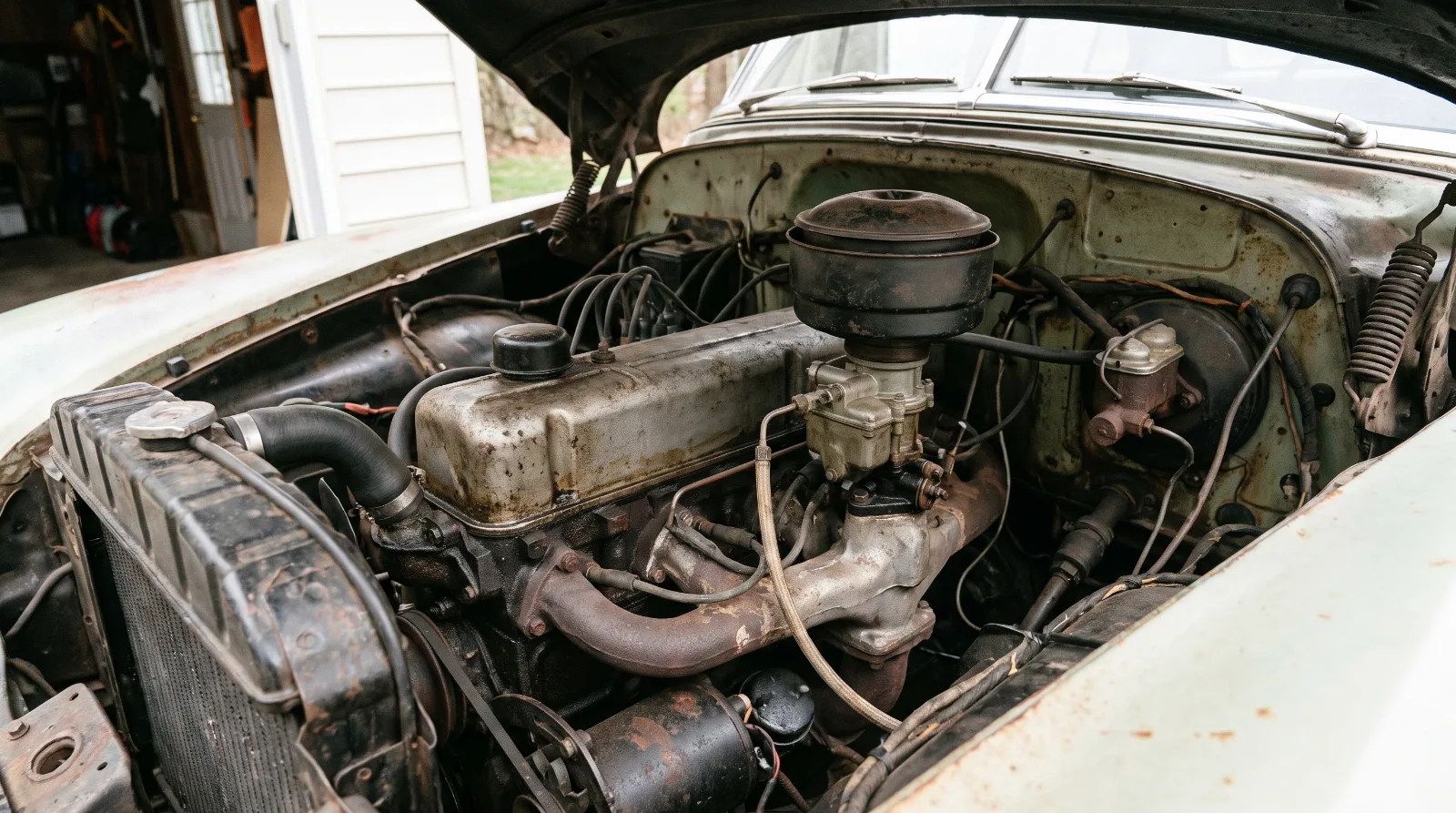
Here is the thing most people get wrong about a 1951 Chevrolet. They see Stovebolt six, they read about the 235, and they assume that is what is under the hood. It usually is not. Unless the car left the factory with Powerglide, the engine in a 1951 Chevrolet is the 216, and the 216 is a different animal from the 235 in the one way that matters most: how it oils its bearings.
I have had my hands inside more of these than I can count, and I have never had one let me down that was not asked to do something it was never built for. But you have to understand what it is before you can look after it, so let us go through it properly.
What the 216 actually is
An overhead-valve inline six of 216.48 cubic inches, bore three and a half inches, stroke three and three-quarters. Chevrolet built it from 1937 to 1953. Compression is somewhere between 6.25 and 6.6 to one depending on the year, which tells you everything about the fuel it was designed to drink.
| Years | Power | Torque | Name on the paperwork |
|---|---|---|---|
| 1937-1940 | 85 hp @ 3,200 | 170 lb-ft @ 1,200 | n/a |
| 1941-1948 | 90 hp @ 3,300 | 174 lb-ft @ 1,200-2,000 | Thriftmaster in the trucks |
| 1949-1953 | 92 hp @ 3,400 | 176 lb-ft @ 1,000-2,000 | Thrift-Master |
Look at where that torque arrives. A thousand revolutions per minute. This is an engine that does its work down where you actually drive, and that is why a 92 horsepower car with a three-speed box is perfectly pleasant to potter about in. It was never fast. It was never trying to be.
The oiling system, which is the whole story
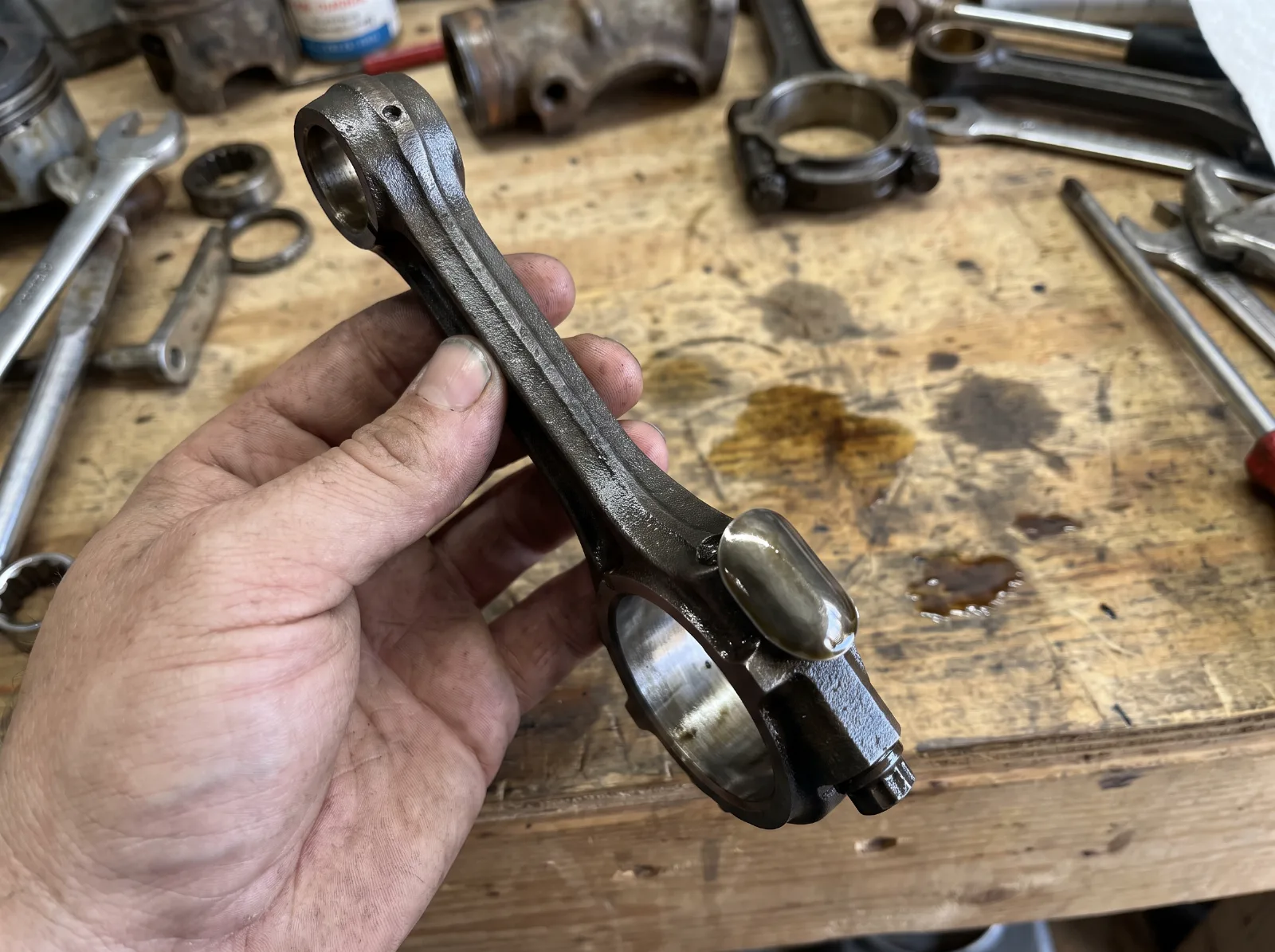
The 216 does not have a pressure feed to its connecting rod bearings. What it has instead is a trough cast into the oil pan with spray nozzles pointed at it, and a dipper hanging off the bottom of each connecting rod cap. The pump fills the trough, the nozzles keep it topped up, and as each rod comes round the bottom of its stroke the dipper slaps into the oil and throws it up into the bearing.
It works. It worked for sixteen years and millions of cars. But it works within limits, and the limits are the reason people are careful with these engines.
The rod bearings themselves are babbitt, cast directly into the connecting rod rather than being a separate insert you can buy in a box. When they wore, the way you dealt with it was to take a copper shim out from between the rod and the cap and pull the clearance back up. That is a workshop practice from another era and it tells you what the engine expected of its owner.
"A 216 is not fragile. It is specific. It wants oil in it, it wants to be warm before you work it, and it does not want to sit at four thousand revolutions on a freeway on-ramp. Give it those three things and it will outlast you."
— Earl Dawson
216 or 235 in a 1951
This is the question I get asked most, and the answer is cleaner than people expect.
The 216 is standard in every 1951 Chevrolet. The 235 was fitted only to cars ordered with Powerglide, and Powerglide was a De Luxe option at around $159. So a 1951 with three pedals has a 216. A 1951 with two pedals ought to have a 235 and the automatic behind it, and if it has one without the other, somebody has been in there.
| 216 (1951 standard) | 235 (1951 Powerglide only) | |
|---|---|---|
| Displacement | 216.48 cu in | 235.5 cu in |
| Power | 92 hp | 105 hp |
| Rod bearings | Babbitt, cast into the rod | Babbitt in 1951, still splash fed |
| Lubrication | Trough, nozzles and dippers | Same in 1951 |
| Lifters | Solid | Hydraulic |
| Gearbox | Three-speed manual only | Powerglide only |
Note the row that surprises people. The 1951 version of the 235 is not the full-pressure engine everybody talks about. Full pressure lubrication came to the 235 in 1953 on Powerglide cars and in 1954 across the board, along with aluminium pistons and insert bearings. The 235 in a 1951 is the early one, and it dips and splashes exactly like the 216 does. The whole difference between the two 235s is laid out in the Chevy 235 engine.
Living with one
Everything about running a 216 comes back to the oiling. Get that into your head and the rest follows on its own.
Check this first
- Oil level, every single time. The dippers reach a trough at a set height. Run the sump down and the dippers stop reaching, and the bearings stop being fed. On a pressure-fed engine low oil is a warning. On this one it is a countdown.
- Oil pressure at idle, warm. Low is normal on a 216 and it does not mean what it means on a modern engine, because the rods are not fed by pressure anyway. What you are watching is the trend across months, not the number on one day.
- Listen at 1,500 rpm under light load. A worn babbitt rod knocks in that band before it knocks anywhere else.
- Look at the pan and the block for a heavy rebuild. Plenty of 216s were rescued once with a shim adjustment and a hone. Signs of a second visit are worth knowing about.
- Check what is really in the car. Block casting numbers, not the seller's word. A later 235 in a 1951 is common, it is not a crime, and it changes the value.
- Warm it before you work it. Cold babbitt and cold oil are how these get hurt.
Rebuild it or swap it
Both are legitimate, and the right answer depends on what you want the car to be.
Rebuilding the 216 keeps the car what it is, and the parts are available. Gaskets, valve train, water pumps, fuel pumps, carburettor kits and rebuild kits are ordinary catalogue items, and the rods can be rebabbitted by shops that still do that work. What it will never be is a highway engine.
Swapping in a later full-pressure 235 is the most common modification made to these cars, and it has been for sixty years. You get insert bearings, pressure to the rods and a good deal more margin, in a package that looks close enough that most people at a show will not notice. It is not original and you should not sell it as original. What to look for when you go down that road is in how to identify a 235.
The full account of what Chevrolet fitted to the 1951 cars, engine by engine and gearbox by gearbox, is in what was under the bonnet. If you have decided to open this one up, the order of work is in rebuilding a 216, and the numbers you will need on the bench are in every number for the 216.
Sources and notes
- Chevrolet Stovebolt engine, Wikipedia - 216.48 cubic inches, 3.5 by 3.75 inch bore and stroke, 6.25 to 6.6 compression, the 92 hp and 176 lb-ft rating from 1949, the oil trough with spray nozzles and rod dippers, babbitt cast integral with the rod and adjusted with copper shims, and Blue Flame applied only from 1953 and only to the 235 with Powerglide.
- Stovebolt 6 engine history and information, Restore An Old Car - the 216 without pressurised rod journal oiling and the reputation of its babbitt bearings, every pre-1953 engine splash-oiled, and what the later 235 added: stronger crankshaft and rods, aluminium pistons, full-pressure lubrication.
- Secrets of the Chevy Powerglide 1950-73, Mac's Motor City Garage - Powerglide as a De Luxe-only option at $159, paired with the 235 at 105 horsepower against the standard 216.5, and the hydraulic lifters that came with it.
- Chevrolet Deluxe, Wikipedia - the 216.5 Thrift-Master as standard and the 235.5 offered only with the automatic on De Luxe and Bel Air models.
- 1951 Chevrolet De Luxe Series specifications, Conceptcarz - the 92 and 105 horsepower ratings as Chevrolet listed them for 1951.
- Comprehensive history of the 1947-1955 first series Advance Design, DevesTechNet - the 216.5 Thriftmaster in the light trucks through 1953 at 92 hp and 176 lb-ft.
More from the garage
Rebuilding a Chevy 216
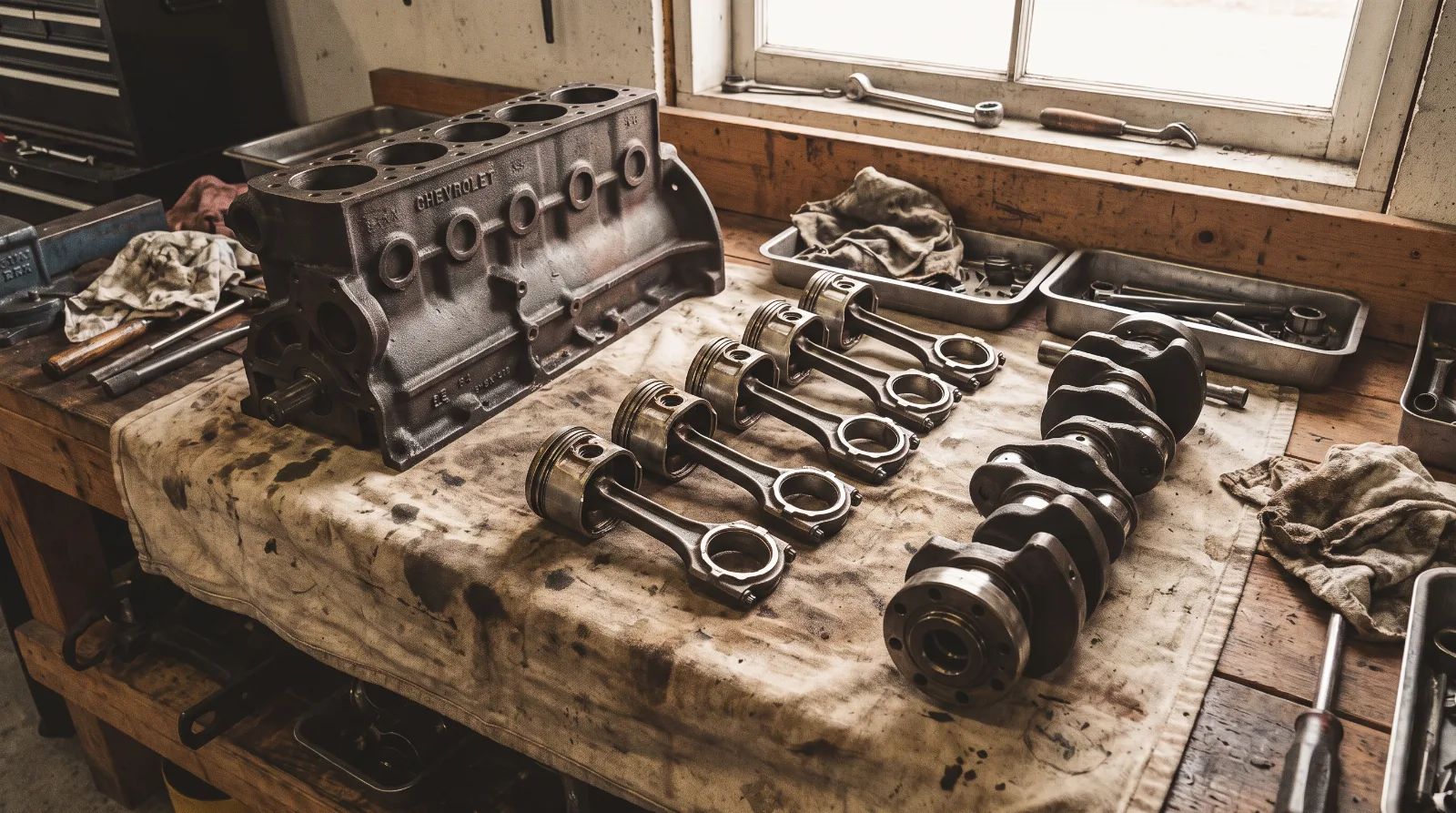
Rebuilding a 216 is not like rebuilding anything made after about 1955, and the difference is not the tools. It is that on most engines the botto...
The 1951 Chevrolet Apache
There is no 1951 Chevrolet Apache. The Apache name belongs to the generation of Chevrolet trucks that came after the one built in 1951, and it do...
The 1951 Chevrolet Impala
There is no 1951 Chevrolet Impala. The name did not exist in 1951, the car did not exist in 1951, and nothing Chevrolet built that year was ever...