1951 Chevrolet Suburban
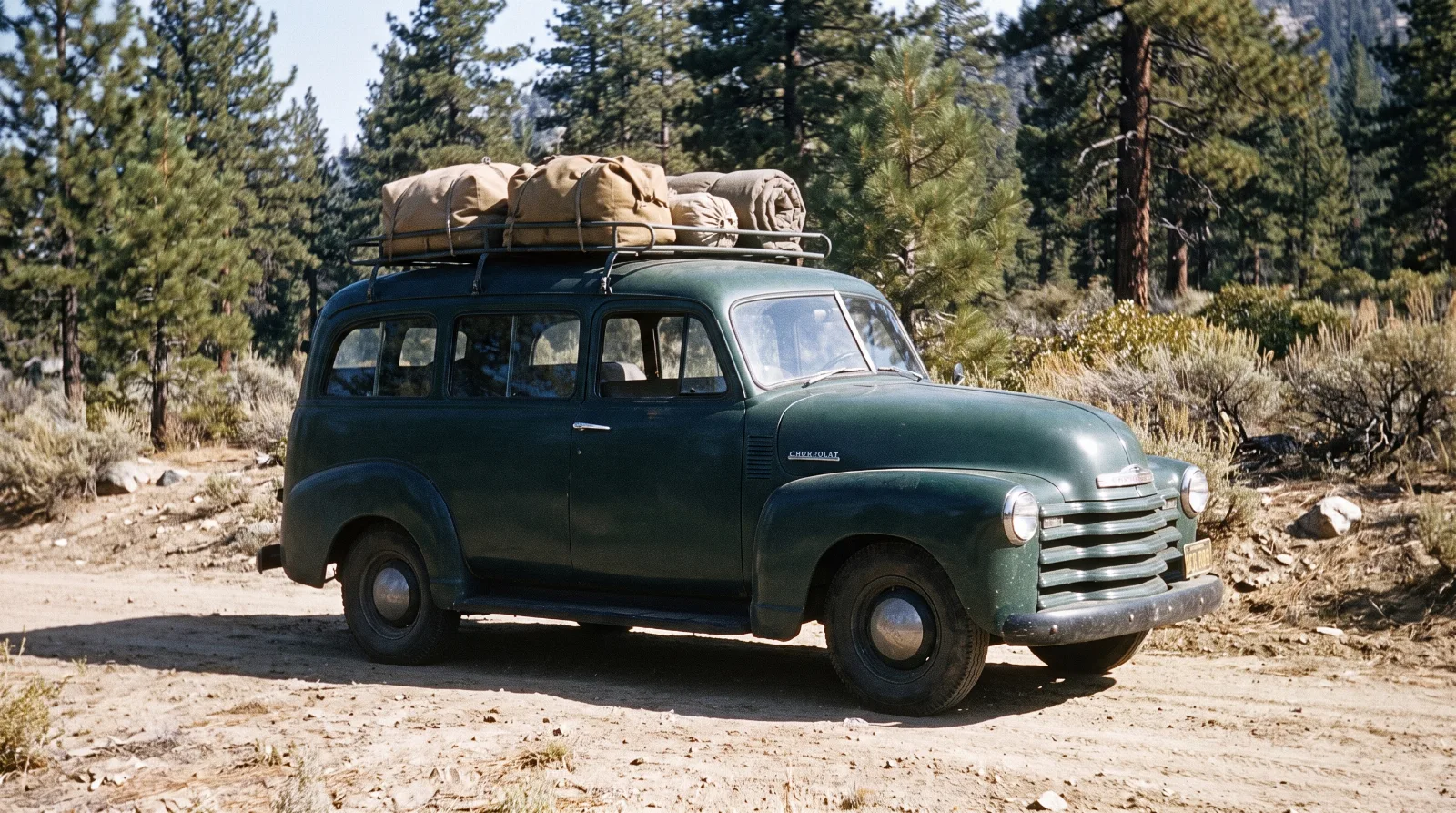
Long before anybody used the phrase sport utility vehicle, Chevrolet was selling one. The Carryall Suburban is a panel truck with windows cut into it and three rows of seats bolted in, built on the half-ton truck chassis, and in 1951 it did the job a modern three-row wagon does: carry eight people, or take the seats out and carry freight instead.
It is also the oldest nameplate still in use. Wikipedia calls the Suburban the longest-produced automobile nameplate in the world, and it has been on Chevrolet price lists since the 1930s without a break. The 1951 is not a footnote in that story. It is the middle of the run that established what the thing was for.
What Chevrolet actually sold
The Carryall Suburban was an all-steel eight-passenger wagon, and it was restricted to the 3100 line. That is worth saying plainly because it is the fact people get wrong most often: there is no three-quarter ton Suburban and no one-ton Suburban in this era. Half-ton chassis only, 116 inch wheelbase, the same one under the pickup and the half-ton panel.
What it replaced was the older idea of a station wagon built out of wood framing on a light truck chassis. All-steel meant it did not need annual varnishing, did not shrink and rattle, and did not rot from the joints outward. That was the selling point, and it is the reason there are any left.
| 1951 Carryall Suburban | |
|---|---|
| Chassis | 3100 half ton only, series letter JP for 1951 |
| Wheelbase | 116 in |
| Body | All steel, two side doors, three rows of seats |
| Capacity | Eight passengers, or two with the rear benches removed |
| Rear access | Tailgate, or twin side-hinged panel doors |
| Engine | 216.5 six, 92 hp |
| Gearbox | Three-speed, four-speed optional |
Tailgate or barn doors
You could have the back of a 1951 Suburban either way, and it is the single biggest practical difference between two otherwise identical trucks.
Twin side-hinged doors are the panel-truck arrangement. They swing wide, they let you back up to a loading dock, and they do not need clearance behind the vehicle to open. They also block your rear view a little more when they are glazed small, and they are two more things to sag.
The tailgate gives you the liftgate-and-tailgate arrangement people expect from a wagon: drop the gate, sit on it, load over it. Easier for family use and much easier when you are parked nose-in.
Chevrolet eventually gave the two arrangements their own model numbers, 3106 for the panel-door version and 3116 for the tailgate, which is the numbering people quote from the mid-1950s. For a 1951 the distinction is the same one, whatever number you find it written under. What matters when you are buying is that the parts do not interchange and that a Suburban missing its rear doors or its tailgate is missing a genuinely hard piece.
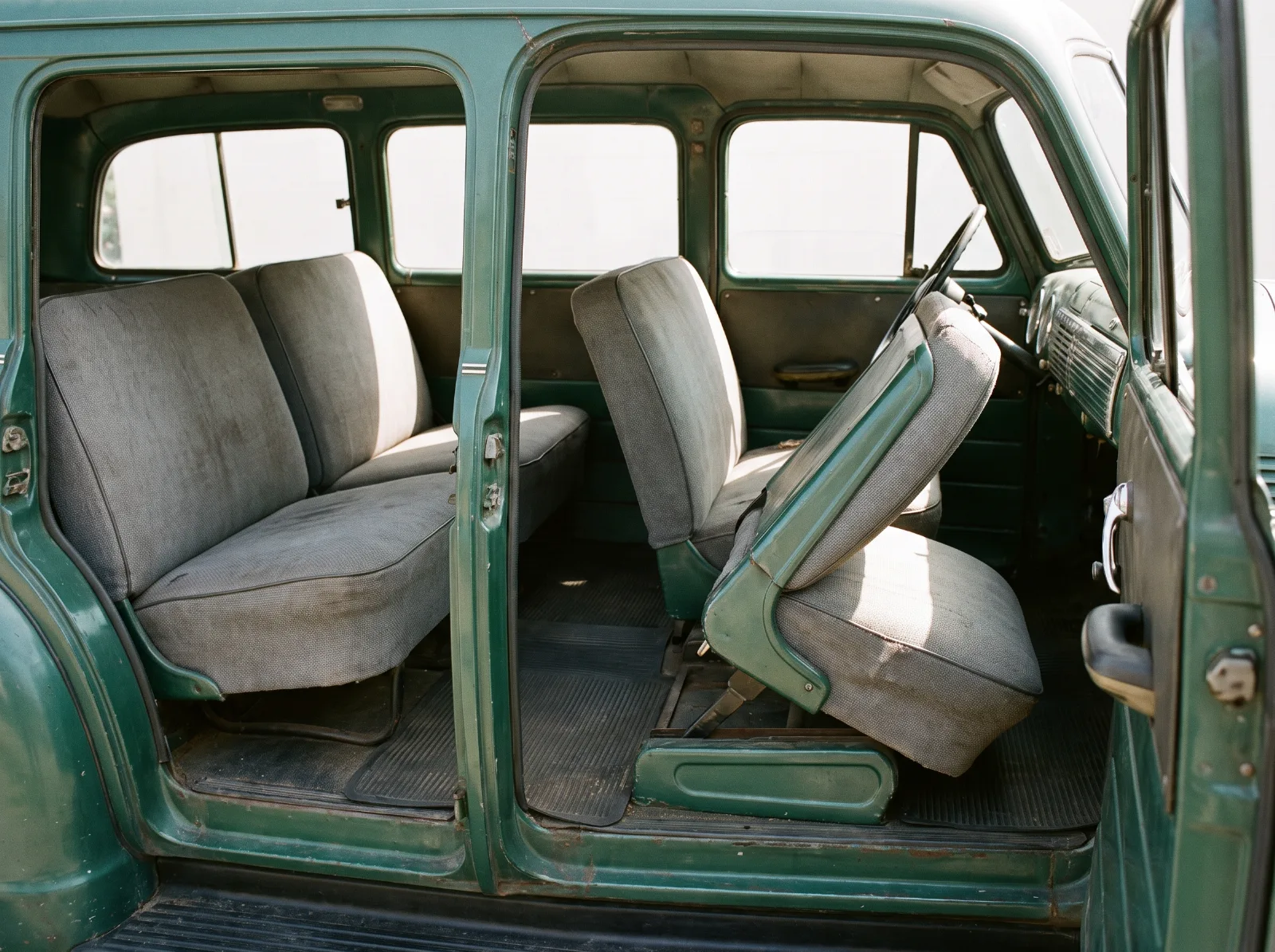
"The seats are what people lose. Sixty years of somebody needing the space for one weekend and taking the middle bench out, and then the shed gets cleared and that is the end of it. Buy the one with the seats."
— Earl Dawson
Dating and driving one
The cab and nose are shared with the pickup, so a 1951 Suburban dates exactly like a 1951 pickup. Vent windows in the door glass together with turndown outside handles, which is the one-year combination. A speedometer reading to 80 rather than 90. Chrome inside window and wiper knobs in their last year. Those three checks settle the year without a document.
Mechanically it is the ordinary half-ton: the 216.5 cubic inch six at 92 horsepower, three-speed on the column with the four-speed optional, hydraulic drums at all four corners, and six volt electrics with a negative ground. There is no automatic in a 1951 Chevrolet truck of any kind. The Hydra-Matic did not appear in these until 1953, so a 1951 Suburban with two pedals has been converted.
Loaded with people it drives better than a pickup does, because there is weight over the back axle where a pickup has none. Empty it is the same firm half-ton ride. The one thing that surprises people is the noise: a steel box with eight seats in it and very little trim resonates, and every Suburban that gets used regularly ends up with sound deadening in the floor.
Check this first
- Are the middle and rear benches there? They are removable, which means they got removed. Original seats and their mounting hardware are among the hardest things to find for one of these.
- The floor under the rear seats. Water gets in past the rear glass and the door seals, sits under the benches where nobody looks, and takes the floor out from underneath.
- Lower body corners and the rear wheel arches. Same disease as the panel truck. These are repairs rather than replacement panels.
- Rear doors or tailgate, and their frames. Sagging doors usually mean a rotten latch pillar. A bent or rusted tailgate is a long search.
- Cab mounts and cab corners. The Advance Design weak point, no different for having a wagon body behind it.
- Glass and rubber all round. A Suburban has a great deal more glass than a panel and every seal is a way in for water.
What one is worth having
A Suburban is the Advance Design body I would buy if I wanted to actually use a 1951 Chevrolet truck for something. It seats a family, it locks, it is dry, and it does all of that without pretending to be a car. That combination is why the modern descendant is still in the catalogue seventy-five years later.
The market has caught on. A complete Suburban with its seats and an honest floor is worth a good deal more than the equivalent pickup was ten years ago, and rather more than a panel. What has not changed is that the rough ones are money pits, because the body panels you need are the ones nobody reproduces and the interior parts are rarer still.
The same body with no windows and no seats is the 1951 Chevrolet panel truck. The car-based delivery vehicle that did a similar job on a passenger chassis is the 1951 Chevrolet sedan delivery. The truck line as a whole is in Chevrolet's 1951 trucks, and the full picture of what Chevrolet built that year is the year in full.
Sources and notes
- Chevrolet Suburban, Wikipedia - the 1947 to 1955 generation as a two-door carryall seating up to eight, built on the Advance Design pickup chassis, the 3106 and 3116 designations for panel doors and tailgate, the 216 cubic inch Stovebolt six, the Hydra-Matic from 1953 onwards, and the Suburban as the longest-produced automobile nameplate in the world.
- Comprehensive history of the 1947-1955 first series Advance Design, DevesTechNet - the Carryall Suburban as an all-steel eight-passenger wagon restricted to the 3100 line, the short front bench with a separate sliding right-side passenger seat, the removable middle and third-row benches, and the 216.5 six.
- Chevrolet Suburban, Conceptcarz - the all-steel body on a commercial truck chassis, eight seats with easily removable benches, the two rear arrangements offered, and the wood-framed wagons it replaced.
- 1950-1958 Chevrolet model series identification, The Old Car Manual Project - JP as the 1951 half-ton series at a 116 inch wheelbase, the chassis the Suburban used.
- 1947-1959 Chevy truck model years identification guide, Classic Industries - the 1951 cab details that date any Advance Design body: vent windows with turndown handles, the 80 mph speedometer, and the last year of chrome knobs.
- Chevrolet Suburban listings, ClassicCars.com - live inventory showing what complete early Suburbans ask against panels and pickups of the same period.
More from the garage
Rebuilding a Chevy 216
Rebuilding a 216 is not like rebuilding anything made after about 1955, and the difference is not the tools. It is that on most engines the botto...

The 1951 Chevrolet Apache
There is no 1951 Chevrolet Apache. The Apache name belongs to the generation of Chevrolet trucks that came after the one built in 1951, and it do...
The 1951 Chevrolet Impala
There is no 1951 Chevrolet Impala. The name did not exist in 1951, the car did not exist in 1951, and nothing Chevrolet built that year was ever...