1951 Chevrolet Factory Body Colors
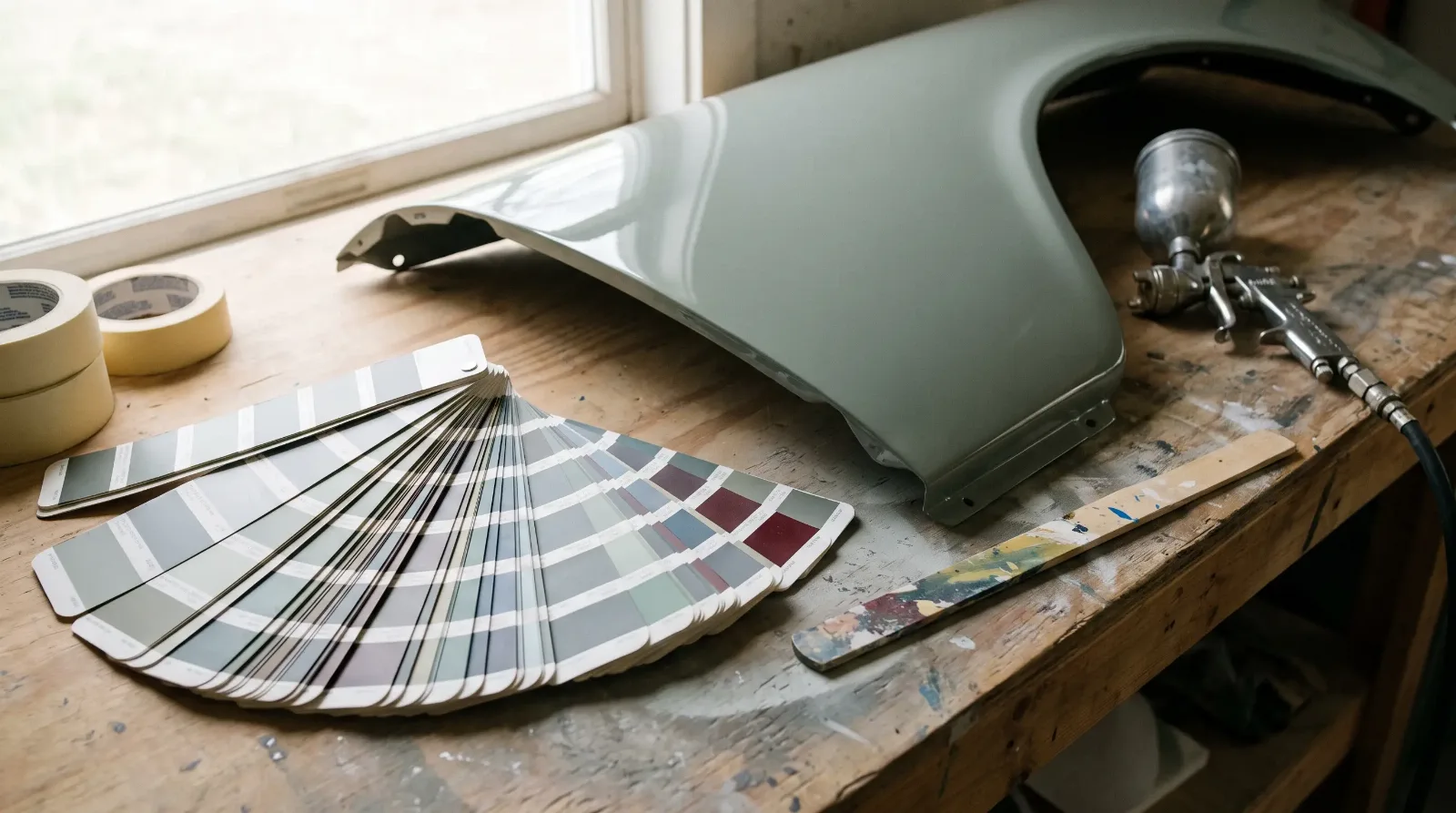
The 1951 Chevrolet body colors were a modest, tasteful set of factory paints, mostly quiet grays, greens, blues, and maroons with a few brighter choices mixed in. This was a conservative car for a conservative buyer, and the paint chart reflected that. If you are restoring one, the color question matters more than most folks expect, because getting the original shade right is what separates a car that looks correct from one that just looks repainted. I have chased down more than one faded factory color over the years, and I want to walk you through how the 1951 palette worked, how to find what your car left the factory wearing, and how to match it today. For the full picture of the car itself, start with the whole 1951 Chevrolet range and come back here for the paint.
Chevrolet offered the 1951 line in a range of single solid tones plus a set of approved two-tone combinations. Solids were the common sight in driveways. Two-tones cost a little more and were more often ordered on the De Luxe trim, where a buyer already paying for the nicer car was more likely to pay for the fancier paint. Understanding which is which is the first step in getting a restoration honest.
The 1951 color palette
The factory chart for 1951 was built around single solid colors first. These were straightforward one-color cars, body and roof painted the same shade, and they made up the bulk of production. On top of that, Chevrolet published a set of factory two-tone combinations, where the body wore one color and the roof or an accent area wore a second. Those two-tones were not a free-for-all. The factory approved specific pairings, and a correct restoration follows those approved combinations rather than mixing any two colors a painter happens to like.
The names ran to the understated side. Grays and greens dominated, blues and maroons filled out the middle, and there were a couple of lighter and brighter options for buyers who wanted their Chevrolet to stand out a little. Compared to the wild two-tones that would come to Chevrolet by the middle of the decade, the 1951 palette is reserved. That fits the car. A 1951 Chevrolet was a sensible family automobile, and it was painted like one.
Named colors of the era
Here is the list of solid colors published for the 1951 Chevrolet, with the factory codes that go with them. Even so, treat any code as something to confirm against a factory paint chip chart before you spray, because reference sources do not always agree and Chevrolet sometimes carried, renamed, or dropped a shade between model years. The codes below run in a tidy sequence from 442 through 450.
| Color name | Type | Notes |
|---|---|---|
| Mayland Black | Single | Code 442. Always available, the default low-cost finish. |
| Burgundy Red | Single | Code 443. Deep maroon red, a period favorite. |
| Thistle Gray | Single | Code 444. Soft light gray, one of two grays on the chart. |
| Fathom Green | Single | Code 445. The darker of the two 1951 greens. |
| Shadow Gray | Single | Code 446. The second, deeper gray alongside Thistle Gray. |
| Trophy Blue | Single | Code 447. The single blue on the 1951 solid chart. |
| Aspen Green | Single | Code 448. The lighter of the two greens. |
| Aztec Tan | Single | Code 449. A light tan, also used in two-tone work. |
| Moonlite Cream | Single | Code 450. The lightest option on the chart. |
| Approved two-tone combinations | Two-tone | Body in one color, roof or accent in a second, carrying their own codes in the same series. Not every pairing was offered. |
Do not take that list as final. It is a starting point. The definitive record is the factory paint chart and the AMA specifications for 1951, and a good restoration shop or a Chevrolet color reference for the 1949 to 1954 bodies will have the exact names and the codes that go with them. That is the source you match to, not a magazine list and not this page.
How to find your car's original color
The car itself will usually tell you what it was born wearing if you know where to look. On these early 1950s Chevrolets the Fisher Body identification plate, often called the cowl tag or body plate, carries the build information, including a Paint line and a Trim line that tie back to the factory color and the interior. A 1951 tag reads out in short lines such as Style, Body, Trim, and Paint, and that Paint number is the three-digit factory color code. The tag is riveted to the cowl panel under the hood, on the right hand (passenger) side. Find it, read it, and write down every line before you clean it.
The code on the tag is not a color name. It is a short factory code, and you translate it using a decoding chart for the year. That is the same reason a paint code without the chart is only half the answer. Once you have the code and the chart, you have the original color, the original interior trim, and enough to order the right paint. If the tag is missing or unreadable, and plenty are after seventy-odd years, you fall back to physical evidence. Look under trim pieces, behind the kick panels, inside the door jambs, and in the trunk for paint that never saw the sun and never got resprayed. That protected paint is the truest sample of the factory color you will find on the car.
Matching and repainting today
Modern paint can reproduce these old colors well, but it takes a little homework. The factory codes from 1951 do not map one to one onto a modern paint line, so the process is to take the original factory code, cross-reference it to a current formula through a paint supplier's classic or vintage color library, and get that mixed in a modern single-stage or base-clear system. A reputable paint jobber who handles restoration work can pull a 1951 Chevrolet formula from the cross-reference and mix it to the ounce. That is the reliable path, and it beats eyeballing a chip under fluorescent lights.
One caution on originality. A car that has faded for decades is not showing you the color it left the factory wearing. Sun and time lighten and shift old paint, so matching to a faded panel gives you a faded result. Match to a protected sample and to the factory code, then decide how you want the finished car to read. A show restoration follows the factory formula. A driver can take a hair more flexibility. Either way, know the correct color first, then choose on purpose rather than by accident. While you are sorting the wiring and the small electrical pieces during a repaint teardown, the circuit drawings is worth keeping on the bench so the harness goes back the way it came out.
"Everybody wants to argue about horsepower, but the paint is what people see first, and a wrong color reads wrong from across the lot even if they cannot say why. Find the code on the tag, find a chip the sun never touched, and match to those two. Do that and the car looks like it should. Skip it and you have got a nice repaint of the wrong car."
— Earl Dawson
Interior and exterior combinations
Color did not stop at the sheet metal. The factory paired exterior colors with specific interior trims, and the cowl tag carries a separate Trim line that points to the interior alongside the Paint line for the body color. That pairing matters for a correct restoration, because a given body color came with an approved set of interior fabrics and colors rather than any combination a buyer might dream up. Redoing the interior in a color the factory never offered with your exterior is the kind of small wrong note that a knowledgeable eye catches right away.
The Special and De Luxe trims also played into this. The De Luxe, being the nicer car, was where the two-tone paint and the dressier interior combinations showed up more often, while the Special leaned toward the plainer solid colors and simpler cloth. None of that is a hard rule you can bank a purchase on, but it is the pattern, and it is worth keeping in mind when a car's paint and interior seem to disagree with each other. When you start shopping, checking a range of Chevrolets on the market is a good way to train your eye on which colors and combinations actually turn up on surviving cars.
Get the color right and you have honored what the car was. The 1951 palette is not flashy, but that reserve is the whole character of the car, and a correctly colored 1951 Chevrolet has a quiet rightness to it that a random modern shade never quite matches. Read the tag, chase down a protected chip, match to the factory code, and let the paint tell the truth about the car underneath it. The cowl tag carries a trim code as well as a paint code, and what it means is in what the trim code means. For where paint sits in the order of a whole job, see the restoration plan.
Sources and notes
- PaintRef.com, 1951 GM/Chevrolet paint code cross-reference
- Old Car Manual Project, 1949-54 Chevrolet paint colors and codes
- HD Paint Code, 1950-1959 GM paint codes and color charts
- AutomotiveTouchup, 1951 Chevrolet color list
- Team Chevelle forum, 1951 Chevrolet cowl (Fisher Body) trim tag example and decode
- In The Garage Media, decoding vintage Chevrolet trim tags and VIN numbers
More from the garage
Rebuilding a Chevy 216
Rebuilding a 216 is not like rebuilding anything made after about 1955, and the difference is not the tools. It is that on most engines the botto...

The 1951 Chevrolet Apache
There is no 1951 Chevrolet Apache. The Apache name belongs to the generation of Chevrolet trucks that came after the one built in 1951, and it do...
The 1951 Chevrolet Impala
There is no 1951 Chevrolet Impala. The name did not exist in 1951, the car did not exist in 1951, and nothing Chevrolet built that year was ever...