1951 Chevrolet Interiors
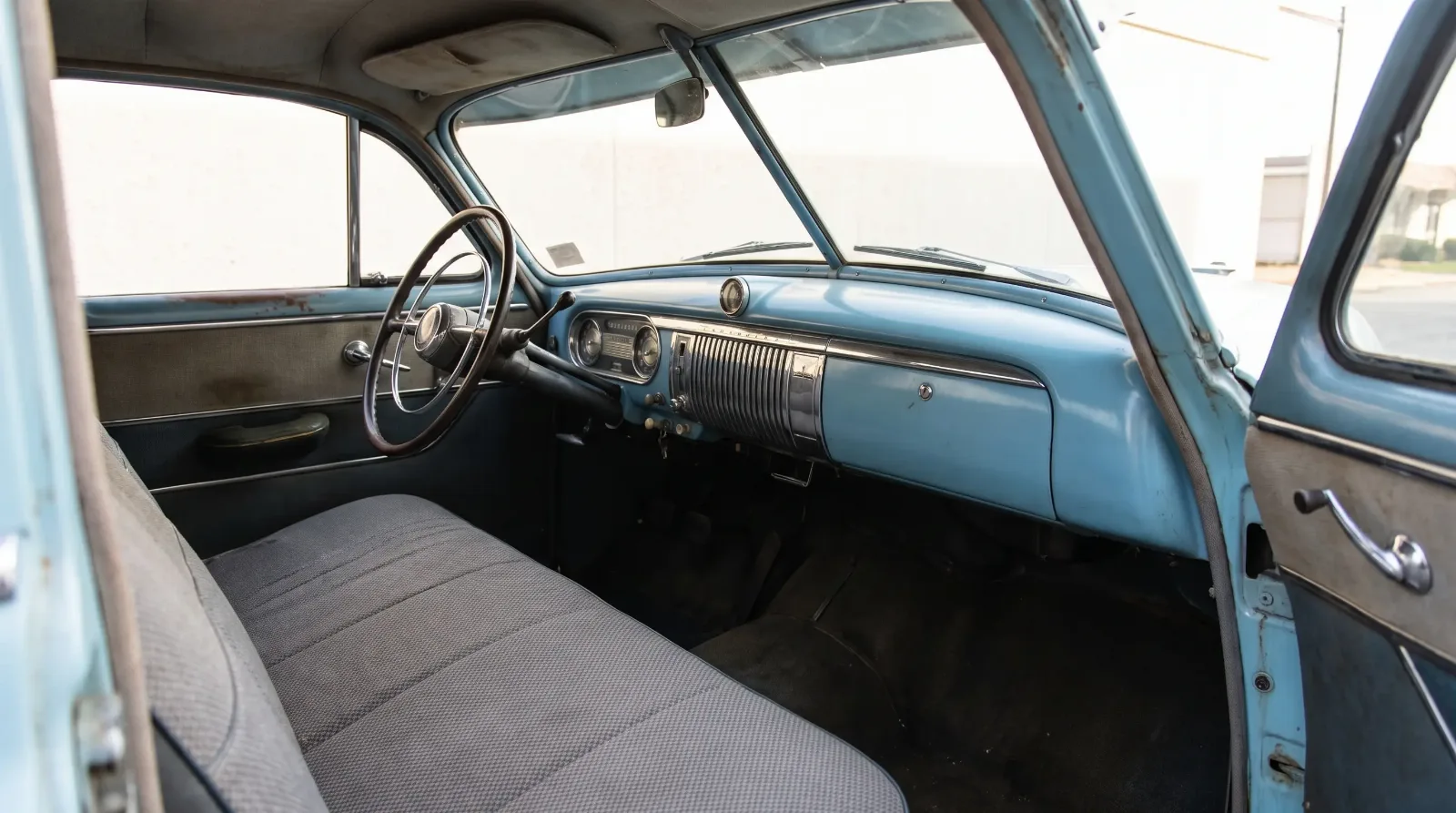
The 1951 Chevrolet interior was a plain, honest cabin built for a family car, and that is exactly what makes it worth getting right in a restoration. There is nothing flashy in here. Painted metal, cloth seats, a broad flat dash, and a big thin steering wheel. But every one of those pieces was made a certain way at the factory, and a car that has the correct fabric, the correct dash finish, and the correct wheel color reads as honest the moment you open the door. I have redone enough of these cabins to know where the shortcuts show. Let me walk you through what a 1951 Chevrolet interior actually was, how the Special and De Luxe differed inside, and what it takes to put one back the way Fisher Body built it. For the full picture of the car, start with the 1951 Chevrolet guide and come back here for the inside.
The cabin followed the same reserved character as the rest of the car. This was the second year of the postwar body that arrived for 1949, so the 1951 interior carried that same shape with the small trim updates the model year brought. Nothing radical. A sensible layout a first-time buyer could read at a glance.
Dashboard layout and gauges
The dash on a 1951 Chevrolet is a wide, symmetrical panel with the instrument cluster set in front of the driver and a matching area over on the passenger side, often carrying the clock or a delete plate where an accessory could go. The main cluster grouped the speedometer in the center with the fuel and the other gauges arranged around it. On these early 1950s Chevrolets the driver watched a set of full gauges rather than idiot lights, with the speedometer at the center and the fuel, temperature, oil pressure, and ammeter readings grouped around it. That full-gauge layout is one of the quiet pleasures of the car, because everything the engine is doing shows on a needle. The radio, when the car had one, mounted in the center of the dash, and the heater controls sat below it.
The dash face itself was painted, usually to complement the interior trim rather than the exterior color, and the walk-around carried a band of trim across it that was part of that same painted treatment. That painted-metal dash is one of the first things a careless restoration gets wrong, because it is easy to spray it body color and call it done. It was not body color. Match the dash finish to what the interior called for, not to the paint outside.
The steering wheel and controls
The 1951 wheel is a large-diameter thin-rim wheel with a horn ring, the style of the era, made of a molded plastic that was color-keyed to the interior rather than always black. Two or three spokes ran to a center hub carrying the Chevrolet bowtie, and the horn ring sat just inside the rim where a thumb could reach it. These old wheels crack. The plastic shrinks and checks with decades of sun, and a cracked original wheel is one of the most common faults you will find in a 1951 cabin.
The column carried the shifter for the three-speed manual, mounted on the column in the usual place, or the selector for the optional Powerglide automatic on cars ordered with it. Below the wheel sat the pedals, the headlight and wiper controls pulled or turned from knobs on the dash, and the whole arrangement was built to be simple. A driver stepping out of a 1940s Chevrolet found nothing to relearn.
Upholstery, door panels, and headliner
Seats in a 1951 Chevrolet were trimmed in cloth as the standard material, a durable woven upholstery in patterns and colors the factory paired to the exterior. The common combinations ran to grays, greens, and tans that sat quietly with the reserved factory paints. Leather was not part of the standard closed-car story. The everyday sedans and coupes came in cloth, and where leather did appear it was on the premium body styles, the convertible and the Bel Air hardtop, which used a leather and fabric combination rather than the plain broadcloth of the closed cars. What is certain is that cloth was the material most of these cars wore, in a bench seat front and rear.
The door panels were pressed board covered in material to match the seats, with a simpler treatment on the Special and a dressier one on the De Luxe. The headliner was a cloth liner supported on bows across the roof, and on these cars it is a common casualty, sagging or torn after decades. The floor wore a rubber mat or a carpet depending on trim and body style. The table below lays out how the interior appointments generally split between the two series.
| Feature | Special series | De Luxe series |
|---|---|---|
| Seat upholstery | Plainer cloth, basic pattern | Nicer cloth grade and pattern |
| Door panels | Simple board with minimal trim | Dressier panels with added brightwork |
| Dash trim | Painted, plainer finish | Upgraded trim finish |
| Steering wheel | Standard color-keyed wheel with horn ring | Same wheel across both series |
| Floor covering | Rubber mat common | Carpet more likely, body style depending |
| Extras fitted | Fewer standard accessories | Clock and brightwork more often present |
Special versus De Luxe inside
The clearest way to read a 1951 interior is through the two-series split. The Special was the price leader, and its cabin showed it, with plainer cloth, simpler door panels, and fewer standard extras. The De Luxe was the step up, and inside that meant a better grade of upholstery, dressier door panels and trim, and more of the small brightwork that made the car feel finished. The difference is not dramatic to a casual eye, but it is real, and a restoration that puts De Luxe-grade material in a Special, or the reverse, is a wrong note that a knowledgeable buyer catches.
The interior also tied back to the exterior through the factory pairings. A given body color came with an approved set of interior trims rather than any combination a buyer might want, so the paint and the cloth were meant to go together. If you are sorting out what your car should wear inside, reading up on the Chevrolet paint codes alongside this page helps, because the cowl tag carries both the paint code and the trim code and the two were chosen as a set at the factory.
"Folks fuss over the engine and the paint and then throw any old seat cover at the inside like it does not count. It counts. You sit in the interior every time you drive the car. Get the right cloth, the right dash finish, and a wheel that is not cracked to pieces, and the cabin feels like 1951 instead of like a swap-meet parts bin."
— Earl Dawson
Restoring the interior correctly
The good news is that the 1951 through the early 1950s Chevrolet cabin is well served by the reproduction trade. You can buy correct seat upholstery kits, door panel sets, headliners, carpet, and rubber floor mats made to the factory patterns for these cars, and a full interior kit takes a lot of the guesswork out of the job. The catch is picking the right kit for your series and your body style, because a two-door and a four-door and a Special and a De Luxe do not all use the same pieces. Order to the car you actually have, not to a generic 1951 listing.
Color is where restorations go wrong most often. The interior color and pattern were chosen to match the exterior at the factory, so the trim code on the cowl tag is your guide, the same way the paint code is for the outside. Match to that code, not to a faded sample and not to what looks nice on the shelf. A cracked steering wheel can be restored or replaced with a reproduction, and a good wheel is worth the money because it is right in front of you every mile. When you are pricing the whole job, remember the small stuff adds up, and browsing period period extras is worth doing early so anything you want fitted goes in while the cabin is apart rather than after.
Put it all back the way Fisher Body did and the cabin rewards you every time you get in. The 1951 Chevrolet interior was never meant to dazzle. It was meant to be honest, comfortable, and easy to live with, and a correct restoration keeps that character intact. Match the trim to the code, buy the right kit, sort the wheel, and let the inside of the car tell the same true story the outside does. Where the trim work falls in the running order of a restoration is in the restoration plan, and what sits under the hood of the car you are trimming is in the Stovebolt six.
Sources and notes
- Wikipedia, Chevrolet Styleline and Fleetline (1949-1952) overview
- Old Car Manual Project, 1949-54 Chevrolet brochures and factory literature
- ChevyTalk forum, 1949-54 Chevrolet interior trim and restoration threads
- Classic Industries, 1951 Chevrolet Styleline De Luxe interior reproduction parts catalog
- In The Garage Media, decoding vintage Chevrolet trim tags and codes
More from the garage
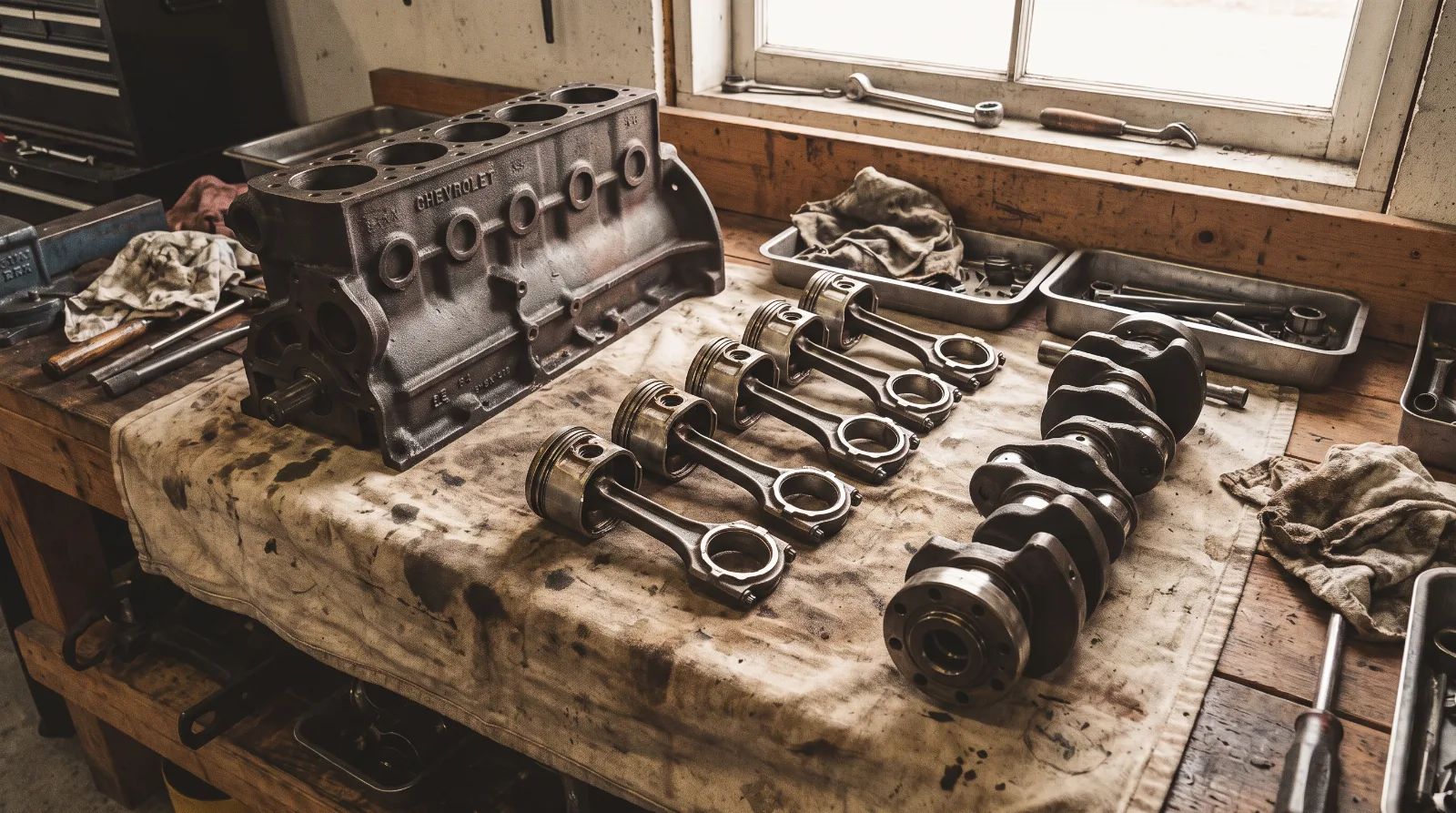
Rebuilding a Chevy 216
Rebuilding a 216 is not like rebuilding anything made after about 1955, and the difference is not the tools. It is that on most engines the botto...
The 1951 Chevrolet Apache
There is no 1951 Chevrolet Apache. The Apache name belongs to the generation of Chevrolet trucks that came after the one built in 1951, and it do...
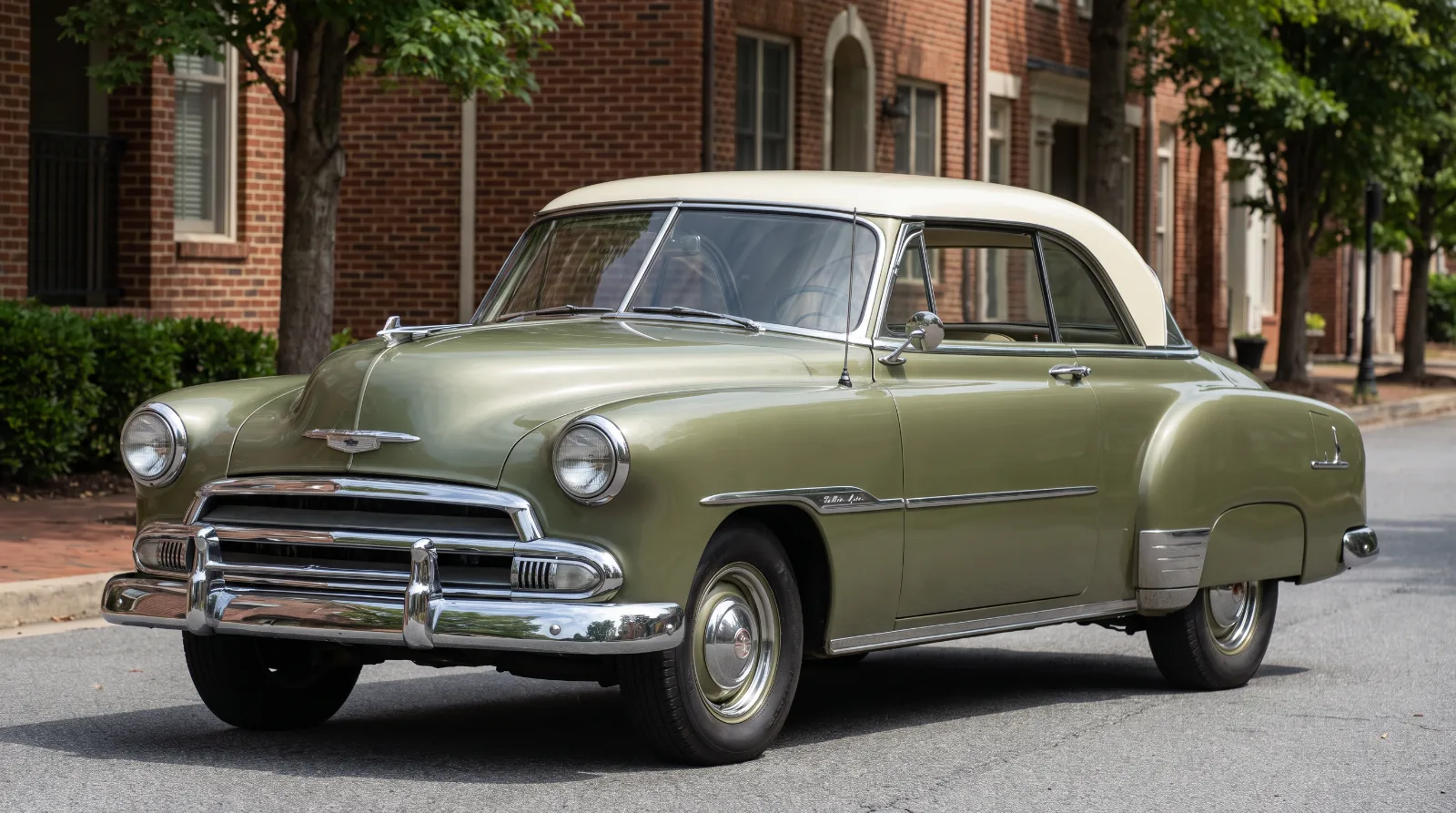
The 1951 Chevrolet Impala
There is no 1951 Chevrolet Impala. The name did not exist in 1951, the car did not exist in 1951, and nothing Chevrolet built that year was ever...