1951 Chevrolet Bel Air
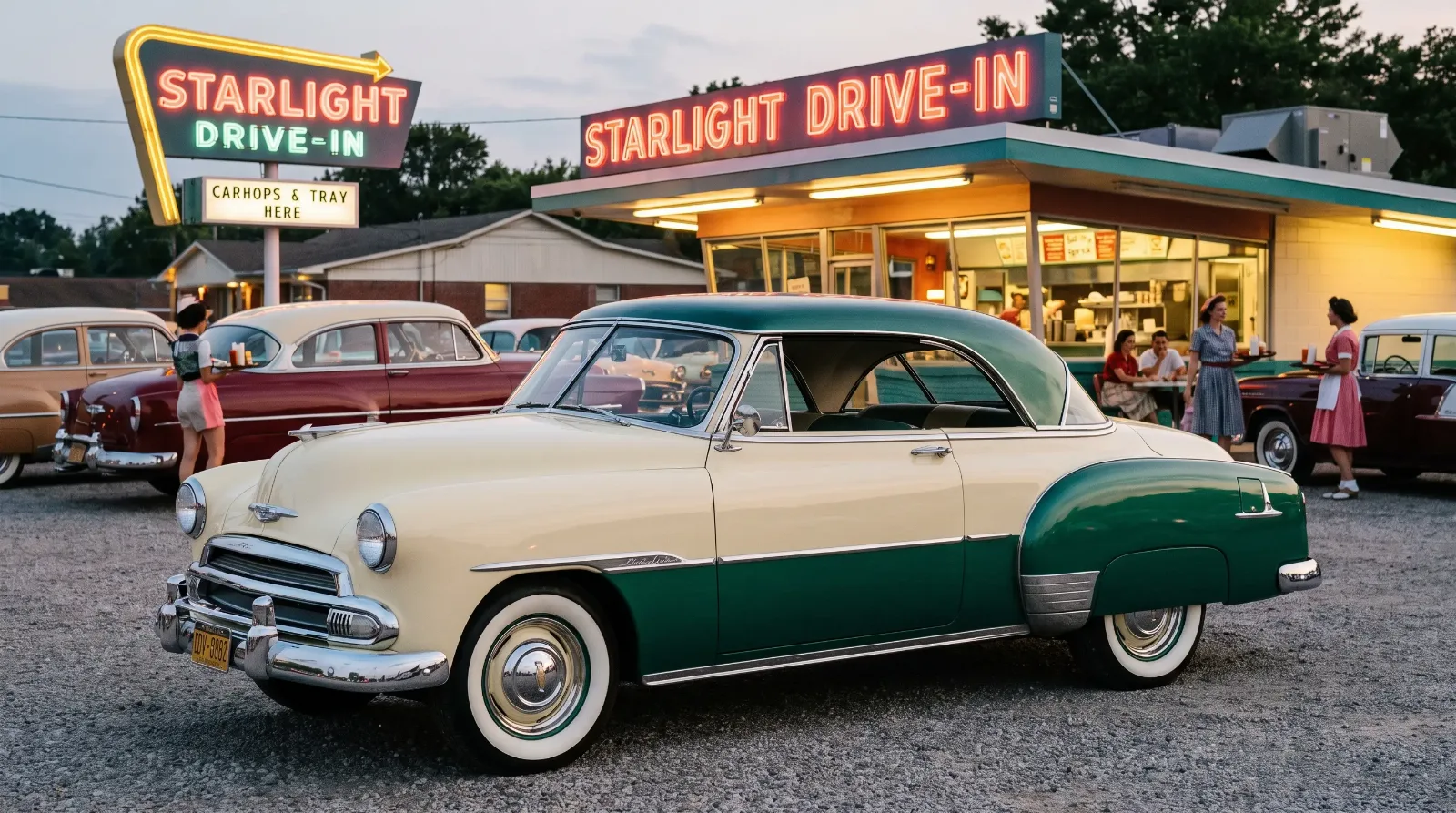
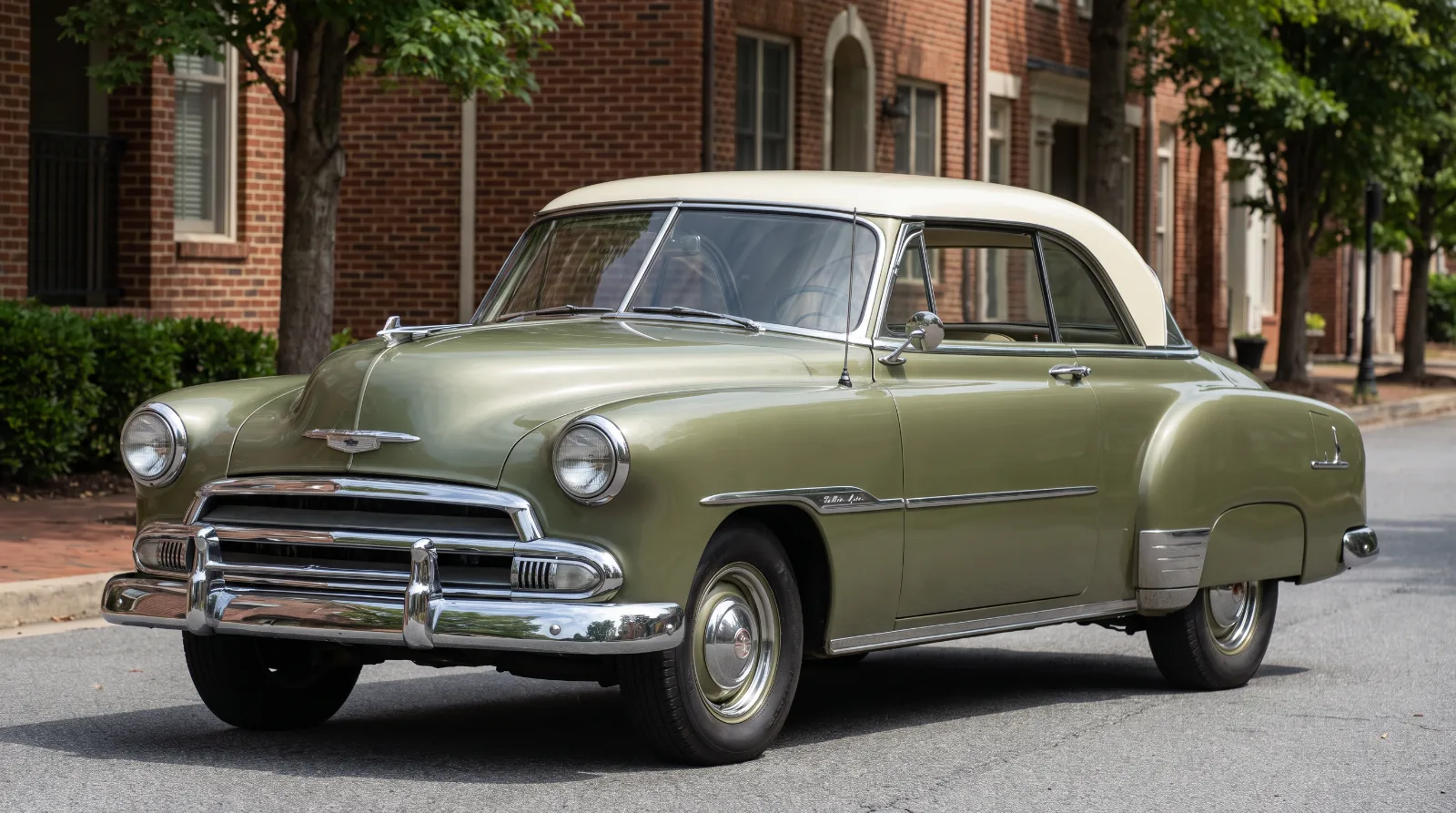
The 1951 Chevrolet Bel Air is the car that brought the hardtop down to where working people could buy one. Roll all four windows down and there is nothing left between you and the outside. No post in the middle, no window frames standing up in the breeze, just a steel roof floating over open air. Cadillac and Buick and Oldsmobile had shown that trick in 1949 and it cost Cadillac money to see it. Chevrolet had it on the showroom floor for well under two thousand dollars.
People today know the Bel Air name from the Tri-Five cars, the 1955 through 1957 Chevrolets that ended up on every calendar and every diner wall. They forget that the name started five years earlier and started on exactly one body style. In 1951 a Bel Air was not a trim level you could order on a sedan. A Bel Air was the two-door hardtop, and that was the whole of it.
What a Bel Air was in 1951
Chevrolet introduced the Bel Air in mid-1950 as its first pillarless two-door hardtop, and the marketing name for the idea at the time was the hardtop convertible. The point was to give a buyer the open, airy look of a convertible with a solid steel roof over his head. You got the low, clean roofline, the wide open side view with the glass down, and none of the leaks, drafts and rotted fabric that came with a real ragtop.
It was a De Luxe car only. Chevrolet did not offer a Bel Air in the plain Special series, and it would have made no sense to, because the whole car was a piece of showmanship. The name came from the Bel Air neighborhood on the west side of Los Angeles, which tells you exactly what Chevrolet wanted you to think about while you were signing the papers.
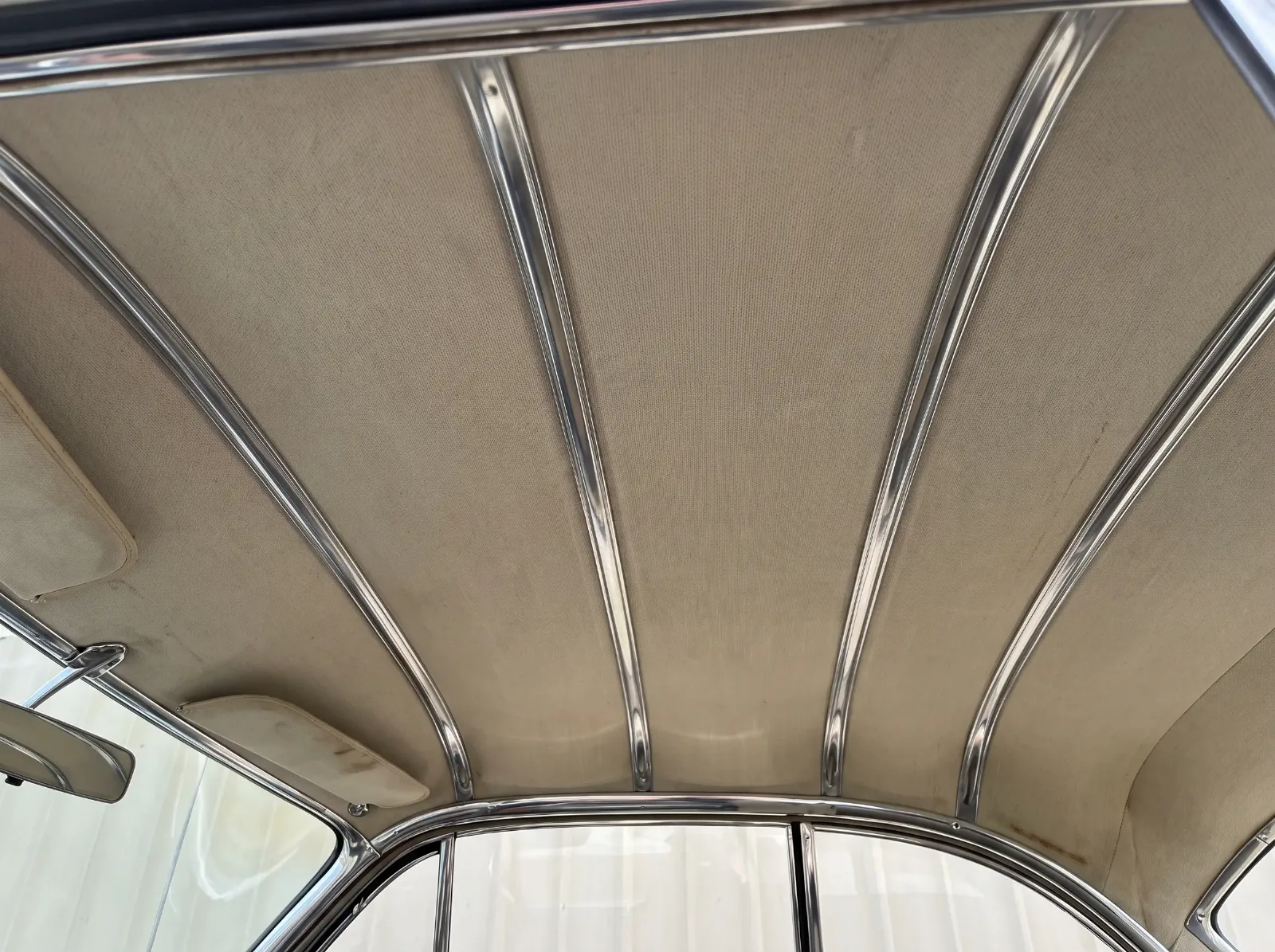
Inside, the Bel Air was trimmed to keep the convertible illusion going. The headliner carried chrome crossbars running over your head in the pattern of a convertible top's bows. It is a detail people miss until it is pointed out, and then they cannot stop seeing it. That, along with richer upholstery and extra brightwork, is what separated the Bel Air interior from an ordinary De Luxe.
Where the Bel Air sat in the 1951 range
The Bel Air was the expensive end of the closed cars. Only the convertible and the station wagon cost more, and both of those were specialty items. Here is where the money went that year.
| 1951 De Luxe model | Factory price | Production |
|---|---|---|
| Styleline De Luxe two-door sedan | $1,630 | 262,933 |
| Sport coupe | $1,650 | 64,976 |
| Styleline De Luxe four-door sedan | $1,680 | 380,270 |
| Bel Air hardtop | $1,920 | 103,356 |
| Convertible | $2,030 | 20,172 |
| Station wagon | $2,190 | 23,586 |
Read those two columns together and you see what Chevrolet pulled off. The Bel Air cost roughly two hundred and forty dollars more than a De Luxe four-door sedan, real money in 1951, and Chevrolet still moved 103,356 of them. That is five times what the convertible did. The public wanted the open look far more than it wanted an actual open car, and it was willing to pay for the difference.
The first year, 1950, Chevrolet built 76,662 Bel Airs at $1,741. The 1951 jump to 103,356 shows the idea catching on rather than cooling off. In 1952 the figure settled at 74,634, and for 1953 Chevrolet took the name off the hardtop and turned Bel Air into a full trim series with sedans and a convertible under it. Everything the name became later starts with this car.
The closest thing to a Bel Air on a budget was the sport coupe, which had a similar dressy roofline but kept its window frames and its post. If you are weighing the two, I put the case for the cheaper car in the 1951 Chevrolet Styleline Sport Coupe. And for how the whole series and body-style puzzle fits together, start with what Chevrolet built in 1951.
What is different about the 1951 car
Chevrolet did not redesign for 1951, it refreshed. The rear fenders went higher and squarer across the whole range, and the taillights were squared off and moved outboard onto the fender ends instead of sitting inboard. It sounds like nothing written down. On the car it widens the whole back end. The grille was cleaned up too, with the parking lights set wide apart and the lower section looping around them instead of carrying vertical bars. Behind the wheel there was a redesigned instrument panel.
That squarer rear treatment is the quickest way to tell a 1951 or 1952 Bel Air from a 1950 at a show. Look at the taillights and where they sit on the fender. The paint chart changed as well from year to year, and if you are trying to put a car back to a correct factory color, the codes and names are in the paint chart.
Engines and how it drives
The standard engine was the 216.5 cubic inch overhead-valve six, the Stovebolt, rated at 92 horsepower, with a three-speed manual on the column. The option that changes the character of the car is Powerglide, Chevrolet's two-speed automatic. Powerglide was a De Luxe-only option in these years, which means a Bel Air could have it, and a car ordered that way came with the larger 235.5 cubic inch six with hydraulic lifters rated at 105 horsepower rather than the 216.
An automatic Bel Air with the bigger six is the version I would look for if the car is going to get driven rather than trailered. It is not fast by any measure anyone uses today, but it is smooth and quiet and it suits the car. Shifting a column three-speed in traffic gets old faster than you think it will.
The electrical system is six volt with a negative ground. Ford, Chrysler and GMC ran positive ground in the same era, so plenty of people assume Chevrolet did too and wire a car backwards. It does not work and it can cost you a generator or a coil to find out.
"A hardtop with the glass down is the closest thing to a convertible that still keeps the rain off. Chevrolet figured that out in 1950 and sold five of them for every ragtop. Seventy-five years later people still buy the Bel Air for the same reason. It looks like a good time and it acts like a sensible car."
— Earl Dawson
Buying a 1951 Bel Air
The Bel Air is one of the four body styles leading collector interest among 1949 to 1952 Chevrolets, along with convertibles, wagons and the Fleetline fastbacks. Values on correct, stock cars have been rising steadily, and stock is the word that matters. A tidy original Bel Air brings real money now while a modified one usually brings what somebody thinks the parts are worth.
The hardtop body has its own weak spot, and it is the direct result of having no B-pillar. All the structure has to come from the floor, the rockers and the cowl, so rust in those places matters more on a hardtop than it does on a sedan with a post holding the roof up. Check the rockers and the floors carefully, and if the doors sag or the door gaps taper, walk around and look at the rockers again before you believe any explanation.
Check this first
- Rockers, floors and body mounts. With no center post, a hardtop leans on its lower structure. Soft rockers show up as sagging doors and gaps that taper toward the back.
- Door and quarter glass alignment. Run all four windows up and check that they seal against each other with no frame to guide them. Fixing hardtop glass alignment is fiddly and slow.
- Headliner and chrome roof bows. The bows are Bel Air-specific and correct replacements are not sitting on a shelf. A butchered headliner is a real cost.
- Cowl and vent drains. Rots from the inside on every car in this family. You cannot see it from the engine bay, so look from underneath and inside.
- Correct De Luxe and Bel Air brightwork. This is what you are paying the premium for. Pitted trim and missing pieces are slow to replace and expensive when you find them.
- Drivetrain agreement. A Powerglide car should carry the 235 six. A 216 behind an automatic means somebody has been in there.
If you want the shape without waiting for the right car to appear locally, it is worth watching what the cars in the 1951 market are actually asking, because the condition spread on these is enormous and the ad photos rarely tell you where a car sits.
The 1951 Bel Air is the beginning of a name that outlived it by decades, and it is the cheapest way into a body style that used to be Cadillac territory. Find one with straight rockers, honest floors and its own trim, keep it stock, and you will have the car that put the hardtop within reach of everybody. The other 1951 De Luxe body that collectors chase is the fastback, and that one is Chevrolet's fastback De Luxe.
Sources and notes
- Chevrolet Bel Air, Wikipedia - the Bel Air as a two-door hardtop within the De Luxe trim only, 1950 production of 76,662 at $1,741, the squarer 1951 rear treatment, and the origin of the name.
- 1951 Chevrolet De Luxe Series, Conceptcarz - 1951 factory prices and production for the Bel Air, convertible, wagon, sport coupe and sedans, plus the 216.5 and 235.5 cu in engine ratings.
- 1951 Chevrolet Bel Air, the hardtop era begins, Curbside Classic - the hardtop convertible concept, the chrome headliner bows imitating convertible top bows, and 1952 Bel Air production of 74,634.
- 1949 to 1952 Chevys are gaining in collectibility, Old Cars Weekly - Bel Air hardtops among the body styles leading collector interest and current value ranges for factory-correct cars.
- Car of the Week, 1950 Chevrolet Bel Air, Old Cars Weekly - the mid-1950 introduction of Chevrolet's first pillarless hardtop and how it was positioned against the more expensive GM hardtops.
- Secrets of the Chevy Powerglide 1950-73, Mac's Motor City Garage - Powerglide as a De Luxe-only option and its pairing with the larger 235 cu in hydraulic-lifter six.
More from the garage
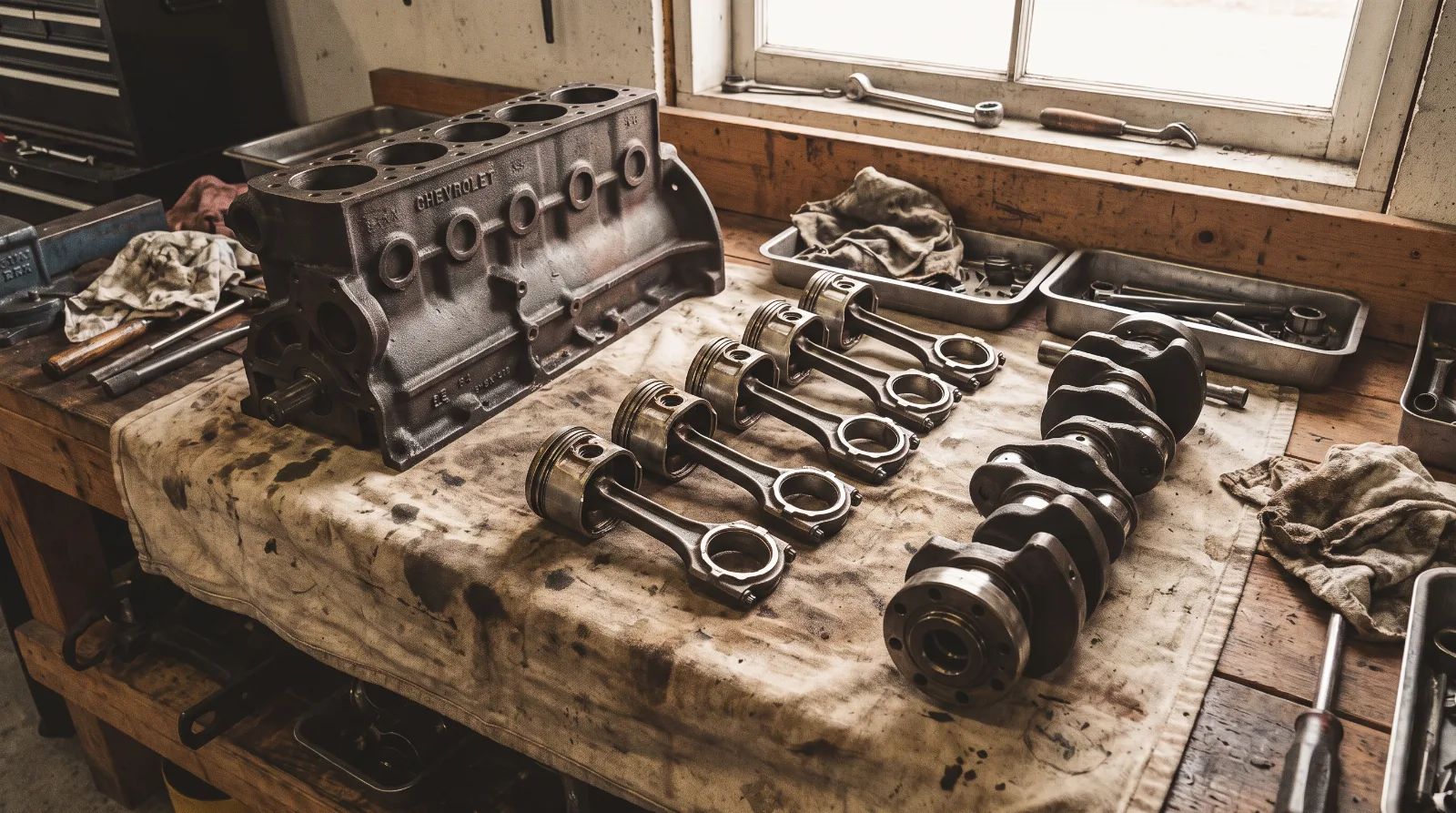
Rebuilding a Chevy 216
Rebuilding a 216 is not like rebuilding anything made after about 1955, and the difference is not the tools. It is that on most engines the botto...
The 1951 Chevrolet Apache
There is no 1951 Chevrolet Apache. The Apache name belongs to the generation of Chevrolet trucks that came after the one built in 1951, and it do...
The 1951 Chevrolet Impala
There is no 1951 Chevrolet Impala. The name did not exist in 1951, the car did not exist in 1951, and nothing Chevrolet built that year was ever...