Rebuilding a Chevy 235
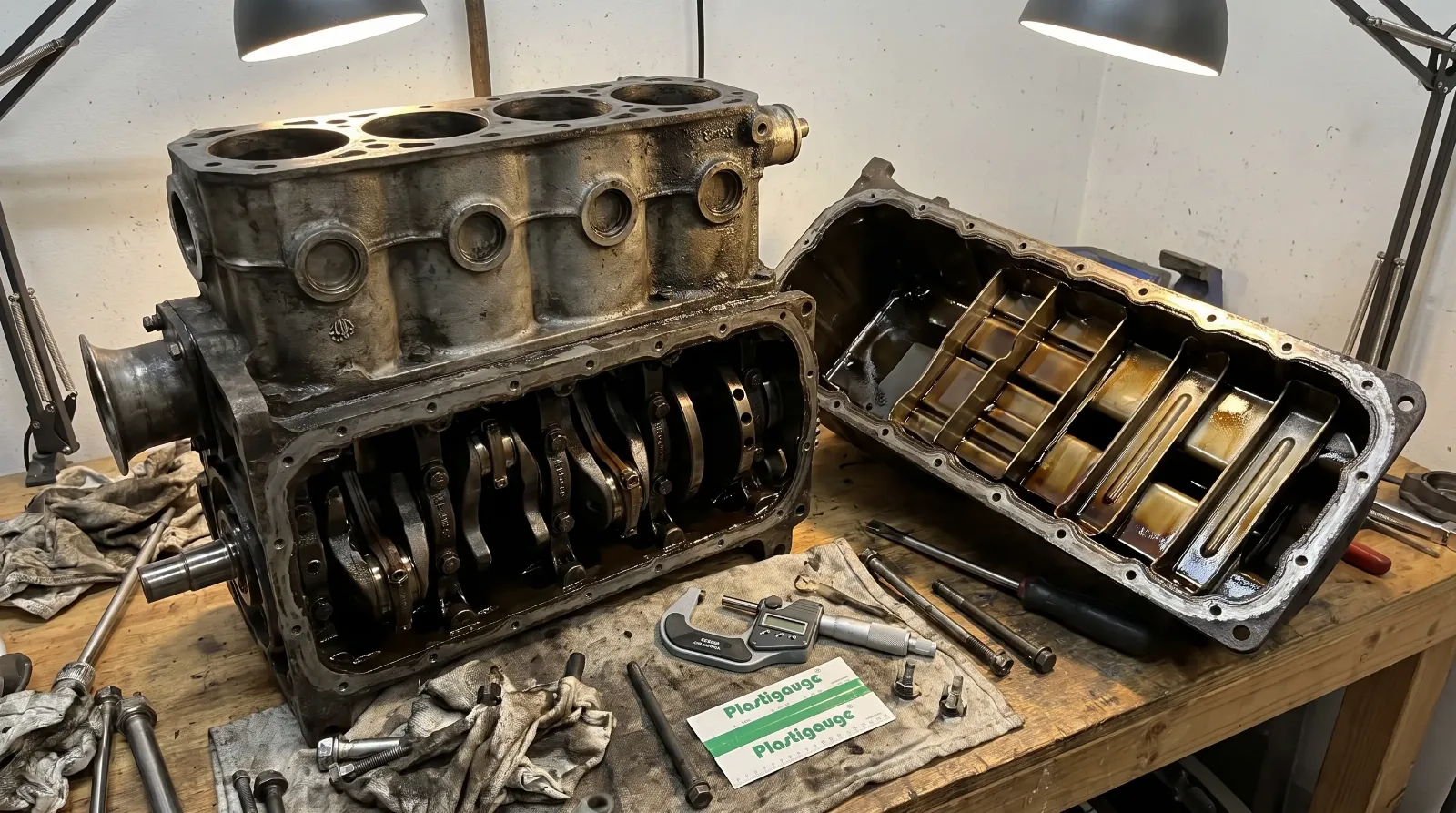
A Chevy 235 is one of the friendlier engines to rebuild in a home garage. Six cylinders in a row, a cast iron block you can lean over, no interference to worry about, and parts still on the shelf seventy years after the last one was built. What decides whether the job is straightforward or awkward is not your skill. It is which 235 you have.
The pre-1953 engines have poured babbitt bearings. The 1954 and later engines have insert bearings. Those are two different jobs, two different suppliers, and two different bills. Everything else about the rebuild is much the same, so let me get the split out of the way first and then walk the rest.
Babbitt or inserts, and why it changes everything
On a pre-1953 235, the main and rod bearings are poured babbitt, and the rods are fed by dippers that pick oil out of troughs cast into the pan. When those bearings are worn, you cannot open a box and fit a new set. The bearings get poured and line-bored, which is specialist machine work that fewer shops do every year, and it costs accordingly.
From 1954, every 235 got aluminum pistons, full pressure oiling and insert bearings on both mains and rods. That is a normal modern rebuild: measure the crank, order the right undersize shells, fit them. The 1953 model year is split, with Powerglide cars getting the full pressure version and manual cars keeping the older bottom end.
This is the single biggest fork in the job, and it is why the first thing to do is not order parts. It is to find out what you have, which is laid out in identifying a 235.
Deciding how far to go
Not every tired six needs a full rebuild, and the honest answer is often less work than the internet suggests. Three levels, and picking the right one saves real money.
| Level | What it involves | When it is the right call |
|---|---|---|
| Service and seal | Valve job, timing gear, water pump, oil pump, gaskets, rear main | Good compression, good oil pressure, burns oil or leaks. Very common on these. |
| Top end and bearings | The above plus rings, and bearings if they measure out | Low compression on one or two holes, ticking that goes with oil pressure |
| Full rebuild | Bore, crank, bearings, everything | Rod knock, scored bores, low oil pressure hot, or an engine of unknown history |
Before you commit to any of them, do a compression test and a hot oil pressure reading. Those two numbers tell you more than any amount of guessing, and they cost an afternoon. On a splash-rod engine, remember that oil pressure at the gauge reports on the mains, not the rods, so a healthy reading does not clear the bottom end.
The parts that actually give trouble
Rebuild kits for the 235 are made and easy to buy. The parts that hold jobs up are the ones outside the kit.
The timing gear. Chevrolet used a fibre camshaft gear on these engines, and it is a wear item that eventually strips. It is cheap and it is inside the timing cover, so replace it while you are in there rather than doing the job twice.
Valve seats and guides. Seventy years of leaded fuel followed by decades of unleaded means seat recession is common. Hardened seats are the usual answer if the car is going to be driven regularly.
The oil pan and its troughs. On a splash engine the pan is part of the lubrication system. A dented or badly cleaned pan with damaged troughs will not feed the rods properly no matter how good the bearings are.
Machine shop willingness. Finding a shop that will pour babbitt is the real constraint on an early engine, not finding parts. Ring round before you tear anything down.
"Most of these engines do not need rebuilding. They need a valve job, a timing gear, an oil pump and somebody to stop the leaks. I have watched men spend four thousand dollars proving that to themselves the expensive way."
— Earl Dawson
While the engine is out
The engine coming out is the cheapest opportunity you will ever get for half a dozen other jobs, and they are all miserable to do later with the six back in place.
Check this first
- Clutch, pressure plate and rear main seal. All of it is right there and all of it is a transmission-out job otherwise.
- Engine mounts. Seventy-year-old rubber is collapsed even when it looks intact, and it changes how everything lines up.
- Radiator and hoses. A rebuilt engine pushed into an old cooling system is how people cook fresh bearings.
- Wiring at the front of the car. Cloth harnesses are a fire risk and you will never have better access.
- Firewall, cowl and inner fenders. Look for the rust you cannot normally see. On these cars the cowl rots from the inside.
- Ring gear and starter. Check the tooth count and condition now, especially if the engine has been swapped across the 1955 change.
Done sensibly, a 235 rebuild is one of the better returns in this hobby. The engine is simple, the parts exist, and the result will outlast your interest in the rest of the car. Just find out which 235 you have before you spend a dollar, because that decision drives everything after it. The background on the two engines is in the two 235s, and what Chevrolet fitted to the 1951 cars is in 1951 Chevrolet engines. For the wider order of operations on a whole car, see the order of work.
Sources and notes
- Stovebolt six history and information, Restore An Old Car - pre-1953 engines as splash-oiled babbitt bearing designs with pressure to the mains and troughs in the pan feeding dippers on the rods, and the 235's stronger crank and rods against the 216.
- Everything to know about the 235 Chevy engine, VehicleHistory - the 1954 change to aluminum pistons, full pressure oiling and insert bearings on mains and rods, and the split 1953 model year.
- Chevrolet 235 inline six, EngineFacts - bore and stroke, output by year, and the 1953 upgrade of Powerglide engines to full pressure lubrication with hydraulic lifters.
- Engine short block parts, Chevs of the 40s - current parts coverage for these engines, including short blocks and rebuild components.
- 1951 Chevy car parts, Chevs of the 40s - the wider 1951 catalog, including cooling, ignition and gasket parts you will want while the engine is out.
- Chevrolet 216 and 235 high torque starters, Vintage Auto Garage - starter and ring gear matching across the 1955 six to twelve volt change.
More from the garage
Rebuilding a Chevy 216
Rebuilding a 216 is not like rebuilding anything made after about 1955, and the difference is not the tools. It is that on most engines the botto...

The 1951 Chevrolet Apache
There is no 1951 Chevrolet Apache. The Apache name belongs to the generation of Chevrolet trucks that came after the one built in 1951, and it do...
The 1951 Chevrolet Impala
There is no 1951 Chevrolet Impala. The name did not exist in 1951, the car did not exist in 1951, and nothing Chevrolet built that year was ever...