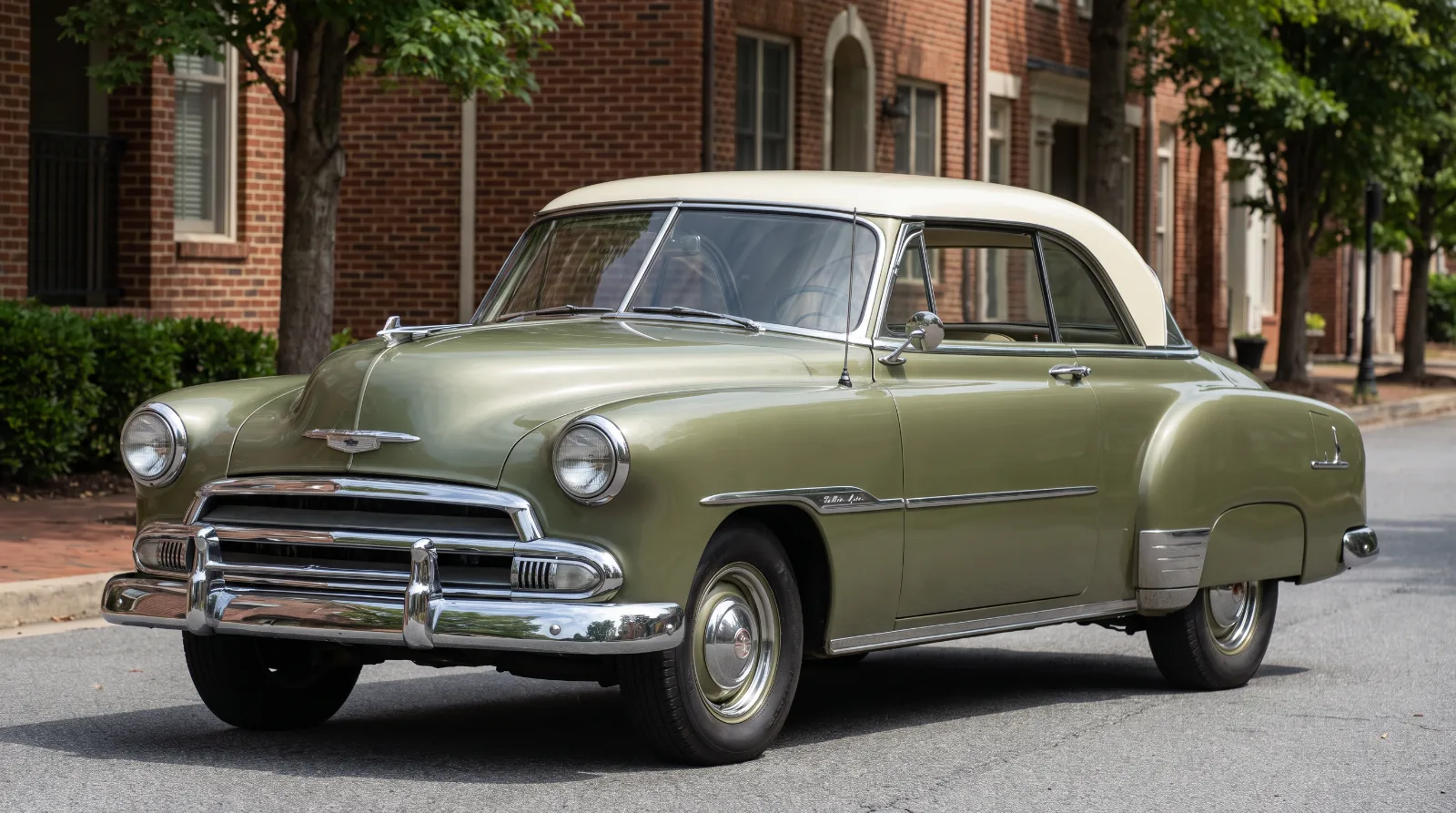
1951 Chevrolet Hardtop
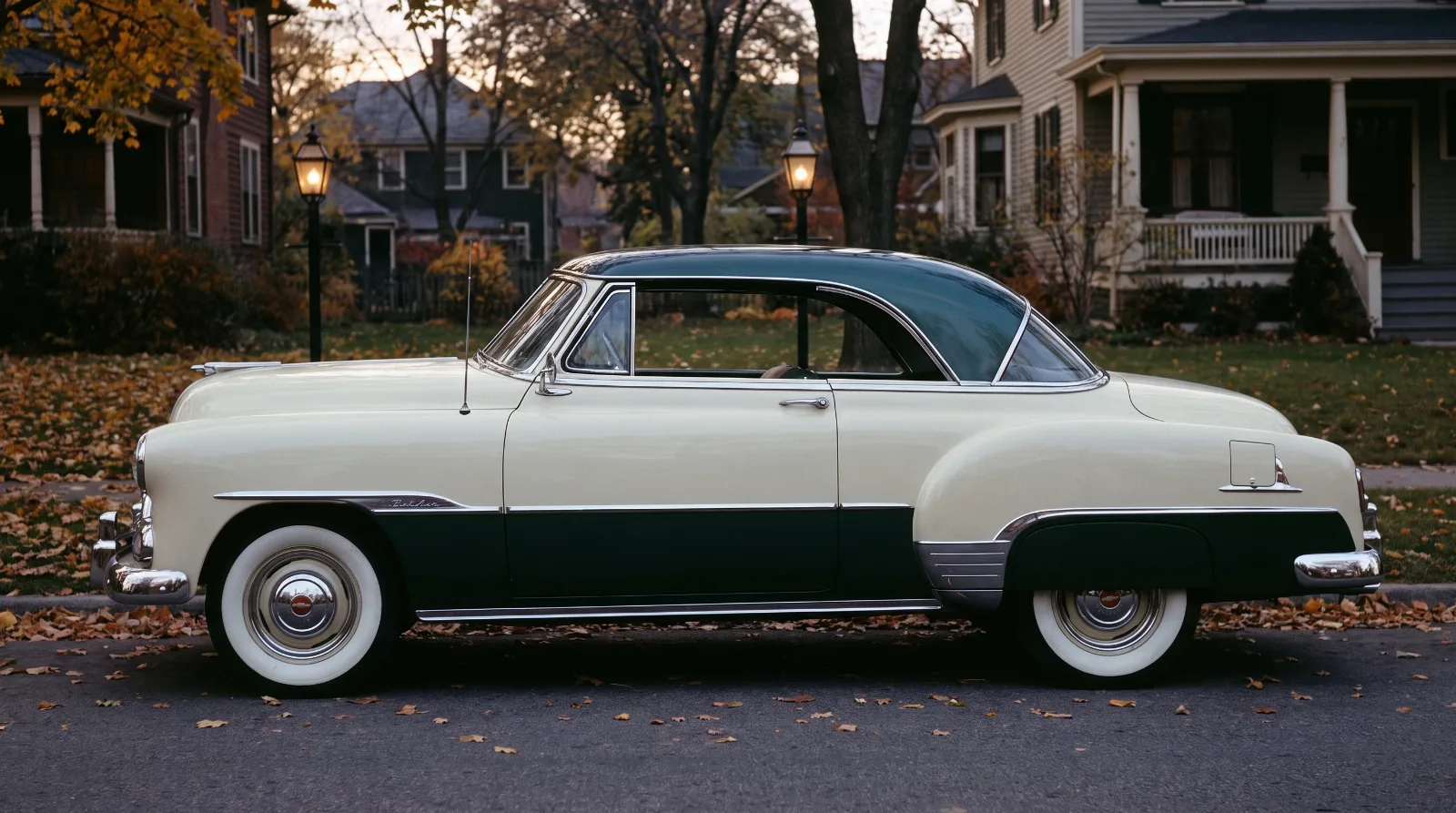
Chevrolet built exactly one hardtop in 1951 and it was called the Bel Air. That is the whole answer, and it saves a lot of time when a listing says hardtop and the photographs show something with a post in the middle of the door opening. If it has a post, it is a coupe. If it does not, it is a Bel Air, and it is worth considerably more.
What follows is what a hardtop actually is, why Detroit went mad for them in the space of about eighteen months, and how to check that the one you are looking at left the factory that way.
What a hardtop is, and why it mattered
A hardtop is a car with a fixed steel roof and no B-pillar. Wind the door glass and the rear quarter glass down and the whole side of the car is open from the windshield to the rear pillar, with nothing but air in between. The idea was to sell the look of a convertible with the top down to people who wanted a roof over their heads, and the trade press of the day called it a hardtop convertible, which is a clumsy phrase that describes it perfectly.
General Motors got there first. The pillarless roof arrived in the middle of 1949 on the big cars, and for 1950 it came down to the smaller bodies: Chevrolet got the Bel Air, Pontiac got the Catalina, Oldsmobile got the Holiday. Chevrolet built 76,662 Bel Airs in that first year at $1,741 apiece, and they outsold the folding-top convertible by roughly two to one. That is the number that changed the industry. Everybody could see that most buyers wanted the shape of an open car and none of the inconvenience.
| Year | Model | Price | Built |
|---|---|---|---|
| 1950 | Styleline De Luxe Bel Air | $1,741 | 76,662 |
| 1951 | Styleline De Luxe Bel Air, model 2154 | $1,900 | 103,356 |
By 1951 the Bel Air was outselling the convertible five to one, and it was the most expensive closed Chevrolet you could buy that was not a station wagon. The name went on to mean something entirely different a few years later, but in 1951 Bel Air was a body style, not a trim level.
How to verify a real hardtop
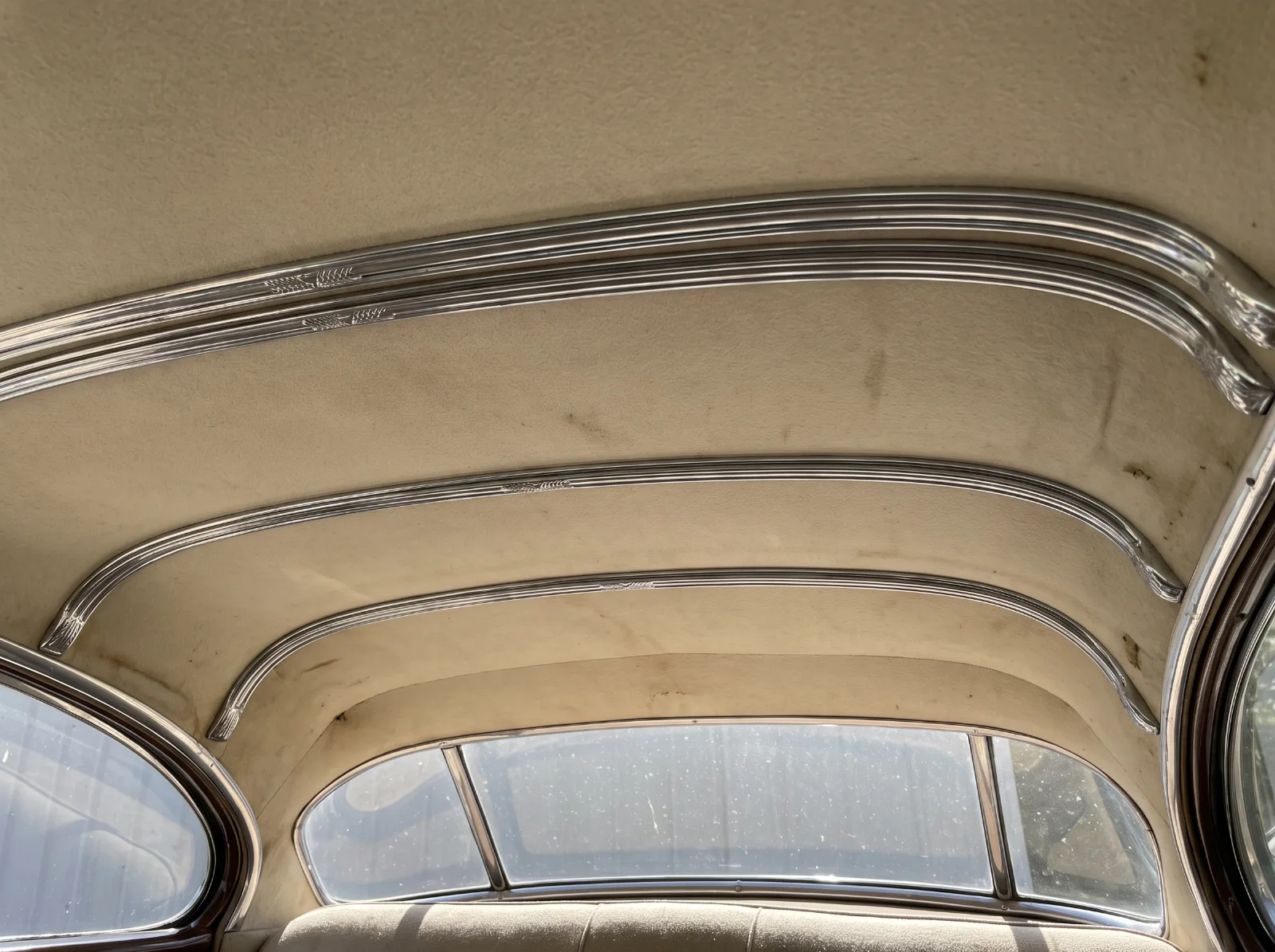
The good news is that this is one of the easier things to check on a 1951 Chevrolet, because a hardtop roof is not something anybody fabricates.
Both windows down. Ask the seller for one photograph with the door glass and the quarter glass fully lowered. If there is steel between them, it is a sport coupe. That single image settles it before you drive anywhere.
The model number on the body tag. Under the hood, on the firewall, the body plate carries the model. A 1951 Bel Air is model 2154. A De Luxe sport coupe is 2124. They are one digit apart and completely different cars.
The serial plate on the driver's door post. First letter is the year, J for 1951. Second letter is the series, K for De Luxe. The Bel Air only ever came as a De Luxe, so a Bel Air with a J in the second position is telling you something is wrong.
The headliner bows and the interior. The Bel Air had the best interior Chevrolet offered that year, with better cloth, leather-grain trim available and courtesy lights in the rear pillars. A stripped-out plain interior in a car claiming to be a hardtop deserves a longer look.
Check this first
- Door alignment with the door shut and the glass up. Nothing at the top of the door opening carries the glass on a hardtop. Worn hinges show as a sagging door and a glass that will not seal at the top.
- The quarter window channels and their felts. This is where a hardtop leaks, and it is where the money goes. Wet carpet in the rear footwell almost always starts here.
- Rear window rubber. The second leak. Water gets past it, runs down inside the quarter and rots the floor and the lower quarter panel from behind.
- Floors, both footwells and under the rear seat. Lift everything. A dry-looking carpet over a rotten pan is the oldest trick there is.
- Lower rear quarters and the trunk drop. These are quarter panel repairs on a hardtop, which is real bodywork and not a patch.
- Trim completeness. Bel Air specific bright work, the headliner bows and the rear pillar courtesy lights are hard to find and expensive when you do.
What it is like to own compared with a post car
I have owned both and I will tell you honestly that the sport coupe is the easier car. The hardtop looks better, sits better in a photograph and is worth more, and every one of those advantages comes from the same missing piece of steel that makes it harder to keep tight.
Without a B-pillar, the door glass has nothing to lean against at the back and the top edge of it has to seal against the roof rail on its own. Get the hinges, the glass adjustment and the channels right and it is fine for years. Let any one of the three go and you have wind noise, water in the carpet, and a door you have to lift to close. That is not a fault in the design, it is just what a hardtop asks of you.
"A hardtop is a convertible that kept its roof. It leaks in the same places, it flexes in the same places, and it costs the same to put right. What it does not do is fold, which is the only part everybody remembers."
— Earl Dawson
Underneath, it is the same 1951 Chevrolet as everything else in the range. The 115 inch wheelbase, the six up front, hydraulic drums at all four corners and six volt electrics with a negative ground. Standard is the 216.5 cubic inch six at 92 horsepower. The 235.5 at 105 horsepower came only with Powerglide, and since the Bel Air was a De Luxe, it was one of the models that could be ordered that way.
Where the hardtop sits in the 1951 range
At $1,900 the Bel Air was the second dearest car Chevrolet listed, behind the convertible at $2,020 and the station wagon at $2,200. It was aimed squarely at somebody trading up from a sedan who wanted the neighbours to notice, and the sales figures say plenty of people were exactly that.
Today it is the 1951 body style that has held its value best, and the one where condition matters most, because the roof structure is what you are paying for and the roof structure is what suffers when a car is left outside. A good sport coupe is very often a better buy than a rough hardtop, and I have said so to people who did not want to hear it.
The full account of the car itself, its trim and its place in the lineup, is in the 1951 Chevrolet Bel Air. If you like the open look and want the real thing, the folding-top car is covered in the 1951 Chevrolet convertible. And the range as a whole, both series and every body style Chevrolet listed that year, is in the full 1951 range.
Sources and notes
- 1950: the birth of the Chevrolet Bel Air, Mac's Motor City Garage - 76,662 Bel Airs built in 1950 at $1,741, outselling the convertible two to one, the bright headliner bows and rear pillar courtesy lights, and the Pontiac Catalina and Oldsmobile Holiday as its A-body siblings.
- 1951 Chevrolet passenger car models chart, The Old Car Manual Project - model 2154 Bel Air coupe against model 2124 sport coupe and 2134 convertible coupe, all within series 2100.
- 1951 Chevrolet De Luxe Series specifications, Conceptcarz - the Bel Air at $1,900 with 103,356 built, the convertible at $2,020 and the station wagon at $2,200, plus the shared 115 inch wheelbase.
- Chevrolet Deluxe, Wikipedia - the Bel Air introduced for 1950 as a hardtop coupe within the De Luxe range, its upgraded interior, and Powerglide restricted to De Luxe and Bel Air models.
- Stored 27 years: 1951 Chevrolet Bel Air hardtop, Barn Finds - the pillarless roof arriving on the Buick Riviera in mid-1949 and reaching Chevrolet, Pontiac and Oldsmobile for 1950, the Bel Air replacing the fastback as the sporty model, and a stock 216 six at 92 horsepower with the column shift manual.
- 1951 Chevrolet Bel Air listings, ClassicCars.com - live inventory showing what the hardtop premium looks like against a post coupe in comparable condition.
More from the garage
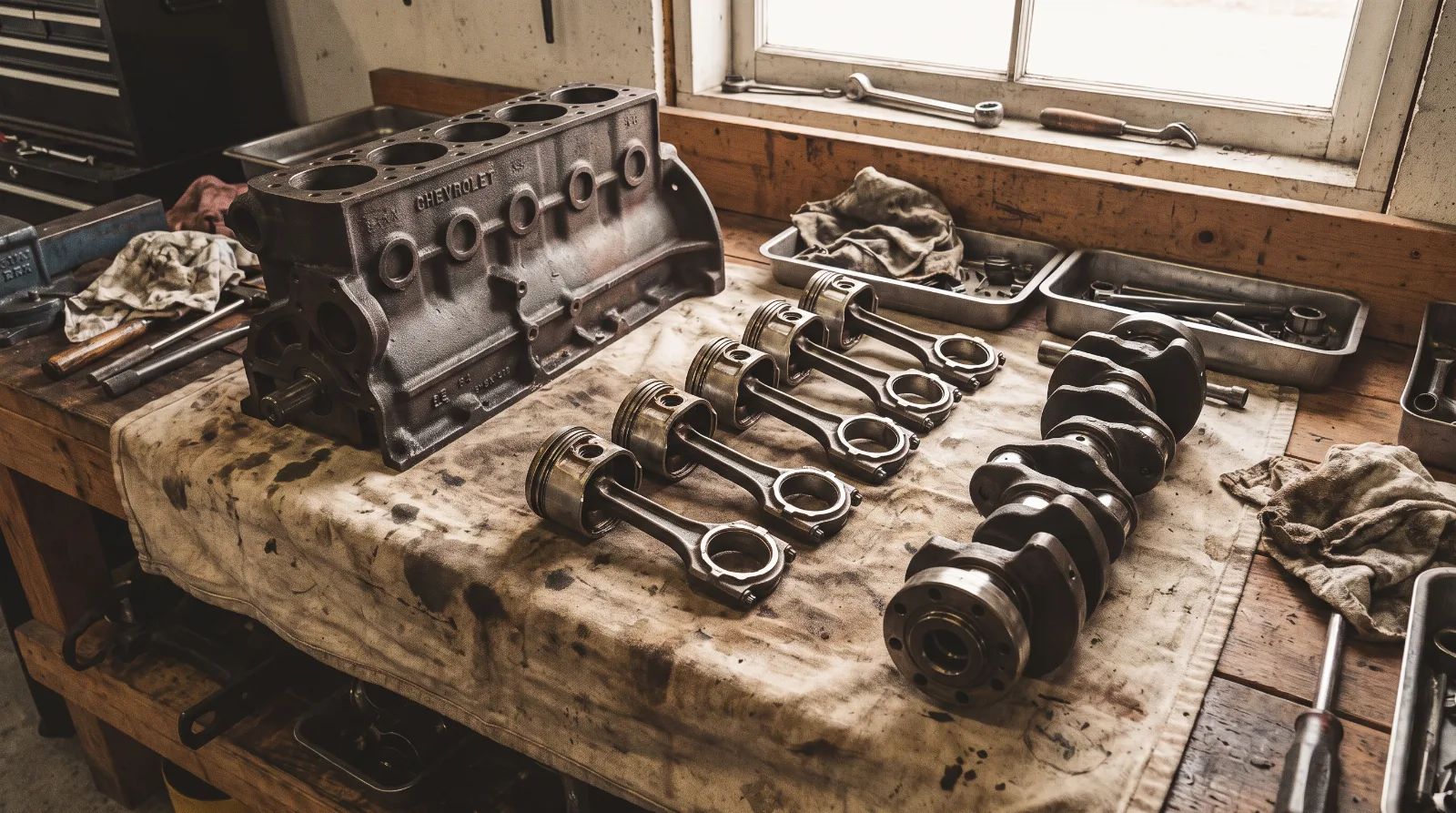
Rebuilding a Chevy 216
Rebuilding a 216 is not like rebuilding anything made after about 1955, and the difference is not the tools. It is that on most engines the botto...
The 1951 Chevrolet Apache
There is no 1951 Chevrolet Apache. The Apache name belongs to the generation of Chevrolet trucks that came after the one built in 1951, and it do...
The 1951 Chevrolet Impala
There is no 1951 Chevrolet Impala. The name did not exist in 1951, the car did not exist in 1951, and nothing Chevrolet built that year was ever...