1951 Chevrolet Truck Parts
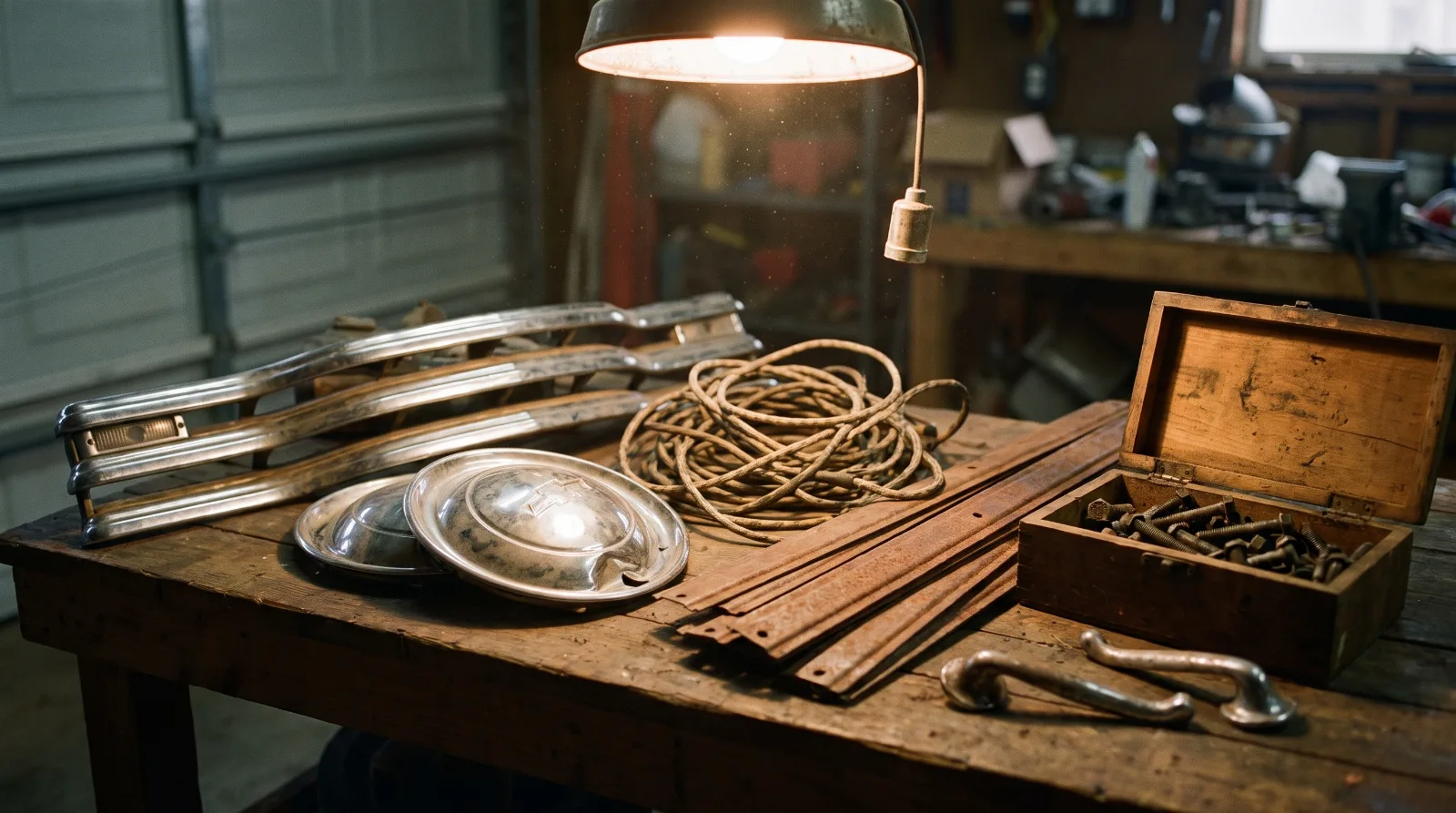
The reason people restore Advance Design trucks rather than something rarer is that you can buy almost everything. Cab sheet metal, fenders, running boards, glass, wiring, brakes, bed wood, complete engine rebuild kits. It is one of the best supported vehicles in the American hobby and it has been for forty years.
What nobody tells you is which parts are the exception, and on a 1951 there are a handful of them, because 1951 sits on the seam between two versions of the same truck. Get the easy parts anywhere. Get the difficult ones right, and know which is which before you commit to a project.
What you can buy without thinking about it
The mechanical side of an Advance Design truck is completely served, and most of it is shared with the passenger cars of the same era, which doubles the supply. The 216.5 cubic inch six was in production from 1947 through 1953 in these trucks, so gaskets, bearings, valve train, water pumps, fuel pumps and carburettor kits are ordinary catalogue items rather than a search.
| Area | Availability | Note |
|---|---|---|
| Engine internals and gaskets | Excellent | Shared with the cars and with 1947 to 1953 trucks |
| Brakes, hoses, master cylinders | Excellent | Reproduced by several suppliers |
| Wiring harnesses | Excellent | Buy the six volt harness, not a generic one |
| Cab sheet metal, floors, corners | Excellent | The single biggest reason these trucks are worth restoring |
| Front fenders and running boards | Excellent | Reproduced new and widely stocked |
| Bed wood, strips and bolt kits | Excellent | Complete kits in zinc-plated or stainless, plus the mounting blocks |
| Grille, bumpers, hub caps | Good | Reproduction and used, depending on how correct you want to be |
| Interior soft trim | Good | Seat covers, windlace, door panels all made |
The suppliers that carry all of this are the same handful of names people have been ordering from for decades. Jim Carter Truck Parts has been the specialist for the 1947 to 1955 range for a very long time and holds a large stock of used General Motors parts alongside the reproductions. Chevs of the 40s catalogues by year, which is the right way round for a 1951, and Classic Industries covers the range with a mix of restoration and street rod parts. Between them there is very little you cannot get.
The 1951 parts that are not straightforward
Five things. Learn them and you will avoid most of the mistakes people make on these trucks.
Doors. The 1951 door is the only Advance Design door that carries a vent window and a turndown outside handle at the same time. Vent windows arrived for 1951; for 1952 Chevrolet went to push-button handles. So a 1952 door shell is not a straight swap unless you are prepared to accept the wrong handle, and a 1950 door has no vent window at all.
Bed boards. Chevrolet changed from a nine-board floor to an eight-board floor partway through 1951. Both are correct. If you order a kit for the wrong half of the year you will have a bed that is technically period and visibly wrong for your truck, so establish which one you have before you order wood.
Speedometer and gauges. A 1951 reads to 80 miles an hour. From 1952 it reads to 90. A 90 mph unit in a 1951 dash is a very common thing and a very obvious one to anybody who knows.
Chrome knobs. 1951 is the last year for the chrome inside window handle knobs and the chrome wiper knob. For 1952 they went maroon. These are small parts and they are the sort of detail that separates a careful restoration from a quick one.
Nu-Vue corner glass. If the truck is a five window, the two curved corner panes and their seals are the expensive glass on the vehicle. Price them before you buy a five window with cracked ones, because they are most of the reason people fit flat glass and hope nobody looks.
"Every catalogue in the country will sell you a 1947 to 1955 part. The truck does not know that. Find out which half of 1951 yours came from before you spend a dollar on wood."
— Earl Dawson
Series-specific parts, and what does not interchange
Above the frame, all three light chassis are the same truck. The cab, the nose, the doors, the glass, the dash and the front sheet metal are identical whether the hood says 3100, 3600 or 3800. That is why the sheet metal supply is so good: one part fits everything.
Below the frame is where it stops. The 3600 and 3800 have their own springs, axles, brakes and wheels, and the wheels are the one that catches people out, because a half-ton runs a six-stud wheel and a three-quarter ton generally runs an eight-stud. A matched set of the heavier wheels in the right size is a genuine shopping job. Bed lengths differ too: 78 inches on the 3100, 87 on the 3600, 108 on the 3800, so bed wood is ordered by series as well as by year.
Panel, canopy express and Suburban bodies are the real orphans. Everything they share with the pickup is well supported and everything specific to those bodies is not. Rear doors, tailgates, lower body corners and interior fittings for those are repair jobs and used-parts hunts rather than catalogue purchases, which is worth knowing before you buy a rotten one.
Check this first
- Which half of 1951 the truck is from. Nine boards or eight. It governs the bed wood, the strips and the bolt count.
- Whether both doors are 1951 doors. Mixed handles across the two doors almost always means one came off another truck.
- Six volt, negative ground. Buy the correct harness and the correct components. Chevrolet ran negative ground when Ford, Chrysler and GMC did not.
- Series, before ordering anything under the frame. Springs, axle, brakes, wheels and bed length all follow the 3100, 3600 or 3800 split.
- Whether the body is a pickup. If it is a panel, Suburban or canopy express, budget for fabrication on the body-specific pieces.
- What has already been swapped in. A truck with a later engine, a later gearbox or a modern axle is a fine thing to own, and it changes every part number you will ever order for it.
Buying used, and buying once
Used parts still matter on these trucks, and not only for the pieces nobody makes. Original General Motors sheet metal is heavier gauge than most reproduction stampings and it fits without persuasion, which is worth a great deal on a job you want to do once. The specialist suppliers hold used stock alongside the new, and swap meets are still where the small correct parts turn up.
If you are still working out which truck you are dealing with, the year-by-year identification is in the truck identification guide, and the cab option that changes what glass you need is in the 1951 Chevrolet 5 window pickup.
Sources and notes
- 1947-55 Chevrolet GMC Advance Design trucks, Jim Carter Truck Parts - parts readily available across the range, bed wood sets, bed strips and bolt kits, mounting blocks, wiring harnesses, brakes and interior trim, and how easily these trucks accept a later engine.
- 1947-1955 miscellaneous truck parts, Jim Carter Truck Parts - reproduction stock alongside a large holding of used General Motors parts, and how much of the catalogue is listed across broad year ranges rather than by model year.
- 1951 Chevy truck parts, Chevs of the 40s - a catalogue organised by model year, covering brakes, engine, electrical, glass, grilles, beds and tailgates, and noting the mid-1951 change from nine boards to eight.
- 1947-1959 Chevy truck model years identification guide, Classic Industries - the 1951 details that govern which parts fit: vent windows with turndown handles, the 80 mph speedometer against 1952's 90, the last year of chrome window and wiper knobs, and the mid-year bed change.
- Comprehensive history of the 1947-1955 first series Advance Design, DevesTechNet - bed lengths of 78, 87 and 108 inches by series, all beds 50 inches wide, and the 216.5 Thriftmaster six used through 1953.
- Sun-baked to perfection: 1951 Chevrolet 3600, Barn Finds - eight-stud wheels on the three-quarter ton against six on the half-ton, and how mixed-year door handles show up on a truck that has been apart.
More from the garage
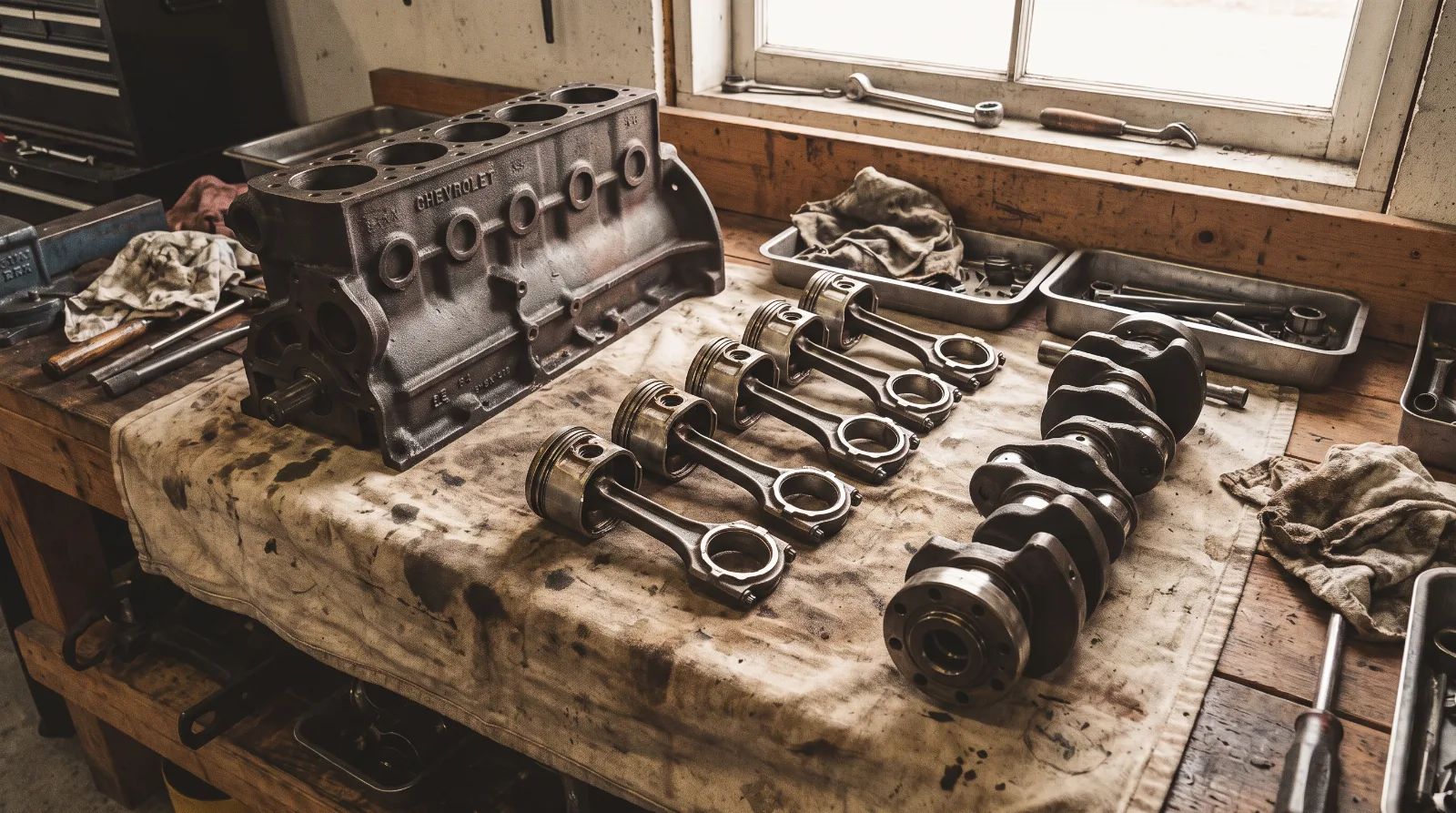
Rebuilding a Chevy 216
Rebuilding a 216 is not like rebuilding anything made after about 1955, and the difference is not the tools. It is that on most engines the botto...
The 1951 Chevrolet Apache
There is no 1951 Chevrolet Apache. The Apache name belongs to the generation of Chevrolet trucks that came after the one built in 1951, and it do...
The 1951 Chevrolet Impala
There is no 1951 Chevrolet Impala. The name did not exist in 1951, the car did not exist in 1951, and nothing Chevrolet built that year was ever...