1951 Chevrolet Panel Truck
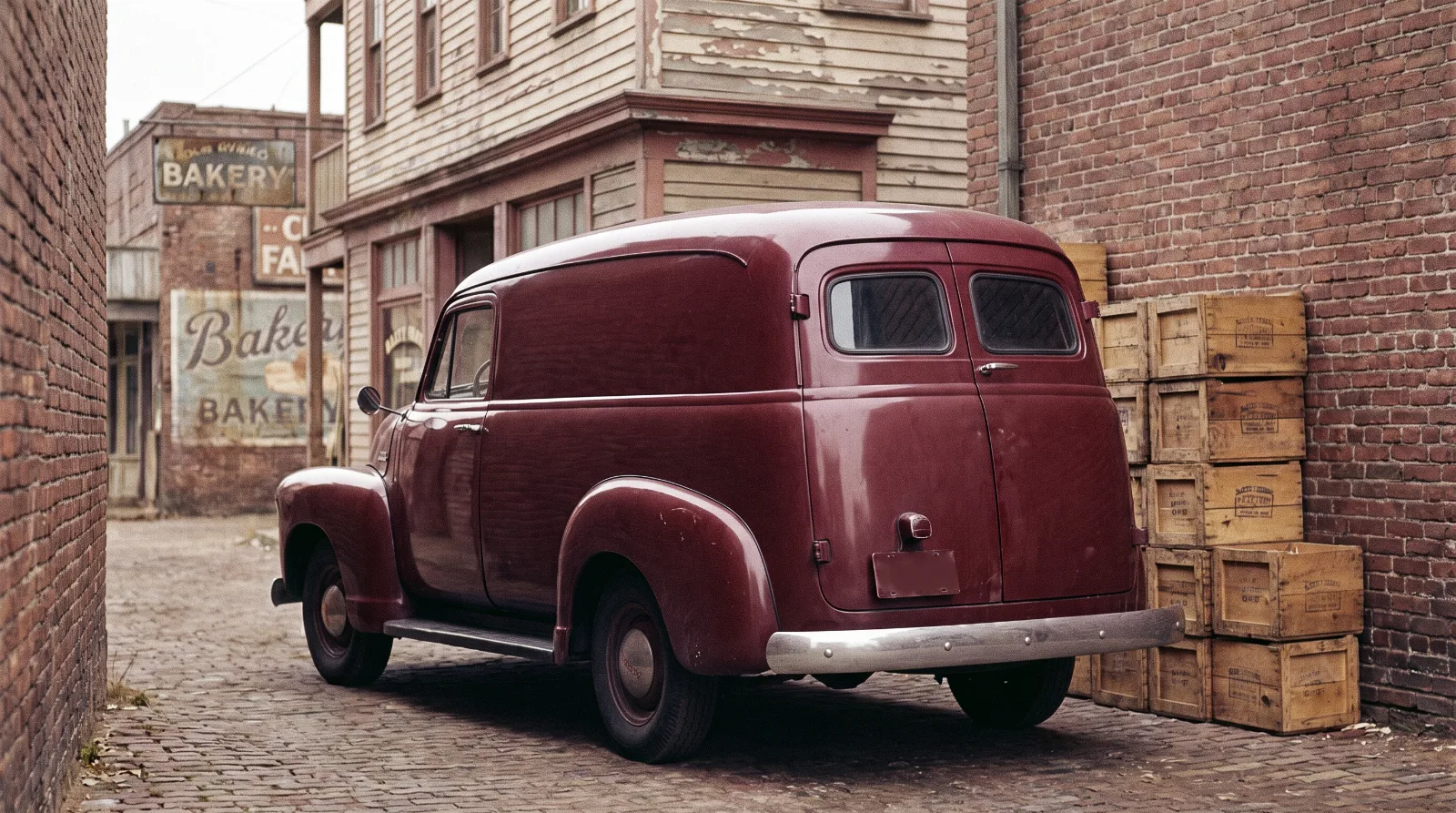
A panel truck is a pickup with the bed replaced by a closed steel box, and in 1951 Chevrolet would sell you one on the half-ton chassis or the one-ton. It was the delivery vehicle of small-town America: the bakery, the plumber, the laundry, the parts runner. Nobody bought one for pleasure and nobody kept one after it wore out, which is exactly why a good one is harder to find today than a pickup and why the ones that survive tend to have a story attached.
They are also, to my eye, the best-looking body Chevrolet put on the Advance Design chassis. That long unbroken flank is why sign painters loved them then and why people still buy them to put a business name on.
What Chevrolet built
The half-ton panel is model 3105, on the 116 inch wheelbase, the same chassis as the 3100 pickup everybody knows. The one-ton panel sits on the 137 inch JS chassis, runs to about 223.88 inches overall, weighs around 4,220 pounds empty and carries a 7,000 pound gross rating on single rear wheels with six-ply tires.
| Half-ton panel | One-ton panel | |
|---|---|---|
| Series | 3100, model 3105 | 3800, series letter JS for 1951 |
| Wheelbase | 116 in | 137 in |
| Rear access | Twin side-hinged doors | Twin side-hinged doors |
| Engine | 216.5 six, 92 hp | 216.5 six, 92 hp |
| Gearbox | Three-speed, four-speed optional | Four-speed only |
Both share the cab, the nose, the doors and every year-specific detail with the pickups, so a 1951 panel is dated exactly the same way as a 1951 pickup: vent windows in the door glass together with turndown outside handles, a combination that existed for one model year only, a speedometer reading to 80 rather than 90, and the last year of the chrome inside window and wiper knobs.
What a panel is like to drive
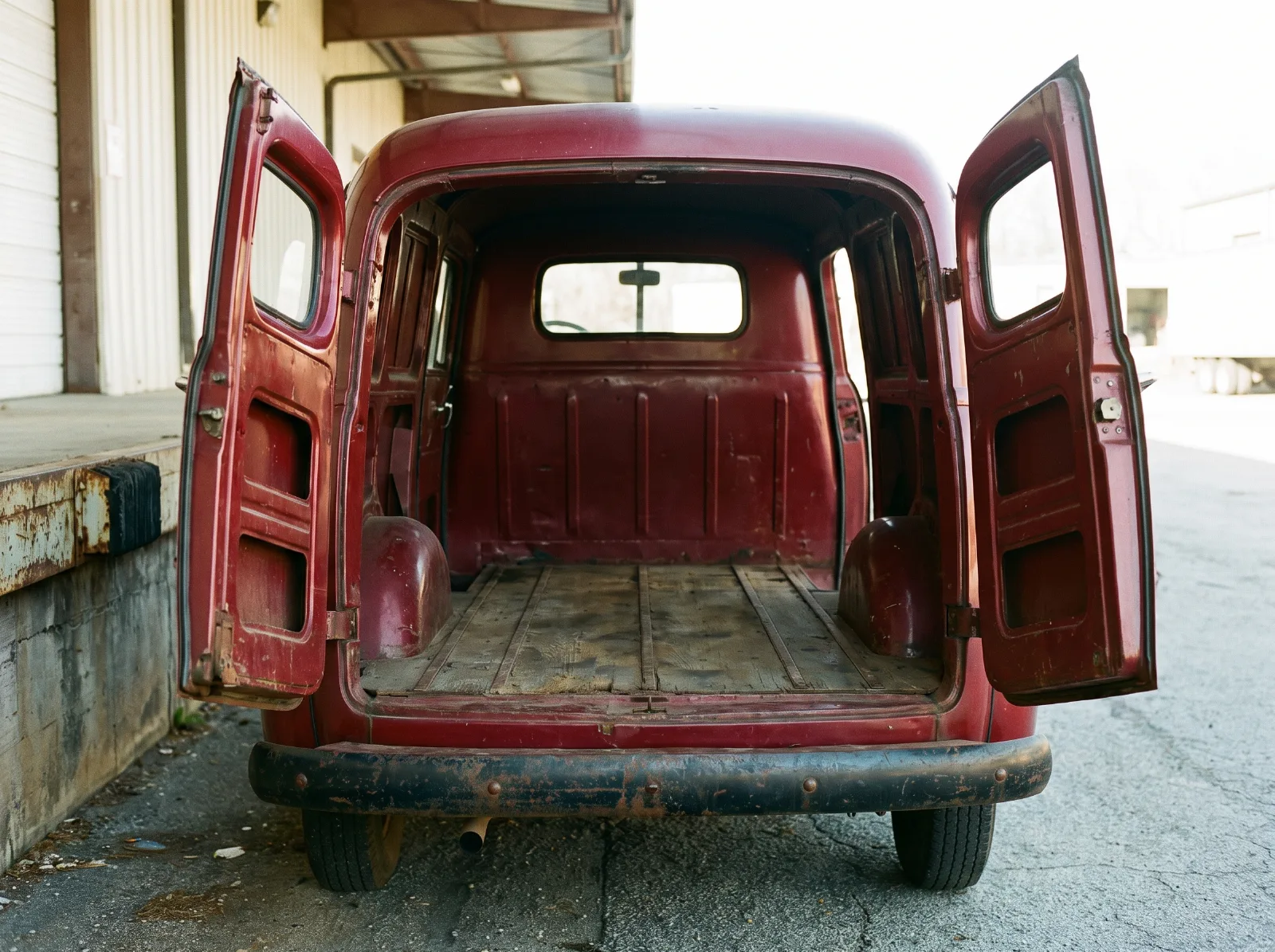
Different from a pickup in exactly two ways, and both of them are about what you can see.
There are no windows behind the doors. None. You have the windshield, the door glass, and whatever glass the rear doors were given, and that is the whole of your view out. Reversing a panel truck is a skill you acquire rather than a thing you do, and mirrors on both sides are not optional whatever the truck came with. Anybody who tells you the blind spot is manageable has driven one around a yard and not through a town.
The second difference is noise and heat. A closed steel box behind the cab with no headliner and no lining reflects everything back at you: the exhaust, the axle, the road. Panels that get used regularly almost always end up with sound deadening in them, and that is not a betrayal of originality so much as an acknowledgement of what it is like in there in August.
"Everybody who buys a panel says they will keep it plain. Six months later there is a business name on the side, because the truck asks for it. That flank was drawn to be painted on and it knows it."
— Earl Dawson
Underneath, it is the ordinary 1951 Chevrolet truck. The 216.5 cubic inch six at 92 horsepower and 176 pound-feet, six volt electrics with a negative ground, hydraulic drums at all four corners. There is no automatic in a 1951 Chevrolet truck of any body style, so a panel with two pedals has been changed.
Where a panel truck rots
Everything that goes wrong on a pickup goes wrong on a panel, and then the body adds problems of its own. The important thing to understand is that the rear body is structural in a way a pickup bed is not, so rot in it is a repair rather than a replacement.
Check this first
- The lower rear corners of the body, inside and out. This is where panels die. Water and road salt get in at the bottom of the rear doors and work forward along the floor edges.
- The load floor and the sills under it. A panel spent its life with things slid in and out over that floor. Worn, patched and rotten floors are normal, and the sills below are what matter.
- Rear door frames, hinges and the latch pillar. Heavy doors on a body that flexes. Sagging doors that will not latch are usually a rotten pillar, not a hinge.
- The roof seams and the drip rails. Long flat roof, long seams, and nobody ever looked at them.
- Cab mounts and cab corners. Same as any Advance Design, and just as serious.
- Old signwriting under the paint. Worth looking for rather than avoiding. A panel with its original business name still under a repaint has a history you can research, and that is worth money.
The parts situation is honest rather than good. Everything shared with the pickup is well supported: cab sheet metal, front fenders, running boards, glass, mechanical parts, wiring. Everything specific to the panel body is not, and the rear doors and the body's lower panels are the pieces you will be repairing rather than buying. That is the main reason to buy the soundest panel you can afford rather than the cheapest.
Why buy one now
Because it does something a pickup cannot. A panel is lockable, dry and out of sight, so it is a genuinely usable vehicle for anybody who moves tools, stock or equipment. Because it is rarer than the pickup and always will be, since these were worked until they were worn out and then scrapped. And because the flank is the best canvas in the hobby, which is why so many of them end up in front of a shop with a name on the side.
The reason not to buy one is the body repair. If a panel is rotten in the rear corners and the floor, you are looking at fabrication rather than shopping, and that is a different skill and a different budget.
The passenger-carrying version of this idea, the same all-steel body arranged for eight people instead of freight, is the 1951 Chevrolet Suburban. The one-ton chassis that carried the bigger panel is the 1951 Chevrolet 3800, and the whole truck range for the year is in the Advance Design line. The open-bed half of the same family, and the cab option that decides what one is worth, is in the five window truck.
Sources and notes
- Comprehensive history of the 1947-1955 first series Advance Design, DevesTechNet - panels with twin side-hinged rear doors, the canopy express with its low tailgate and waterproof roll-up curtains, the 216.5 Thriftmaster at 92 horsepower and 176 pound-feet, and the 116 and 137 inch wheelbases.
- Chevrolet 3105 panel truck, Car.info - model 3105 as the half-ton Advance Design panel with the 3.5 litre inline six.
- Car of the week: 1952 Chevrolet 1-ton panel truck, Old Cars Weekly - the one-ton panel on a 137 inch wheelbase at 223.88 inches overall, 4,220 pounds standard weight, a 7,000 pound gross rating on single rear wheels with six-ply tires, and JS as the 1951 series letter.
- 1947-1959 Chevy truck model years identification guide, Classic Industries - the 1951 cab details shared by every Advance Design body: vent windows with turndown handles, the 80 mph speedometer, and the last year for chrome window and wiper knobs.
- Chevrolet Advance Design, Wikipedia - the panel truck as one of the standard bodies in the range, the 216 cubic inch six used from 1947 to 1953, and three and four-speed manuals with no automatic until 1954.
- Chevrolet panel truck listings, ClassicCars.com - live inventory showing how panels are priced against pickups of the same period and condition.
More from the garage
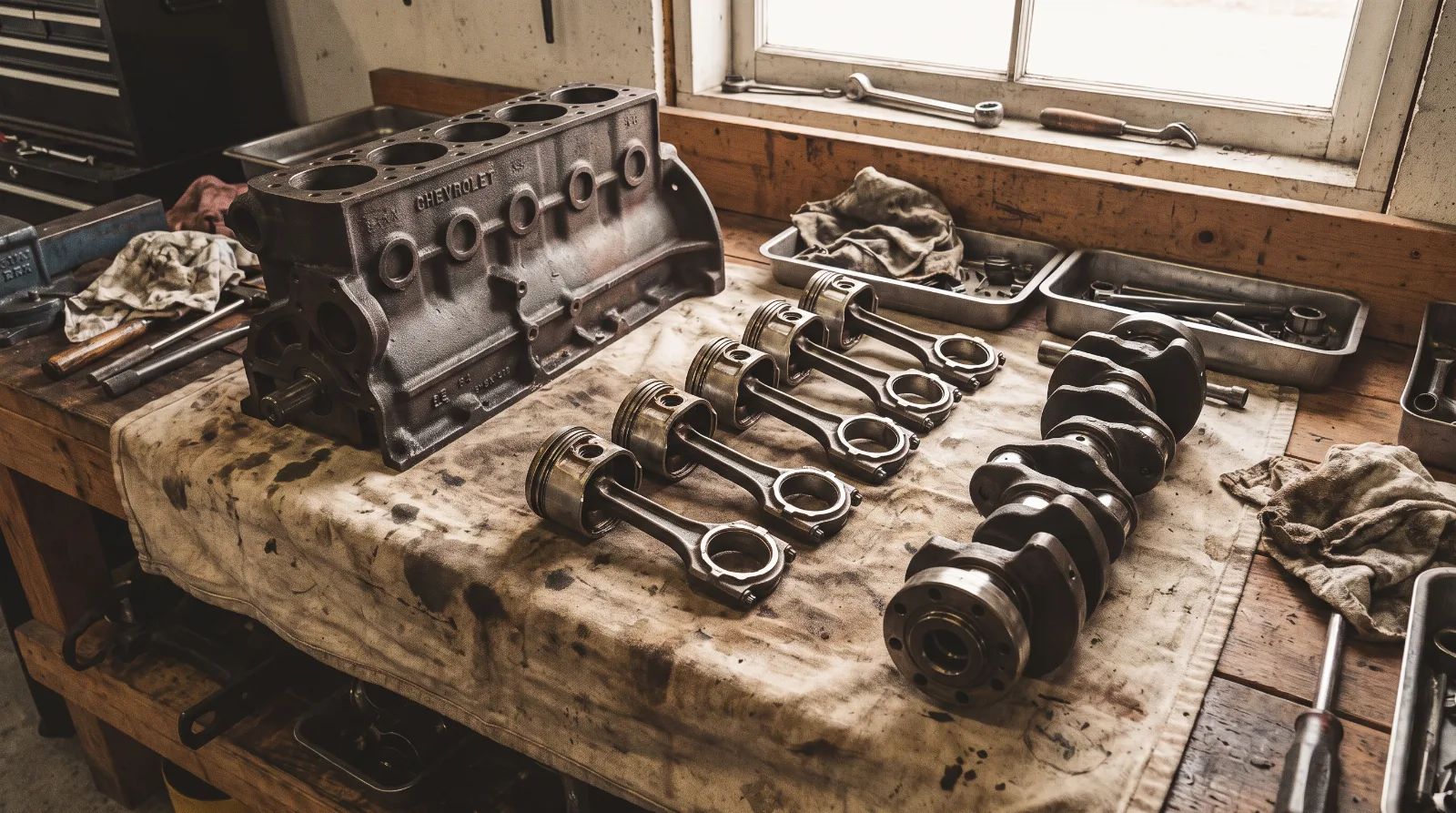
Rebuilding a Chevy 216
Rebuilding a 216 is not like rebuilding anything made after about 1955, and the difference is not the tools. It is that on most engines the botto...
The 1951 Chevrolet Apache
There is no 1951 Chevrolet Apache. The Apache name belongs to the generation of Chevrolet trucks that came after the one built in 1951, and it do...
The 1951 Chevrolet Impala
There is no 1951 Chevrolet Impala. The name did not exist in 1951, the car did not exist in 1951, and nothing Chevrolet built that year was ever...