1951 Chevrolet Fleetline Special
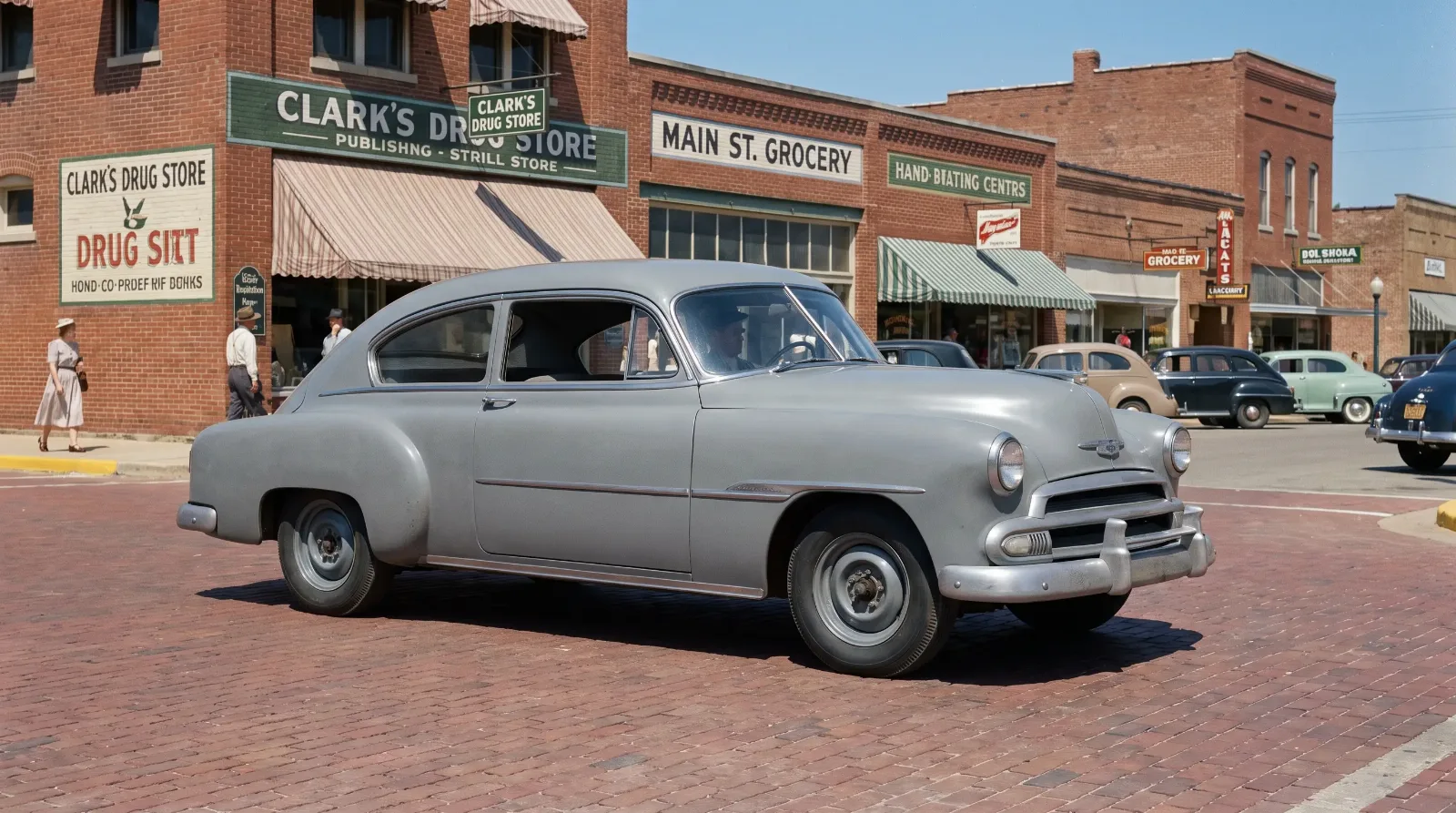
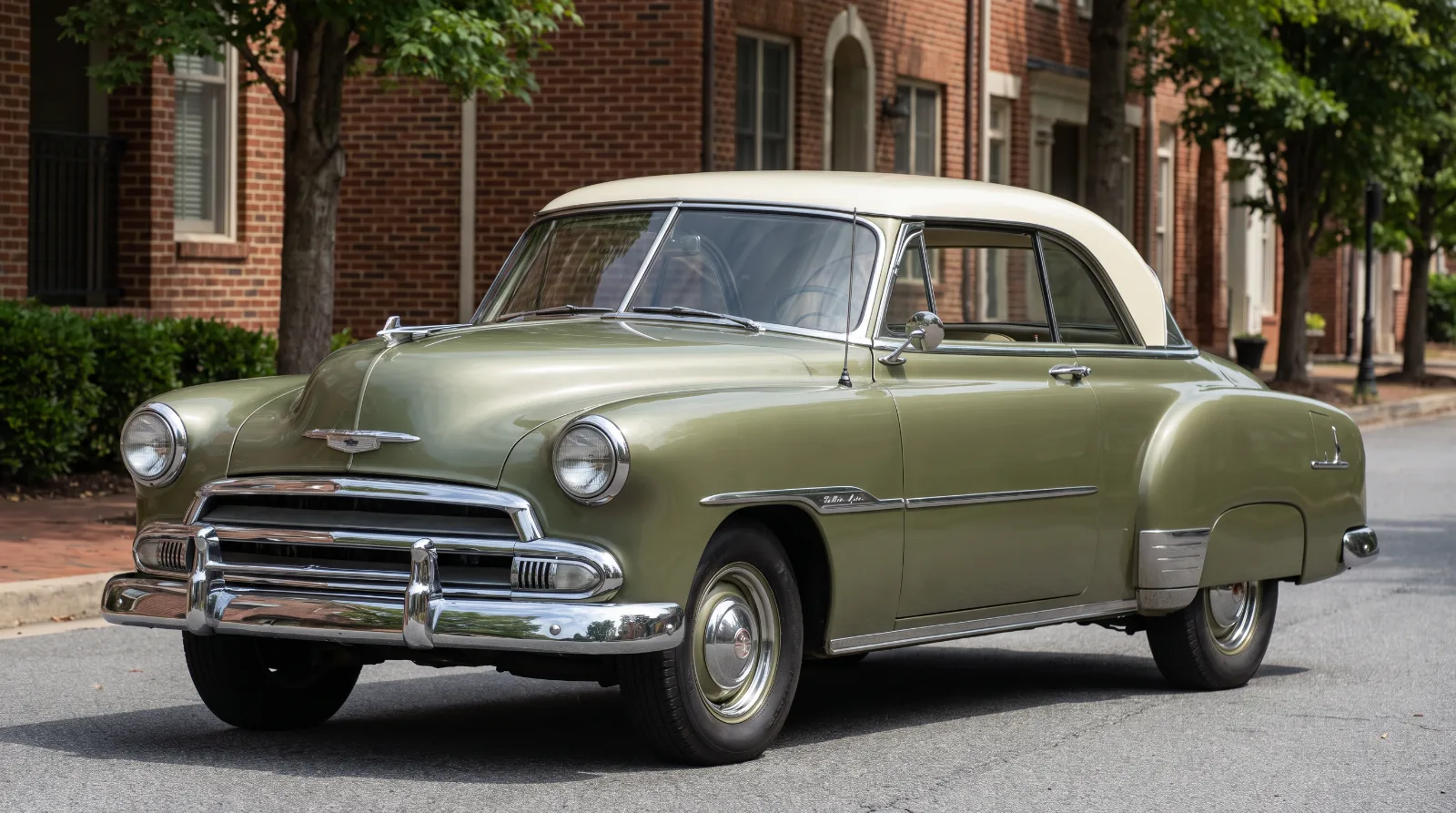
The 1951 Chevrolet Fleetline Special is the fastback that most folks picture when they think of a postwar Chevy sliding down Main Street. Long sloping roofline, no notch at the back glass, the deck falling away in one clean line from the top of the windshield to the bumper. Chevrolet called that shape the Fleetline, and for a few years it was the sportiest silhouette in a very ordinary lineup. The word "Special" on the end tells you where this one sat on the ladder. It was the base trim, the plainer of the two series, the car built for the family that wanted the good-looking body without paying for every last piece of chrome. I have owned and worked on these long enough to have a soft spot for them, and I want to walk you through what a 1951 Fleetline Special actually is before you go chasing one.
By 1951 the fastback was already living on borrowed time, and that is a big part of why the car matters to us now. The notchback Styleline was outselling it, the trunk was winning the argument, and Chevrolet would soon quietly retire the shape. So a Fleetline Special is a snapshot of a body style on its way out the door. If you want the fuller picture of where this car sat in the showroom, walk through the 1951 Chevrolet lineup and you will see how the pieces fit together.
What the Fleetline was
Chevrolet split its 1951 cars into two body families. The Styleline was the notchback, the conventional three-box sedan and coupe with a distinct trunk hanging off the back. The Fleetline was the fastback, that unbroken roofline running all the way down. Same chassis underneath, same running gear, different roof and rear.
The fastback was not new in 1951. Chevrolet had been building the shape since before the war, and the two-door version had carried the "Aerosedan" name back in the 1940s. By the time we get to 1951 the styling had been reworked to match the all-new postwar body Chevrolet introduced for 1949, but the idea was the same. A roof that swept, a back end that flowed, a car that looked like it was moving when it sat still. It was the closest thing to a sporty look you could get from Chevrolet in those years, and it cost the buyer very little extra over the plain sedan.
Fleetline Special versus Fleetline De Luxe
Here is where the "Special" part earns its keep. Chevrolet sold the 1951 car in two trim series, and both the Styleline and the Fleetline body came in each. The Special was the base line. The De Luxe was the step up. Same body shell, but the money bought you appointments.
On a Special you got the plainer treatment. Less bright trim, simpler interior fabric, fewer of the little chrome touches, and some of the convenience items that came standard on the De Luxe were left off or made optional. The De Luxe wore more brightwork, dressed the interior up, and generally presented as the nicer car in the brochure. Mechanically the two were the same underneath, so a Special is not a slower or lesser-running car. It is a more modestly dressed one. For a lot of buyers in 1951 that was exactly the point. You bought the Special, you saved the difference, and the neighbors still saw that good-looking fastback in your driveway.
If you want to compare the fastback against what the notchback body offered in the same year, take a look at the notchback sport coupe. Set them side by side and the trade the Fleetline made becomes obvious, style at the back in exchange for the trunk space and rear-seat room the notchback gave you.
| Attribute | 1951 Chevrolet Fleetline Special |
|---|---|
| Body style | Fastback (2-door and 4-door sedan) |
| Trim series | Special (base, below De Luxe) |
| Engine | Overhead-valve inline six, 216.5 cu in "Stovebolt" |
| Rated power | 92 hp at 3400 rpm |
| Transmission | 3-speed manual standard; Powerglide 2-speed automatic optional |
| Wheelbase | 115 in |
| Powerglide engine | Larger 235.5 cu in six (105 hp) fitted to automatic cars |
The fastback body, two doors and four
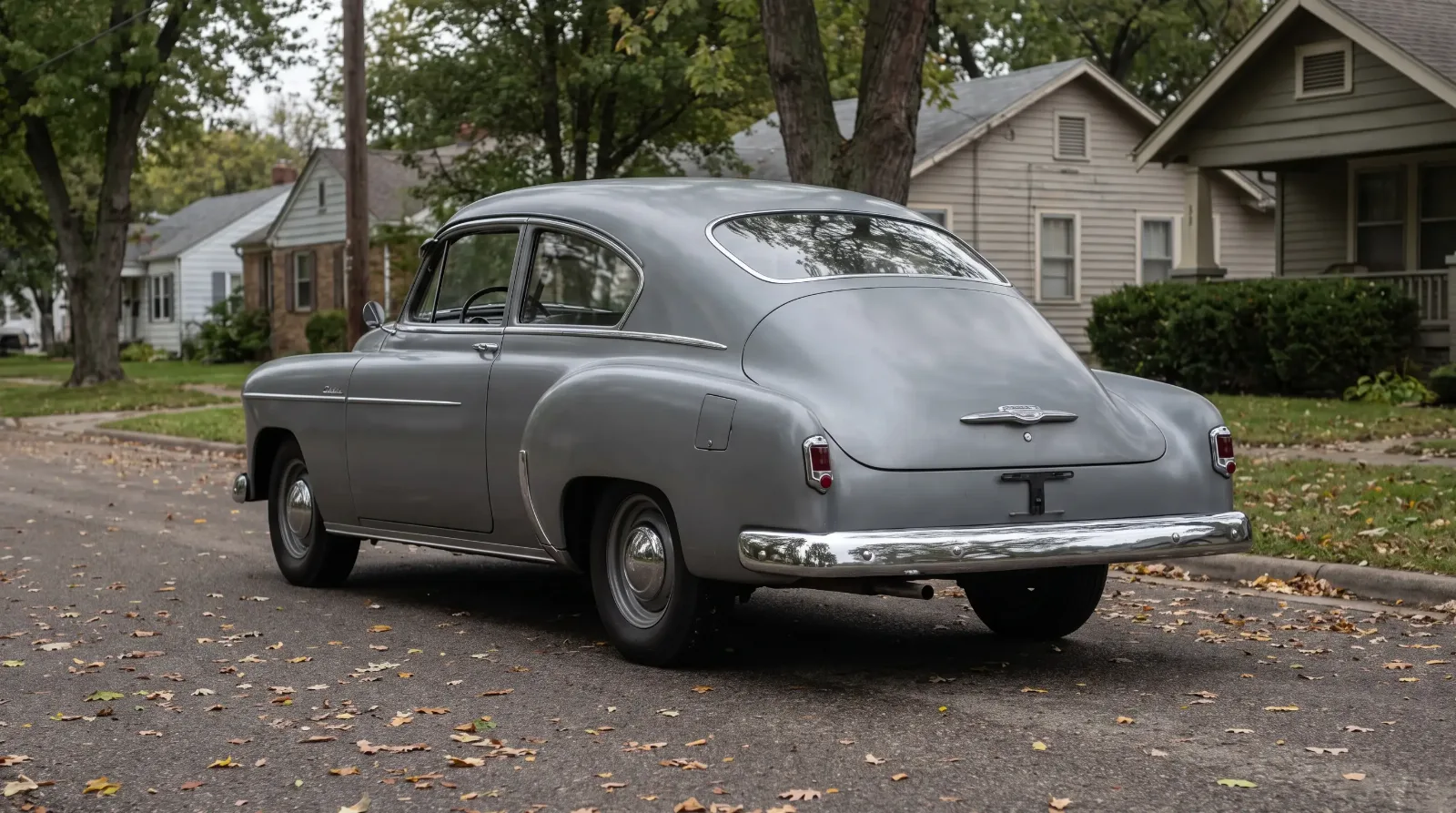
In 1951 the Fleetline was offered as both a two-door and a four-door fastback sedan. That is worth knowing, because a lot of people assume the fastback only ever came as a coupe or two-door. The four-door Fleetline existed, and it is the rarer sight today. Both wore the same sloping roof, so a four-door Fleetline gives you the family-sedan doors with the sporty back end, which is an unusual combination and a large part of the charm.
The body is where the character lives and also where the trouble lives. That long unbroken roof skin is a big panel with nowhere for a rain leak to hide, and the way the deck flows down means the drainage and the trim seams sit in spots that a notchback simply does not have. When you go looking at one, you are buying the body as much as the car. Straight sheet metal on a fastback is harder to find and harder to fix than on the trunk-back cars, because there is more uninterrupted steel to keep true.
Check this first
- The fastback roof and rear quarters. That long roof skin and the sweeping quarters are the signature of the car and the most expensive metal to straighten or replace. Reproduction panels for the fastback are thinner on the ground than sedan parts, so a rusted or waved rear quarter can turn into a fabrication job.
- Floor pans and the trunk area. Water that gets past the back glass or the drains runs down inside the body. Pull the mats and look at the pans and the low spots under the rear seat before anything else.
- The Stovebolt six and its oiling. The 216 relies on a low-pressure splash system with dippers on the rod caps. Listen for a knock and check for oil pressure at idle. A tired bottom end is a rebuild, not a weekend fix.
- Trim and brightwork completeness. Because the Special wore less chrome to begin with, the pieces it did have are model and trim specific. Missing Special trim is harder to source than the common De Luxe brightwork.
- Wood and body mounts. These bodies still used structural elements that rot and body mounts that crush. A door that will not line up is often telling you the body has sagged, not that the hinge is worn.
Under the hood, the Stovebolt six
Every 1951 Chevrolet ran a version of the overhead-valve inline six that people nicknamed the Stovebolt, and the Fleetline Special was no different. The base engine was the 216.5 cubic inch six rated at 92 horsepower. It is not a fast engine and it was never meant to be. It is a torquey, unhurried, long-lived motor that will run a very long time if you keep oil in it and do not lug it. That reputation for durability is a good part of why so many of these cars survived to become somebody's project.
Behind it, the standard gearbox was the three-speed manual with the shifter on the column. The news for 1951 was the automatic. Powerglide, Chevrolet's two-speed automatic, had arrived on the passenger cars the year before in 1950, and it was optional on the 1951 line. Cars fitted with Powerglide got the larger 235.5 cubic inch six to make up for what the automatic took out of the driveline. So a Powerglide Fleetline Special is a slightly different animal under the hood than a stick car. Worth knowing when you look at one and worth checking, because the two are not the same engine.
The end of the fastback
The Fleetline was winding down as 1951 turned into 1952. The buying public had made its choice, and the choice was the trunk. For 1952 the fastback range was cut back to the two-door alone, and the Fleetline body was dropped entirely for 1953. That makes 1951 one of the last full years for the shape, and it is the reason a good Fleetline carries a little extra weight with collectors today. You are looking at a body style Chevrolet was about to abandon.
The Special angle adds a second layer to the rarity. Base cars have always had a lower survival rate than the fancy ones. Plain cars get used up, driven hard, and thrown away, while the De Luxe examples with the nicer trim were more likely to be saved and pampered. So a Fleetline in the Special trim is the less common survivor of an already fading body style. That does not make it valuable in the way a hardtop or a convertible is valuable, but it makes it interesting, and it makes a clean one harder to find than the numbers alone would suggest.
"Folks chase the convertibles and the hardtops and drive right past a fastback sedan. But a Fleetline Special is honest metal with a shape Chevrolet quit building, and I would rather own a straight one of those than a tired ragtop that needs everything. The roofline is the whole point, so buy the best body you can find and let the rest follow."
— Earl Dawson
Buying and restoring a Fleetline Special
My advice on these is simple. Buy the body first and the mechanicals second. The Stovebolt six is a known quantity and parts to rebuild it are around, so a bad engine is a budget line, not a dealbreaker. The fastback sheet metal is the opposite. That is the piece you cannot easily replace, and it is the piece that decides whether the car is a driver or a headache. Get under it, pull the mats, and look hard at that long roof and the rear quarters before you fall in love with the shape.
Mechanical parts, brakes, suspension bushings, gaskets, tune-up pieces, and general 1949 to 1954 Chevrolet running gear are well served by the reproduction and swap-meet world. Trim is the harder hunt, and Special trim harder still, because there was less of it made and less of it saved. If a car you are looking at is missing its correct Special brightwork, plan on time in the classifieds rather than a quick catalog order. When you are ready to see what is out there, what the surviving cars are asking is a sensible way to get a feel for condition and price before you commit.
A 1951 Fleetline Special is not the car that wins the trophy at the big show. It is the car that gets waved at on a Sunday drive, the plain-trim fastback that looks like it is going somewhere. For a buyer who cares more about that unbroken roofline than about counting chrome, it is one of the more satisfying ways into early-1950s Chevrolet ownership. Find a good body, keep the Stovebolt fed, and it will give you years of easy miles the way it gave them to the family that bought it new. For the shape itself, and why Chevrolet gave up on it two years later, see the 1951 Chevrolet fastback.
Sources and notes
- Wikipedia, Chevrolet Fleetline — confirmed the Fleetline as the fastback body, the "Aerosedan" two-door heritage, that 1949 to 1951 cars came in both two-door and four-door, the four-door dropped after 1951, and the Fleetline dropped entirely for 1953.
- Conceptcarz, 1951 Chevrolet Special Series specifications — confirmed the 115 in wheelbase, 216.5 cu in six at 92 hp, the optional 235.5 cu in six at 105 hp, and both two-door (6,441) and four-door (3,364) Fleetline Special sedan production.
- Conceptcarz, 1951 Chevrolet DeLuxe Series specifications — confirmed the 3-speed manual and Powerglide automatic pairing and the Styleline versus Fleetline body split.
- Wikipedia, Powerglide — confirmed the two-speed Powerglide automatic arrived for 1950 as the first automatic in a low-priced car, optional on the 1951 line, paired with the larger six.
- It Still Runs, Chevrolet 216 specifications — confirmed the 216.5 cu in "Stovebolt" overhead-valve six and its low-pressure splash oiling with dippers on the rod caps.
- Motogallery, 1941–1952 Chevrolet Fleetline guide — confirmed the fastback roofline description, the Special versus De Luxe trim relationship, and the body style's decline as buyers moved to the notchback.
More from the garage
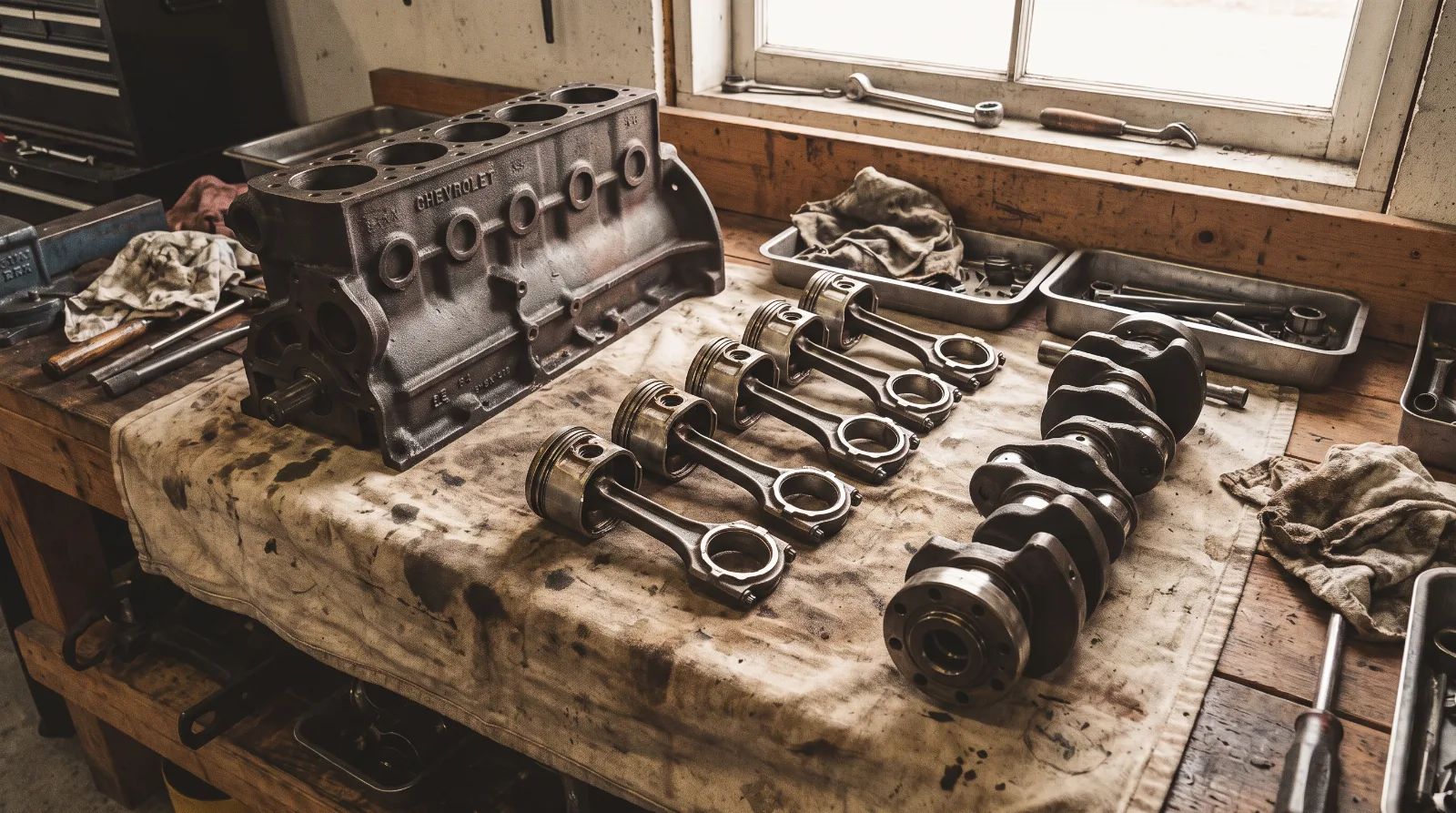
Rebuilding a Chevy 216
Rebuilding a 216 is not like rebuilding anything made after about 1955, and the difference is not the tools. It is that on most engines the botto...
The 1951 Chevrolet Apache
There is no 1951 Chevrolet Apache. The Apache name belongs to the generation of Chevrolet trucks that came after the one built in 1951, and it do...
The 1951 Chevrolet Impala
There is no 1951 Chevrolet Impala. The name did not exist in 1951, the car did not exist in 1951, and nothing Chevrolet built that year was ever...