1951 Chevrolet Styleline De Luxe
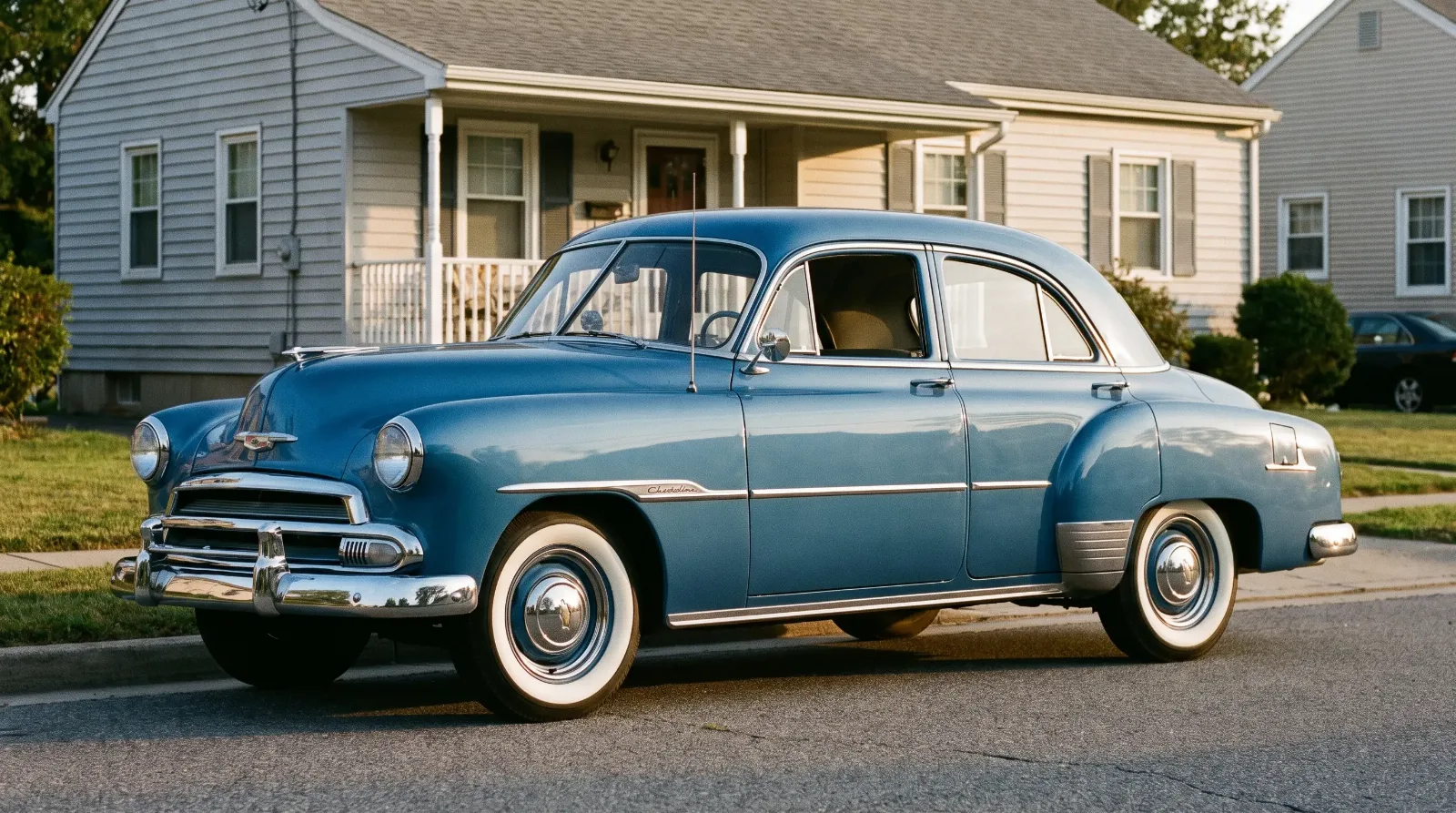
The 1951 Chevrolet Styleline De Luxe was the car America actually bought. Not the Bel Air, not the convertible, not the fastback. The plain-looking notchback sedan with the stainless spear down the side and the Deluxe script above the front wheel outsold every other body style Chevrolet made that year, by a margin that is hard to believe until you see the figures side by side.
That is exactly why it gets overlooked now. A car that sold in the hundreds of thousands does not feel rare, and the hobby has spent seventy years chasing the ones that did not sell. But the De Luxe sedan is the definitive 1951 Chevrolet, it is the easiest one to find in honest condition, and it is the cheapest way into the body. I have owned several and I have never regretted one.
What De Luxe bought you
Chevrolet ran two trim series in 1951. The Special was the price leader and the De Luxe was the step up. Both series could be had on either body shape, the notchback Styleline or the fastback Fleetline, so a Styleline De Luxe is the upper trim on the conventional body with the separate trunk.
From outside, the giveaway is the stainless molding that starts above the front fender and runs back onto the front door, with the Deluxe name spelled out above the front wheel opening. A Special wears none of that. Inside you get better upholstery, more bright trim around the dash and the glass, and a generally nicer place to spend a Sunday. The plain version of the same car is covered in the 1951 Chevrolet Styleline Special, and the difference between the two is mostly jewelry and money.
The De Luxe badge also unlocked the option that actually changes how the car drives, which is the next section, and it is the reason most people should be shopping De Luxe rather than Special in the first place.
The best-selling car Chevrolet built that year
| 1951 body style | Series | Factory price | Production |
|---|---|---|---|
| Styleline De Luxe four-door sedan | De Luxe | $1,680 | 380,270 |
| Styleline De Luxe two-door sedan | De Luxe | $1,630 | 262,933 |
| Fleetline De Luxe two-door sedan | De Luxe | $1,630 | 131,910 |
| Bel Air hardtop | De Luxe | $1,920 | 103,356 |
| Sport coupe | De Luxe | $1,650 | 64,976 |
| Fleetline De Luxe four-door sedan | De Luxe | $1,680 | 57,693 |
| Station wagon | De Luxe | $2,190 | 23,586 |
| Convertible | De Luxe | $2,030 | 20,172 |
| Styleline Special four-door sedan | Special | $1,535 | 63,718 |
Read the top two rows against the bottom of the table. The De Luxe four-door alone outsold the Bel Air, the sport coupe, the wagon and the convertible put together, with room to spare. It outsold the Special four-door six to one. Total De Luxe production across all bodies came to 1,064,896 cars.
Those numbers are the reason this car is the sensible buy. Parts interchange, donor cars exist, and nobody has to bid against a collector to get one. The scarcity that makes a convertible expensive is the same scarcity that makes its top frame impossible to find.
Powerglide, and why it matters here
The standard engine is the 216.5 cubic inch overhead-valve six, the Stovebolt, rated at 92 horsepower, through a three-speed manual on the column. The option worth hunting is Powerglide, Chevrolet's two-speed automatic, which cost around $159 when it arrived.
Powerglide was a De Luxe-only option in these years. That is the practical reason to shop De Luxe: a Special cannot legitimately be an automatic, and a De Luxe can. Cars ordered with Powerglide also came with the larger 235.5 cubic inch six with hydraulic lifters, rated at 105 horsepower, so the automatic and the bigger engine arrived as one package.
If the car is going to get driven rather than parked, that is the one to look for. Thirteen extra horsepower is not the point. Not shifting a column three-speed in traffic is the point. Verify it though, because the pairing is also how you catch a car that has been changed: a Powerglide De Luxe should have the 235, and a 216 behind an automatic means somebody has been in there.
The electrical system is six volt with a negative ground. Ford, Chrysler and GMC ran positive ground in the same years, so half the people who touch one of these for the first time get it backwards. Chevrolet did not.
"Everybody at the show is standing around the convertible. Fine. I will take the four-door De Luxe with the 235 and the automatic, drive it home, and still have money in my pocket. It is the same car from the cowl forward and it does not need a top."
— Earl Dawson
What is new on the 1951 car
Chevrolet refreshed rather than redesigned for 1951. The rear fenders went higher and squarer with the lamps out on the fender ends, which widens the whole back of the car to the eye. The grille was cleaned up, with the parking lights set wide apart and the horizontal bar wrapping around them. Behind the wheel there is a redesigned instrument panel.
The features the salesman actually pushed were Body by Fisher, Knee-Action independent front suspension, the curved two-piece windshield and the Safety-Sight instrument panel with its gauges grouped into two clusters. Those are covered properly in Chevrolet's passenger car features. If you are putting a car back to a correct factory color, the codes are in the factory body colors, and the fastback version of the same trim level is in the 2100 series Fleetline.
Buying one
The De Luxe sedan is where the value is in this family, and it stays that way because the market pays for body style rather than condition. A straight, honest four-door will cost less than a rough two-door and a great deal less than anything with a folding roof. If you want a car to drive, that is a gift.
Buy the metal. That never changes on a 1949 to 1952 Chevrolet. And buy a car that still wears its trim, because the stainless and the pot metal are what stall these projects, not the mechanical work.
Check this first
- Cowl and vent drains. Water sits inside the structure and rots it from the inside out where you cannot see it. A soft cowl turns a driver into a bodyshop job.
- Floors, trunk pan and lower rear quarters. Pull the mats and the trunk mat. On a common car the metal is most of the value.
- De Luxe trim, present and straight. The fender-to-door stainless and the script are what you are paying the premium for. Missing pieces cost more to replace than the discount you were offered.
- Drivetrain agreement. Powerglide should mean the 235 six. A 216 behind an automatic means the car has been changed.
- Series honesty. Trim can be added to a Special. Check the plate on the left front door hinge pillar: K is De Luxe, J is Special.
- Six volt wiring. Seventy-five year old cloth harnesses are a fire risk, not an inconvenience. Budget a rewire on anything that has not had one.
This is the car that carried families to work and to church and out to the lake for a decade, and it is still the most honest way to own a 1951 Chevrolet. Find one with a dry cowl, its trim intact and a readable plate, and you will have the version of this car that Chevrolet actually sold. Looking at a spread of asking prices first will show you how wide the range is before you commit to one.
Two other cars belong next to this one before you decide. The Bel Air hardtop is the same series with a different roof and a good deal more money attached, and the range as a whole, series by series and body by body, is laid out in the year's full model guide.
Sources and notes
- 1951 Chevrolet De Luxe Series, Conceptcarz - factory prices and production for every De Luxe body style, the 1,064,896 series total, and the 216.5 cu in at 92 hp and 235.5 cu in at 105 hp engine ratings.
- 1951 Chevrolet Special Series specifications, Conceptcarz - the Special four-door price and production used for the comparison in the table.
- Chevrolet Deluxe, Wikipedia - the Special and De Luxe series structure and how the Styleline and Fleetline bodies were shared between them.
- Secrets of the Chevy Powerglide 1950-73, Mac's Motor City Garage - Powerglide as a De Luxe-only option at $159 and its pairing with the larger 235 cu in hydraulic-lifter six.
- 1949 to 1952 Chevys are gaining in collectibility, Old Cars Weekly - the 1951 feature list including Body by Fisher, Knee-Action, the curved two-piece windshield and the Safety-Sight instrument panel, plus current value ranges.
- Chevrolet Fleetline, Wikipedia - Fleetline production for 1951 and the end of the four-door fastback after that year.
More from the garage
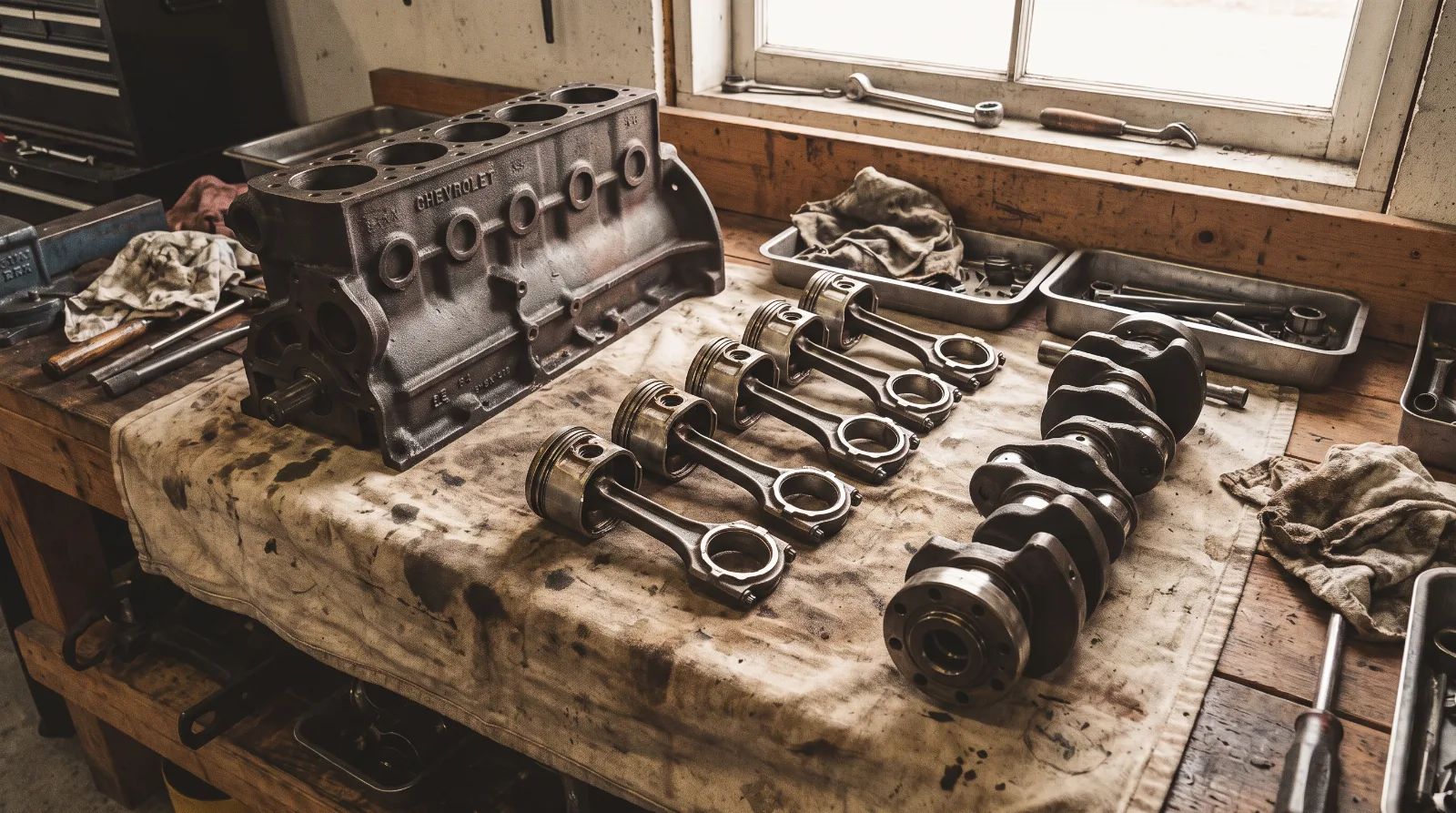
Rebuilding a Chevy 216
Rebuilding a 216 is not like rebuilding anything made after about 1955, and the difference is not the tools. It is that on most engines the botto...

The 1951 Chevrolet Apache
There is no 1951 Chevrolet Apache. The Apache name belongs to the generation of Chevrolet trucks that came after the one built in 1951, and it do...
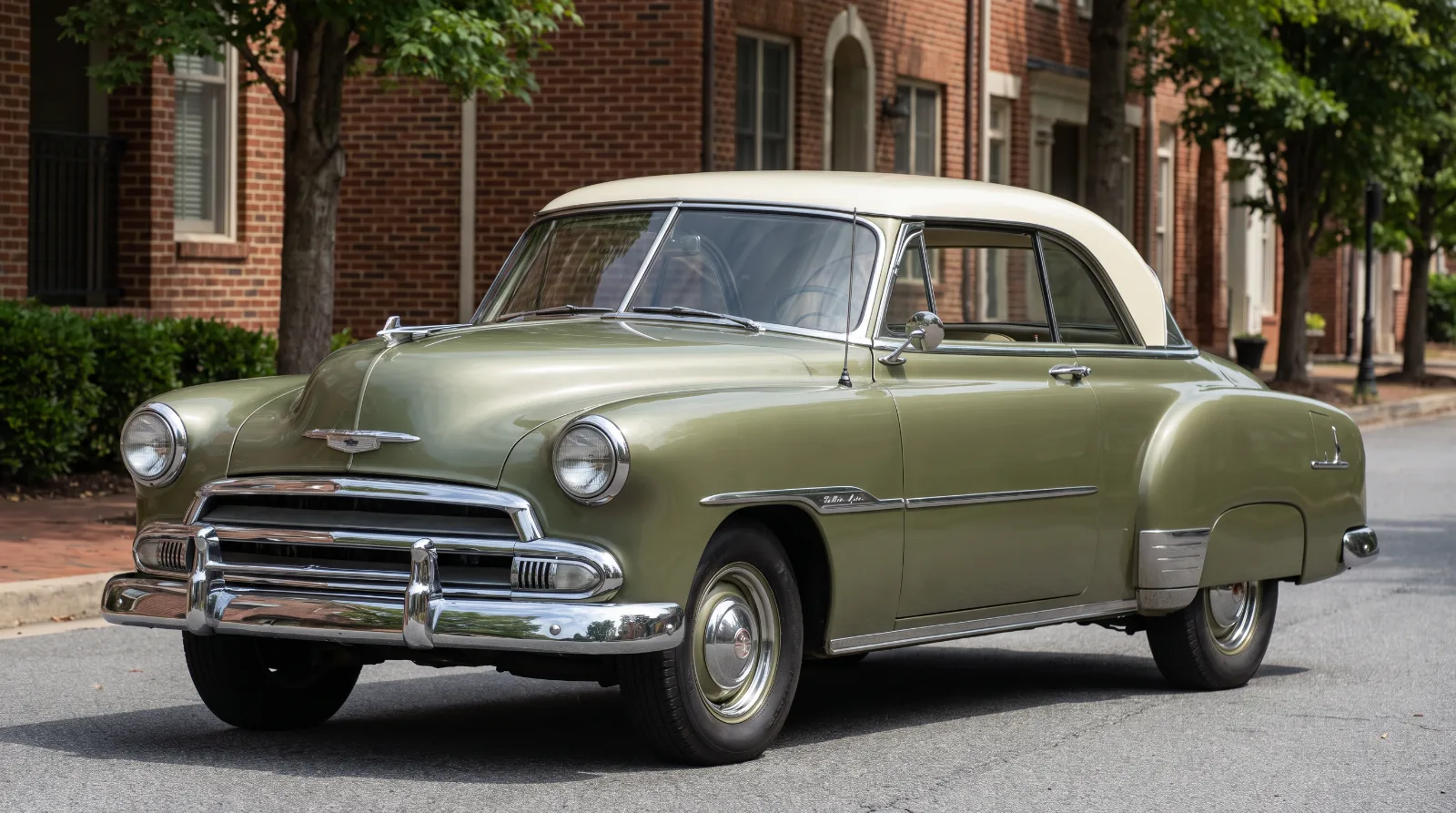
The 1951 Chevrolet Impala
There is no 1951 Chevrolet Impala. The name did not exist in 1951, the car did not exist in 1951, and nothing Chevrolet built that year was ever...