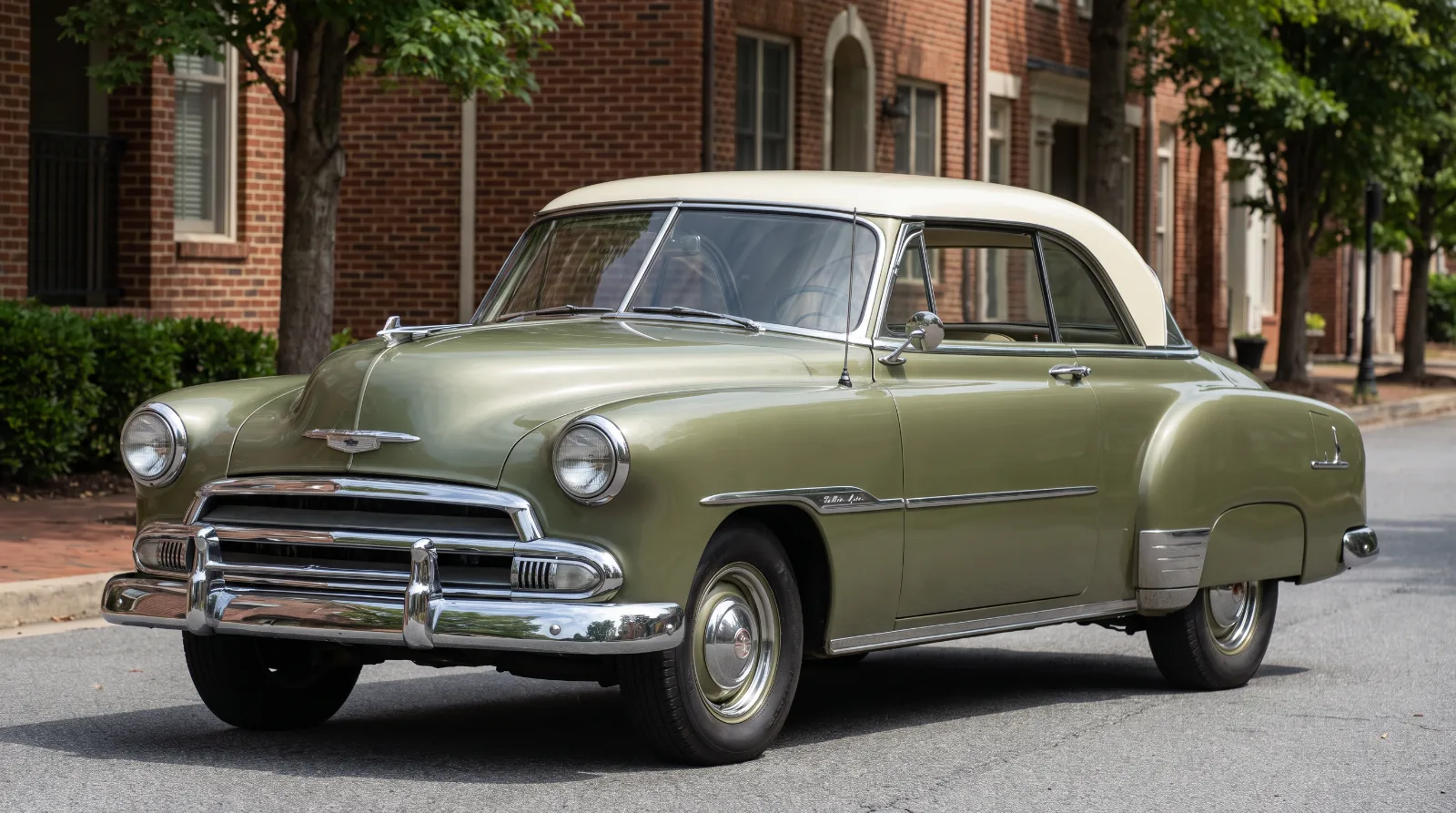
1951 Chevrolet Convertible
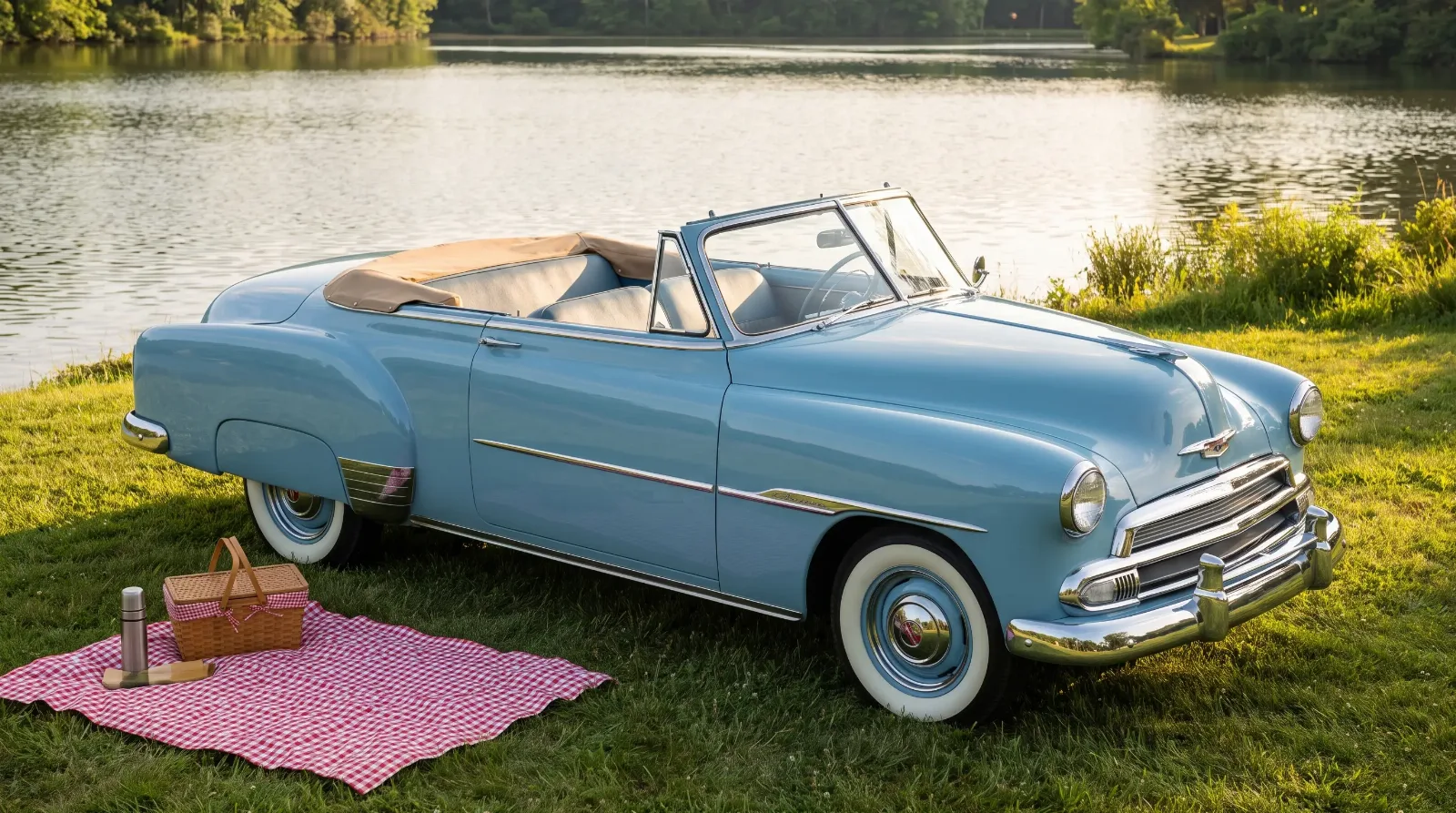
The 1951 Chevrolet convertible is the rarest car in the range and always was. Chevrolet built 20,172 of them that year against better than 380,000 four-door sedans. One convertible for every nineteen sedans. That ratio is why you can spend a whole season of shows and see plenty of 1951 Chevrolets without seeing a single ragtop.
Officially it was the Styleline De Luxe convertible, and like everything else worth having in 1951 it was a De Luxe car only. Chevrolet never offered a convertible in the plain Special series. If you are looking at a 1951 Chevrolet with a folding top, it started life at the top of the range.
What Chevrolet charged and what it built
At $2,030 the convertible was the second most expensive 1951 Chevrolet, sitting between the Bel Air hardtop and the station wagon. Here is the top end of the range for context.
| 1951 De Luxe model | Factory price | Production |
|---|---|---|
| Bel Air hardtop | $1,920 | 103,356 |
| Convertible | $2,030 | 20,172 |
| Station wagon | $2,190 | 23,586 |
| Styleline De Luxe four-door sedan, for comparison | $1,680 | 380,270 |
The interesting comparison is not the sedan, it is the hardtop. For $110 less than a convertible you could have a Bel Air, which gave you the same wide-open look with the windows down and a steel roof over your head. Chevrolet sold five Bel Airs for every convertible. Most buyers wanted the idea of an open car more than they wanted the reality of one, and that is exactly what makes the reality scarce today. I put the case for the hardtop in the Bel Air hardtop if you are weighing the two.
The top, and why it decides the price
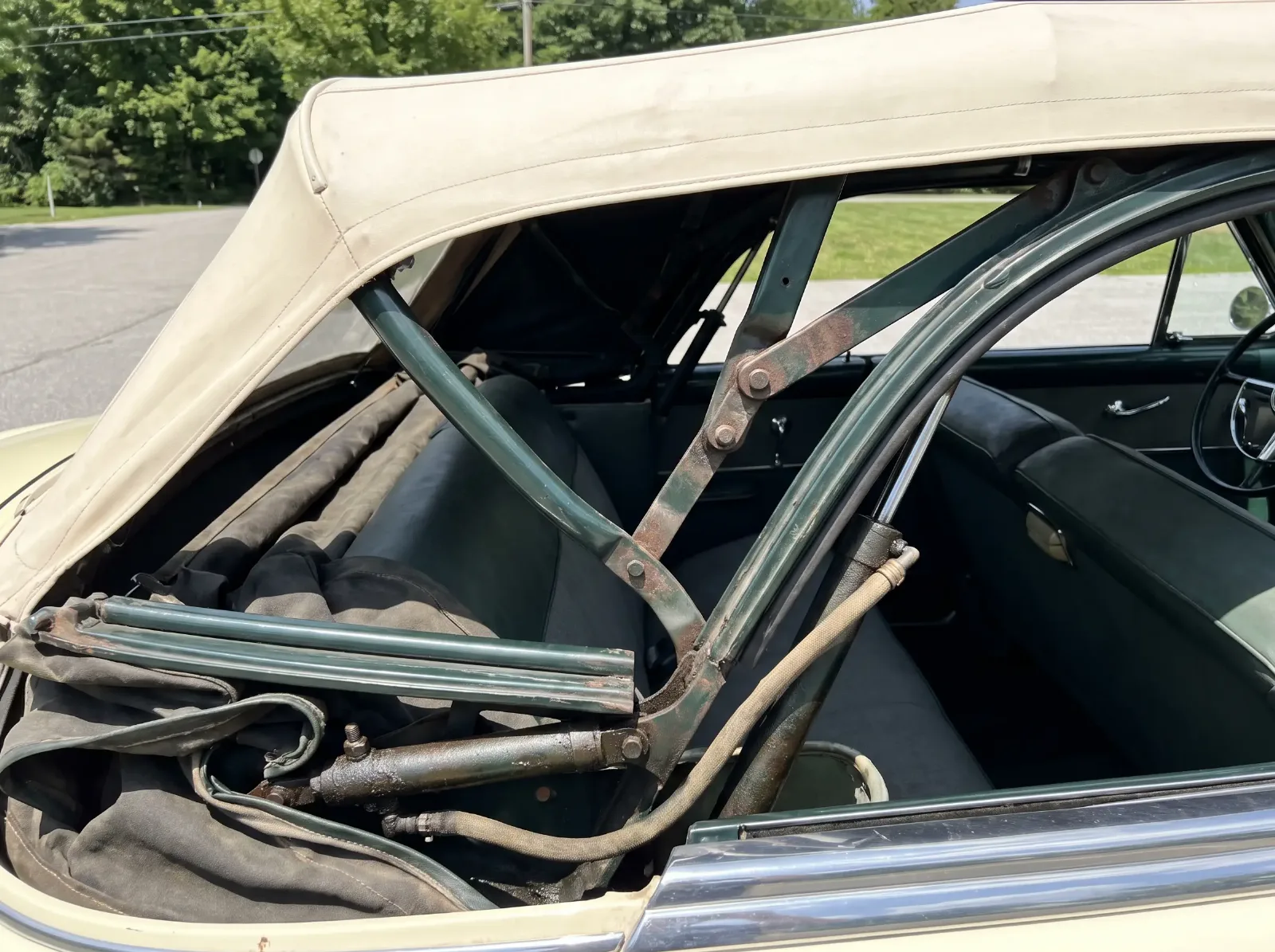
The 1951 convertible top is power operated, run by a hydraulic pump and cylinders rather than by muscle. That is a genuine luxury for the money and it is also the thing that most often does not work on a car you go to look at. Pumps leak, cylinders leak, hoses go hard, and a car that has sat for years almost never has a working top system.
The top itself is a two-piece assembly. The rear curtain with its window goes on first and the main top cover goes over it, both stapled to the rear bow. That construction matters when you price a retrim. It is not a single blanket you throw over the frame, and the shop that does it properly charges for the extra work. Correct top material and pump and cylinder parts are still available for these cars, so nothing here is unobtainable, but nothing here is cheap either.
Then there is what the top hides when it does not seal. Water that gets past a bad top runs down inside the quarters and sits in the floor, and a convertible has no roof to stiffen the body while that is happening. Rust in the floors, rockers and the area under the rear seat is worse news on this body than on a sedan.
Underneath it is an ordinary 1951 Chevrolet
Mechanically the convertible is the same car as everything else in the range, which is good news for anyone who has to keep one running. The standard engine is the 216.5 cubic inch overhead-valve Stovebolt six at 92 horsepower with a three-speed manual on the column. Powerglide was available, because this is a De Luxe car, and a Powerglide convertible came with the larger 235.5 cubic inch six with hydraulic lifters at 105 horsepower.
The electrics are six volt and the ground is negative. Ford and Chrysler ran positive ground in this era and people assume Chevrolet did too. It did not. On a convertible that matters twice over, because the top pump is one more thing on the circuit that you can damage by getting it backwards.
The 1951 styling refresh applies here as it does everywhere else in the range. Squarer rear fenders, taillights squared off and moved outboard, a cleaner grille with wide-set parking lights, and a redesigned instrument panel. Interior trim on a convertible was its own treatment, and what went on the seats and door panels across the range is covered in interior trim. The wider view of how the series and bodies fit together is in the model guide for the year.
"Buy the body, then buy the top. People do it the other way round. They see a nice new top on a tired car and decide it must have been looked after. A top is a few thousand dollars. A rotten floor under a convertible is a winter."
— Earl Dawson
What to check before you buy
Convertibles lead collector interest among the 1949 to 1952 Chevrolets, along with wagons, Bel Air hardtops and the Fleetline fastbacks, and values on factory-correct stock cars have been climbing. That means two things for a buyer. Good cars cost real money now, and there is enough of a premium in the body style that people convert sedans and call them convertibles. Check the car, not the ad.
Check this first
- Floors, rockers and under the rear seat. No roof means the lower structure carries the body. Water from a leaking top ends up here, and a soft floor on a convertible is structural, not cosmetic.
- Top frame, pump and cylinders. Run the top up and down in front of the seller. Leaking cylinders and a dead pump are common and the repair bill is real.
- Door gaps and shut lines. A tired convertible body sags. Doors that drop when you open them, or gaps that taper, tell you more than any story about the car.
- Is it a factory convertible. Confirm the series and body from the pillar plate and the Fisher body plate on the cowl. The value gap over a sedan is big enough to tempt people.
- Cowl and vent drains. Same trap as the rest of the family. It rots from the inside out where you cannot see it.
- Rear curtain and window. The two-piece top means the curtain is a separate job. A cracked window with a good cover still means a proper trim shop visit.
Twenty thousand cars in a model year of well over a million is a small number, and seventy-five years of weather has taken most of them. A straight 1951 Chevrolet convertible with a working top and honest floors is worth being patient for. Find that car, keep it stock, keep the six volt system negative ground, and put the top down. That is the entire point of the thing. The other 1951 body that trades on air and space rather than a roofline is the 1951 Chevrolet station wagon, and it is rarer still.
Sources and notes
- 1951 Chevrolet De Luxe Series, Conceptcarz - the $2,030 convertible price and 20,172 production figure, plus the Bel Air, wagon and sedan comparisons and the 216.5 and 235.5 cu in engine ratings.
- Chevrolet Deluxe, Wikipedia - the convertible offered only in the De Luxe series and the 1949 to 1952 range structure.
- 1950-52 Chevrolet Styleline Deluxe convertible tops and parts, Convertible Top Guys - the two-piece top with a separate rear curtain stapled to the rear bow, and the hydraulic cylinders, pumps and hose sets still available.
- 1949 to 1952 Chevys are gaining in collectibility, Old Cars Weekly - convertibles among the body styles leading collector interest and the rising values for factory-correct stock cars.
- Secrets of the Chevy Powerglide 1950-73, Mac's Motor City Garage - Powerglide as a De Luxe-only option paired with the larger 235 cu in hydraulic-lifter six.
- 1951 Chevrolet Styleline De Luxe parts, Classic Industries - current reproduction and replacement parts coverage for the Styleline De Luxe, including body, trim and weatherstrip items.
More from the garage
Rebuilding a Chevy 216
Rebuilding a 216 is not like rebuilding anything made after about 1955, and the difference is not the tools. It is that on most engines the botto...
The 1951 Chevrolet Apache
There is no 1951 Chevrolet Apache. The Apache name belongs to the generation of Chevrolet trucks that came after the one built in 1951, and it do...
The 1951 Chevrolet Impala
There is no 1951 Chevrolet Impala. The name did not exist in 1951, the car did not exist in 1951, and nothing Chevrolet built that year was ever...