1951 Chevrolet Specifications
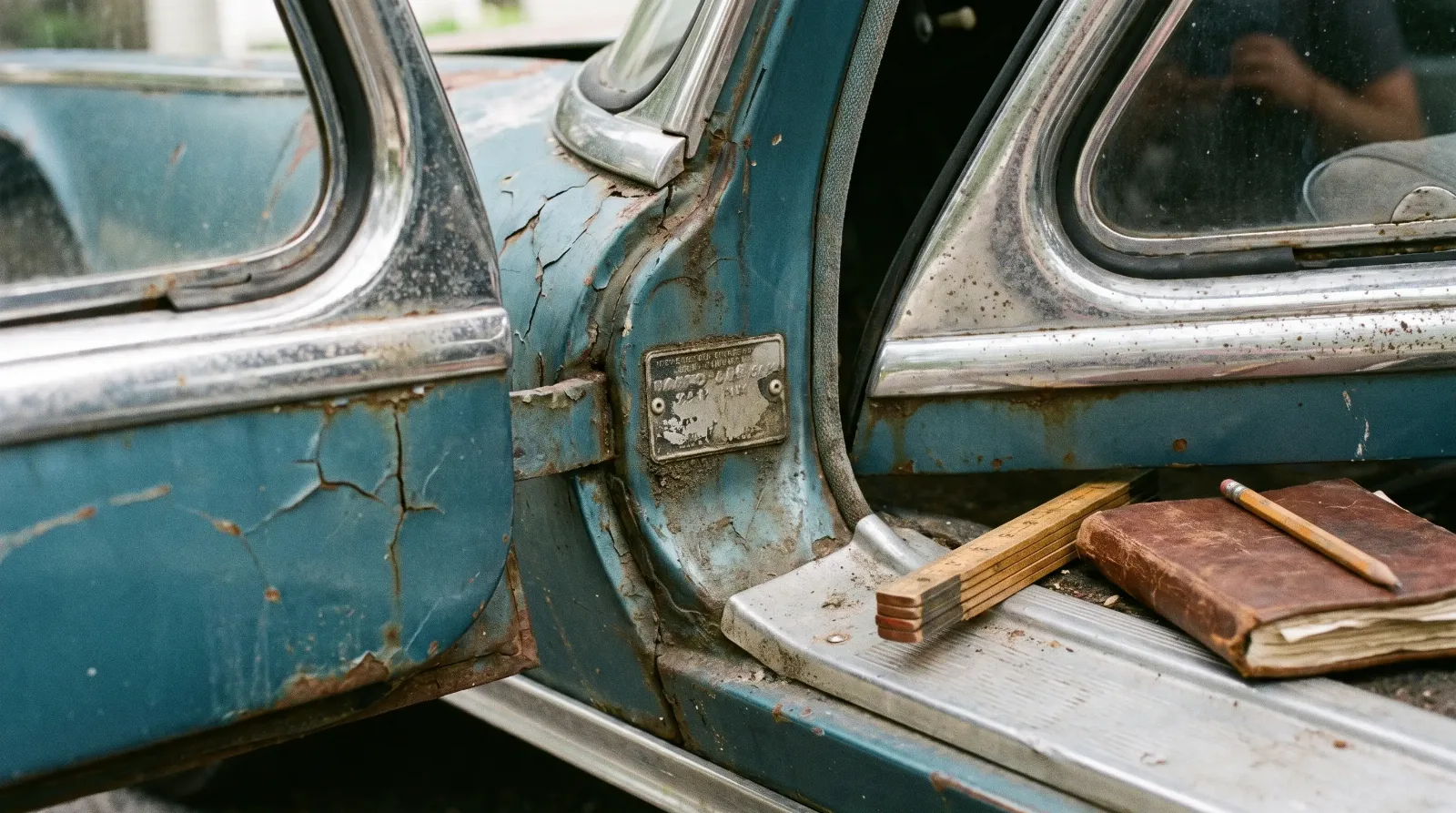
People ask me for the numbers on a 1951 Chevrolet more than anything else. What does it weigh, how long is the frame, what did the six make, what oil goes in it. This is the page I point them to. Think of it as the spec sheet I keep taped inside the toolbox door, the reference you check before you order parts or argue with a fellow at a swap meet. If you want the full story behind the car, read the 1951 Chevrolet guide first, then come back here for the cold figures. Where a number needs a second look before you bet money on it, I have flagged it.
Dimensions and weight
The 1951 Chevrolet rode on a single passenger-car wheelbase across the whole line, from the plainest Styleline business coupe to the dearest closed car. The body sat on a separate frame, the way everything did back then, and the numbers below cover the standard passenger cars rather than the trucks, which are a different animal entirely.
| Specification | Figure | Notes |
|---|---|---|
| Wheelbase | 115 in | Same across the passenger-car line |
| Overall length | 197.8 in | Station wagon slightly longer at about 198.9 in |
| Overall width | about 74 in | Approximate; body style varies |
| Overall height | about 63 in | Sedans; coupes sit lower |
| Curb weight | 3,100 to 3,455 lb | Depends on body and trim |
| Front track | 57 in | |
| Rear track | 58.8 in | |
| Tire size | 6.70 x 15 | Bias-ply, 15 in wheels |
Weight is the figure that moves the most. A stripped business coupe with the manual box is a good bit lighter than a loaded Bel Air with the automatic, and I would not quote a single curb weight for the whole line. If you are working out shipping or a trailer, weigh the actual car.
Engines and output
Every 1951 Chevrolet came with the inline overhead-valve six that folks call the Stovebolt. There were two displacements that year. The 216 cubic inch "Thrift-Master" was the standard engine behind the three-speed manual. The larger Chevy 235 identification was fitted to cars ordered with the Powerglide automatic, and it was built a little differently for that duty. For the deeper mechanical rundown, see the Stovebolt six page, which gets into the valve gear and the oiling.
| Engine | Displacement | Horsepower | Torque | Fitted to |
|---|---|---|---|---|
| 216 "Thrift-Master" six | 216.5 cu in | 92 hp at 3400 rpm | 176 lb-ft | Standard, 3-speed manual |
| 235 six (Powerglide) | 235.5 cu in | 105 hp at 3600 rpm | about 200 lb-ft | Powerglide cars only |
Both were long-stroke, low-compression engines built to pull from low in the rev range and run forever on the gas of the day. Compression sat around 6.6 to 1 on the 216 and a touch higher on the 235. These are not high-strung engines. Fed clean oil and kept cool, a Stovebolt will outlast the man who owns it.
Transmissions and axle ratios
Two gearboxes were offered. Standard was a three-speed manual with the shifter on the column, synchronized on second and third. New for the low-price field in 1950 and carried into 1951 was Powerglide, Chevrolet's two-speed automatic. Powerglide was the reason to step up to the 235 engine, and the pairing is the one you want to keep original if the car left the factory that way.
| Transmission | Type | Rear axle ratio | Notes |
|---|---|---|---|
| 3-speed manual | Column shift, synchro 2nd/3rd | 4.11:1 | Standard behind the 216 |
| Powerglide | 2-speed automatic | 3.55:1 | Paired with the 235 |
The axle ratios above are the common figures, but Chevrolet offered options for different duty, so check the numbers on your own differential rather than trusting a chart. The Powerglide cars ran a taller gear because the torque converter did the low-speed work.
Fuel, oil, and cooling capacities
These are the service numbers you need for a fluid change or a fill-up. Treat them as a starting point and always check the dipstick and the sight of the radiator, since a rebuilt engine or a swapped pan can throw the book figure off.
| Capacity | Figure | Notes |
|---|---|---|
| Fuel tank | 16 gal | |
| Engine oil (with filter) | 5 qt | Check dipstick after fill |
| Cooling system | 15 qt | Varies with heater |
| Manual transmission | 1.5 pt | |
| Rear axle | 3.5 pt | |
| Electrical system | 6-volt negative ground | Confirm polarity on your car |
The six-volt system trips up more people than any single thing on these cars. The wiring is simple but it is not modern, and thin or corroded cable will leave you cranking slow on a cold morning. If you are chasing a gremlin or just want to understand the layout, the factory wiring layout sets out every circuit the way Chevrolet drew it.
"Numbers on a page are only half the job. I have measured a hundred of these cars and the honest ones match the book close enough. When a figure is way off, the car is telling you somebody changed something, and that is worth knowing before you buy."
— Earl Dawson
Model year and production context
The 1951 Chevrolet carried two main series, the standard Special and the upper De Luxe, each offered in the fastback Fleetline and the notchback Styleline bodies. It was a facelift of the postwar shape that first appeared for 1949, with revised trim and grille for the year. Chevrolet held the number-one sales spot in the American low-price field, and total 1951 output ran past 1.2 million cars, though the Korean War restrictions on materials shaped what got built and how it was equipped.
For a spec sheet, the practical takeaway is this. Almost everything mechanical was shared across the line, so a Fleetline Special and a Styleline De Luxe run the same 216, the same three-speed, the same six-volt system unless the car was ordered with Powerglide. The differences that year were mostly trim, seats, and brightwork, not the numbers on this page. That is why one good reference sheet covers the whole 1951 catalog, and why I keep coming back to these figures instead of memorizing a dozen versions of them. When the figures turn into work, the order to do it in is in how a whole job is sequenced.
Sources and notes
- Conceptcarz, 1951 Chevrolet DeLuxe Series specifications and dimensions (wheelbase, length, weight range, tracks, both engines, fuel tank, tire size).
- Conceptcarz, 1951 Chevrolet Special Series specifications and dimensions (wheelbase 115 in, length 197.75 in).
- Classic Car Database, 1951 Chevrolet Styleline DeLuxe specifications (216.5 cu in, 92 hp, 176 lb-ft torque, 6.6:1 compression, 4.11 axle, 16 gal fuel, 15 qt cooling, 6-volt).
- Automobile-Catalog, 1951 Chevrolet Styleline DeLuxe 4-Door Sedan Powerglide (235.5 cu in Powerglide engine output and torque, dimensions).
- Barn Finds, 1951 Chevrolet Styleline Special (Thrift-Master 216 for manual cars, 235 truck-based six with hydraulic lifters and full-pressure oiling for Powerglide cars).
- Note on polarity: the 1951 Chevrolet uses a 6-volt negative-ground electrical system. Ford, Chrysler, and GMC of the era used positive ground, which is a common source of confusion.
More from the garage
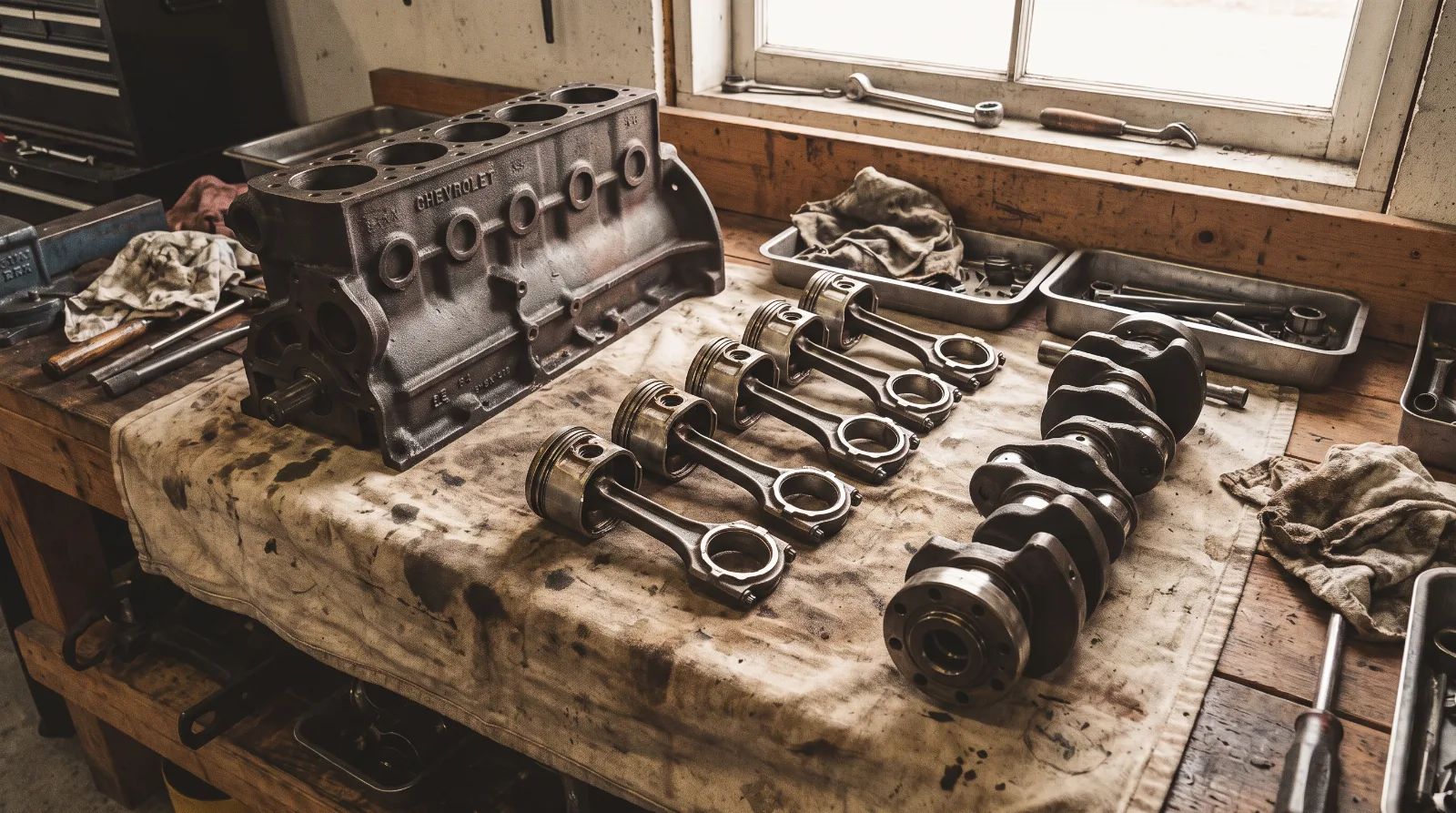
Rebuilding a Chevy 216
Rebuilding a 216 is not like rebuilding anything made after about 1955, and the difference is not the tools. It is that on most engines the botto...

The 1951 Chevrolet Apache
There is no 1951 Chevrolet Apache. The Apache name belongs to the generation of Chevrolet trucks that came after the one built in 1951, and it do...
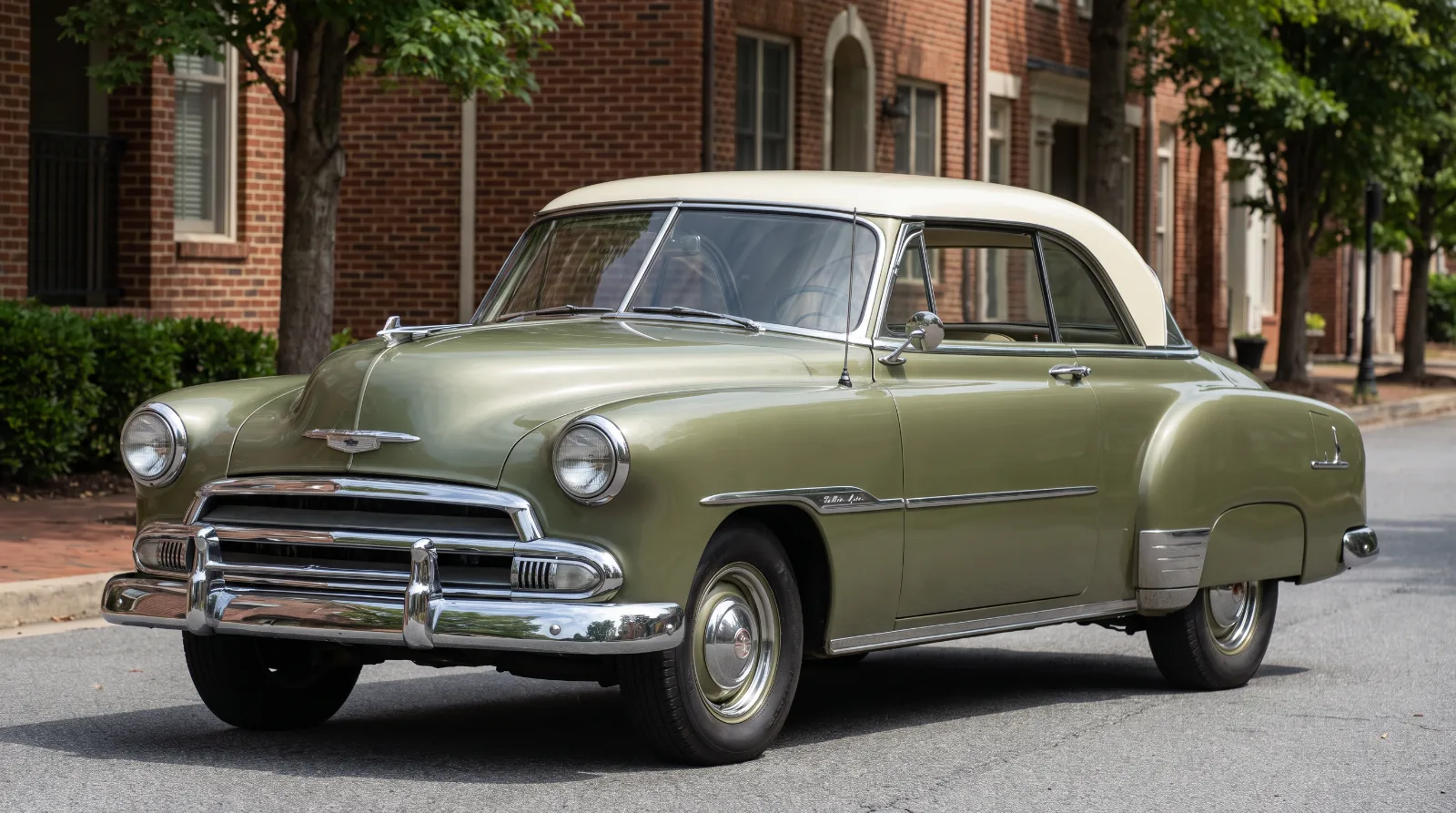
The 1951 Chevrolet Impala
There is no 1951 Chevrolet Impala. The name did not exist in 1951, the car did not exist in 1951, and nothing Chevrolet built that year was ever...