The 1951 Chevrolet 3100
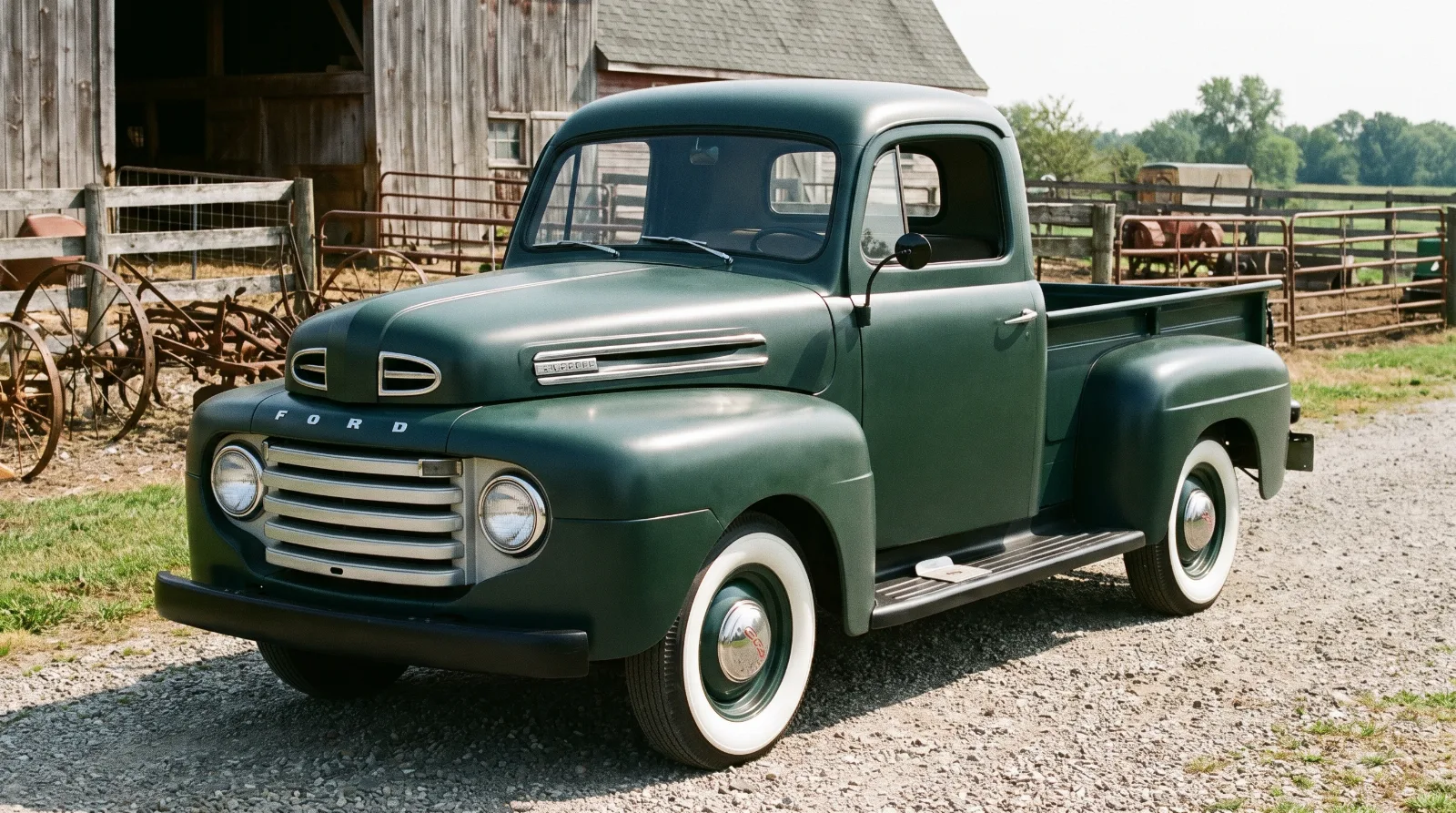
The 3100 is the half ton. It is the truck almost everybody means when they say Advance Design, the one on the calendar and in the film, and in 1951 it was a working vehicle that a farmer bought because it was cheap and it started.
Seventy five years later it is the most sought after light truck of its era, which is a strange fate for something that cost less than a Chevrolet sedan and was expected to be worn out in a decade. What makes the 1951 worth singling out is that it is the year with a set of features that exists in no other.
What a 1951 3100 is
A 116 inch wheelbase, 196.6 inches from bumper to bumper, and 3,120 pounds empty. The gross rating is 4,200 pounds on the standard six by sixteen tyres, or 4,800 if the truck was ordered with the heavier 6.5 by 16s. The engine is the 216.5 cubic inch six making 92 horsepower, and the gearbox is a three speed shifted on the column.
The number itself is a badge. From late 1949 the hood side emblems stopped saying Thriftmaster and started carrying the load rating instead, so 3100 on a half ton, 3600 on a three quarter, 3800 on a one ton. That is why the model number is on the truck at all.
| Item | 1951 Chevrolet 3100 |
|---|---|
| Rating | Half ton |
| Wheelbase | 116 in |
| Overall length | 196.6 in |
| Weight | 3,120 lb |
| GVW | 4,200 lb, or 4,800 lb on 6.5 x 16 tyres |
| Standard tyres | 6.00 x 16 |
| Engine | 216.5 cu in six, 92 hp |
| Transmission | Three speed, column shift |
| Serial series letters | JP |
What changed for 1951
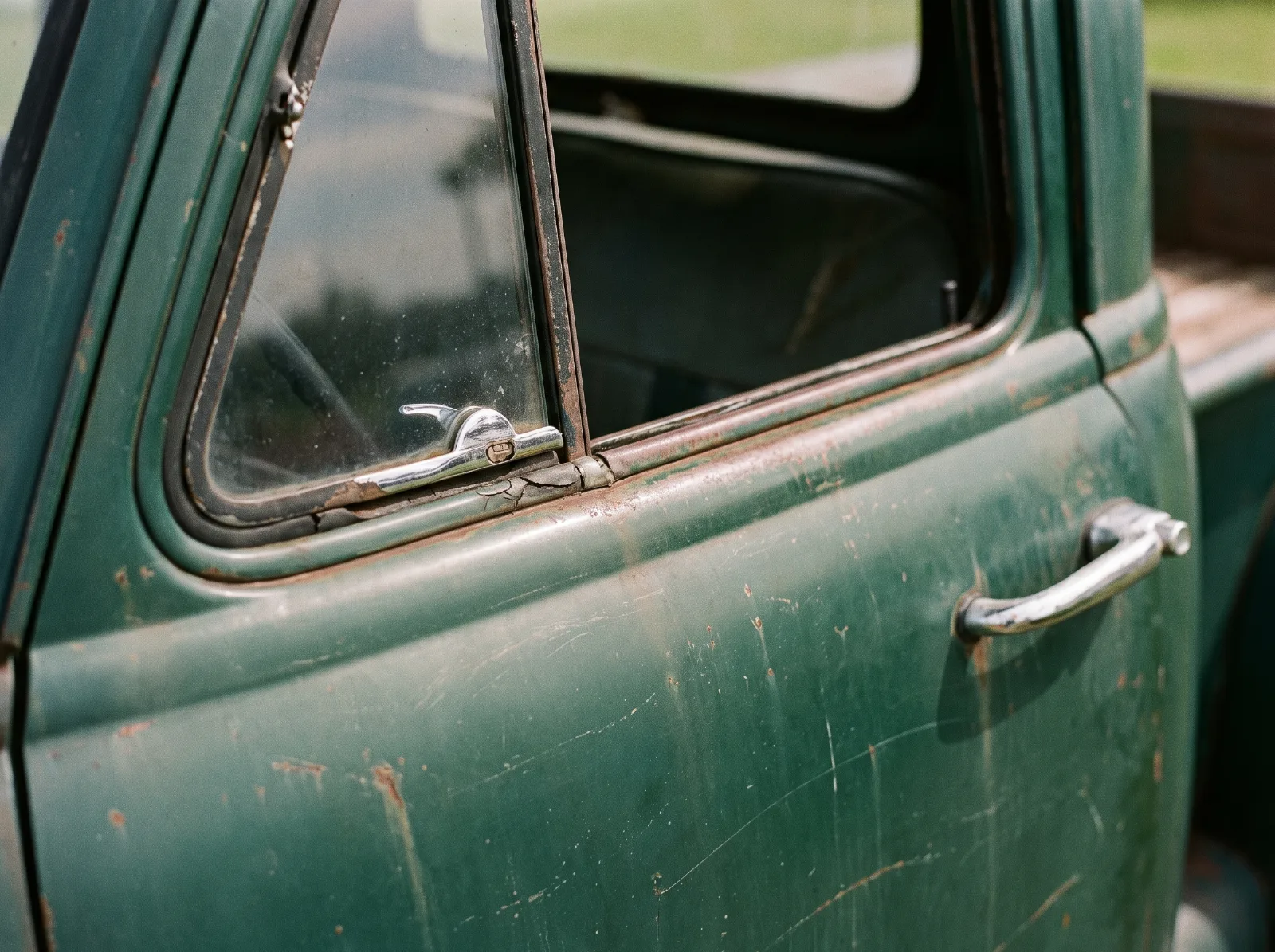
More than people expect from a year that looks the same from across the street.
The doors. The single piece door glass becomes two piece with a vent window, and the little cowl vent on the driver's side that had been letting air in since 1947 disappears because it is no longer needed.
The brakes. Changed for 1951 to the duo servo self energising Bendix design. That is a real mechanical change and not a trim item, and it matters when you are ordering parts for a truck somebody has told you is a 1950.
The bed. Halfway through the year the floor goes from nine boards to eight. Both are correct for 1951, which is a rare thing to be able to say about a restoration detail, and it means an early and a late 1951 need different wood.
The seat adjuster. The metal cable arrangement gives way to a rod under the cushion. Small, but it is one of the things that identifies the year underneath.
The last of the bright bits. 1951 is the final year for the 80 mile an hour speedometer, the chrome window handle knobs and the chrome wiper knob. Everything after it starts getting cheaper, and by 1952 and 1953 the Korean War has taken the brightwork off these trucks altogether, with painted hubcaps, painted bumpers and painted grilles.
"People pay a premium for a 1953 because it is later. Then they spend the next two years buying back the chrome that a 1951 came with as standard. Work that one out."
— Earl Dawson
What it is like, and what it is not
Ninety two horsepower moving three thousand pounds through a three speed with a 4.11 style ratio underneath is not fast, and the 216 was never meant to be revved. It is a truck that cruises comfortably in the fifties and complains above that, and the 80 mile an hour speedometer is optimism rather than a specification.
What it does have is a genuinely comfortable cab for the period. The Advance Design cab is wider than what came before it, with more head and leg room and space for three, better insulation and a proper floor mat. Chevrolet sold that comfort hard in 1947 and it is still the reason people enjoy driving these.
What to be careful of is the same as any seventy five year old light truck: the cab corners, the floor, the running boards, and the bottom of the doors. Mechanical parts for these are reproduced in enormous quantity and are cheap. Rust in the cab is the expensive part, and it is the part that photographs least well in an advertisement.
Check this first
- Vent windows plus pull down door handles. The single fastest way to confirm you are looking at a 1951.
- The serial plate on the left front hinge pillar. JP for the half ton, and it will settle the year as well.
- Nine boards or eight. Both are right for 1951, but you need to know which before you buy wood.
- Cab corners and the floor, from underneath. This is where the money is, not in the engine bay.
- The speedometer face. An 80 mile an hour dial belongs in this year and a 90 does not.
- Whether the chrome is chrome. Painted hubcaps and bumpers are correct for 1952 and 1953, not for this truck.
Where this fits
The half ton sits under the 1951 Chevrolet trucks alongside its heavier brothers, the 3600 at three quarters of a ton and the 3800 at one ton. The cab that everybody wants is in the five window pickup and what made it Deluxe is in the Deluxe cab. The floor behind it is in the truck bed, the dash in front of you is in the truck gauges, and the whole job is laid out in the truck restoration. Parts sources are in the truck parts, and the engine is in the Chevy 216.
Sources and notes
- Car of the week, 1951 Chevrolet 3100 pickup, Old Cars Weekly - the 116 inch wheelbase, 196.6 inch length, 3,120 pound weight, 4,200 and 4,800 pound gross ratings on 6 x 16 and 6.5 x 16 tyres, the 216.5 cubic inch 92 horsepower six, the column shifted three speed, the cowl vents replaced by Ventipane door vent windows, the change to duo servo self energising Bendix brakes for 1951, and Forester Green as the standard colour.
- Comprehensive history of 1947-1955 first series Advance Design, Deves Technical Network - the single piece door glass becoming two piece with vent windows for 1951, the driver's side cowl vent disappearing, 1951 as the only year with vent windows and pull down outside handles, chrome window handle and wiper knobs ending after 1951, and the 1952 changes to push button handles, a 90 mile an hour speedometer and painted hubcaps and bumpers.
- Chevrolet Advance Design, Wikipedia - the hood side emblems changing from Thriftmaster to load ratings of 3100, 3600 and 3800 from late 1949, the door vent windows and mid year nine to eight board bed change for 1951, the last year for the 80 mile an hour speedometer, and the JP, JR and JS serial letters.
- 1951 Chevy truck parts, Chevs of the 40s - the left side cowl vent eliminated in favour of door vent windows, the seat adjustment changing from a metal cable to a rod under the cushion, and the mid year change from nine boards to eight in the bed.
- Advance Design 1947-1955, Classic Chevy Trucks - tubular shock absorbers arriving for 1950, door vent windows for 1951, and brightwork eliminated across 1952 and 1953 because of Korean War shortages, leaving painted hubcaps, bumpers and grilles.
- 1952 Chevrolet 3100, Horsepower Enterprises - the wider Advance Design cab with more head and leg room, and the five window Deluxe cab conceived to eliminate the blind spots behind the driver.
More from the garage
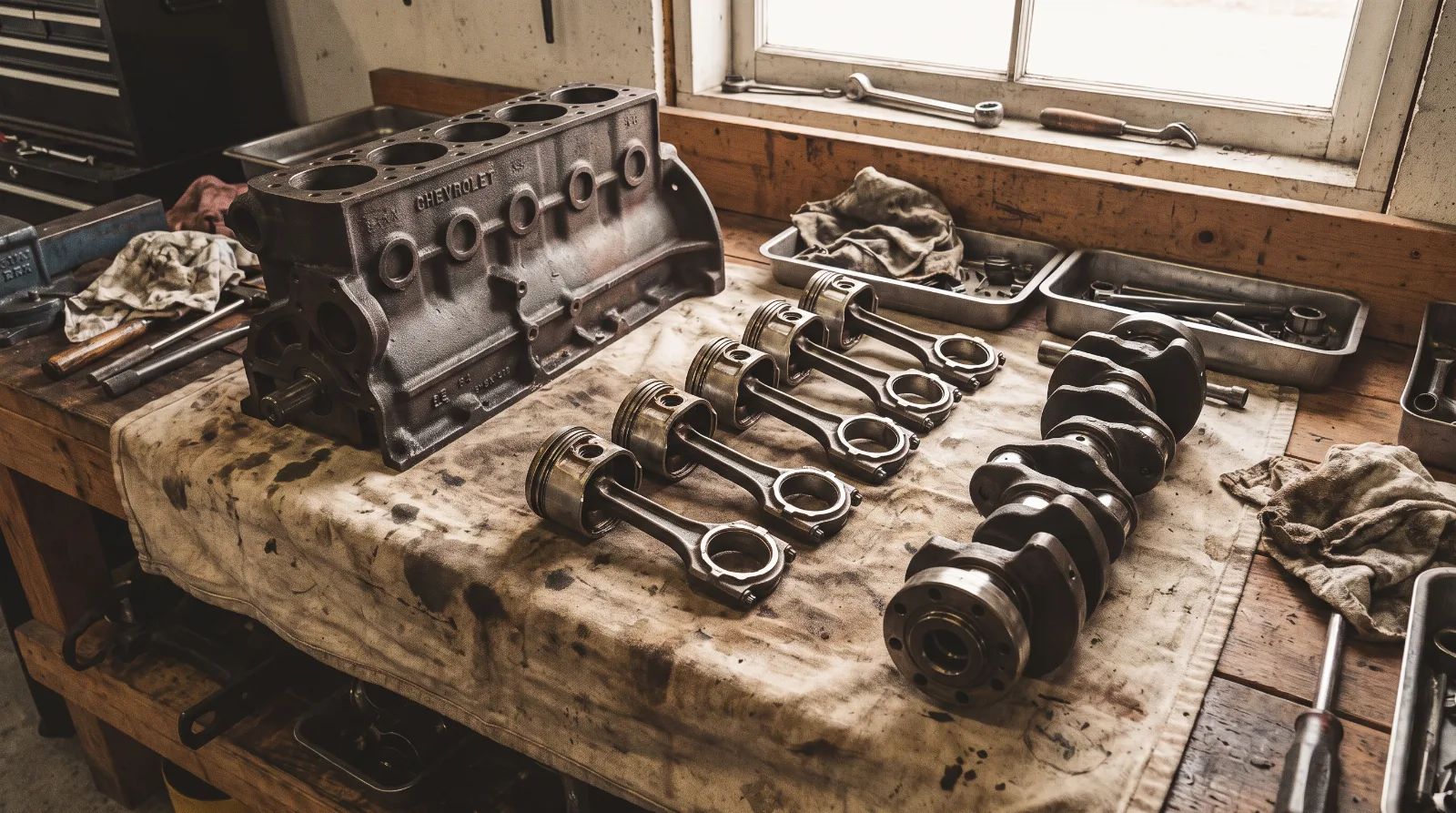
Rebuilding a Chevy 216
Rebuilding a 216 is not like rebuilding anything made after about 1955, and the difference is not the tools. It is that on most engines the botto...

The 1951 Chevrolet Apache
There is no 1951 Chevrolet Apache. The Apache name belongs to the generation of Chevrolet trucks that came after the one built in 1951, and it do...
The 1951 Chevrolet Impala
There is no 1951 Chevrolet Impala. The name did not exist in 1951, the car did not exist in 1951, and nothing Chevrolet built that year was ever...