1951 Chevrolet Factory Accessories
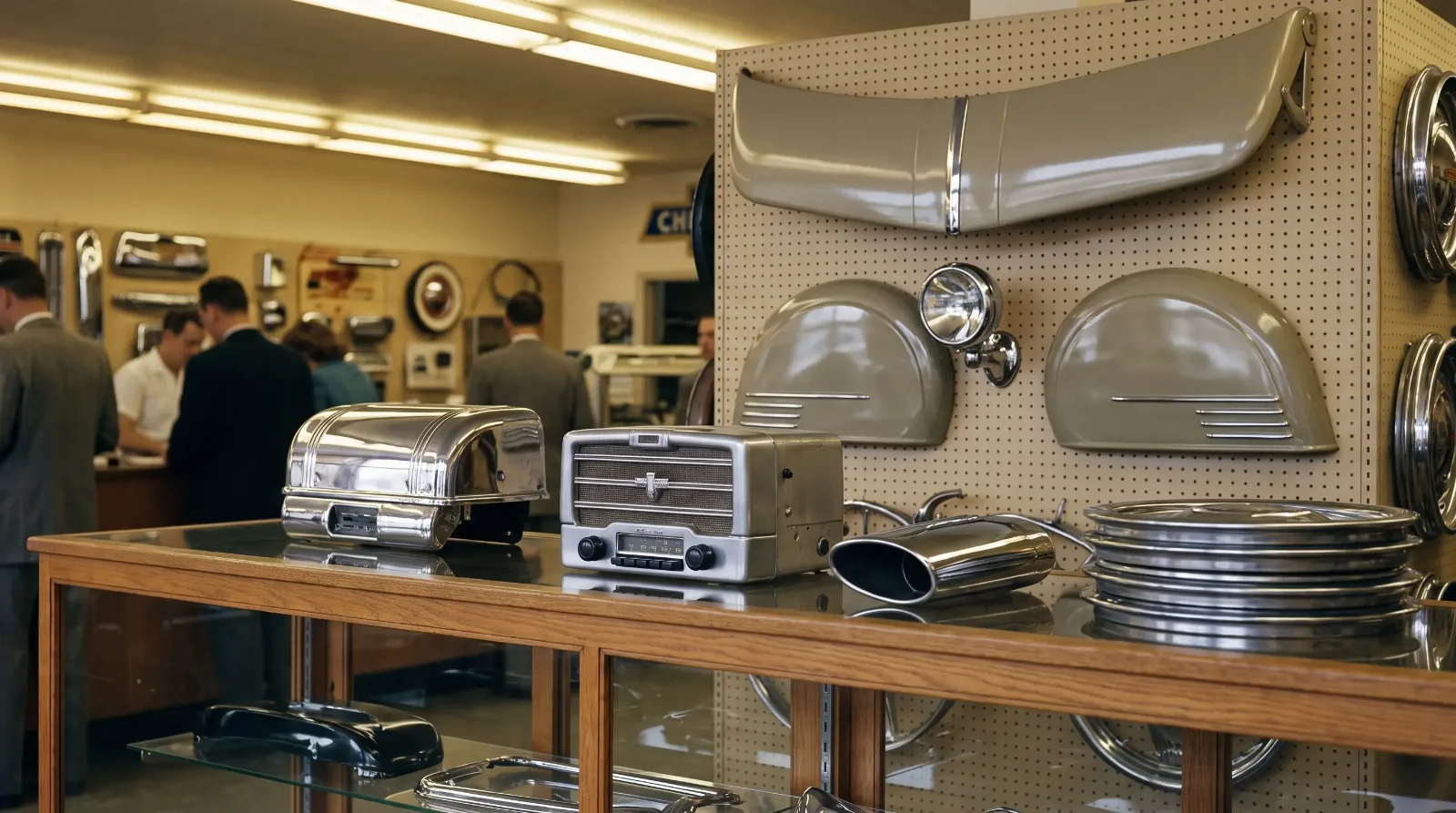
The 1951 Chevrolet accessories were where a plain family car turned into the car a buyer actually wanted. A base Chevrolet in 1951 left the factory pretty sparse by modern standards, and a lot of what we now think of as ordinary equipment was an extra-cost item you added at the dealer or checked off on the order. Heaters, radios, and even outside mirrors were accessories, not standard gear. I have owned and worked on these cars long enough to know that the accessory list tells you as much about the car as the engine does, because it shows how the original buyer optioned it and how honest a restoration really is. If you want the full picture of the car itself, start with the 1951 Chevrolet model guide, then come back here for the extras.
Chevrolet split accessories into two rough camps for 1951. There were the factory-authorized accessories, sold through the parts counter and listed in Chevrolet's own accessory catalog, and there were the dealer add-ons and aftermarket pieces a salesman would talk you into on the lot. Both were common. Knowing which is which, and which of them a 1951 car could genuinely wear, is the whole game when you are judging a car or building one back up right.
Why period-correct accessories matter
To a collector, the accessories are part of the car's story. A 1951 Chevrolet loaded with a factory heater, a pushbutton radio, fender skirts, and a set of wheel trim rings reads as a car whose first owner spent a little more and cared a little more. That matters at a show and it matters to value. A period-correct accessory that was genuinely available in 1951 belongs on the car. A part from 1955, or a modern reproduction passed off as original, is the kind of wrong note a knowledgeable judge or buyer catches fast.
The trap is that a lot of accessories look right at a glance and are not. Chevrolet and its accessory suppliers changed part designs year to year, so a spotlight or a heater that fits and looks period can still be from the wrong year. That is why the safest approach is to treat every accessory as something to verify against a 1951 Chevrolet accessory catalog rather than assume. The same discipline you would use reading over the reference sheet applies to the accessory list. Confirm before you commit.
The accessories a 1951 buyer could order
Here is a working list of the factory and dealer accessories that a 1951 Chevrolet buyer could reasonably order. I have flagged the items I cannot confirm were offered specifically for 1951, because accessory availability shifted year to year and I will not tell you something was on the 1951 chart when I am not certain. Treat this as a starting point to check against a genuine Chevrolet accessory catalog, and do not read any of it as a substitute for that catalog.
| Accessory | Type | Notes |
|---|---|---|
| Heater and defroster | Factory | Not standard in 1951. Offered as a recirculating heater and a fresh-air type. A common first add. |
| AM pushbutton radio | Factory | Dash-mounted tube radio with a separate speaker. An extra-cost item, not base equipment. |
| Fender skirts | Factory / dealer | Steel skirts covering the rear wheel openings. A popular dress-up piece of the era. |
| Exterior sun visor | Factory / dealer | Outside metal visor over the windshield, listed in Chevrolet's 1951 accessory manual. Clamps to the drip rails and center post. |
| Spotlight | Dealer / accessory | Cowl or A-pillar mounted, often an Appleton-style unit. Single or dual. A period dealer and aftermarket piece rather than a Chevrolet catalog item. |
| Fog lamps | Factory | Auxiliary fog lamps listed in the 1951 Chevrolet accessory manual. Bumper or valance mounted. |
| Bumper guards | Factory / dealer | Front and rear guards, listed alongside grille guards and fender guards in the 1951 accessory manual. |
| Wheel trim rings | Factory / dealer | Wheel rings for the outer rim, plus wheel discs as a step up. Both appear in the 1951 accessory manual. |
| Clock | Factory | Chevrolet listed both an electric clock and a spring-wind clock in its 1951 accessory manual. |
| Outside rearview mirror | Factory / accessory | Outside and door mirrors are listed in the 1951 accessory manual. An extra rather than standard on the base car. |
| Windshield washer | Factory | Listed in the 1951 Chevrolet accessory manual to work with the wipers. |
| Backup lamp | Factory | Back-up lamps are listed in the 1951 accessory manual, wired to a manual or transmission switch. |
| Locking gas cap | Dealer / accessory | Common period counter item. The manual lists a gasoline filler door guard rather than a locking cap, so treat a locking cap as a period aftermarket piece. |
| Seat covers | Factory / dealer | Seat covers are listed in the 1951 accessory manual and were a near-universal dealer upsell. |
| Traffic light viewer | Factory / accessory | Prismatic viewer that attaches to a windshield molding screw to see overhead signals. Listed as a traffic viewer in the 1951 accessory manual. |
That covers the accessories buyers actually reached for. Notice how many of them are comfort and convenience items we now take for granted. In 1951 a heater and a radio were money out of pocket, which is exactly why a car that has both, correct and working, is worth a second look.
Telling genuine from reproduction
This is where patience pays. Original 1951 accessories were made from real steel, real stainless, and real Bakelite, and they show it in the casting, the plating, and the way the mounting hardware was designed to fit a 1951 body. Reproductions vary from very good to obvious. The tells are in the details. Look at the quality and thickness of the chrome, the crispness of any cast lettering, and whether the mounting points line up with factory holes rather than needing new ones drilled. A part that requires fresh holes in original sheet metal is telling you something.
Paperwork helps more than anything. An accessory that comes with its original box, instruction sheet, or a dealer installation slip is far easier to trust than a bare part of unknown origin. Short of that, cross-reference the piece against a 1951 Chevrolet accessory catalog and against known-good examples on a solid original car. I will not quote part numbers here, because a wrong number does more harm than no number, and the correct ones belong to the catalog you should be checking anyway.
Dealer add-ons and where the line blurs
Not everything on a 1951 Chevrolet came from Chevrolet. Dealers stocked their own accessories, and the aftermarket sold plenty more, from curb feelers to fancier wheel covers to interior gadgets. Some of those pieces were period-correct in the sense that a buyer in 1951 really could have bought and fitted them, even if they never appeared in a Chevrolet catalog. That is a fair distinction to make on a driver-level car, and it is where honest restorers and strict judges sometimes disagree.
My rule is simple. Know what the piece is before you call it original. A factory-catalog accessory is one thing, a period dealer or aftermarket accessory is a second thing, and a modern reproduction of either is a third. All three can look similar on the car. Only one of them is the factory item, and a buyer paying a premium for originality deserves to know which is which. The nicer trims, like the Special and the De Luxe, tended to wear more accessories, and a car such as a 1951 Fleetline Special is exactly the kind of Chevrolet where a well-chosen set of period extras looks right at home.
"Folks get excited when a car has a spotlight and fender skirts and a radio, and they should, because that is how these cars were meant to be enjoyed. But excited is not the same as correct. Find out if the part is a factory accessory, a period dealer piece, or a repro, and price the car for what it actually is. A carful of the right accessories is a joy. A carful of wrong-year chrome is just shiny."
— Earl Dawson
Building an honest accessory list
If you are restoring or shopping, put the accessories on paper the same way you would the drivetrain. Write down what the car has, mark each item as factory, period dealer, or reproduction, and confirm each one against a real 1951 catalog before you spend. That habit keeps you from paying original money for a repro part, and it keeps a restoration honest when the day comes to sell. The accessories are half the fun of one of these cars. Get them right, and a 1951 Chevrolet wears them the way it was meant to. What was fitted inside the car as standard, rather than added at the dealer, is in what Fisher Body fitted inside.
Sources and notes
- Old Car Manual Project, 1951 Chevrolet Accessories Manual. Primary reference confirming the factory-listed accessories, including heater and defroster, radio, outside metal visor, auxiliary fog lamps, bumper guards, wheel rings and discs, electric and spring-wind clocks, windshield washer, back-up lamps, seat covers, outside mirrors, and the traffic viewer.
- The Filling Station, 1951 Chevrolet car parts and accessories. Restoration vendor listing for fender skirts, sun visors, traffic light viewers, wheel trim rings, and backup lamps.
- The Filling Station, exterior accessories. Detail on outside sun visors, fender skirts, and wheel trim rings for early Chevrolets.
- National Chevy Association, 1951 Chevy Accessory Installation Manual. Reprint of the period installation manual with accessory illustrations and part numbers.
- Chevs of the 40s / Classic Parts, 1951-59 Traffic Light Viewer. Confirms the prismatic traffic viewer as a period Chevrolet accessory that mounts to a windshield molding screw.
- Appleton spotlight reference. Background on cowl and A-pillar spotlights as a popular period dealer and aftermarket fitment rather than a factory catalog item.
More from the garage
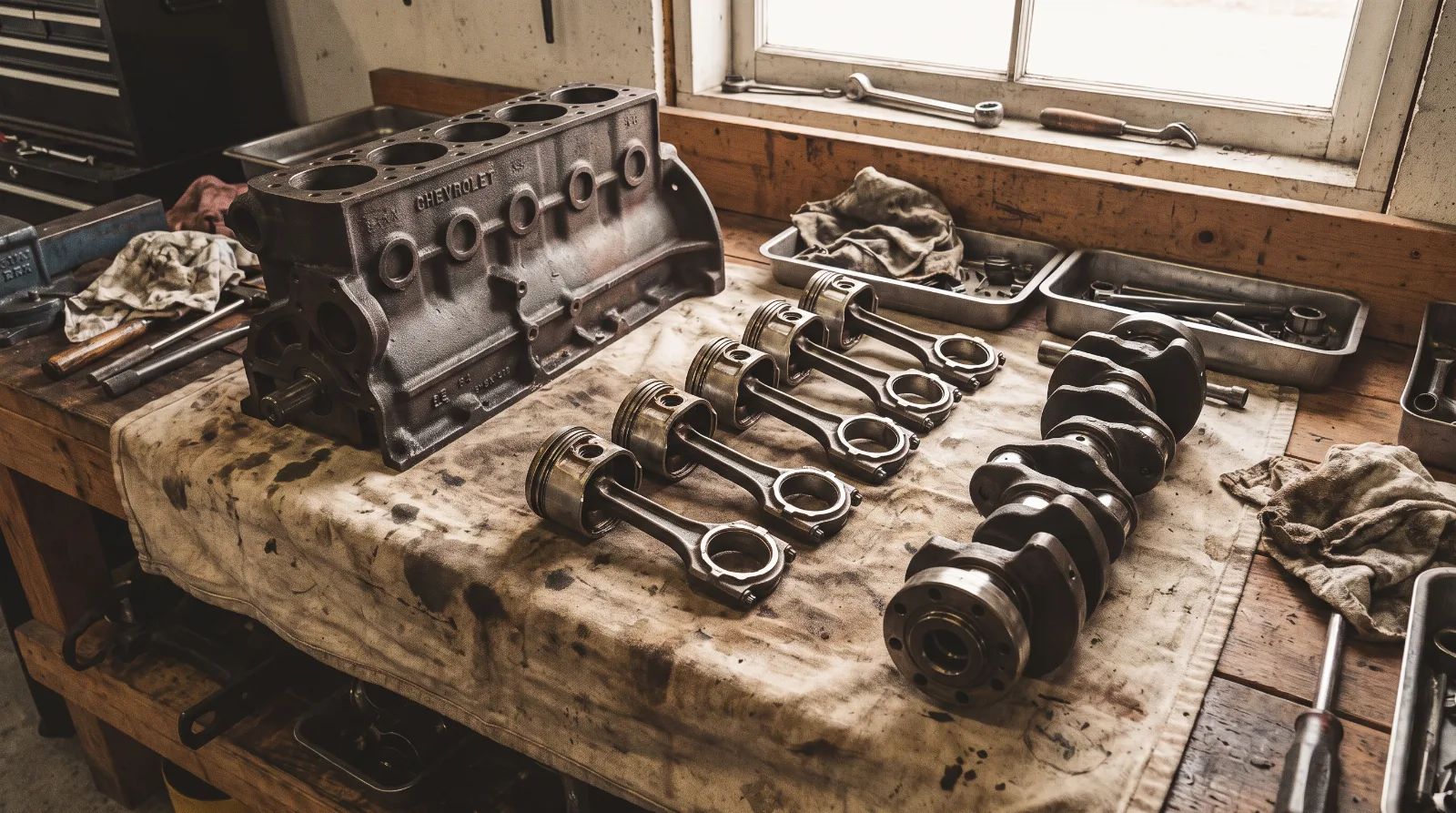
Rebuilding a Chevy 216
Rebuilding a 216 is not like rebuilding anything made after about 1955, and the difference is not the tools. It is that on most engines the botto...
The 1951 Chevrolet Apache
There is no 1951 Chevrolet Apache. The Apache name belongs to the generation of Chevrolet trucks that came after the one built in 1951, and it do...
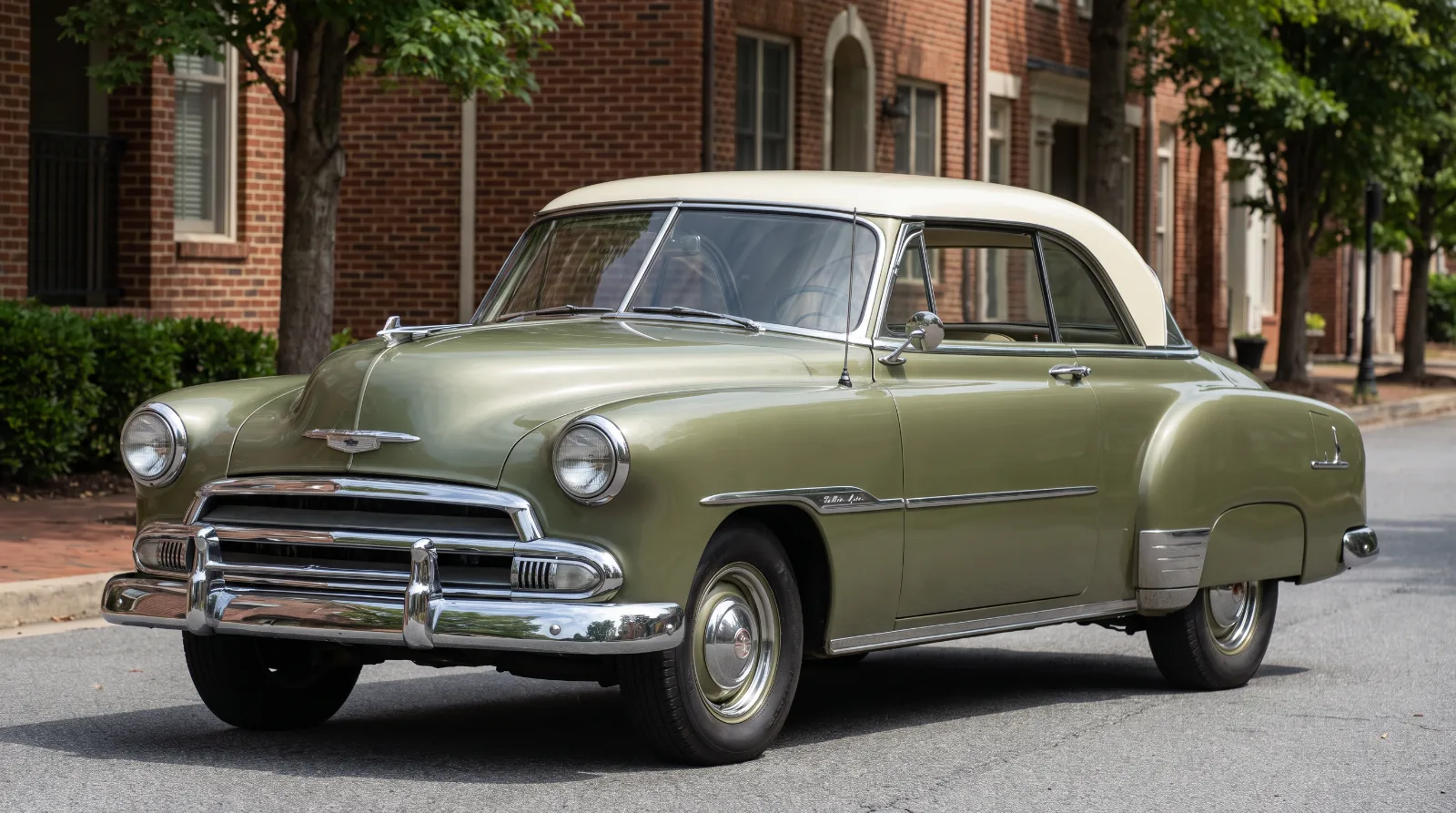
The 1951 Chevrolet Impala
There is no 1951 Chevrolet Impala. The name did not exist in 1951, the car did not exist in 1951, and nothing Chevrolet built that year was ever...