The 1951 Chevrolet: A Complete Model Guide
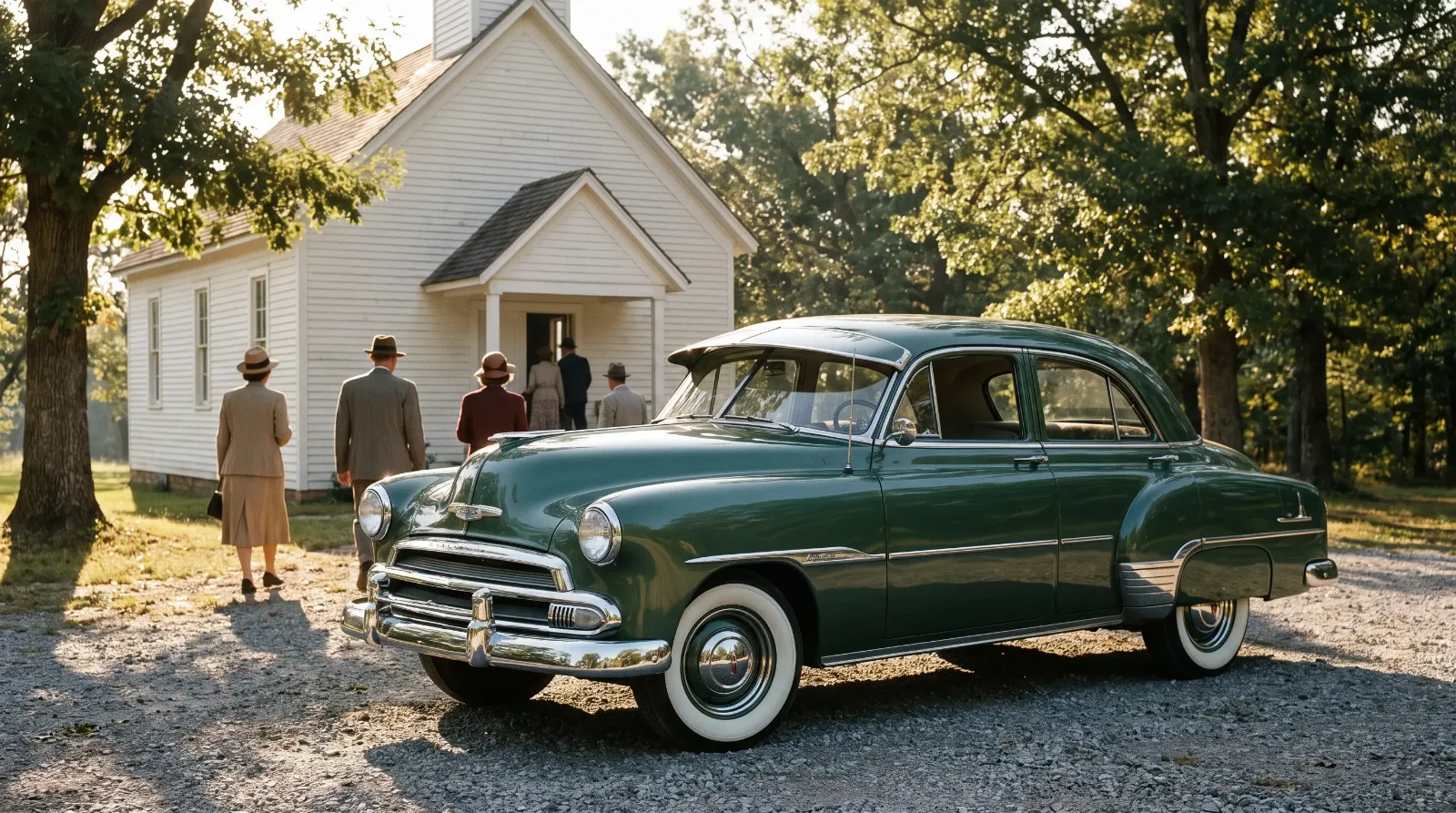
When a 1951 Chevrolet was the family car, it did not shout for attention. It just showed up every morning, started on the first pull of the choke, and carried five people to church, to the plant, and out to the lake on Sunday. I grew up around these cars, and I have been putting them back together since the 1970s, so let me tell you what the 1951 model was and why it still matters. It sits right in the sweet spot of the early postwar years, built on styling that had already proven itself, powered by an engine so honest that people still drive them daily. This is the whole story, from the two series and the body styles to the Stovebolt six, the Powerglide, and what it takes to own one today.
Chevrolet was the volume brand in 1951, the car that outsold everyone, and that is exactly why so many survived. When more than 1.2 million of something rolls out the door, enough of them make it to the next century that you and I can still find one. So this is not a rare exotic. It is a car built to be owned, and it rewards an owner who understands it.
The 1951 Chevrolet in postwar America
To understand the 1951, you have to remember where the country was. The war was over, factories had turned back to building cars instead of trucks and tanks, and families that had waited years finally had money and a reason to spend it. Chevrolet met that demand with a car that was modern for its day but not frightening to anyone. It was roomy, it was cheap to run, and it looked like money without costing it.
The look itself was not new for 1951. Chevrolet had thoroughly restyled the whole line for 1949, moving away from the tall, upright prewar shapes to a lower, wider, more integrated body with the fenders starting to blend into the doors. That 1949 design carried through 1950 and 1951 with yearly updates to the grille and trim rather than a whole new shell. Buyers liked it, and Chevrolet saw no reason to argue with success. The 1951 was the third and most refined year of that body.
The pitch in the showroom was simple. Chevrolet was the low-priced three alongside Ford and Plymouth, and it leaned hard on value, economy, and that famous line about seeing the U.S.A. in your Chevrolet. For most American families, this was the car you actually bought, not the one you dreamed about. That is its charm now. It is the everyman car of its moment.
The two series: Special and De Luxe
Here is the first thing every buyer needs to sort out, because it decides a lot about what a given 1951 is. Chevrolet split the line into two trim series. The lower one was the Special, sometimes written as Styleline Special and Fleetline Special. The upper one was the De Luxe. Same basic body, same running gear, different level of dress and equipment.
The Special was the price leader. Plainer trim, less brightwork, simpler interior appointments, and it did without some of the conveniences the De Luxe threw in. If you wanted a Chevrolet and wanted to keep the check small, the Special was your car. It is honest transportation and nothing to apologize for.
The De Luxe was the one most people stepped up to. More chrome, richer upholstery, extra interior trim, and it was the series where you found the nicer body styles and the optional automatic. When you see a 1951 with the two-tone interior and all the bright moldings, you are almost certainly looking at a De Luxe. If you are chasing a specific example, the lower-line Fleetline body is covered in more depth on the plain fastback page, and it is a good study in how much the trim level changed the feel of the same car.
One point that trips people up. The Special and De Luxe names describe trim level, while Styleline and Fleetline describe body shape. So a car can be a Styleline De Luxe or a Fleetline Special, and the combinations are what you read off the trim plate. Keep those two ideas separate in your head and the whole 1951 catalog suddenly makes sense.
Body styles across the 1951 range
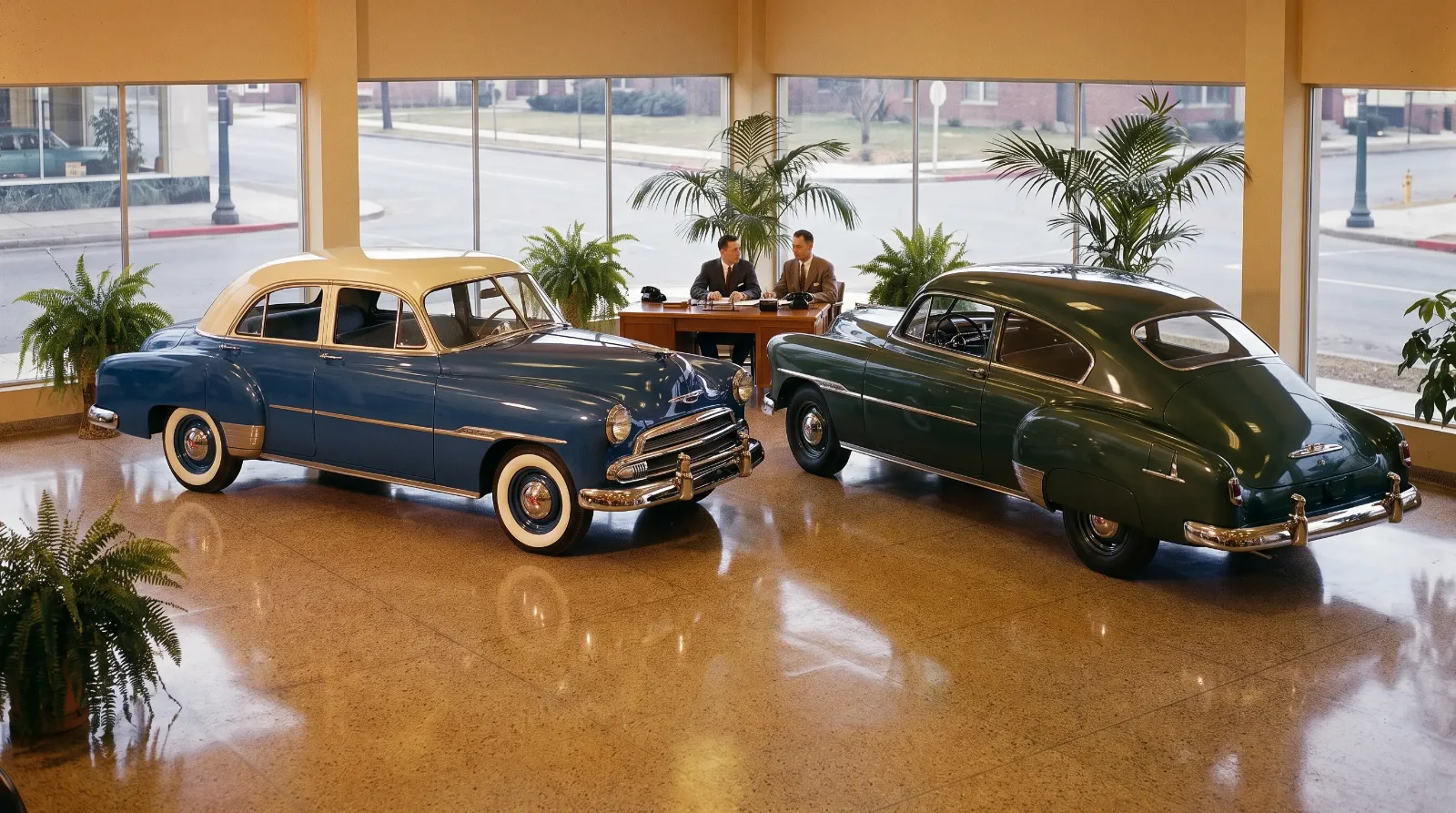
This is where the 1951 gets interesting, because Chevrolet offered a real spread of body styles, and the shape changes the car more than anything else. The two big families were the Styleline and the Fleetline.
The Styleline was the notchback, the shape with a distinct trunk that steps down behind the rear window. This was the mainstream look, and it covered most of the range: the four-door sedan, the two-door sedan, the sport coupe, the business coupe, the convertible, and the station wagon. If you picture a 1951 Chevrolet in your mind, you are probably picturing a Styleline sedan.
The Fleetline was the fastback, with a roofline that sweeps in one unbroken line from the top of the windshield all the way down to the rear bumper. No separate trunk hump, just that smooth tail. In 1951 the Fleetline was still offered as both a two-door and a four-door, and it was already on its way out of fashion. The fastback look had peaked in the late 1940s, and buyers were drifting back to the notchback trunk. That makes a clean Fleetline a more distinctive car to own today.
Within the Styleline family, the individual body styles each have their own character. The four-door sedan was the family hauler and the most common. The two-door sedan was the same idea in a slightly sportier wrapper. The sport coupe was the pillarless-feeling two-door hardtop-style coupe with the nicer roofline, and it is one of the most sought-after shapes now. If that body is what you are after, the Styleline Sport Coupe earns its own close look. The business coupe traded the back seat for cargo room and was aimed at traveling salesmen. The convertible, offered in the De Luxe series, is the glamour car of the bunch. And the station wagon, by 1951 an all-steel body that had replaced the earlier wood-bodied wagons, is the rarest and most collectible of the practical body styles.
| Body style | Series offered | Roofline | Notes |
|---|---|---|---|
| Styleline four-door sedan | Special & De Luxe | Notchback | Most common, the family car |
| Styleline two-door sedan | Special & De Luxe | Notchback | Sportier take on the sedan |
| Styleline sport coupe | De Luxe | Notchback | Hardtop-style roof, highly sought |
| Styleline business coupe | Special | Notchback | No rear seat, cargo space |
| Styleline convertible | De Luxe | Soft top | The glamour body, De Luxe only |
| Styleline station wagon | De Luxe | Wagon | Rarest practical body, De Luxe series |
| Fleetline two-door | Special & De Luxe | Fastback | Fading in popularity by 1951 |
| Fleetline four-door | Special & De Luxe | Fastback | Still offered in 1951, dropped after 1952 |
My advice on body style is simple. Buy the shape you love, because you are going to look at it every time you walk into the garage. The sedans are cheaper to buy and easier to find parts for. The coupes and the convertible cost more and always will. There is no wrong answer, only the one that suits your wallet and your eye.
Under the hood: the Stovebolt six and Powerglide
Now to the heart of the thing. Every 1951 Chevrolet came with an inline six-cylinder engine, the overhead-valve six that folks have called the Stovebolt for generations. The nickname came from the slotted, stove-bolt-style fasteners on the early versions of the engine, and it stuck long after the bolts changed. This engine family is one of the most durable powerplants Detroit ever built, and that is not nostalgia talking, it is why so many still run.
For 1951 the standard engine was the 216.5 cubic inch six, marketed as the Thrift-Master and rated at about 92 horsepower, backed by a three-speed manual transmission on the column. It is a splash-and-dip-lubricated engine in its early form, not a high-pressure oiling system, and it does its best work at moderate revs. Do not expect it to be fast. Expect it to be willing, smooth, and nearly impossible to kill if you keep oil in it.
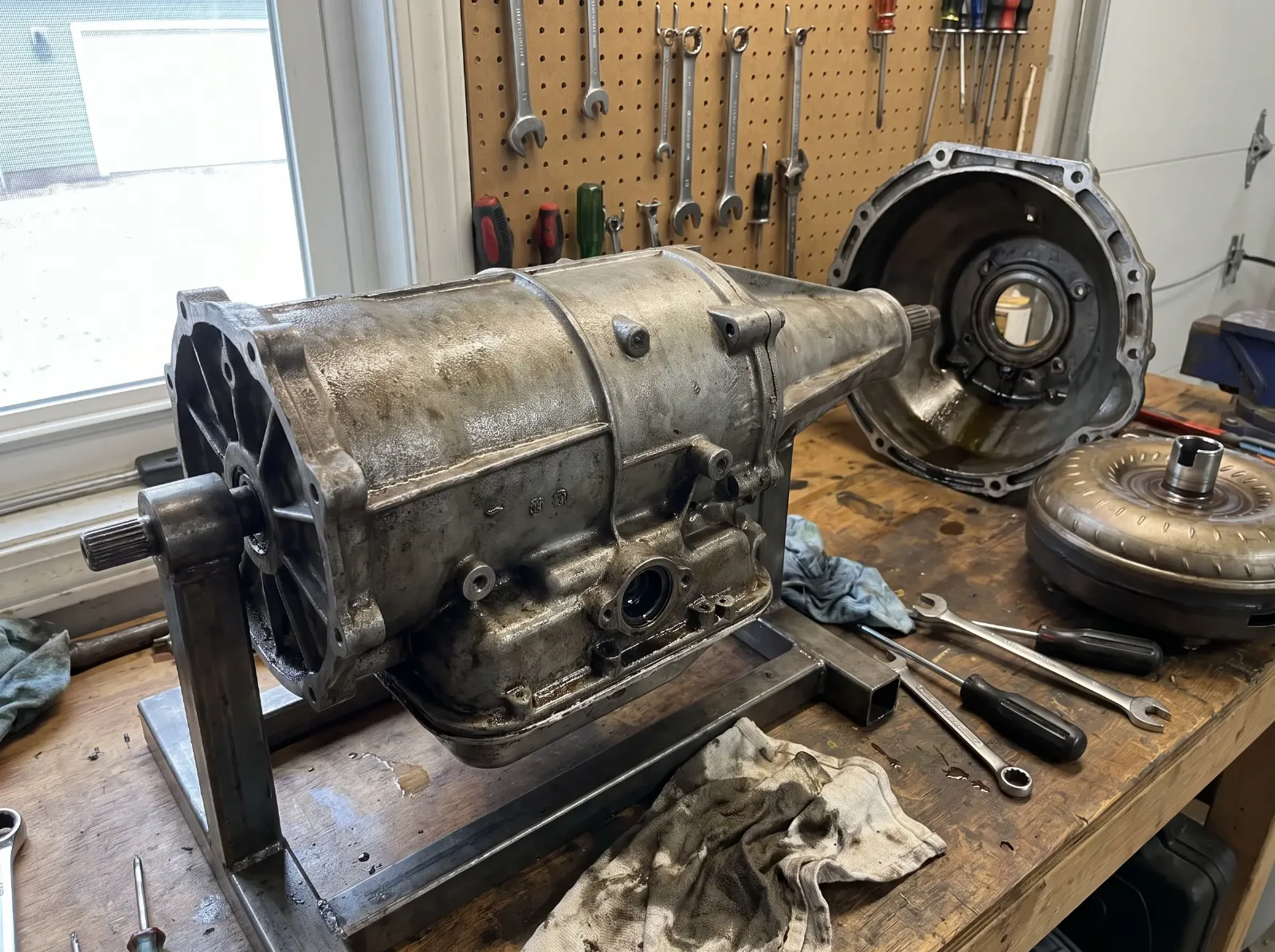
The bigger news for these years was the automatic. Chevrolet introduced the Powerglide two-speed automatic transmission for 1950, the first fully automatic offered in the low-priced field, and it carried into 1951. Cars ordered with Powerglide got a larger 235.5 cubic inch six, rated at about 105 horsepower, to handle the automatic and give it enough pull. So the engine you get is tied to the transmission you get. Three-speed manual cars generally have the 216, and Powerglide cars generally have the 235. That is a useful thing to know when you are reading an advertisement.
"People underrate the Stovebolt because it is slow. Slow is not the same as weak. I have pulled these engines apart at high mileage and found bores you could still measure to spec. Feed it oil and it will outlast the man who owns it."
— Earl Dawson
On the road, neither engine is quick by modern standards, and I would not want you buying one expecting muscle. The manual three-speed is a pleasant, unhurried thing once you learn its shift pattern and its long clutch travel. The Powerglide is smooth and lazy, perfect for a car meant to be driven gently. Both will cruise a back road all day. Neither loves an interstate on-ramp. Drive it for what it is and it will never let you down.
Styling and trim details specific to 1951
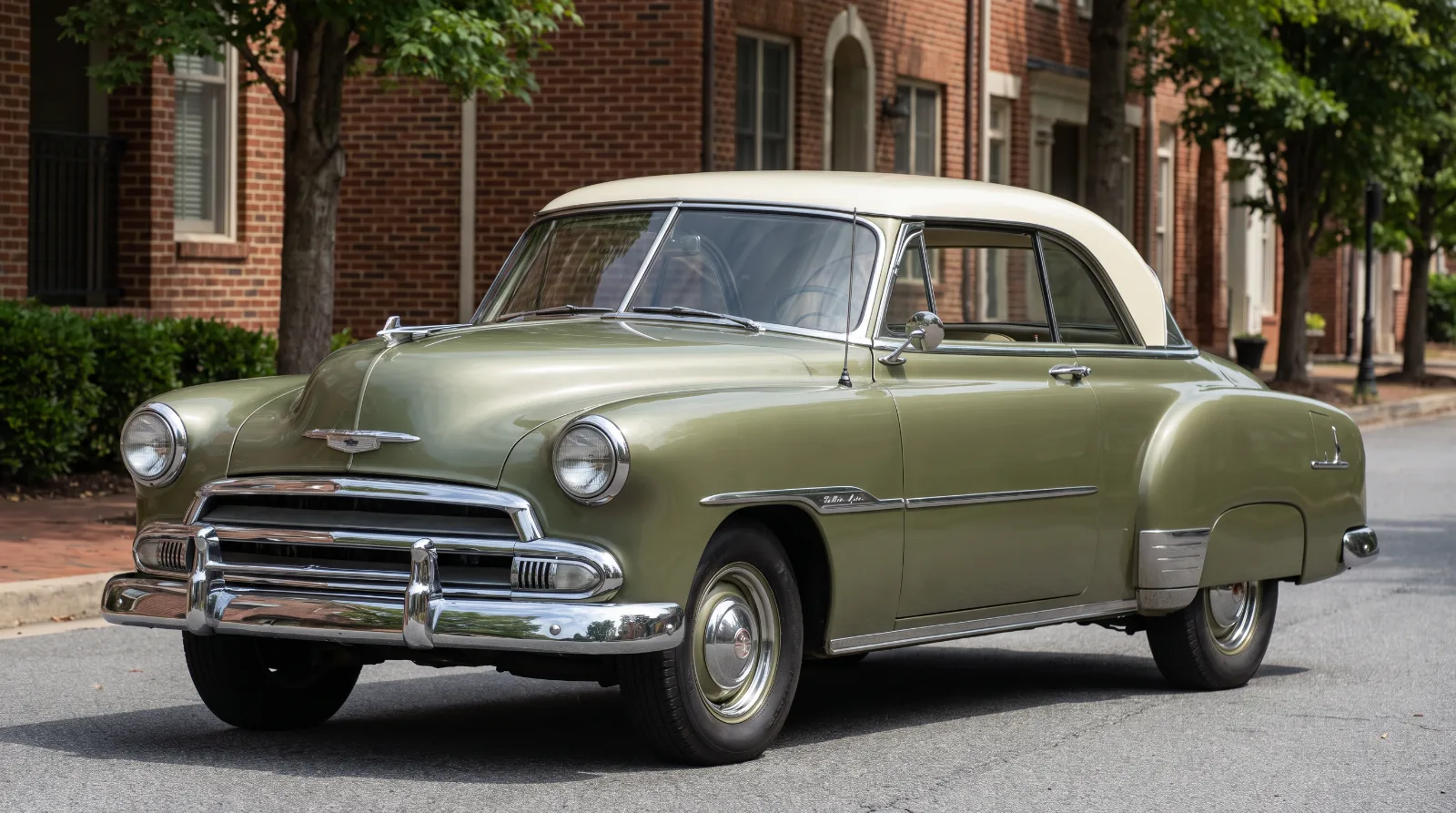
Every year of that 1949-to-1952 body got its own face, and this is how you tell a 1951 from its neighbors at a show. The surest tells are up front. The 1951 grille has its own arrangement of horizontal bars, with the parking lamps carried below the headlights in the ends of the grille bar, and that arrangement differs from the 1950 and again from the 1952. Once you have seen the three years side by side, you never mix them up again.
The trim tells the rest of the story. The De Luxe cars wore more bright moldings along the body sides and around the windows, and the Special cars wore less. Hood ornaments, fender trim, and the placement of the Chevrolet script all shifted slightly year to year, and the 1951 has its own combination. Inside, the dashboard carried the symmetrical postwar layout of that body, with the instrument cluster ahead of the driver and the radio and controls set in a bright bezel across the center. The De Luxe interiors got the two-tone treatment and the nicer door panels.
None of this is hype, it is just the vocabulary you need to read a car correctly. When somebody tells you their car is a 1951 and the grille says otherwise, you will know, and you will save yourself trouble. A lot of these cars have been Frankensteined over the decades with parts from whatever year showed up at the swap meet, so learning the correct 1951 details protects you.
What changed from 1950 to 1951, and 1951 to 1952
Since the same basic body ran from 1949 through 1952, the year-to-year changes are the details, and knowing them makes you a smarter buyer. Going from 1950 to 1951, the biggest visible change was the front-end restyle with the new grille and trim, plus the usual shuffle of interior appointments and color choices. Mechanically the two years are close cousins, with the Powerglide and its larger six already established in 1950 and carried forward.
Going from 1951 to 1952, Chevrolet again freshened the grille and trim while leaving the body shell alone, since an all-new body was coming for 1953. The 1952 is the last of that generation. So the 1951 sits comfortably in the middle of a well-understood, well-supported four-year run, which is good news for parts and for knowing exactly what you are looking at.
For a buyer, the practical takeaway is this. Do not overpay for a car sold as a 1951 without confirming the year details match, and do not walk away from a good honest car just because a previous owner swapped in a grille or a trim piece from an adjacent year. Those are correctable. Rust and bad bodywork are not, at least not cheaply.
"The prettiest paint in the parking lot means nothing if the floors are gone. I have watched folks fall for a shine at fifteen paces and never once look underneath. Get down on the ground with a light before you fall in love."
— Earl Dawson
Buying and owning a 1951 Chevrolet today
Here is the part that matters if you are actually going to write a check. The 1951 Chevrolet is one of the friendlier old cars to own, but it has its trouble spots, and you should know them cold before you shop. There are plenty of these cars around, and there is a steady supply of good ones if you are patient. If you want to see what is out there, a browse through what complete cars are asking gives you a feel for prices before you commit to anything.
Rust is the first enemy. These cars rot in the usual old-Chevrolet places. Look hard at the floor pans, the trunk floor, the lower doors, the rocker panels, the bottoms of the fenders, and the area around the rear window and windshield where the seals trap water. A car from a dry state has a real advantage here, and a car from the salt belt needs a much closer look underneath. Bring a magnet and a flashlight, and use them.
Check this first
- Floor pans and trunk floor. Lift the carpet and the mats. Soft or patched floors mean water has been sitting for years, and full replacement pans plus labor add up fast.
- Lower body and rockers. Fenders, rocker panels, and lower doors are where the tin dies first. Filler and fiberglass hide a lot, so probe and tap.
- Engine oil pressure and smoke. On the early splash-oiled 216, watch for low oil pressure and blue smoke on startup. A tired bottom end is rebuildable but not free.
- Brakes and lines. These are single-circuit drum brakes. Check the master cylinder, wheel cylinders, and hoses. Old rubber and rusted lines are a safety item, not a maybe.
- Wiring and grounds. Six-volt systems with 70 years of hack repairs are common. Cloth insulation goes brittle and bad grounds cause half the gremlins.
On the good-news side, parts availability is excellent for a car this age. The Stovebolt six was built in enormous numbers across cars and trucks for decades, so mechanical parts are out there, and the reproduction market covers a lot of the common wear and trim items. Weatherstrip, brake parts, ignition parts, and many trim pieces are reproduced. Some of the year-specific bright trim gets harder to find in perfect shape, which is exactly why you confirm what a car has before you buy.
A word on the electrical system, because it catches people. Most 1951 Chevrolets left the factory as six-volt, negative-ground cars. People trip over that, because a lot of other six-volt cars of the era, Fords and Chrysler products among them, ran positive ground. Chevrolet did not. That is not a fault, it is just how they were built, and a healthy six-volt system with clean grounds and good cables works fine. The trouble is decades of amateur wiring. If the car has been rewired badly, or converted to twelve volts halfway and left in between, sort that out early. A correct wiring diagram is worth its weight when you are chasing a dead circuit, and I always keep one on the bench.
As for color, the factory offered a tasteful range of solids and some two-tones typical of the early 1950s, in the greens, blues, grays, maroons, and blacks of the period. A correct factory color helps a car's appeal and its value, though plenty of nicely repainted cars wear colors that were never on the 1951 chart. That is a personal call. I lean toward correct, but I will not lecture a man who painted his sedan the color his father's car was.
What should you pay? Prices swing wide with body style and condition, and I will not pin a number I cannot stand behind, so treat this as a shape of the market rather than a quote. The pattern holds true, though. Four-door sedans are the value buy and always the least money. Two-door sedans bring a little more. The sport coupe, the convertible, and a clean Fleetline sit at the top. Condition moves the number more than anything, so a rust-free driver-quality sedan can be worth more than a rough coupe that needs everything.
Owning one of these is a gentle hobby. It is not a fast car and it was never meant to be. It is a comfortable, honest, easy-to-live-with piece of American history that you can actually drive, park at the diner, and hand down. That is what it was in 1951, and that is what it still is. Find a solid one, keep oil in it, and it will give you years.
Where you go next depends on which car you are chasing. The pillarless roof and the trim that came with it are in the 1951 Bel Air, the fastback pair in Chevrolet Fleetline De Luxe, and the trucks in the Advance Design range.
Sources and notes
- Powerglide (Wikipedia) — confirmed the two-speed Powerglide debuted for 1950 as the first automatic in the low-priced field, with Ford's automatic following in 1951 and Plymouth's in 1954.
- 1949–1952 Chevrolet Styleline & Fleetline: Specs & History — confirmed the 216.5 Thrift-Master six at 92 hp with 3-speed manual, the 235 six at 105 hp with Powerglide, and the Styleline/Fleetline and Special/De Luxe structure.
- Chevrolet Stovebolt engine (Wikipedia) — confirmed the overhead-valve six's Stovebolt nickname, the 216.5 and 235.5 displacements, and their output ratings.
- 1951 Chevrolet Special Series Specifications (conceptcarz) — confirmed the 115-inch wheelbase, 1951 model-year production of roughly 1.23 million cars, and the two-series lineup.
- 1951 Chevrolet De Luxe Series (conceptcarz) — confirmed the De Luxe body styles, the 1951 front-end restyle with parking lamps set in the grille bar, and the all-new body arriving for 1953.
- Chevrolet Fleetline (Wikipedia) — confirmed the Fleetline fastback body and its fading popularity through the early 1950s.
More from the garage
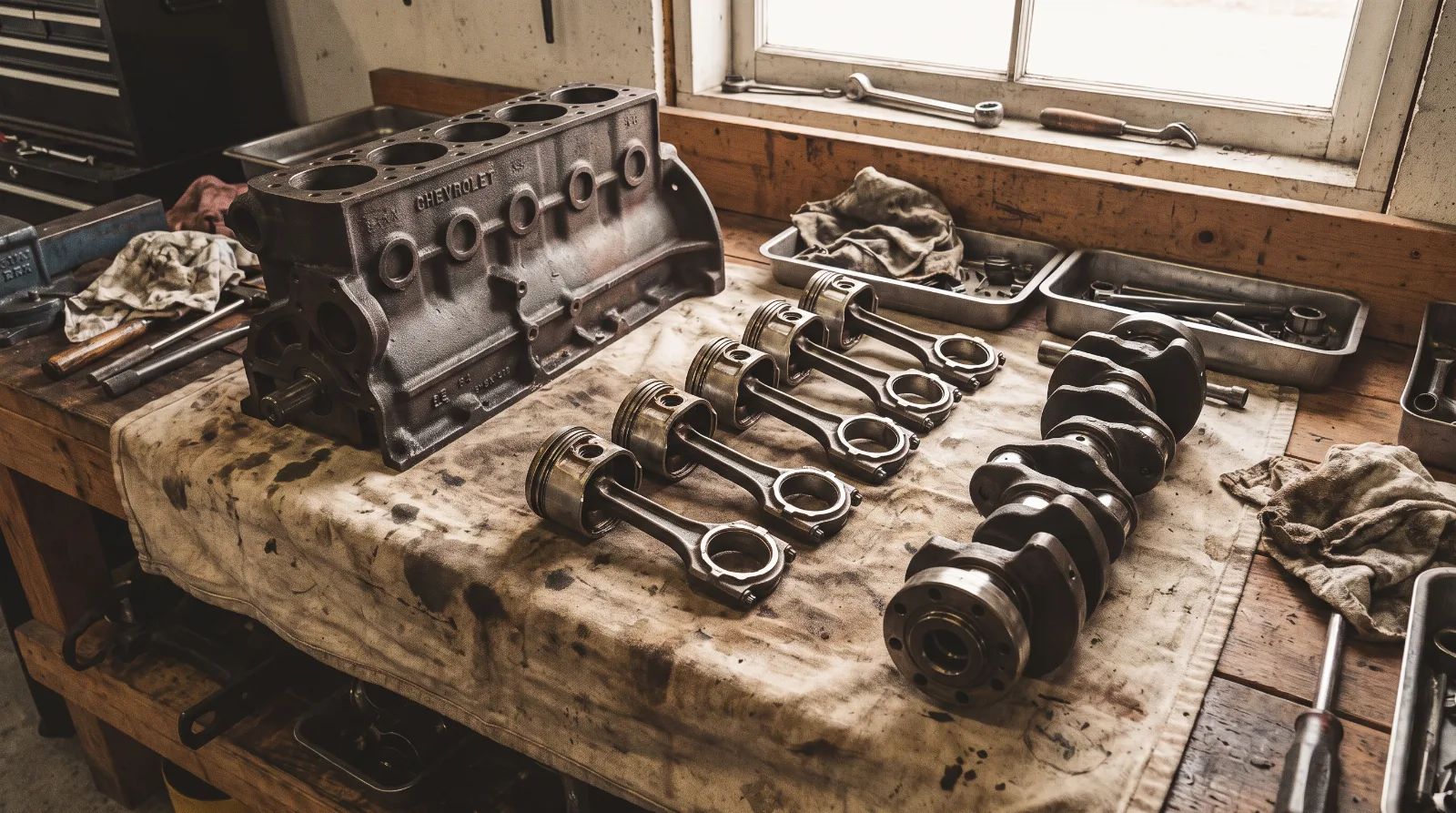
Rebuilding a Chevy 216
Rebuilding a 216 is not like rebuilding anything made after about 1955, and the difference is not the tools. It is that on most engines the botto...
The 1951 Chevrolet Apache
There is no 1951 Chevrolet Apache. The Apache name belongs to the generation of Chevrolet trucks that came after the one built in 1951, and it do...
The 1951 Chevrolet Impala
There is no 1951 Chevrolet Impala. The name did not exist in 1951, the car did not exist in 1951, and nothing Chevrolet built that year was ever...