The 1951 Chevrolet Impala
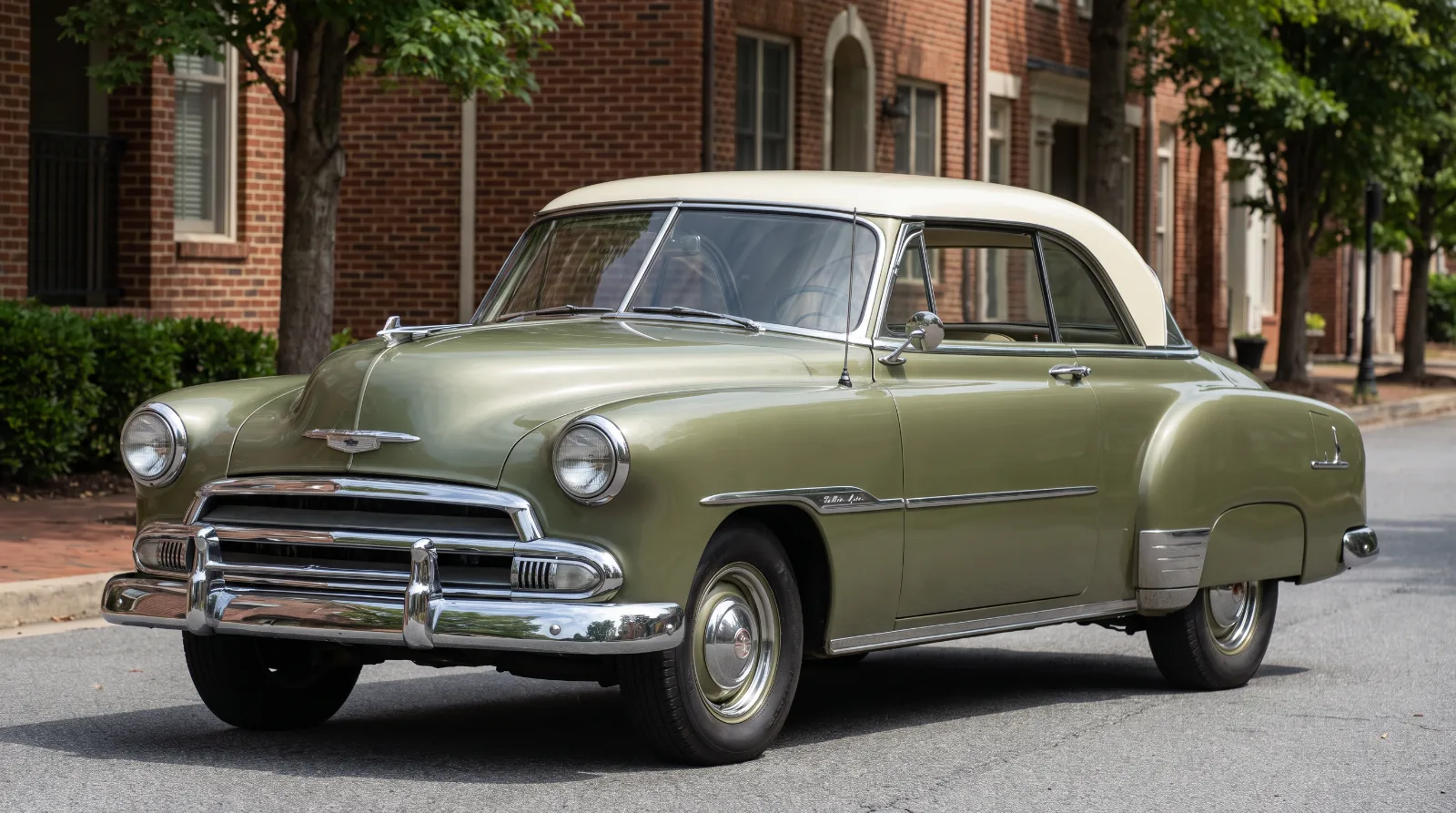
There is no 1951 Chevrolet Impala. The name did not exist in 1951, the car did not exist in 1951, and nothing Chevrolet built that year was ever called one.
That is the short answer, and it deserves a longer one, because the question gets asked constantly and the people asking it are not confused about cars. They are confused about dates, which is a much more forgivable thing.
When the Impala actually appears
The name starts as a show car. Chevrolet put a full size Impala on the Motorama circuit in 1956, a car with Corvette influenced styling, particularly in the grille, named after the African antelope which became its badge.
The production car follows for the 1958 model year, and even then it is not a model of its own. The Impala arrives as the top version of the Bel Air, in two door hardtop and convertible form only. Chevrolet built 125,480 of the coupes and 55,989 of the convertibles that first year.
It becomes a series in its own right for 1959, which is when the four door hardtop, the four door sedan and the station wagon join the hardtop coupe and the convertible.
| Year | Impala |
|---|---|
| 1951 | Does not exist |
| 1956 | Motorama show car |
| 1958 | Top version of the Bel Air, hardtop and convertible |
| 1959 | Becomes a separate series |
What you are probably looking for
If somebody has told you about a 1951 Impala, the car they were describing is almost certainly one of four things.
A 1951 Bel Air. The pillarless two door hardtop, the most glamorous body Chevrolet sold that year, and the direct ancestor of everything the Impala later became. At $1,920 it was the second most expensive car in the range.
A 1951 convertible. The other showpiece, 20,172 built, and the one people picture when they think of an early fifties Chevrolet with the roof down.
A Fleetline fastback. The shape that dominates the custom and lowrider world, and the car most often photographed in a way that makes people reach for a famous name to describe it.
An actual Impala from 1958 onward. In which case the year is wrong rather than the name, and that is a straightforward fix.
"Somebody rings up wanting parts for a 1951 Impala. I do not correct them straight away. I ask what the car looks like, because nine times in ten they have a Bel Air and a very nice one."
— Earl Dawson
Why this matters when you are buying
Mostly it does not, because nobody is deliberately selling a 1951 Impala. But the underlying habit does matter, because it is the same habit that produces a Special being advertised as a De Luxe.
Names on these cars are the least reliable thing about them. Badges get swapped, trim gets added, and every owner repeats what the last one told them. What does not move is the plate on the driver's door pillar, where the series character reads J for Special and K for De Luxe, and the Fisher body plate on the cowl, where the style number says which body left the factory.
So the practical lesson from the Impala question is a general one. Establish what the car is from the plates and the body, then worry about what it is called.
Check this first
- The year against the name. Impala from 1958 and not before, whatever the advertisement says.
- Whether the car in question is actually a Bel Air. The pillarless two door hardtop, and by far the most likely answer.
- The series character on the door pillar plate. J or K, and it settles the trim level.
- The style number on the cowl tag. 15 for the Special series, 21 for the De Luxe.
- The roof. Hardtop, notchback, fastback or fabric, and it names the body without any badge.
- Whether any name on the car matches the plates. When they disagree, the plates are right.
Where this fits
The full 1951 range, with everything that did exist, is in the whole 1951 range, and the other two names that come up the same way are in the 1951 Chevrolet Corvette and the 1951 Chevrolet Apache. The car people usually mean is in the hardtop Bel Air, with the hardtop and the 1951 convertible alongside it. The plates that settle any naming argument are in the identification and the plate on the door pillar.
Sources and notes
- Chevrolet Impala, Wikipedia - the name originating with a full size 1956 Motorama show car carrying Corvette like design cues and named after the African antelope, the introduction for the 1958 model year as a top of the line Bel Air in two door hardtops and convertibles with 125,480 coupes and 55,989 convertibles built, and the Impala becoming a separate series for 1959 with four door hardtop, four door sedan and station wagon added.
- 1951 Chevrolet De Luxe Series, conceptcarz - the 1951 Bel Air at $1,920 with 103,356 built and the convertible at $2,030 with 20,172, inside a De Luxe total of 1,064,896, and the absence of any Impala from the range.
- 1951 Chevrolet Special Series, conceptcarz - the Special series body styles and their prices and production, completing the 1951 range at 185,090 cars.
- Chevrolet model identification 1946-1954, The Old Car Manual Project - the J and K series letters that identify Special and De Luxe on a 1949 to 1952 car regardless of what badges it wears.
- Chevrolet Fleetline, Wikipedia - the fastback body that people most often reach for a famous name to describe, offered from 1949 through 1952.
- Chevrolet postwar models, Classic Car Database - the 1951 range listed in full as Styleline and Fleetline in the 2100 De Luxe and 1500 Special series, with no Impala among them.
More from the garage
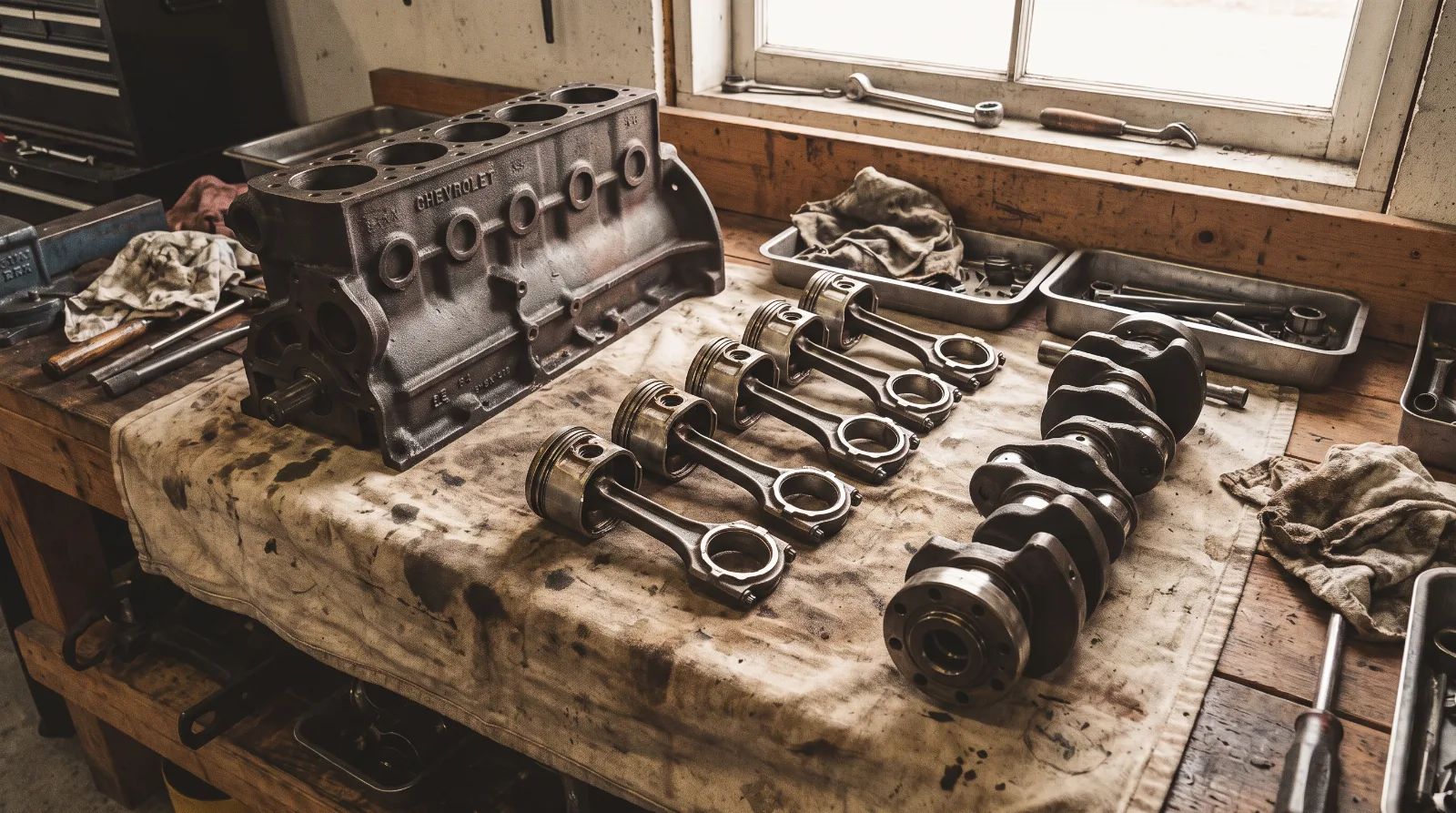
Rebuilding a Chevy 216
Rebuilding a 216 is not like rebuilding anything made after about 1955, and the difference is not the tools. It is that on most engines the botto...
The 1951 Chevrolet Apache
There is no 1951 Chevrolet Apache. The Apache name belongs to the generation of Chevrolet trucks that came after the one built in 1951, and it do...
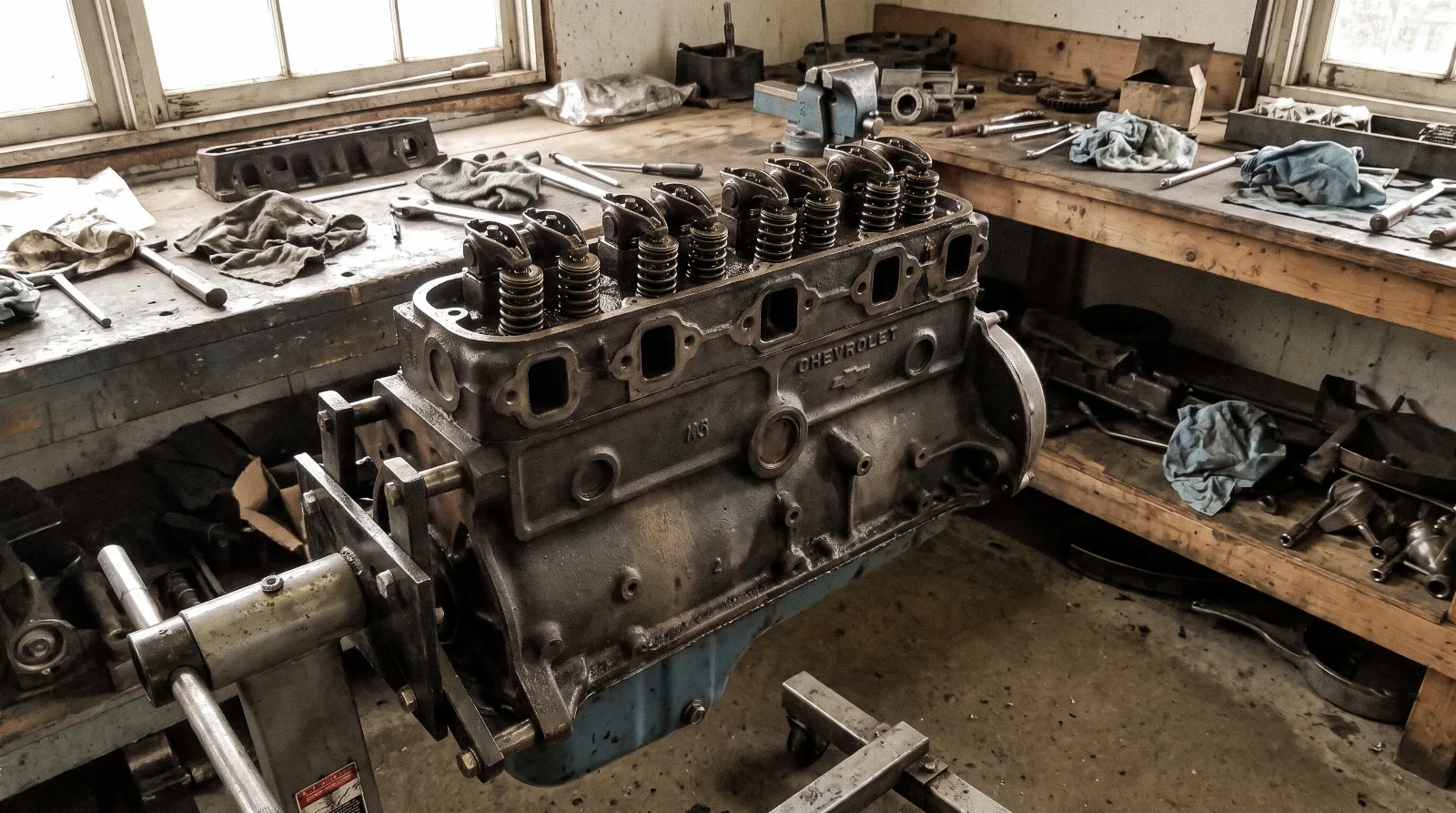
Chevy 216 Engine Specs
This is the page I keep in the toolbox. Not the history, not the argument about whether the 216 or the 235 is the better engine, just the numbers...