1951 Chevrolet Serial Numbers
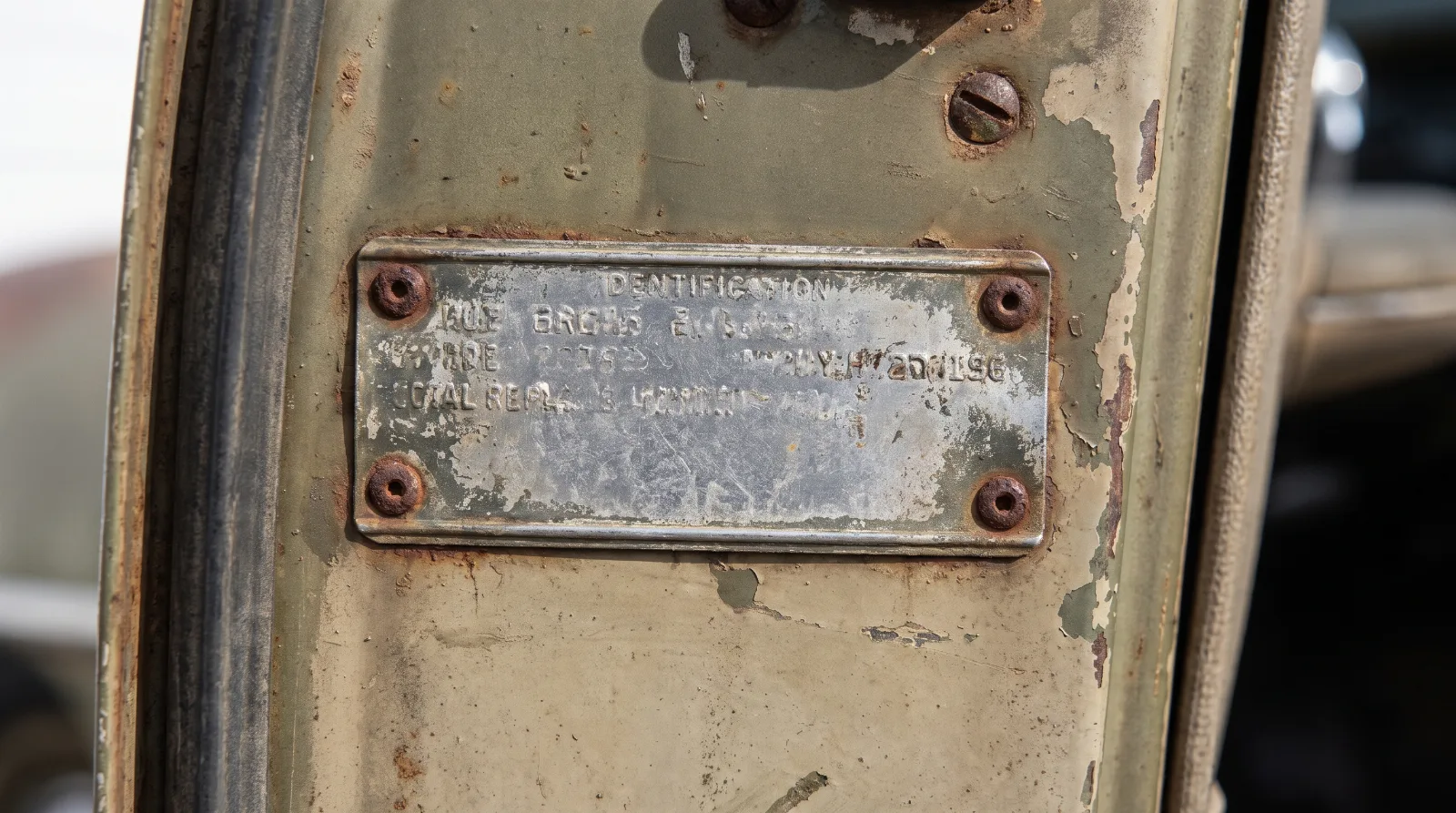
The serial number on a 1951 Chevrolet is not a VIN in the modern sense. It is a short string that Chevrolet used to tell one car from another on its own records, and it carries four pieces of information: where the car was built, what year and series it was, what month it came down the line, and how many cars that plant had already built.
Learn the four and you can read any of them. It takes about five minutes and it settles most of the questions people pay somebody else to answer.
Where the plate is
On a 1949 to 1952 Chevrolet the serial number plate is on the driver's side front door pillar. Open the door and it is there at the hinge end, visible without moving anything. On many cars it has been painted over two or three times and needs a torch held at an angle before the stamping shows up.
There is nothing stamped into the frame. Chevrolet did not start numbering frames until 1955, so on this car the door pillar plate is the only chassis identity there is. If it has gone, the car is identified by its Fisher body plate and by its paperwork, and that is a different conversation.
| Position | What it is | Example |
|---|---|---|
| First | Assembly plant | 9 for Norwood |
| Second | Model year | J for 1951 |
| Third | Series | J Special, K De Luxe |
| Fourth | Month of assembly | A for January |
| Remainder | Sequence at that plant | Starts at 1001 |
The four codes
The plant. A number, and it is the first thing in the string. Flint is 1, Tarrytown 2, St. Louis 3, Kansas City 5, Oakland 6, Atlanta 8, Norwood 9, Baltimore 14, Los Angeles 20 and Janesville 21. A car built in Flint and a car built in Oakland were the same car on paper and quite often differed in small details of assembly, which is worth remembering when two owners argue about what is correct.
The year. A letter, and for 1951 that letter is J. The scheme runs through the surrounding years too, which is how a car with a plate but no paperwork gets dated in one character.
The series. Also a letter, and this is the one people misread because it is often the same letter as the year. J is the Special, the 1500 series. K is the De Luxe, the 2100 series. So a 1951 Special reads JJ in the middle of the number and a 1951 De Luxe reads JK. Two identical looking letters that mean different things, sitting next to each other.
The month. A letter again, running A for January through to L for December. It tells you when the car was assembled rather than when it was sold, which matters on a model year that started in the autumn of the previous calendar year.
"Fellow rang me insisting his car was a De Luxe because the number started with a J. That J was the year. The next letter was the one he needed and it said Special. He had been telling people the wrong thing for six years."
— Earl Dawson
What the number cannot tell you
It does not tell you the body style. A four door sedan and a convertible built in the same plant in the same week carry serial numbers that differ only in sequence. Body style lives on the Fisher plate on the cowl, in the style number, and that is the plate to go to when somebody wants to know what shell the car left the factory as.
It does not tell you the colour or the trim either, for the same reason: those were Fisher's business and they are recorded on Fisher's plate.
And it certainly does not tell you about the engine. There is no factory link between the serial number and the engine number on a car of this age, which means the phrase numbers matching, applied to a 1951 Chevrolet, does not describe anything the factory actually did. That is worth being blunt about, because it comes up in advertisements constantly.
One further trap. Titles issued decades ago frequently recorded the engine number rather than the serial number, because that was what the clerk was given. A car whose paperwork does not match the door pillar plate is very often a car whose paperwork is quoting the block. Check the engine before assuming the worst.
Check this first
- The driver's door pillar, with a torch held at an angle. Paint hides these stampings completely under direct light.
- The second and third characters, separately. Year first, then series. This is where nearly all misreadings happen.
- The plant code against the car's history. A California car with a Baltimore plant code has travelled, which is neither good nor bad but is worth knowing.
- The month letter against the model year. Autumn build dates on the previous calendar year are normal, not suspicious.
- Whether the number on the title is actually the engine number. It very often is on cars of this age.
- How the plate is fixed. Modern fasteners on an original plate deserve a longer look.
Where this fits
This is one of three numbers on the car and the other two are set out in identifying one. The plate that carries the body style, paint and trim is in the plate on the cowl, and the visual check that dates the car without any plates at all is in the badge on the bonnet. What the two series letters actually bought you is in the 2100 series Styleline and the 1500 series Styleline, and the car in general is in the year itself.
Sources and notes
- Chevrolet model identification 1946-1954, The Old Car Manual Project - the serial number plate on the driver's side front door pillar for 1949 to 1952, the J year code for 1951, the K and J series letters for De Luxe and Special, and the plant codes including Flint, Tarrytown, St. Louis, Kansas City, Oakland, Atlanta, Norwood, Baltimore, Los Angeles and Janesville.
- 1946 to 1950 US and Canadian car and truck model codes, Greg Wapling - the same plant code list, the month letters running A for January through L for December, and the sequential number starting at 1001 in each plant.
- 1951 serial number location, Vintage Chevrolet Club forum - the plate at the left pillar visible with the door open, frame numbers arriving only in 1955, and the observation that the number on an old title is frequently the engine number.
- Fisher body tags and serial number plates, Vintage Chevrolet Club forum - the separation between the car's own serial number plate and the Fisher body tag under the bonnet.
- Fisher Body number plates, preface, Chevellestuff - the body plate covering the body only, because engine decisions were made later in final assembly.
- 1951 Chevrolet Styleline De Luxe Series 2100 JK, Classic Car Database - the 2100 JK series designation used for the De Luxe cars, alongside the 1500 JJ Special.
More from the garage
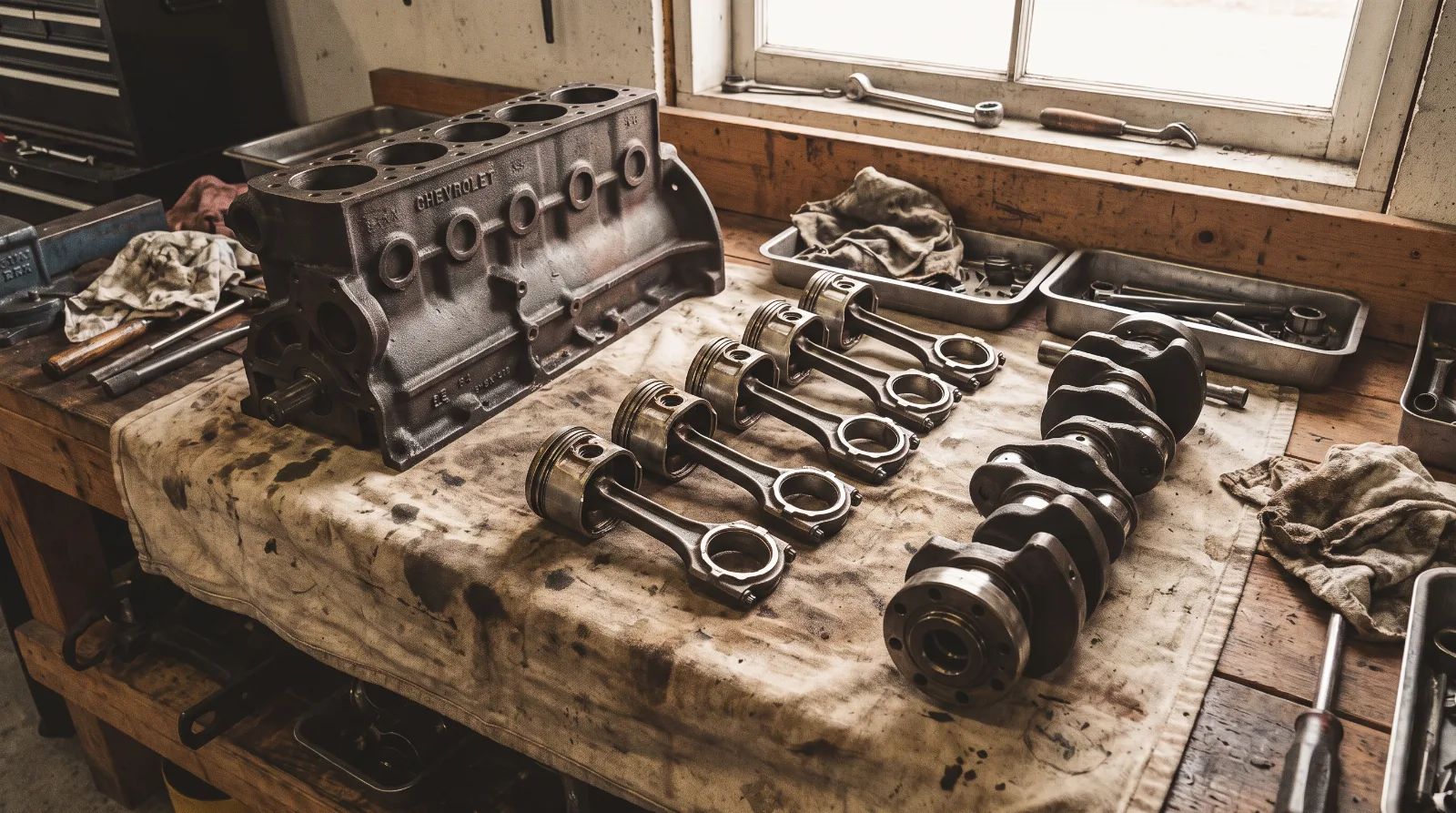
Rebuilding a Chevy 216
Rebuilding a 216 is not like rebuilding anything made after about 1955, and the difference is not the tools. It is that on most engines the botto...
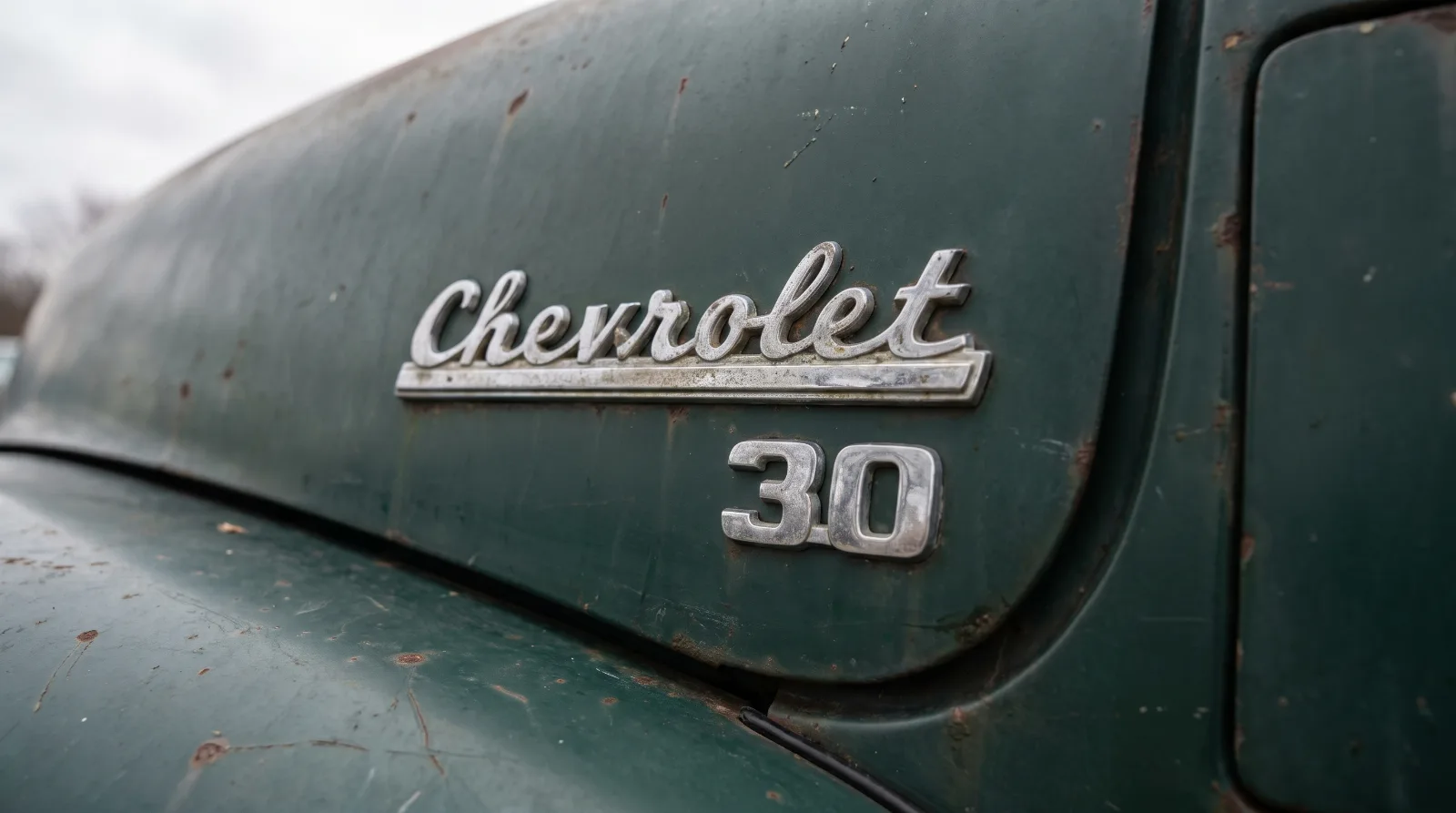
The 1951 Chevrolet Apache
There is no 1951 Chevrolet Apache. The Apache name belongs to the generation of Chevrolet trucks that came after the one built in 1951, and it do...
The 1951 Chevrolet Impala
There is no 1951 Chevrolet Impala. The name did not exist in 1951, the car did not exist in 1951, and nothing Chevrolet built that year was ever...