1951 Chevrolet Fleetline De Luxe
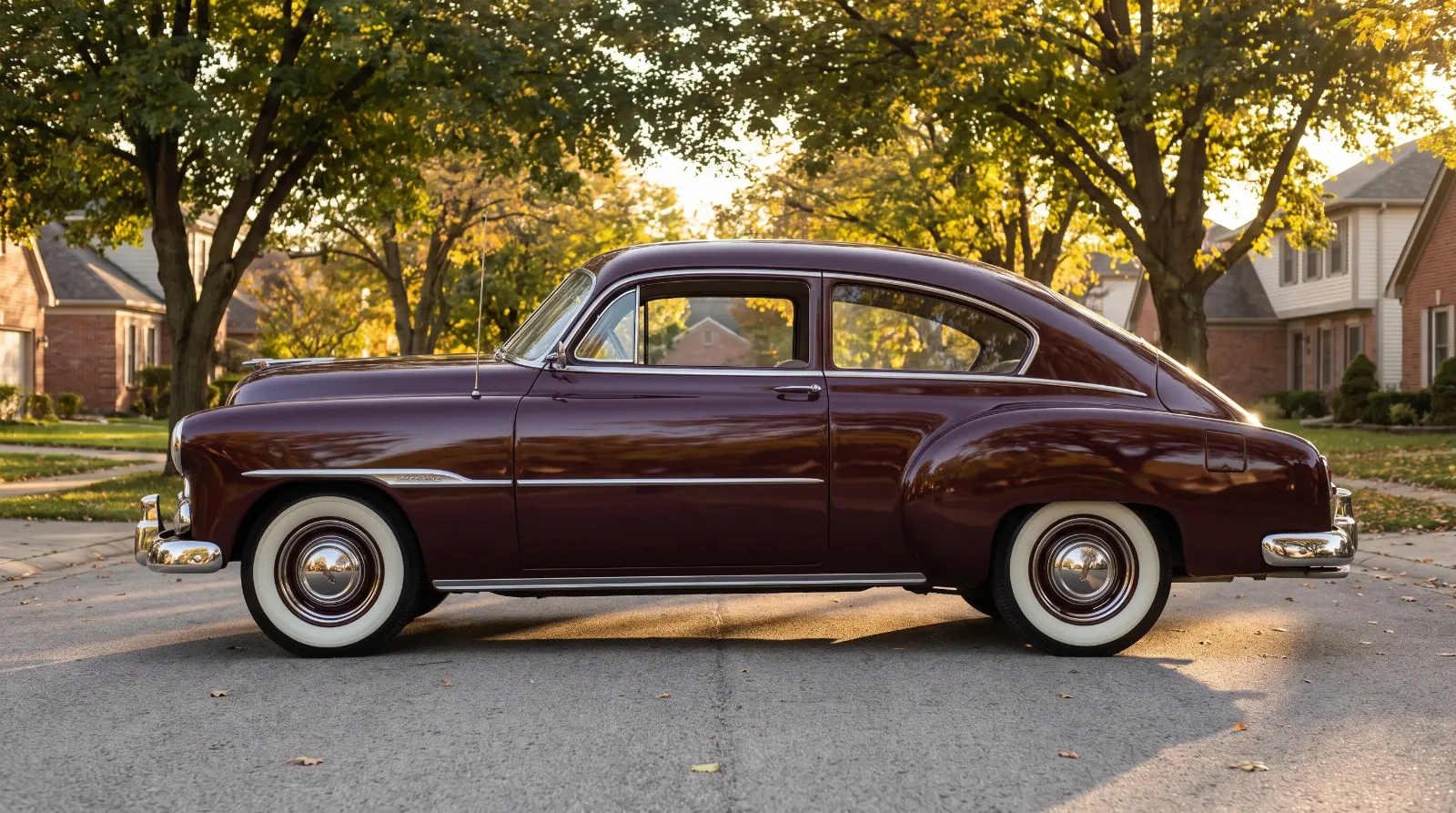
The 1951 Chevrolet Fleetline De Luxe is the fastback with the good trim on it, and to my eye it is the best looking car Chevrolet built in that whole 1949 to 1952 run. The roof leaves the top of the windshield and never stops. No trunk step, no break, just one long slope from the header all the way down to the rear bumper. Park it next to a Styleline and the difference is not subtle. One car has a back end and the other has a tail.
It was also a car on its way out, and that is the part of the story that makes it interesting to own now. The fastback shape was a late-1940s idea, and by 1951 the buying public had already started walking away from it. Chevrolet kept building them because they still sold in decent numbers, but the trend line only pointed one direction. Two years later the Fleetline name was gone from the catalog for good.
What makes a Fleetline a De Luxe
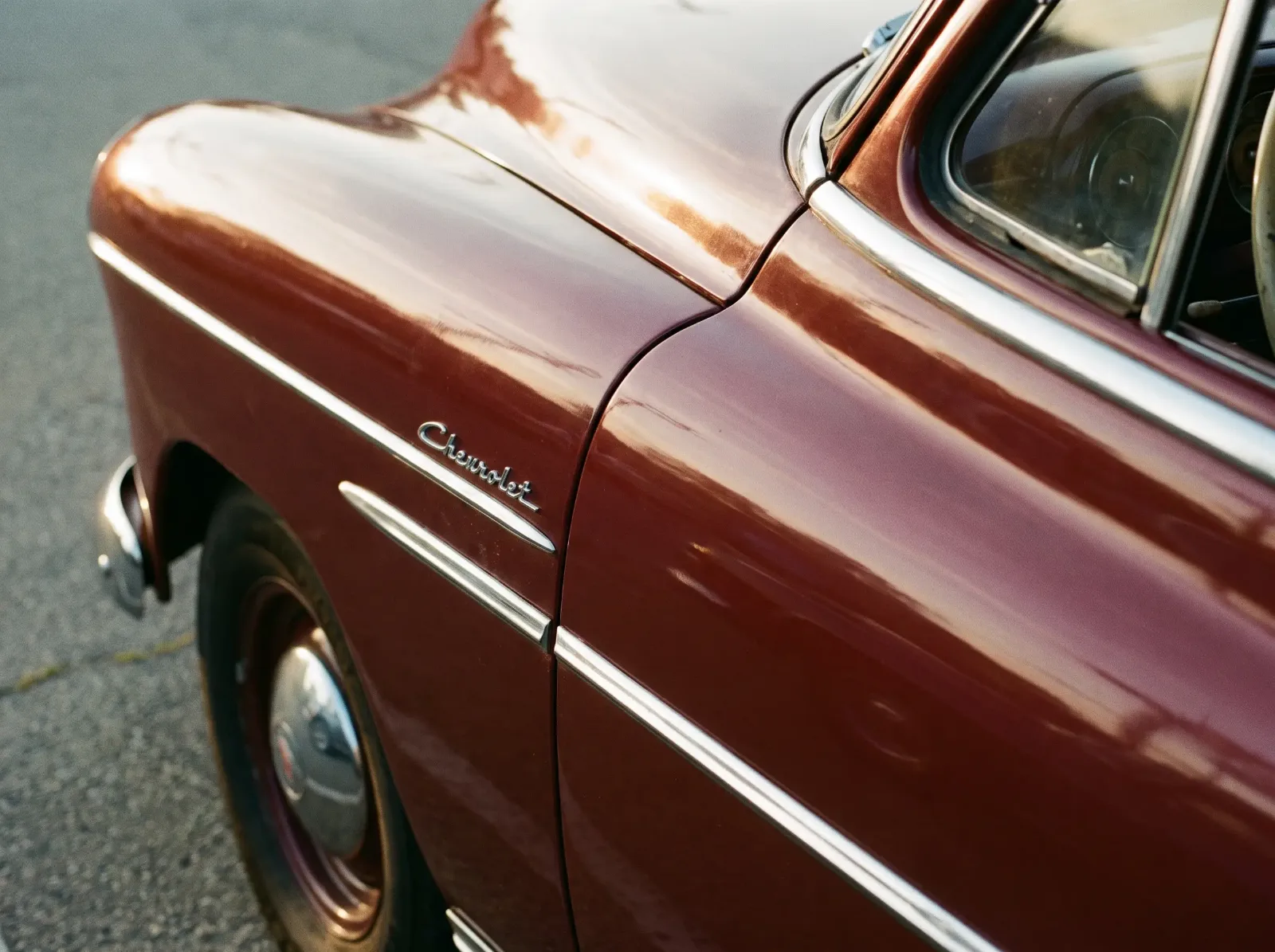
Chevrolet ran two things in parallel in 1951, and people mix them up constantly. Fleetline and Styleline are body shapes. Special and De Luxe are trim series. Fleetline is the fastback. Styleline is the notchback with the separate trunk. Special is the plain series and De Luxe is the dressed one. A Fleetline De Luxe is therefore the fastback body wearing the upper trim, and that combination was by far the most common way the fastback was sold.
You can spot the De Luxe from across a swap meet. It carries a stainless molding that starts above the front fender and runs back onto the front door, with the Deluxe name spelled out above the front wheel opening. Inside you get better upholstery, more bright trim on the dash and around the windows, and generally a nicer place to sit. The plainer version of the same fastback was the Fleetline Special, and 1951 was the last year Chevrolet built it. I wrote about that car separately in the Chevrolet Fleetline Special, and it is worth reading if you are trying to work out which fastback you are looking at.
Everything else the two fastbacks shared with the rest of the range. Same chassis, same front sheet metal, same nose, same 1951 changes. If you want the full picture of how the four series-and-body combinations fit together, it is laid out in the 1951 Chevrolet lineup.
The 1951 Fleetline De Luxe by the numbers
Two body styles carried the Fleetline De Luxe name for 1951, a two-door sedan and a four-door sedan. Both were priced the same as their Styleline equivalents, which is worth knowing, because it means the fastback shape did not cost the buyer a dime extra. He simply picked the roof he liked better.
| Model | Factory price | 1950 production | 1951 production |
|---|---|---|---|
| Fleetline De Luxe two-door sedan | $1,630 | 189,509 | 131,910 |
| Fleetline De Luxe four-door sedan | $1,680 | 124,287 | 57,693 |
| Fleetline Special two-door sedan | $1,550 | 43,682 | 6,441 |
| Fleetline Special four-door sedan | $1,600 | 23,277 | 3,364 |
Look at that four-door column. It fell from 124,287 cars to 57,693 in a single year. That is more than half the demand gone in twelve months, on a car that had not changed in any meaningful way. Nothing was wrong with it. The public had simply decided that a fastback four-door looked like yesterday. The two-door held up better, but it dropped too.
Chevrolet read the numbers. For 1952 the Fleetline was cut back to a single model, the De Luxe two-door, and 37,164 of those were built. Then it was over. There was no Fleetline for 1953. So the 1951 cars are the last year you could buy the fastback in four flavors, and the 1951 four-door De Luxe is the last four-door fastback Chevrolet ever sold.
Under the hood and behind the dash
The Fleetline De Luxe came with the 216.5 cubic inch overhead-valve six that everybody calls the Stovebolt, rated at 92 horsepower, backed by a three-speed manual on the column. The important option was Powerglide, Chevrolet's two-speed automatic, and this is where being a De Luxe mattered. Powerglide was a De Luxe-only option in these years, priced around $159 when it arrived, and cars ordered with it got the larger 235.5 cubic inch six with hydraulic lifters and 105 horsepower instead of the 216.
So a Fleetline De Luxe can legitimately be an automatic car with the bigger engine, where a Fleetline Special never could be. That is a genuine buying point rather than trivia. When you look at a fastback with a Powerglide, the De Luxe trim on the outside is part of what tells you the car is honest.
The electrics are six volt with a negative ground. Chevrolet went negative while Ford and Chrysler and GMC were still positive, and half the people who work on these cars for the first time get it wrong because they assume every old car was positive ground. It is not a matter of opinion and it is not something you can wire either way and sort out later.
The 1951 cars also got a restyled instrument panel, and the De Luxe interior treatment is a step up from the Special in fabric and brightwork. The details of what was on the seats and the door panels are covered in the 1951 Chevrolet interior.
"I have owned both roofs and I will tell you the truth. The Styleline is the more useful car, because that trunk actually holds something. The Fleetline is the better looking car, and it is not close. You buy the fastback with your eyes and you live with the trunk."
— Earl Dawson
What to know before you buy one
The fastback has one structural quirk that decides how much a project costs, and it sits at the back of the car. On a Styleline the trunk lid is a separate panel in a separate opening. On a Fleetline the deck is part of that long sloping roof, the opening is smaller and more awkward, and the seams around it hold water. Get down and look at the bottom of that slope, the lower rear quarters and the area around the deck lid seams. Fastback sheet metal is also the harder metal to find, because far fewer cars were built and fewer still were saved.
Then check the usual places on any 1949 to 1952 Chevrolet. Floors under the mats. The cowl, where the vent drains dump water inside the structure and it rots from the inside out. Door bottoms where the drains plug. Rear quarters above the wheel arches. The mechanical side is the easy part. A Stovebolt six is simple and rebuild parts are still made, so a tired engine is a line on a budget rather than a reason to walk.
Check this first
- The rear roof slope and deck seams. This is the fastback's own problem area and the sheet metal is harder to source than Styleline panels. Check it before anything else.
- Cowl and vent drains. Rots from the inside where you cannot see it. A soft cowl turns a driver into a body-shop project.
- Floors, trunk area and lower quarters. Pull the mats. On a car this age the metal is most of the value.
- Series and drivetrain agreement. A De Luxe with Powerglide should have the 235 six, not the 216. The pillar plate series letter K confirms the car was born a De Luxe.
- De Luxe brightwork. The fender-to-door stainless and the window surrounds are what you pay extra for. Pitted or missing trim is slow and expensive to replace properly.
- Six volt wiring condition. Cloth-covered harnesses seventy-five years old are a fire risk. Budget a rewire on any car that has not had one.
Prices for these cars have been moving up quietly. Convertibles, wagons, Bel Air hardtops and the Fleetline fastbacks lead the interest among the 1949 to 1952 Chevrolets, and stock, correct cars are the ones going up. The 1951 Fleetline De Luxe sits right in that group without the convertible price tag attached. Compare a few against each other before you commit to one, because a straight car and a tidy-looking one are not the same purchase.
Buy the straightest fastback you can find, keep the De Luxe trim with the car, wire it six volt negative ground and drive it. It is the shape that made Chevrolet look modern right at the end of the 1940s, and it is the shape Chevrolet gave up on two years after this one. That combination of good looking and short lived is usually how a car ends up worth owning. If you want the plain-series notchback for comparison, that is the 1951 Chevrolet Styleline Special.
Sources and notes
- Chevrolet Fleetline, Wikipedia - year-by-year Fleetline De Luxe and Special production for 1949 through 1952, the fastback-only body policy, and the Fleetline being dropped for 1953.
- 1951 Chevrolet De Luxe Series, Conceptcarz - De Luxe factory prices including the $1,630 Fleetline two-door and $1,680 four-door, plus the 216.5 cu in and 235.5 cu in engine ratings.
- 1951 Chevrolet Special Series specifications, Conceptcarz - Fleetline Special prices and production for the comparison in the table above.
- 1949 to 1952 Chevys are gaining in collectibility, Old Cars Weekly - the collapse of Fleetline four-door sales from 124,287 to 57,693, which body styles lead collector interest, and current value ranges.
- Secrets of the Chevy Powerglide 1950-73, Mac's Motor City Garage - Powerglide as a De Luxe-only option at $159 and its pairing with the 235 cu in hydraulic-lifter six.
- Chevrolet Deluxe, Wikipedia - the Special and De Luxe series structure and how Fleetline and Styleline bodies were offered inside each.
More from the garage
Rebuilding a Chevy 216
Rebuilding a 216 is not like rebuilding anything made after about 1955, and the difference is not the tools. It is that on most engines the botto...

The 1951 Chevrolet Apache
There is no 1951 Chevrolet Apache. The Apache name belongs to the generation of Chevrolet trucks that came after the one built in 1951, and it do...
The 1951 Chevrolet Impala
There is no 1951 Chevrolet Impala. The name did not exist in 1951, the car did not exist in 1951, and nothing Chevrolet built that year was ever...