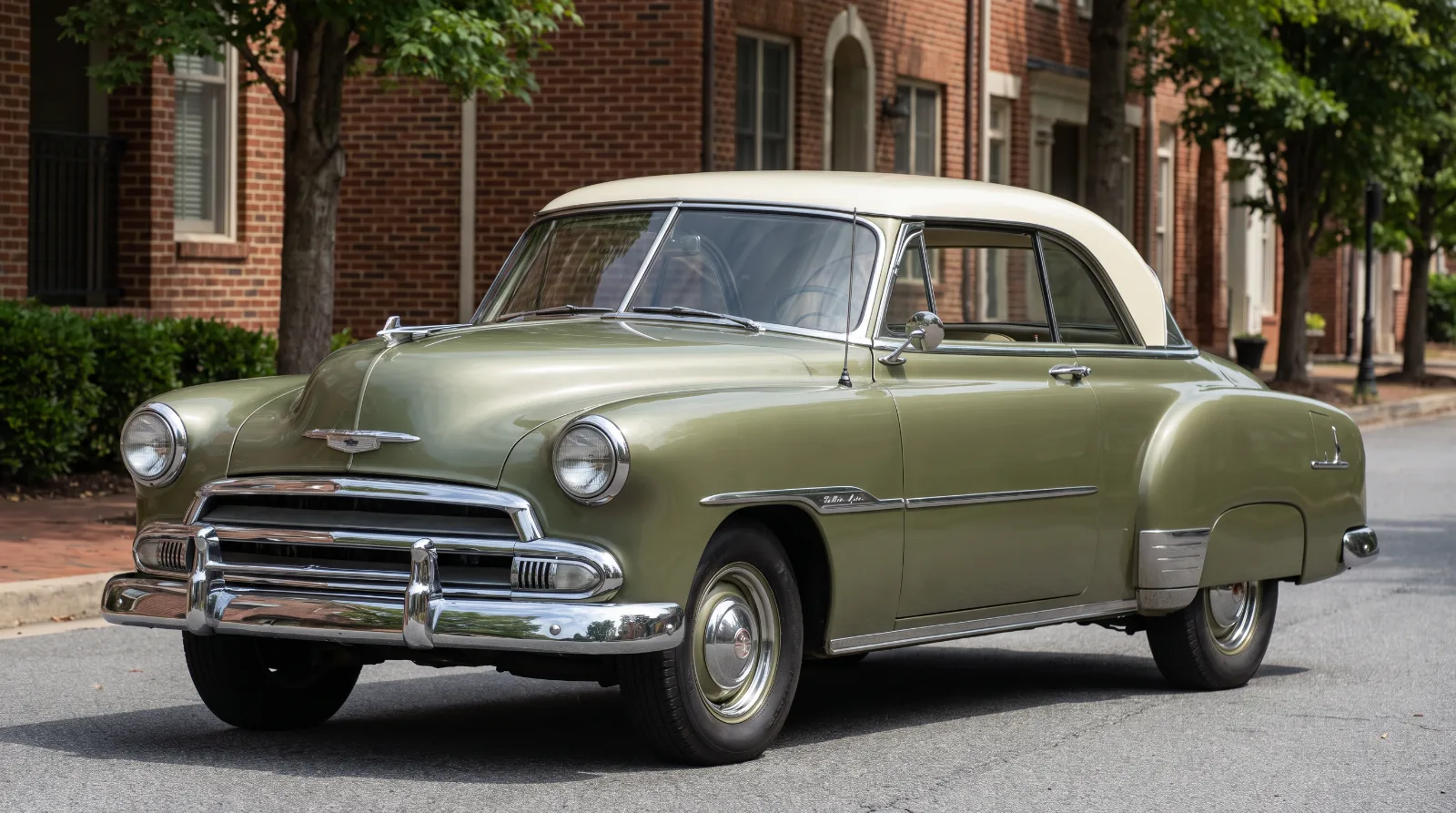
1951 Chevrolet Styleline De Luxe Sport Coupe
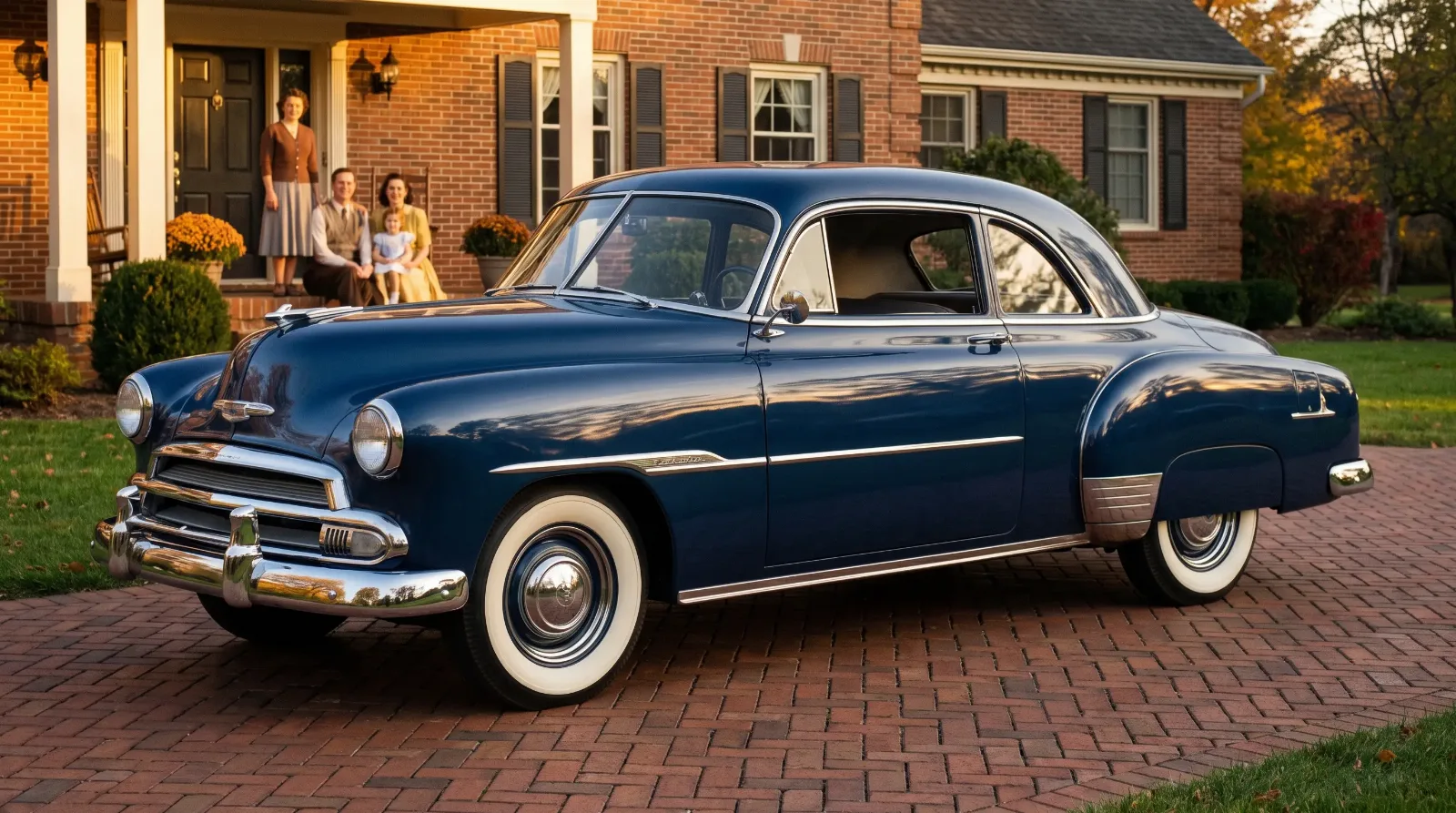
The 1951 Chevrolet Styleline Sport Coupe is one of those cars that gets misunderstood, mostly because of its name. Folks hear "sport coupe" and picture something low and fast. What you actually got was a handsome two-door on the top-trim De Luxe body, with a shorter roof and a longer deck than the plain two-door sedan. It was a family Chevrolet dressed up for Sunday. I grew up around these cars, and I have spent a good part of my life keeping them on the road, so let me walk you through where this one sat in the lineup and what it takes to own one now.
If you want the wider picture first, I laid out the full 1951 Chevrolet story elsewhere. Here we stay on the Sport Coupe.
Where the Sport Coupe sat in the Styleline line
Chevrolet split its 1951 passenger cars into two body families. The Styleline was the notchback, the traditional three-box shape with a defined trunk. The Fleetline was the fastback, that long sloping roofline that ran clean to the tail. Inside each family you had two trim levels: the Special, which was the budget car, and the De Luxe, which was the nicer one with more chrome and better appointments.
The Sport Coupe lived at the top of that arrangement. It was a Styleline De Luxe body, so it carried the full trim, and it wore the coupe roofline instead of the sedan roof. That put it a step above the workaday cars and made it one of the better-looking closed Chevrolets you could buy that year. If the fastback shape is more your taste, I wrote up Chevrolet's Fleetline Special separately, and it is worth a look for how different the two rooflines feel.
What "Sport Coupe" actually meant in 1951
Here is where I have to be careful, because the terms get tangled. The Styleline De Luxe Sport Coupe was a pillared coupe. It had a fixed window frame and a post between the door glass and the rear quarter glass, same as any sedan. It just wore a shorter, more formal roof over a longer trunk. Think of it as a two-door sedan that traded some back-seat headroom and cabin length for a sportier profile.
What it was not was a hardtop. The pillarless hardtop in 1951 was the Bel Air, and that is a different animal. Chevrolet introduced the Bel Air hardtop for 1950 as the first pillarless closed body in the low-price field, styled to look like a convertible with the top up but built with a solid steel roof and no post. In fact Chevrolet used the Sport Coupe name for the Bel Air hardtop in its literature from 1950 through 1952, which is exactly why buyers mix the two up to this day. The simple test: if the side glass rolls down and leaves a clear opening with no post in the middle, it is a Bel Air hardtop. If there is a post, you are looking at the Styleline Sport Coupe.
For the buyer on a tighter budget who wanted the same coupe shape without the De Luxe trim, Chevrolet offered a stripped version too. I covered that one in the write-up on the Business Coupe, and the differences come down to trim and interior more than sheet metal.
Styling and trim on the De Luxe
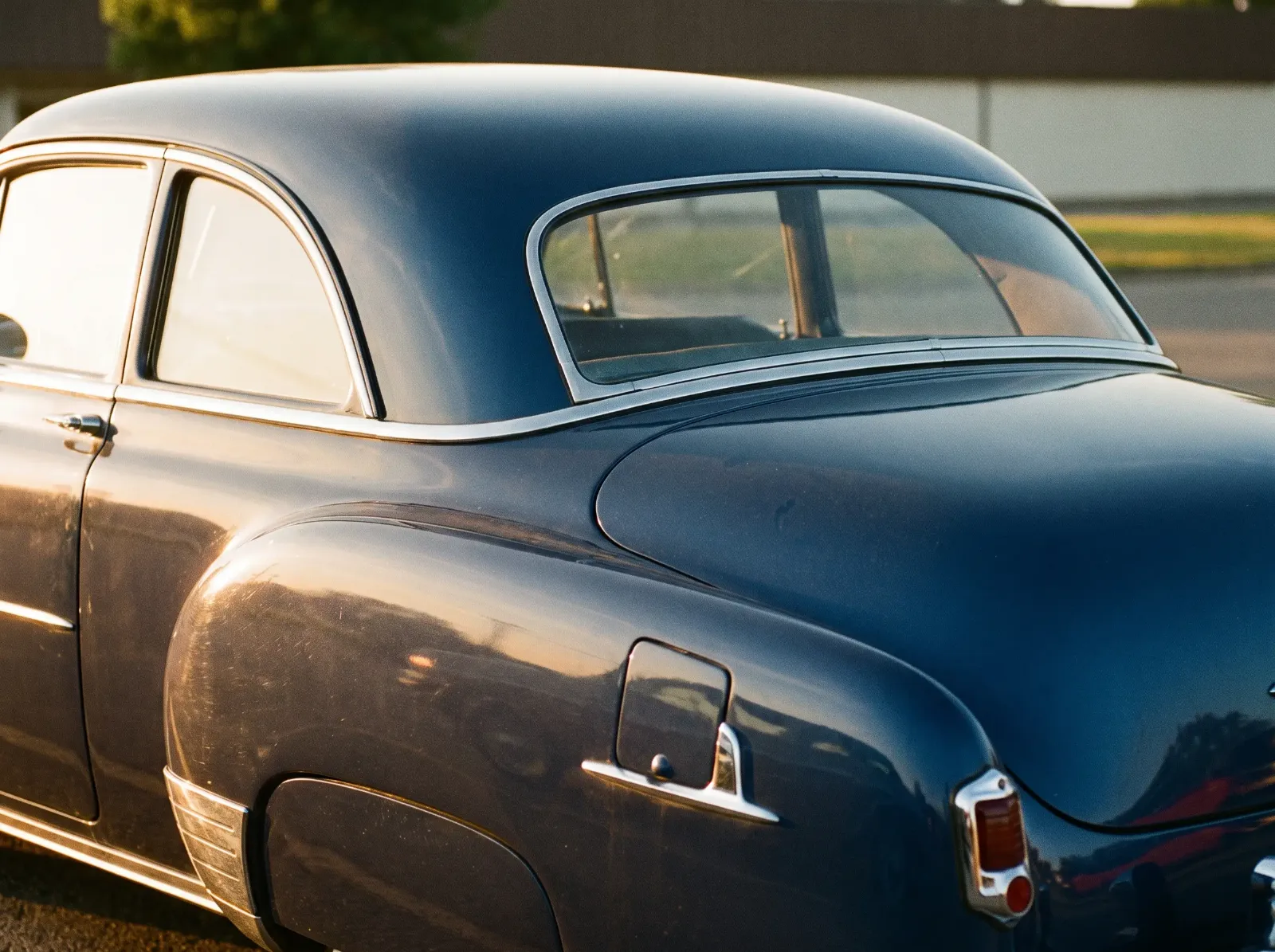
The 1951 got a fresh grille that was heavier than the 1950, with a wider center bar and larger parking lamps set into it. From the front it reads a little more substantial than the year before. Along the sides you got bright window reveals and rocker trim on the De Luxe, plus the fuller bumpers and more generous brightwork that set it apart from the Special.
Inside, the De Luxe treatment showed up in the upholstery, the door panels, and the trim on the dash. The instrument panel was that painted steel design with the round gauges grouped ahead of the driver and a large speedometer. You got a column shifter for the three-speed, a big thin-rimmed wheel, and cloth seats in most cars. It is an honest interior. Nothing fancy by later standards, but well made, and the materials hold up if a car was kept dry.
Under the hood: the Stovebolt six
Every 1951 Chevrolet passenger car ran an inline six, the engine everybody calls the Stovebolt. Which six you got depended on how you ordered the transmission. Cars with the standard three-speed manual used the 216 cubic inch six. Cars ordered with the optional Powerglide automatic got the larger 235 cubic inch six, because the automatic needed the extra torque to feel right. That is an important distinction on a Sport Coupe, and it is the first thing I look at when someone tells me what they have.
The 216 was rated at 92 horsepower and the Powerglide 235 higher, at 105 horsepower. The Powerglide two-speed automatic was the big-ticket option, and it was still fairly new in 1951, having arrived on Chevrolets for 1950.
| Specification | Detail (1951 Styleline De Luxe Sport Coupe) |
|---|---|
| Body style | Two-door pillared notchback coupe, De Luxe trim |
| Standard engine | 216 cu in inline-six "Stovebolt," with three-speed manual |
| Optional engine | 235 cu in inline-six, paired with Powerglide automatic |
| Standard power | 92 hp (216); 105 hp (Powerglide 235) |
| Transmissions | Three-speed manual (standard); two-speed Powerglide automatic (optional) |
| Layout | Front engine, rear-wheel drive, body-on-frame |
| Brakes | Four-wheel hydraulic drums |
None of this is fast. It was never meant to be. What the Stovebolt gives you is an engine that runs a long time on simple maintenance and forgives a lot of neglect. Parts are available, the six is easy to work on with hand tools, and a healthy one will idle all day and pull a hill without complaint. That is the whole appeal.
Living with one today
A 1951 Sport Coupe is a easy car to enjoy at a relaxed pace. The ride is soft, the steering is slow and heavy at parking speeds, and the drum brakes want a long look-ahead. On a Powerglide car you get smooth, unhurried acceleration. On a three-speed you get a little more control and a little more to do with your right hand and left foot. Both are pleasant on a back road at forty to fifty miles an hour, which is where these cars belong.
Keep your expectations honest and you will love it. Try to run it like a modern car in freeway traffic and you will be disappointed. I always tell new owners to drive it for what it is, a comfortable old cruiser, and to plan their trips around two-lane roads. That is the way these were meant to be used, and it is the way they still shine.
"People chase the Bel Air hardtop and drive right past the Sport Coupe, which is the better buy nine times out of ten. Same charm, same easy six, less money. I have never understood why the post scares folks off."
— Earl Dawson
What to check before you buy
These cars are simple, but they are also seventy-five years old, and time is hard on old steel. Rust is the enemy, same as always. A car that lived in a dry climate and stayed under cover is worth paying up for, because rot in the wrong places turns a cheap project into an expensive one fast.
Check this first
- Floor pans and trunk floor. Lift the mats and the trunk mat and look for patched or perforated steel. Pans are reproduced, but the labor to cut and weld them adds up quickly.
- Lower body: rockers, fender bottoms, and rear quarters. These hold moisture and rot from the inside out. Bubbling paint low on the body usually means worse underneath.
- Engine and transmission match. Confirm whether the car is a 216 three-speed or a 235 Powerglide, and that the engine present is the one it should have. A swapped drivetrain is fine for a driver but changes the correctness.
- Brakes and lines. Single-circuit hydraulic drums with old lines are a safety item. Budget for a full brake refresh on any car that has sat.
- Trim completeness. Missing or pitted De Luxe brightwork is costly to replace correctly. Inventory what is there before you agree on a price.
Collectibility and the market
The Sport Coupe sits in a friendly spot in the hobby. It is old enough to draw a crowd at any show, common enough that parts and knowledge are easy to find, and affordable next to the Bel Air hardtop and the convertible. For someone who wants a genuine early-1950s Chevrolet without spending big money, this is one of the smarter entry points I know.
Values move with condition more than anything. A clean, sorted driver in honest colors trades for real but modest money, while a rusty project can be had cheap and will still cost you to finish. The premium goes to solid original cars and to well-documented restorations. The car also has a small screen history working in its favor, since a 1951 Styleline De Luxe turns up as a background vehicle in an episode of the USA Network television series Shooter, which ran from 2016 to 2018. It is a brief background appearance rather than a starring role, but it is the kind of pop-culture footnote collectors enjoy.
My advice has not changed in years. Buy the best body you can afford, worry less about the drivetrain since the six is easy to sort, and drive the thing. A 1951 Chevrolet Styleline Sport Coupe was built to be used, and three-quarters of a century later, that is still the best thing you can do with one.
The series this car belongs to is set out in the De Luxe series, and if you are still deciding which of the year's four coupes you actually want, they are put side by side in the 1951 Chevrolet coupe.
Sources and notes
- Conceptcarz, 1951 Chevrolet DeLuxe Series specifications (216 rated 92 hp at 3400 rpm; 235 rated 105 hp at 3600 rpm; Sport Coupe priced about $1,650).
- Wikipedia, Powerglide (introduced on Chevrolet for the 1950 model year, the first automatic in a low-priced car).
- Wikipedia, Chevrolet Bel Air (the Bel Air Sport Coupe name was applied to the two-door hardtops from 1950 through 1952).
- Restore An Old Car, Stovebolt Six history (origin of the "Stovebolt" nickname from the slotted-head bolts; overview of the 216 and 235 sixes).
- Barn Finds, 1951 Chevrolet Styleline De Luxe Sport Coupe (Sport Coupe as the notchback two-door, 216 three-speed, condition-driven values in the roughly $20,000 to $25,000 range for a sorted car).
- IMCDb, Shooter (2016 to 2018) (1951 Chevrolet Styleline De Luxe listed as a background vehicle in episode 2.07).
More from the garage
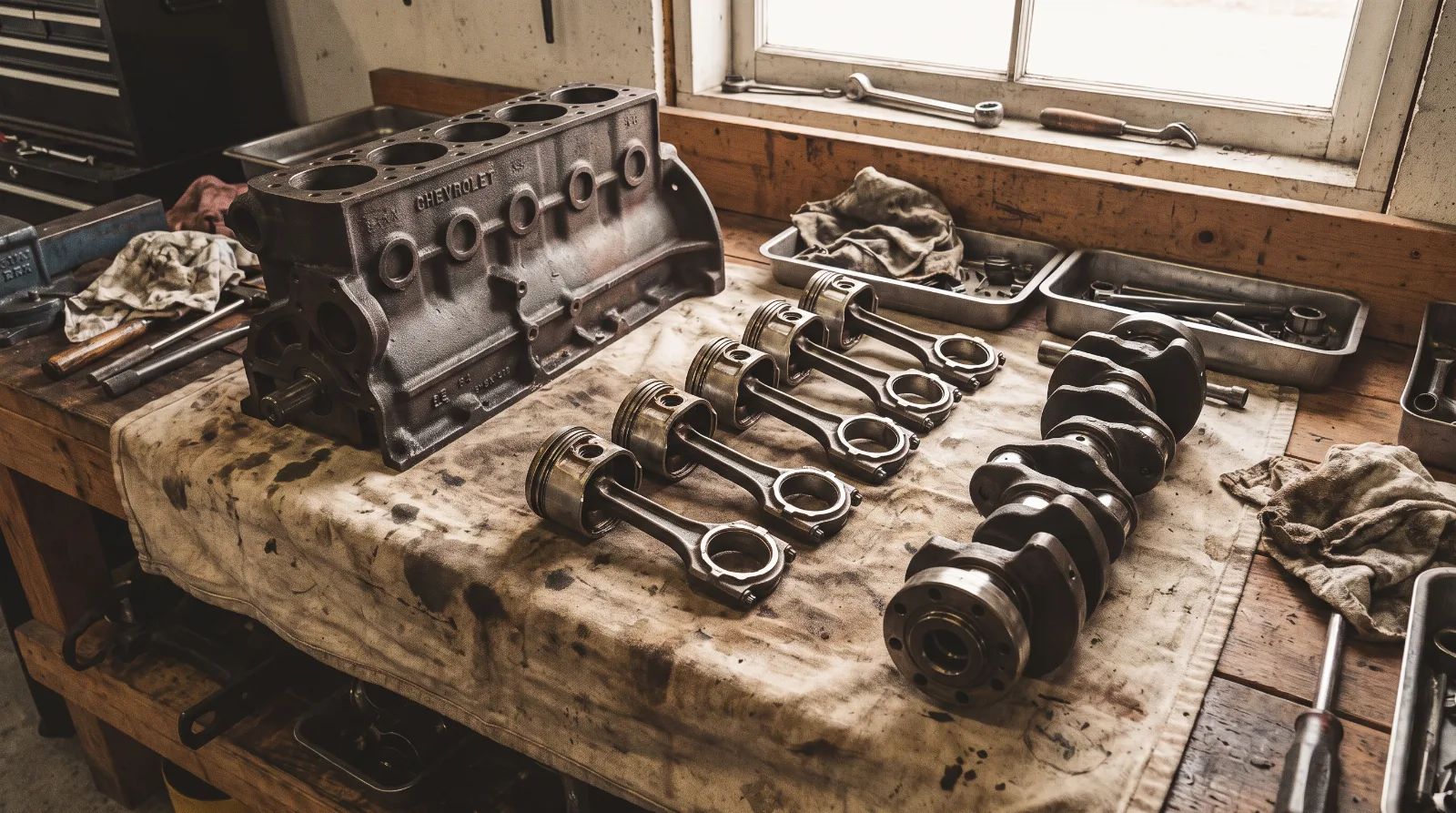
Rebuilding a Chevy 216
Rebuilding a 216 is not like rebuilding anything made after about 1955, and the difference is not the tools. It is that on most engines the botto...
The 1951 Chevrolet Apache
There is no 1951 Chevrolet Apache. The Apache name belongs to the generation of Chevrolet trucks that came after the one built in 1951, and it do...
The 1951 Chevrolet Impala
There is no 1951 Chevrolet Impala. The name did not exist in 1951, the car did not exist in 1951, and nothing Chevrolet built that year was ever...