1951 Chevrolet Trucks
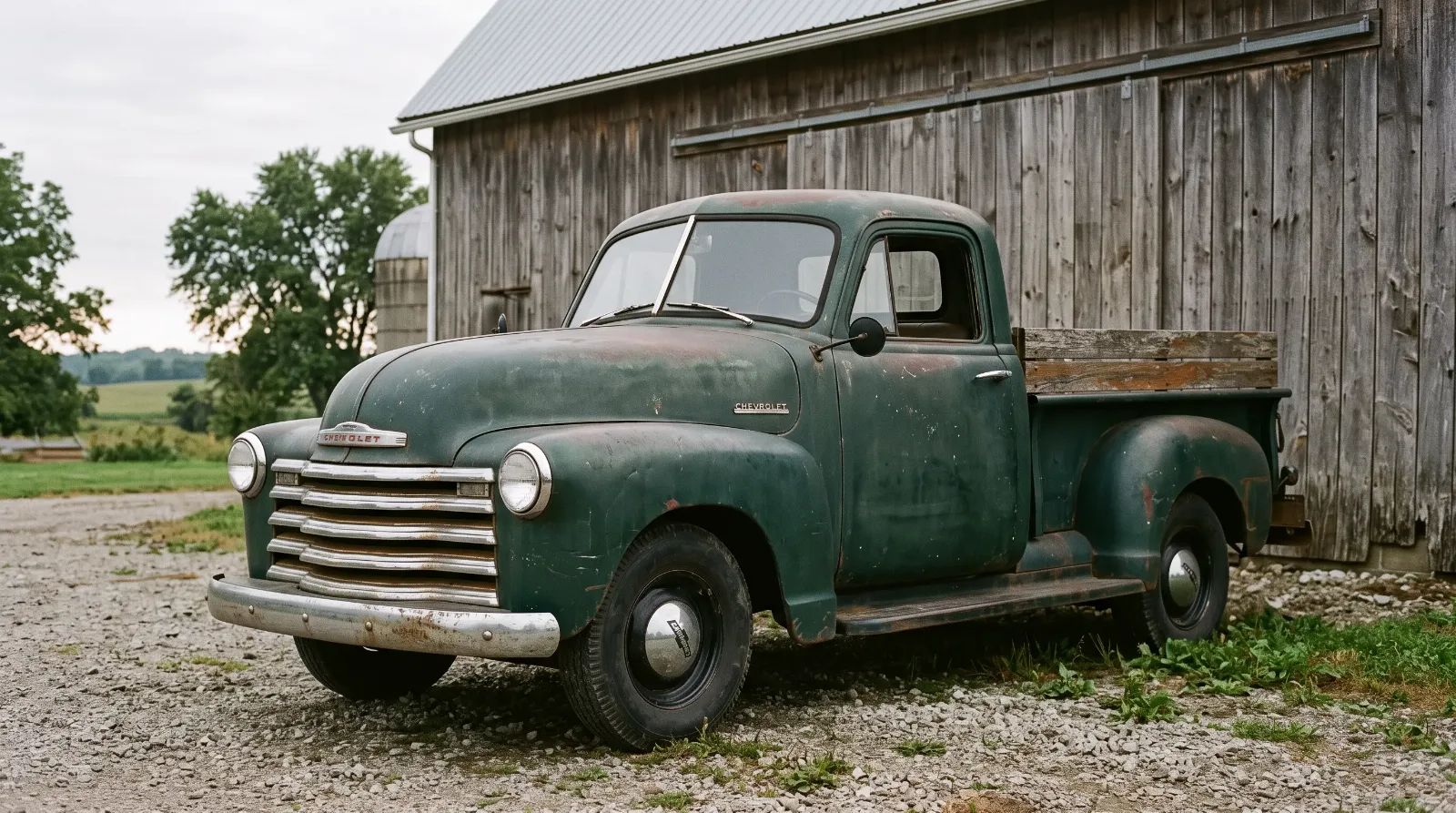
The 1951 Chevrolet truck is the one year of the Advance Design run that you can identify from across a field, and most people who own one do not know why. Look at the doors. If it has vent windows in them and the outside handles are the kind you push down with your thumb rather than press with a button, you are looking at a 1951. That combination existed for exactly one model year.
These are the trucks Chevrolet built from 1947 to 1955, the ones with the round fenders and the tall hood and the split windshield. Chevrolet called the styling Advance Design, and it stayed the best-selling truck in America for most of that run. The 1951 sits right in the middle of it, and it is the year I would point a first-time buyer at, partly for that door detail and partly because there are still enough of them around to be choosy.
What the numbers on the hood mean
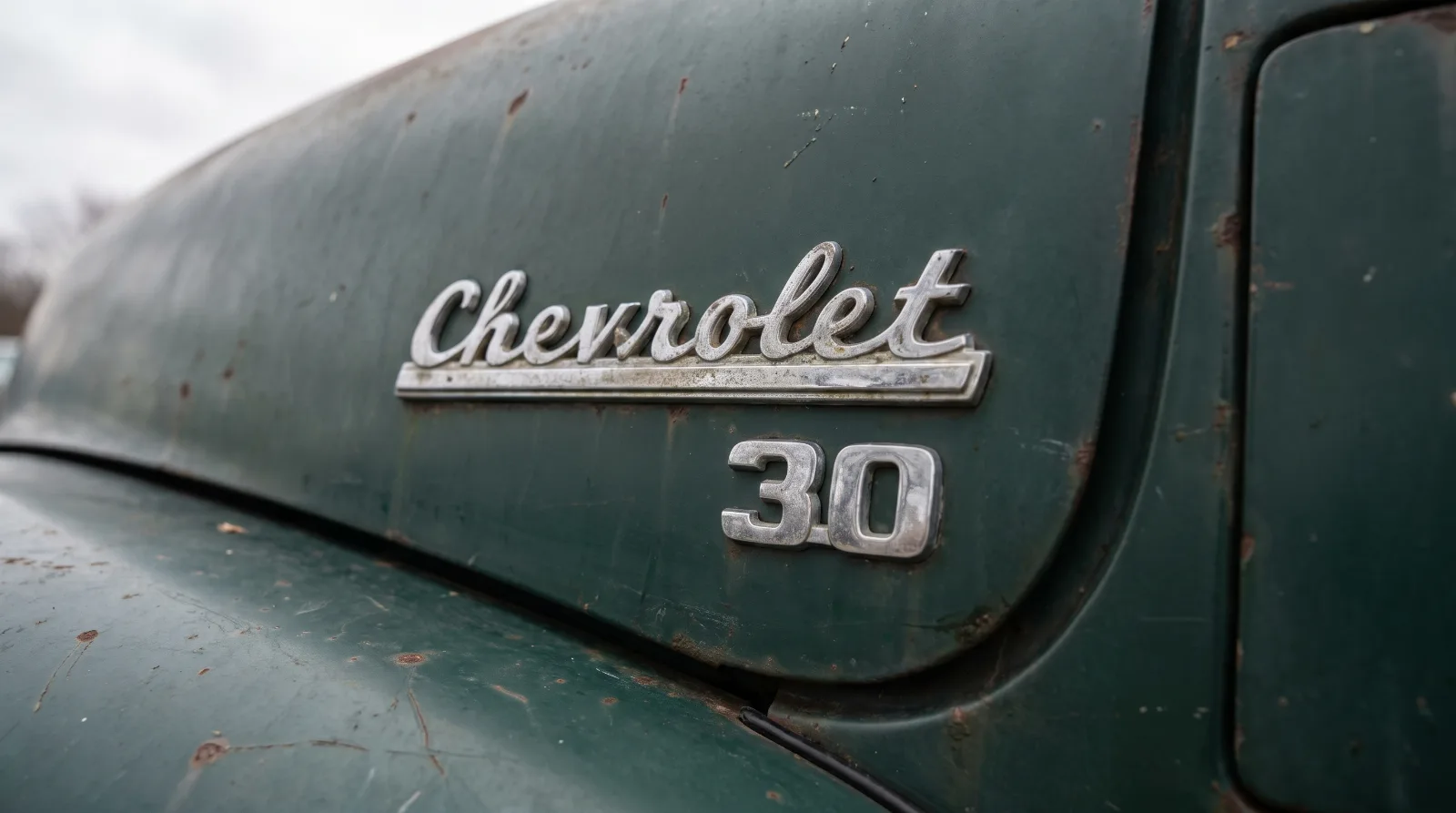
The badge on the side of the hood tells you what the truck was built to carry, and it is the fastest way to know what you are looking at before you crawl underneath. Chevrolet switched from names to numbers in late 1949, so by 1951 the hood emblem is a series number rather than the old Thriftmaster and Loadmaster script.
| Series | Rating | What it is |
|---|---|---|
| 3100 | Half ton | The short-wheelbase pickup, the one everybody pictures and the one everybody wants |
| 3600 | Three-quarter ton | Longer bed and wheelbase, heavier springs, a working truck |
| 3800 | One ton | The heavy one, often found as a stake bed, panel or dually |
Panels, canopy express bodies, Suburbans and cab-over units were built on the same family, so the Advance Design range is wider than the pickup most people mean when they say 1951 Chevy truck. But if somebody says 3100 and nothing else, they mean the half-ton pickup.
How to tell a 1951 from the years either side
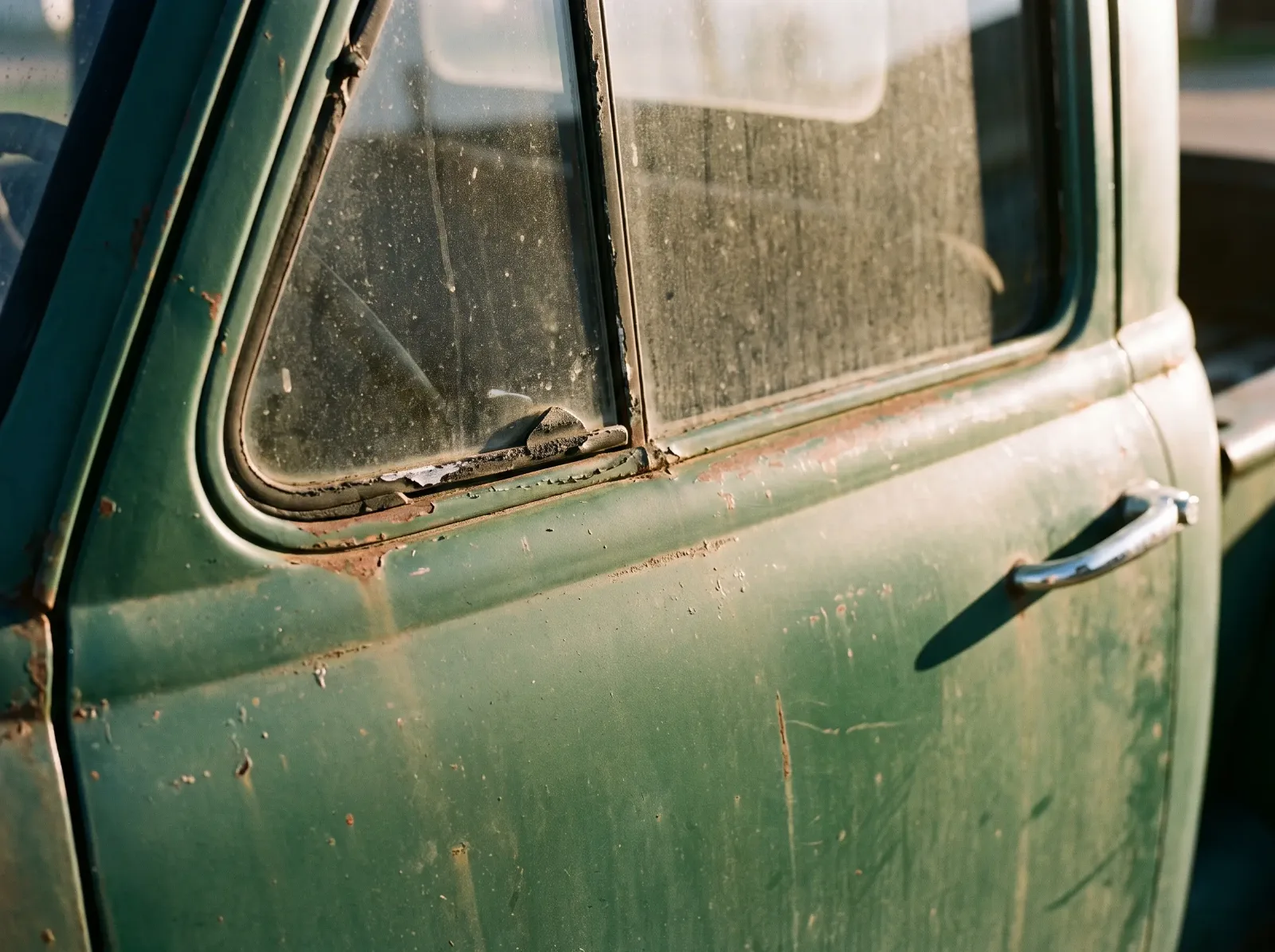
These trucks changed in small ways almost every year, which is good news, because it means you can date one without a single document. Here is what to look at.
Against a 1950. The 1950 has one-piece door glass. For 1951 the doors got two-piece glass with vent windows, and that is the change you can see from twenty feet with the window down. Chevrolet also altered how the seat adjusts, from a metal cable arrangement to a horizontal rod running under the cushion through a rubber grommet.
Against a 1952. Look at the outside door handle. The 1951 uses the turndown handle you press down; the 1952 uses a push button. Then look at the speedometer, because 1951 reads to 80 mph and 1952 reads to 90. Inside, 1951 is the last year for the chrome window crank knobs and the chrome wiper knob.
One more that catches people out on the bed: Chevrolet changed from a nine-board bed floor to an eight-board floor partway through 1951. So an early and a late 1951 do not have the same number of boards, and neither one is wrong. If a seller tells you the bed is incorrect because it has the other count, ask which half of the year the truck was built in before you believe him.
| Detail | 1950 | 1951 | 1952 |
|---|---|---|---|
| Door glass | One piece | Two piece with vent windows | Vent windows |
| Outside door handle | Turndown | Turndown | Push button |
| Speedometer | 80 mph | 80 mph | 90 mph |
| Window crank and wiper knobs | Chrome | Chrome, last year | Changed |
| Bed floor boards | Nine | Nine early, eight late | Eight |
What is under the hood
The engine is the 216 cubic inch overhead-valve six, the same basic Stovebolt that powered the cars, and Chevrolet kept it in the trucks through 1953. It is a slow, torquey, forgiving motor. It will not win anything and it was never asked to. Keep oil in it, do not lug it, and it will outlast several owners.
The gearbox is a manual with the lever on the column, which Chevrolet moved up there back in 1948. There is no automatic in a 1951 truck. The passenger cars could be ordered with Powerglide that year, but the trucks could not, so if you find a 1951 Chevrolet pickup with two pedals, somebody put it there later. That is worth knowing before you pay an originality premium for one. The full story on the six, in both the cars and the trucks, is in Chevrolet's 1951 drivetrains.
Electrics are six volt with a negative ground, the same as the cars. Ford and Chrysler and GMC ran positive ground in this era and people assume everything old did. Chevrolet did not.
"A half-ton is what everybody wants and a three-quarter is what everybody should buy. Same cab, same nose, same six, usually thousands cheaper, and the springs will not beat you to death unless you drive it empty everywhere. The only thing the 3100 has on it is the badge."
— Earl Dawson
Where these trucks rot
A truck that worked for a living wears out differently from a car that went to church. The cab is the expensive part and the bed is the part people underestimate.
Check this first
- Cab corners and the cab mounts. The classic Advance Design rot. Mounts are the serious one, because a cab that has dropped off its mounts throws every panel gap out and you cannot fix it with filler.
- Cab floor and the area under the rear cab wall. Water comes past the rear window seal and sits there. Pull the mat, do not take a word for it.
- Bed cross sills under the wood. New boards on rotten sills is the oldest trick in this corner of the hobby. Look under the floor, not at it.
- Front fenders and running boards. They trap mud behind them and rot from the inside out.
- Windshield and rear glass channels. Rotten channels are why the floors went in the first place, and they are fiddly to put right.
- Doors, at the bottom and at the new vent frames. On a 1951 the vent window frame is a one-year part. A rough one is a genuine search.
Why the 1951 is a good one to own
The Advance Design trucks have gone from cheap to serious money in about fifteen years, and the 1951 rode that wave with the rest. What has not changed is that they are simple, that the aftermarket supports them properly, and that a running one is genuinely usable at modern speeds if you are patient about it.
The one-year door combination is a small thing that turns into a real advantage when you sell. It makes the truck easy to identify, easy to describe honestly, and hard for anybody to argue with. If you want to see what the market is asking before you commit, start with 1951 Chevrolet trucks for sale, and if you are weighing a truck against a car from the same year, the market puts cars and trucks side by side. The car people cross-shop against a pickup most often is in the De Luxe cars, and the wider picture of what Chevrolet built that year sits in Chevrolet's 1951 model year.
Buy the dry cab, check the mounts, look under the bed boards, and do not let anybody talk you out of a three-quarter ton just because the badge says 3600. These trucks were built to work, and the ones that survived are the ones somebody looked after.
From here the range splits two ways. The pickups, and the cab option people argue about hardest, are in the 1951 Chevrolet 5 window pickup. The closed bodies that did the delivering, and the wagon built on the same shell, start at the closed bodies.
Sources and notes
- Chevrolet Advance Design, Wikipedia - the 1947 to 1955 run, vent windows arriving for 1951, last year for chrome window and wiper knobs, the 80 mph speedometer, the mid-year nine-board to eight-board bed change, and the 216 cu in six used through 1953.
- 1947-1959 Chevy truck model years identification guide, Classic Industries - 1951 as the only year with vent windows together with turndown exterior handles, the 1952 switch to push-button handles and a 90 mph speedometer, and the 1950 to 1951 seat adjustment change.
- Comprehensive history of the 1947-1955 first series Advance Design, DevesTechNet - the late 1949 switch from Thriftmaster and Loadmaster script to the 3100, 3600 and 3800 series numbers on the hood.
- 1951 Chevrolet Model 3100, Conceptcarz - specifications and period detail for the 1951 half-ton pickup.
- 1951 Chevrolet Series 3100 half-ton values, Hagerty Valuation Tools - condition-graded values for the 1951 pickup.
- Chevrolet 3100 listings, ClassicCars.com - live inventory showing the spread between project trucks and finished ones.
More from the garage
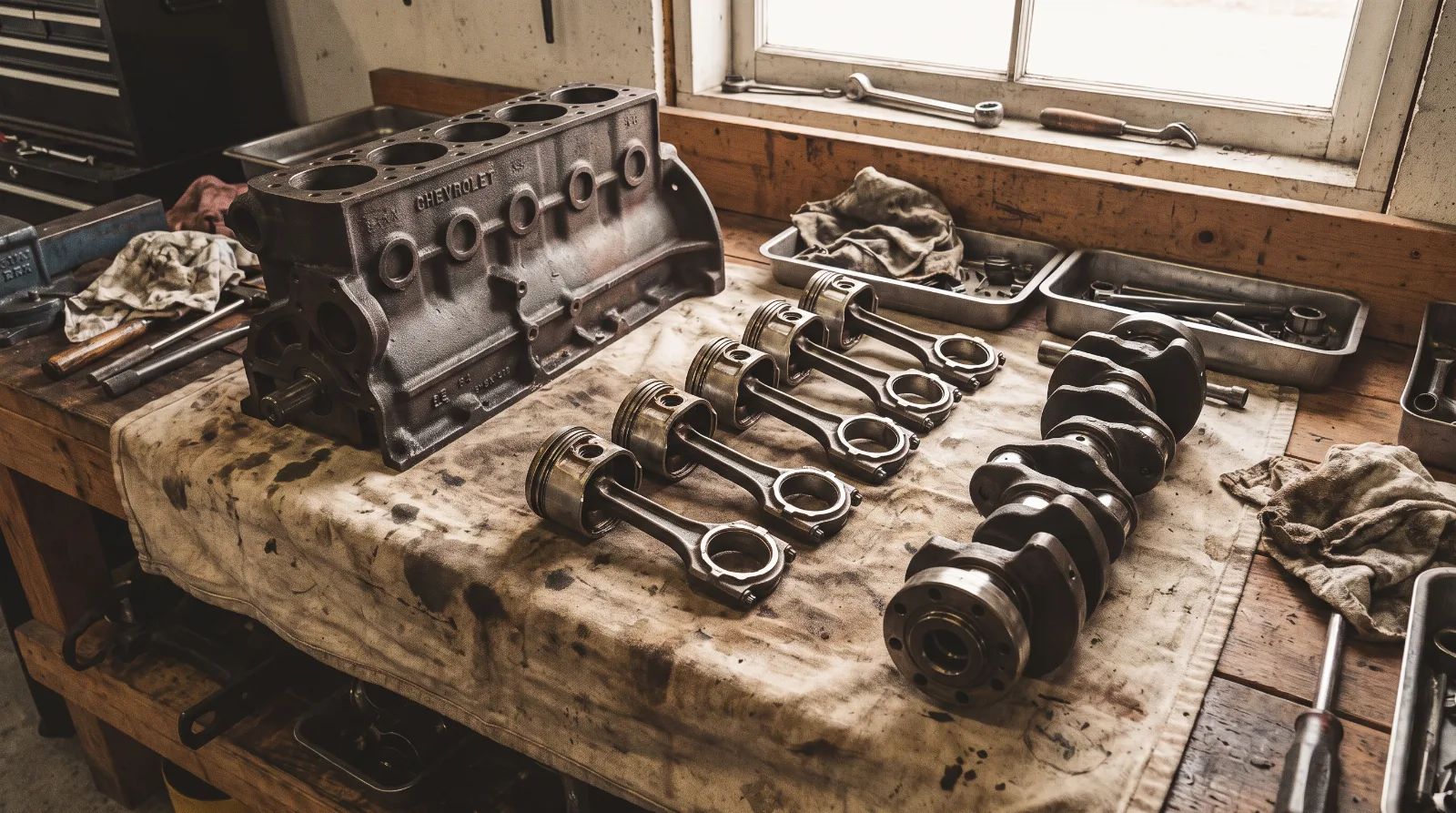
Rebuilding a Chevy 216
Rebuilding a 216 is not like rebuilding anything made after about 1955, and the difference is not the tools. It is that on most engines the botto...
The 1951 Chevrolet Apache
There is no 1951 Chevrolet Apache. The Apache name belongs to the generation of Chevrolet trucks that came after the one built in 1951, and it do...
The 1951 Chevrolet Impala
There is no 1951 Chevrolet Impala. The name did not exist in 1951, the car did not exist in 1951, and nothing Chevrolet built that year was ever...