How to Identify a Chevy 235 Engine
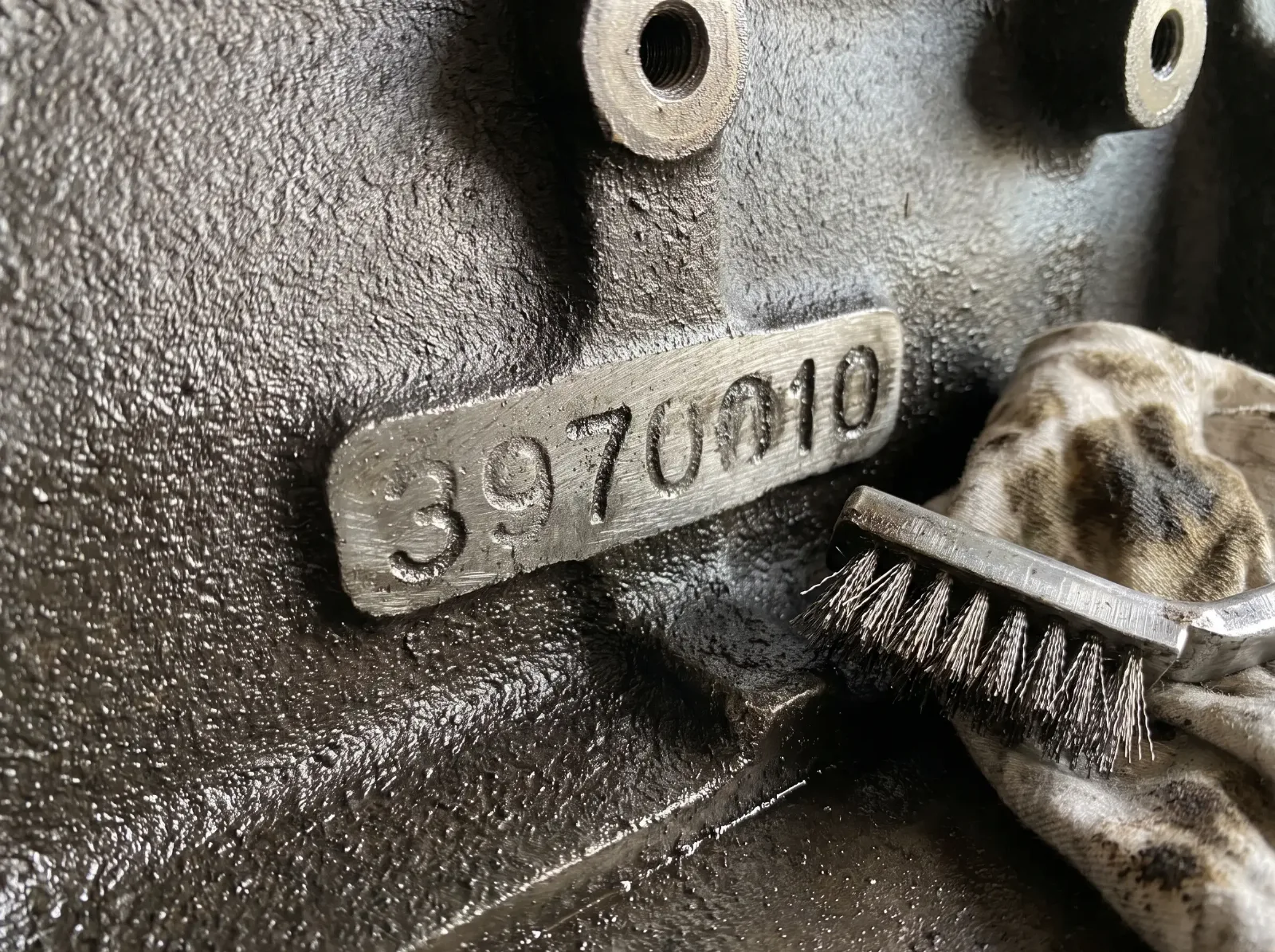
Somebody sells you a car and says it has a 235 in it. Maybe it does. The 216 and the 235 look close enough from the driver's seat that plenty of honest sellers get it wrong, and the difference matters, because a pre-1953 235 and a 1954 or later 235 are not the same engine underneath either. So there are really three questions: is it a 235, what year is it, and does it belong in this car.
None of them need special tools. They need a flashlight, a wire brush, and knowing where to look. Here is the order I go in when a car rolls into the driveway.
Start with the transmission, not the engine
On a 1950 to 1952 Chevrolet car this is the fastest check in the whole process, and you can do it before you open the hood. Chevrolet only put the 235 in cars ordered with Powerglide in those years. A manual-shift car left the factory with the 216.
So a three-pedal 1951 Chevrolet claiming a factory 235 is either wrong or has had an engine swap. That is not automatically bad news, since the swap is the most common upgrade on these cars, but it tells you the engine is not original to the car, and it means you should not pay an originality premium.
The same logic runs the other way. A Powerglide 1951 with a 216 in it has also been changed, because that combination was never sold. Either way, the transmission and the engine should agree, and when they do not, ask what else has been done.
Reading the engine itself
The casting numbers are the real answer, and they are the only thing that dates an engine rather than guessing from what surrounds it. Two places to look.
The block casting number is cast into the side of the block. It will be dirty and it will need a brush. This is what you cross-reference to get the year range and the application, car or truck. As an example of how these read, casting 3835911 was used on 235s from 1953 to 1955 and shows up mostly in trucks.
The engine serial or stamping pad sits on the right side of the block near the fuel pump. On these Chevrolets it is a separate sequence from the car's serial number, so do not expect a match and do not treat a mismatch as evidence of anything. Unmatched engine and chassis numbers on a 1951 Chevrolet are normal, not suspicious.
| What you are checking | Where to look | What it tells you |
|---|---|---|
| Block casting number | Side of the block, under the grime | Year range and whether it is a car or truck engine. The definitive check. |
| Engine stamping pad | Right side of block, near the fuel pump | Engine sequence. Separate from the chassis number on these cars. |
| Pedal count, 1950 to 1952 car | Driver's footwell | Powerglide means it should be a 235. A manual means it should be a 216. |
| Lifter noise, cold | Listen at the head | Hydraulic lifters came with the 1950 Powerglide 235. Solid lifters clatter and want adjusting. |
| Oil pan and rods | Drop the pan | Troughs in the pan and dippers on the rods mean a splash-fed pre-1954 bottom end. |
| Ring gear tooth count | Bellhousing, through the starter opening | Matters when engines and starters get mixed across the 1955 six to twelve volt change. |
Telling the early 235 from the late one
This is the check most people skip and the one that changes what the engine is worth. Displacement is the same. The bottom end is not.
Pre-1953 engines use poured babbitt main and rod bearings, and the rods are lubricated by dippers picking oil out of troughs cast into the pan. From 1954 every 235 got aluminum pistons, full pressure oiling and insert bearings on both mains and rods. The 1953 model year sits in the middle: Powerglide cars got the full pressure version with hydraulic lifters, while manual cars kept cast iron pistons, babbitt rods and splash oiling.
If the pan is off for any reason, look. Troughs and dippers mean early. Plain pan and drilled crank feeding the rods mean 1954 or later. If the pan is on and you do not want to pull it, the casting number is your answer, and it is a better answer anyway.
"Half the 235s advertised in this hobby are 216s, and half the rest are early 235s being sold as late ones. Neither seller is lying on purpose. Brush the casting number off and you will know more about that engine in five minutes than the man who owned it for twenty years."
— Earl Dawson
What a swapped engine means for the car
A later 235 in an earlier car is the most common modification in this corner of the hobby, and it is a good one. You get more displacement than a 216 and, if the donor engine is 1954 or later, a bottom end that does not depend on oil level the way the original does.
What it does mean is that the car is no longer original, and it should be priced that way. It also means you need to know which parts now belong to which era, because the ordering gets confusing fast: the engine may be a 1955 truck unit, the starter may be from anywhere, and the car is still six volt negative ground unless somebody changed that too.
Check this first
- Brush the block casting number. Everything else is inference. This is evidence.
- Count the pedals on a 1950 to 1952 car. Powerglide should mean a 235, manual should mean a 216. Disagreement means a swap.
- Ask whether the pan has ever been off. An owner who has seen troughs and dippers knows exactly what he owns.
- Do not chase a matching engine number. On these Chevrolets the engine and chassis sequences are separate. A mismatch proves nothing.
- Check the starter and ring gear together. This is where mixed-era swaps bite, especially around the 1955 twelve volt change.
- Confirm the car is still six volt negative ground. A swapped engine often arrives with somebody else's electrical opinions attached.
Once you know what the engine is, the rest gets easy. The full history of the two 235s and why the split matters is in the bigger six, what to expect when a tired one comes apart is in a Chevy 235 engine rebuild, and what Chevrolet actually fitted to the 1951 cars is in the engines of 1951. If you are still working out what the whole car is, start from the reference figures.
Sources and notes
- Chevrolet 235 inline six, EngineFacts - the 1941 truck debut, the 1950 arrival in cars with Powerglide only, and the 1953 upgrade of Powerglide engines to full pressure lubrication with hydraulic lifters while manual cars kept the older design.
- Everything to know about the 235 Chevy engine, VehicleHistory - the 1954 change to aluminum pistons, full pressure oiling and insert bearings across all 235s, and casting number 3835911 used on 1953 to 1955 engines, mostly trucks.
- Stovebolt six history and information, Restore An Old Car - pre-1953 engines as splash-oiled babbitt bearing designs, with pressure to the mains and troughs in the pan feeding dippers on the rods.
- 1946 to 1954 Chevrolet model identification, The Old Car Manual Project - the serial plate location and the separate engine number sequence on these cars.
- Secrets of the Chevy Powerglide 1950-73, Mac's Motor City Garage - Powerglide as a De Luxe-only option paired with the 235, which is what makes the pedal count an identification tool on these years.
- Chevrolet 216 and 235 high torque starters, Vintage Auto Garage - the 1955 move to twelve volt and the 168 tooth ring gear matching that catches mixed-era swaps.
More from the garage
Rebuilding a Chevy 216
Rebuilding a 216 is not like rebuilding anything made after about 1955, and the difference is not the tools. It is that on most engines the botto...
The 1951 Chevrolet Apache
There is no 1951 Chevrolet Apache. The Apache name belongs to the generation of Chevrolet trucks that came after the one built in 1951, and it do...
The 1951 Chevrolet Impala
There is no 1951 Chevrolet Impala. The name did not exist in 1951, the car did not exist in 1951, and nothing Chevrolet built that year was ever...