1951 Chevrolet Parts for Sale
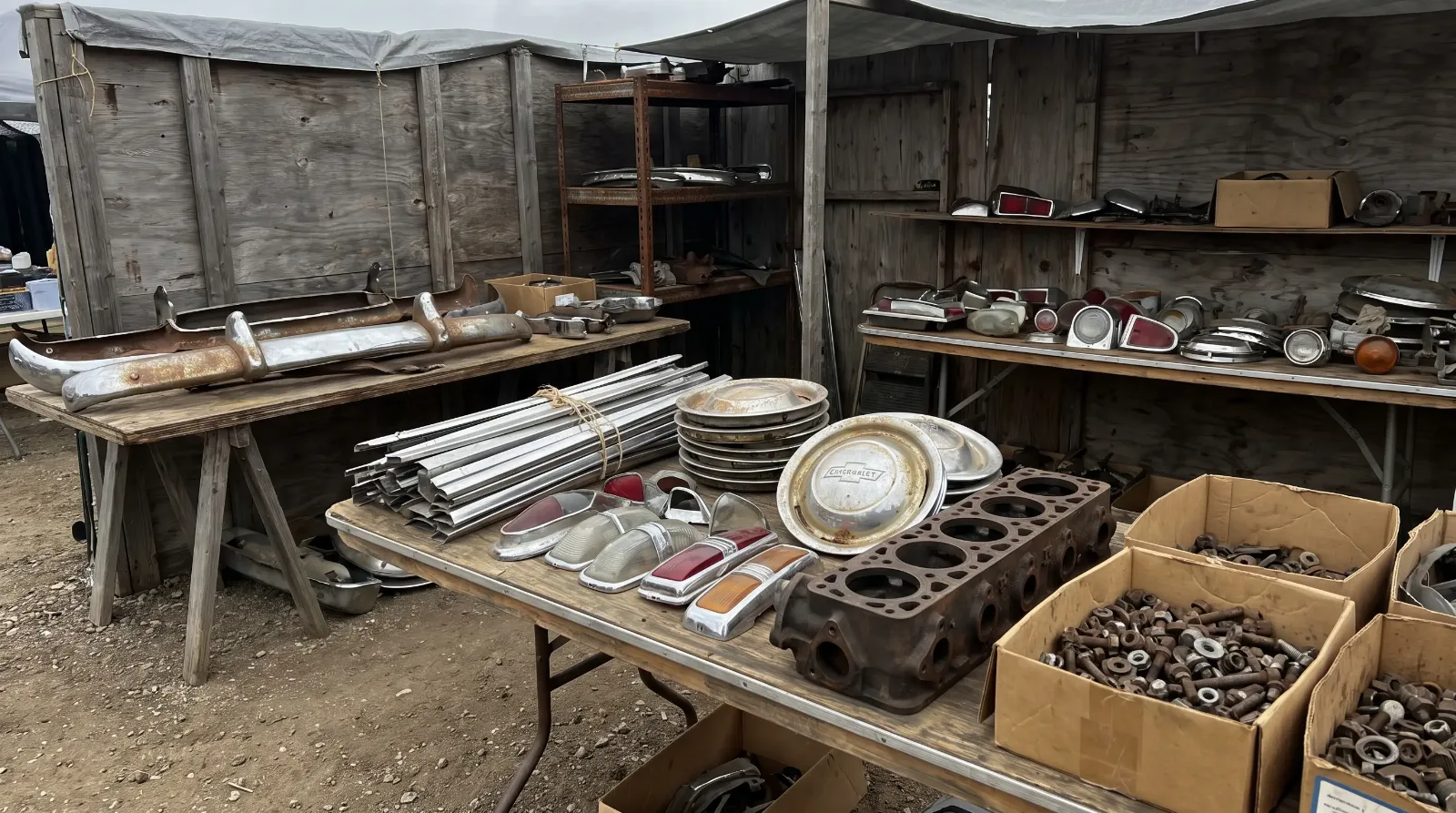
Before you buy a 1951 Chevrolet, find out what the parts cost. That is backwards from how most people do it, and it is why so many of these cars sit half apart in a garage for a decade. The car is the cheap part. What you spend after the car is what decides whether the project finishes.
The good news on a 1949 to 1952 Chevrolet is better than most buyers expect. This was a car built by the million, the aftermarket has never entirely walked away from it, and there are specialist suppliers who have been serving it for decades. The bad news is narrower than people fear but it is real, and it lives almost entirely in the trim.
What you can buy new off a shelf
Rubber and mechanical parts are the easy end. Weatherstrip, glass channel, brake components, fuel system parts, cooling parts, ignition, wiring, exhaust. Suppliers who specialize in the 1940s and 1950s Chevrolet carry all of it and have for years. If your car needs to be made roadworthy and safe, none of that is a hunt. It is a purchase order.
Sheet metal repair panels are the part that surprises people. You can buy reproduction firewalls, outer cowl repair panels for the lower left and lower right, door repair panels for the inner and outer bottoms, and inner rocker repair sections cut to length for these cars. Those are exactly the four places a 1951 Chevrolet rots, which tells you the suppliers have been paying attention. You are not fabricating patch panels from flat stock unless you want to.
Some parts even carry across model years, which widens your search. The 1951 and 1952 cars share enough that vendors list single part numbers covering both, taillight assemblies among them. When you are searching listings, searching 1949 to 1952 rather than 1951 alone will roughly quadruple what comes back.
| Category | Availability | What to expect on price |
|---|---|---|
| Rubber, weatherstrip, glass channel | Reproduced, in stock | Ordinary. Buy quality, not cheapest |
| Brakes, fuel, cooling, ignition, wiring | Reproduced or serviceable | Ordinary. This is the roadworthy budget |
| Sheet metal repair panels | Reproduced: firewalls, cowl, door bottoms, inner rockers | Moderate. Cheaper than a fabricator's hours |
| Full outer panels, fenders, doors | Mostly used and salvage | Varies wildly by condition and location |
| Stainless trim and pot metal | Used, NOS, or restoration services | Expensive. This is the budget killer |
| Body-specific parts: wagon seats, Bel Air headliner bows, convertible top frame | Hunt only | Whatever the seller says, because there is no second one |
| Convertible top hardware, pumps, cylinders | Reproduced and serviceable | Moderate to high, and you will need it |
Where the money actually goes
Read that table from the bottom up and you have the real story. Nobody's project stalls on a fuel pump. Projects stall on a piece of stainless nobody makes, on a chrome piece that needs replating, on a wagon third-row seat that does not exist within four states of you.
Here is the trade I have watched play out for forty years. A buyer finds a cheap 1951 with no trim on it and congratulates himself on the price. Two years later he has spent more chasing correct brightwork than a complete, trimmed car would have cost him at the start. Buy the ugly complete car over the pretty stripped one every single time. Paint is a decision you can make later. Trim is a search with no end date.
The other thing that fails on price is anything specific to a low-production body. Chevrolet built 380,270 four-door sedans in 1951 and 20,172 convertibles. Sedan parts are common because sedans were common. Convertible top frames, wagon seats and Bel Air headliner bows are not sitting in anybody's warehouse, and when one surfaces the price has nothing to do with what the piece is worth and everything to do with how badly the two people bidding need it.
Where to look, and in what order
Start with the specialist suppliers who build their whole catalog around 1940s and 1950s Chevrolet. They have the reproduction parts, they know the interchange, and their part numbers tell you what actually fits before you spend money. That is the fastest way to find out whether the piece you need is a purchase or a hunt.
Then go to the used and salvage vendors who deal specifically in 1949 to 1952 cars. This is where correct used trim, glass, dash pieces and body parts live. Prices are negotiable, condition is everything, and photographs are not enough. Ask about pitting on any brightwork and ask for a picture in daylight at an angle, not head on.
Swap meets and forums come third, but they are where the impossible pieces surface. The wagon seat and the convertible frame are not going to be listed on a website. They are going to be under a table at a meet or mentioned by somebody on a forum who has had one in his loft since 1988. That takes time, which is exactly why you start the search before you need the part rather than after.
Check this first
- Verify the fit before you pay. Ask the seller for the part number or the years listed. Plenty of 1949 to 1952 parts interchange, and plenty do not.
- Judge brightwork in daylight, at an angle. Pitting does not show in a straight-on flash photo. Replating a pitted piece costs more than the piece.
- Treat NOS claims as a question, not a fact. Ask for the box, the label or the part number. Genuine new old stock exists on these cars, and so do repops in old boxes.
- Check for body-style specificity. Wagon, convertible and Bel Air pieces are not shared with sedans. A seller listing "1951 Chevy" may not know the difference.
- Price shipping before you commit. A cheap fender four states away with freight on it is not a cheap fender.
- Buy the complete car when you can. The parts-car math beats the piece-by-piece math more often than not.
"I have never once seen a man regret buying the complete rough car. I have watched plenty of them regret the clean shell with the trim in boxes that turned out to be somebody else's boxes."
— Hal Brennan
Budgeting the way a buyer should
Work out what the car needs before you agree on a number, not after. Roadworthy first, which is brakes, fuel, tires, wiring and cooling, and that is mostly catalog parts at predictable prices. Then metal, which is repair panels plus somebody's hours. Then trim, which is where the number stops being predictable.
The wiring is worth calling out on its own. These are six volt cars with a negative ground, cloth-covered harnesses are seventy-five years old, and a bad harness is a fire rather than an inconvenience. Replacement harnesses are made for these cars. Before you order one, work out what circuits you actually have with the factory circuit drawing, because a car that has been rewired badly once looks nothing like the factory drawing.
For the order of operations on the rest of it, from teardown through paint, the sequence is laid out in restoring a 1951 Chevrolet. And if you are still choosing between candidates rather than fixing one, look at what complete cars are asking first, both in 1951 Chevrolet cars and trucks for sale, because a complete car is often cheaper than the boxes it would take to finish a rough one. The gap between a running complete car and a stripped project is almost always smaller than the parts bill that separates them.
None of this is meant to talk you out of the car. It is meant to get you into the right one. A 1951 Chevrolet is one of the best supported cars of its era, and if you buy complete, budget honestly and start the hard searches early, it is a project that finishes. Buy the trim with the car and the rest is just work. And if the parts hunt turns into buying a better car instead of finishing this one, classic Chevrolet for sale is where the complete ones sit.
Sources and notes
- 1951 Chevy car parts, Chevs of the 40s - the working catalog for 1951 passenger cars, covering rubber, weatherstrip, glass, brake, fuel, ignition, wiring and trim parts still supplied for these cars.
- 1949-1952 Chevrolet sheet metal, Chevs of the 40s - reproduction firewalls, lower left and right outer cowl repair panels, inner and outer door bottom repair panels and inner rocker repair sections.
- 1951 Chevrolet Styleline De Luxe parts, Classic Industries - a second supplier catalog for the same car, useful for cross-checking part numbers and body-style fitment.
- 1949-1952 Chevrolet parts, Bel Air Auto Parts - used, salvage and new old stock coverage for the 1949 to 1952 cars, including trim and body pieces not reproduced.
- 1951-52 Chevy car taillight assembly, Speedway Motors - an example of a part listed as fitting both 1951 and 1952 cars, showing why searching the wider year range finds more.
- 1950-52 Chevrolet Styleline De Luxe convertible tops and parts, Convertible Top Guys - top covers, rear curtains, hydraulic cylinders, pumps and hose sets still available for the convertible.
More from the garage
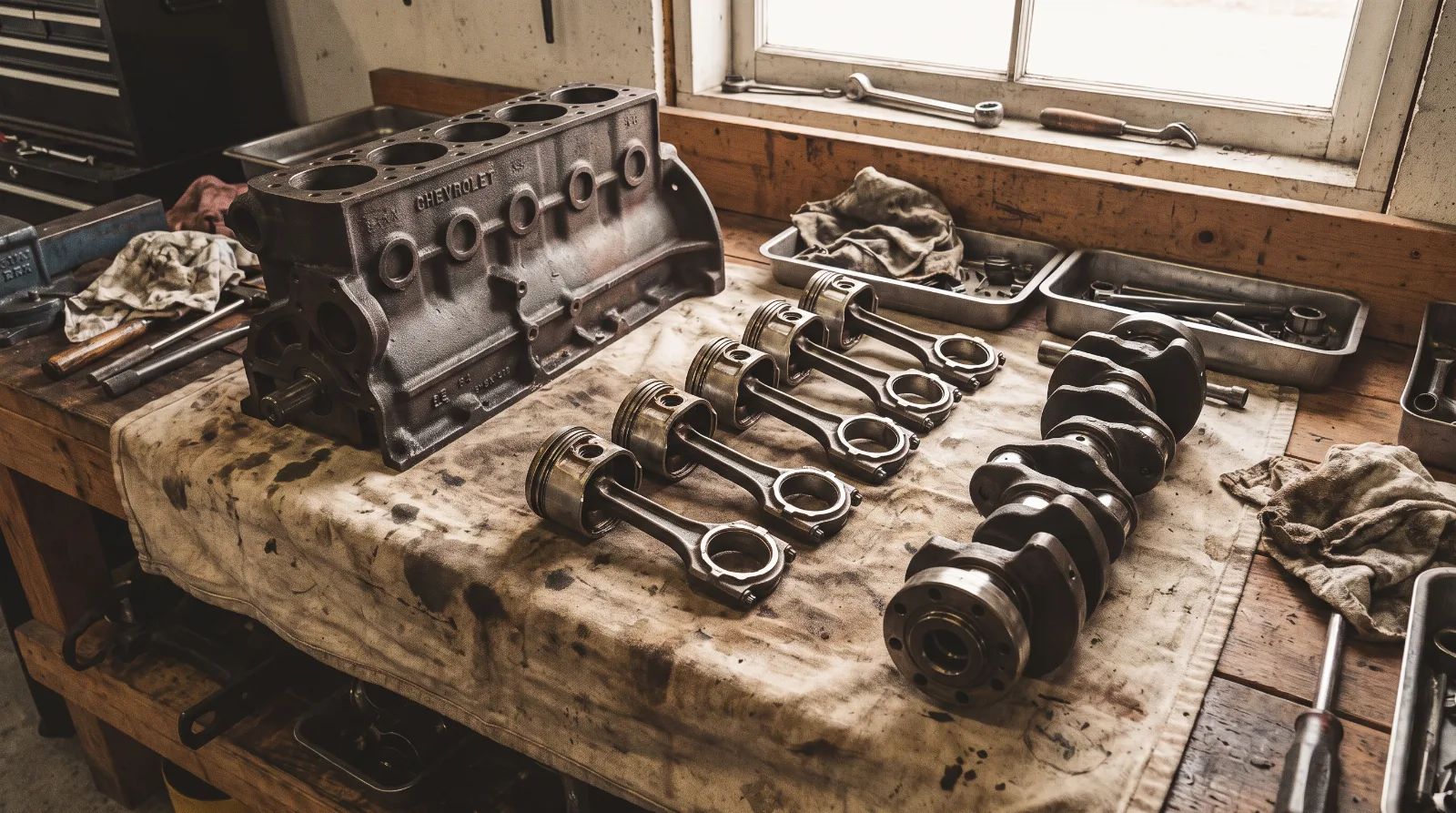
Rebuilding a Chevy 216
Rebuilding a 216 is not like rebuilding anything made after about 1955, and the difference is not the tools. It is that on most engines the botto...
The 1951 Chevrolet Apache
There is no 1951 Chevrolet Apache. The Apache name belongs to the generation of Chevrolet trucks that came after the one built in 1951, and it do...
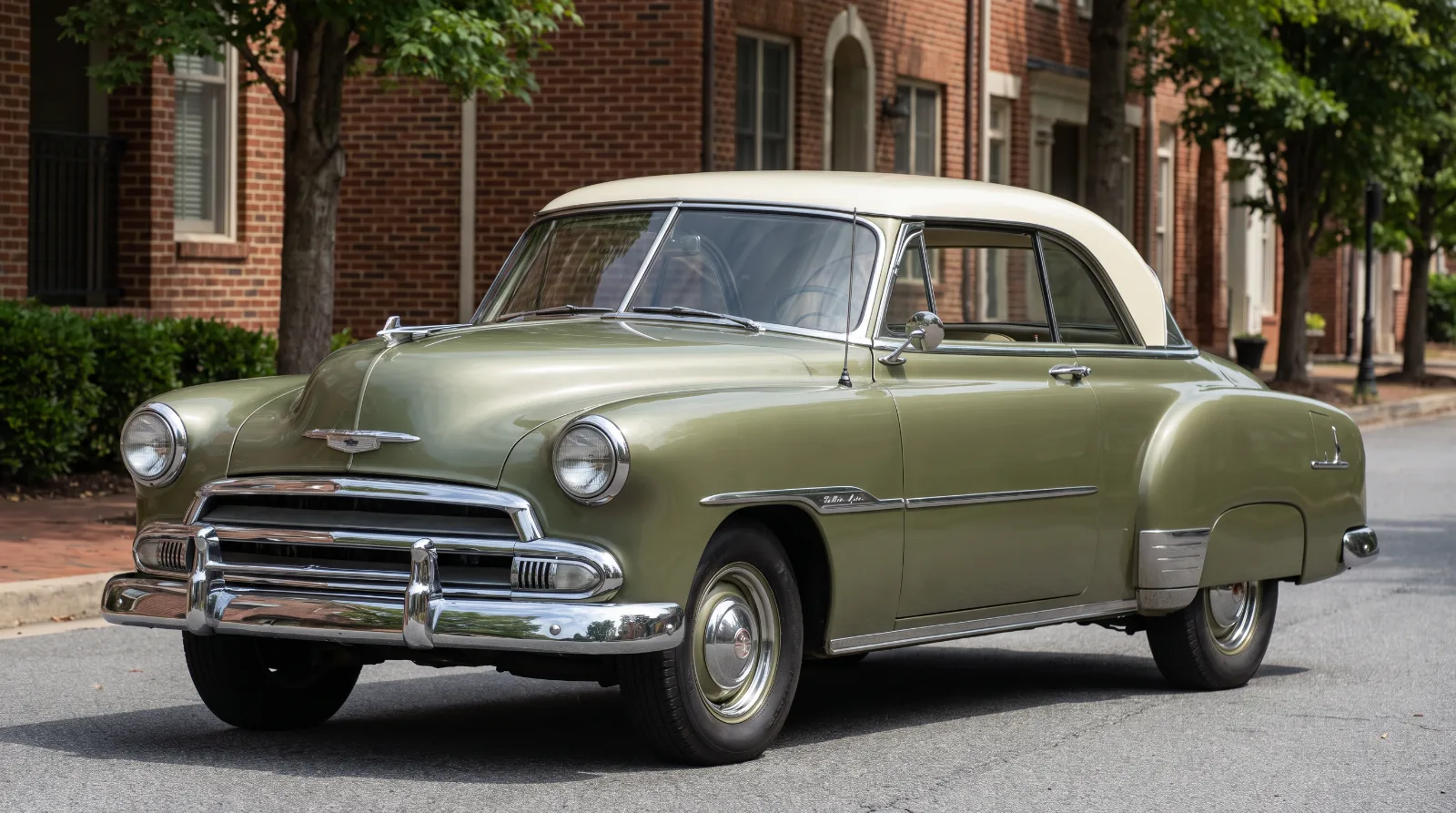
The 1951 Chevrolet Impala
There is no 1951 Chevrolet Impala. The name did not exist in 1951, the car did not exist in 1951, and nothing Chevrolet built that year was ever...