Chevy 216 Engine Specs
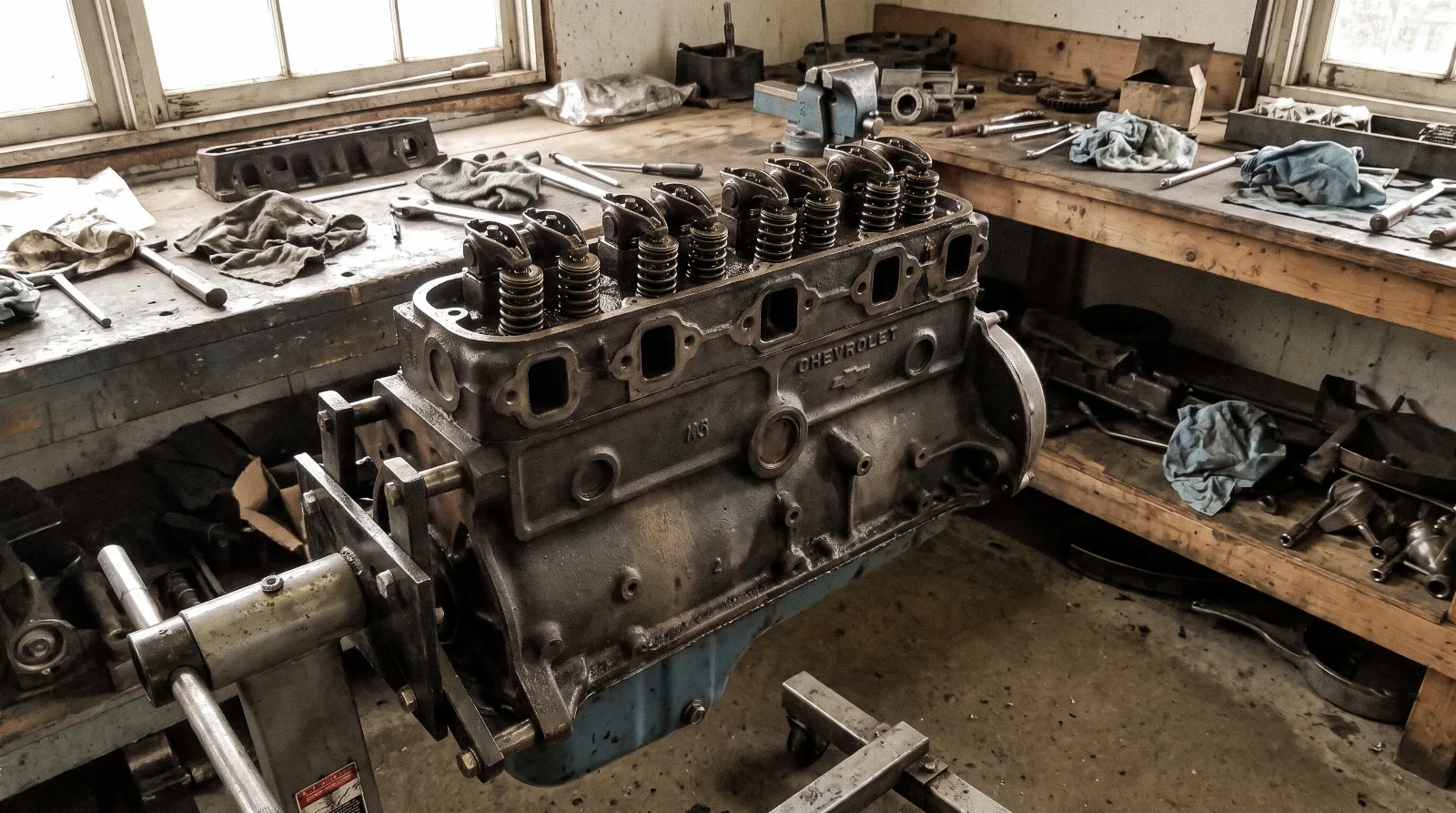
This is the page I keep in the toolbox. Not the history, not the argument about whether the 216 or the 235 is the better engine, just the numbers you need when the pan is off and somebody on the other end of the phone is asking you what size the journals are.
Everything here is for the 216.48 cubic inch six as Chevrolet built it for 1949 through 1953, which is the version in a 1951 car or truck. Where a figure changed earlier in the run I have said so.
The basic dimensions
| Item | Figure |
|---|---|
| Type | Inline six, overhead valve, cast iron block and head |
| Displacement | 216.48 cubic inches (3.5 litres) |
| Bore | 3.5 in (88.90 mm) |
| Stroke | 3.75 in (95.25 mm) |
| Compression ratio | 6.25:1 to 6.6:1 depending on year |
| Valve train | Overhead valve, pushrod, solid lifters |
| Carburettor | Single barrel downdraught |
| Electrical | Six volt, negative ground on Chevrolet |
| Production | 1937 to 1953 |
| Oil capacity | 5 quarts |
| Cooling system | 15 quarts, 16 with a heater |
| Fuel tank | 16 gallons |
Output, year by year
| Years | Horsepower | Torque |
|---|---|---|
| 1937-1940 | 85 @ 3,200 rpm | 170 lb-ft @ 1,200 rpm |
| 1941-1948 | 90 @ 3,300 rpm | 174 lb-ft @ 1,200-2,000 rpm |
| 1949-1953 | 92 @ 3,400 rpm | 176 lb-ft @ 1,000-2,000 rpm |
The torque figure is the one worth carrying in your head. A hundred and seventy-six pound-feet arriving at a thousand revolutions is why a car with 92 horsepower pulls away from a junction without any fuss at all.
Bottom end clearances
These are the numbers people actually ring up about, and they are also where the 216 stops being like anything modern. The connecting rod bearings are babbitt cast directly into the rod, not shell inserts, and clearance was adjusted by removing copper shims from between the rod and its cap.
| Item | Figure |
|---|---|
| Rod journal diameter | 2.311 to 2.312 in |
| Rod bearing clearance | 0.0010 to 0.0025 in |
| Rod side play | 0.004 to 0.007 in |
| Rod bolt torque | 35 to 45 lb-ft |
| Rod bearing material | Babbitt, cast integral with the rod |
| Rod feed | Dipper into a trough. No pressure to the rod journal |
| Crankshaft | Statically and dynamically balanced, about 46 lb |
| Oil pressure, quoted | 14 psi |
| Cranking compression | 110 psi |
"Every number on this page matters less than the one nobody prints: how full the pan is. The rods are fed by a dipper hitting a trough. Get the level wrong and the clearance you set so carefully never sees any oil at all."
— Earl Dawson
What the numbers do not tell you
Three things that catch people out when they treat this like a spec sheet for a modern engine.
Oil pressure is not a health readout. The quoted figure for this engine is fourteen pounds. Fourteen. The gauge is telling you about the pump and the mains, and the rods are not on that circuit at all, so a 216 showing modest pressure warm at idle is behaving exactly as designed. Chasing a bigger number will not make the bearings any happier.
Compression of 6.25 to 1 is not a fault. It is a design decision made for the fuel of the day. There is nothing to fix and nothing to be gained by measuring it against anything built after about 1960.
The rod bearings are not a part number. On an engine with insert bearings you order a set. Here you are either having the rods rebabbitted or you are adjusting shims, and either way the work is a service, not a purchase. Budget accordingly.
Check this first
- Which engine is actually in the car. A great many 1951s have a later six in them. Read the block casting, do not read the seller.
- Whether the rods have been shimmed already. Missing shims tell you the engine has been adjusted at least once and how much is left.
- Journal size against the standard figure. A reground crank changes every clearance number on this page.
- Side play. Out of range points at a rod that has been apart and gone back wrong.
- Six volt, negative ground. Chevrolet ran negative while Ford, Chrysler and GMC ran positive. Wire it the other way and you will be buying a coil.
- Cranking compression against 110 psi. That is the figure this engine was quoted at. A cylinder well under it, with the others even, is telling you where to look.
Where to go next
What this engine is, why the oiling arrangement shapes everything about owning one, and whether to keep it or swap it, is in the engine itself. If the engine is coming apart, the order of work is in rebuilding a 216. Where this engine sits among the options for the year is in the engine options, and the figures for the whole car rather than just the engine sit in the full specifications.
Sources and notes
- Chevrolet Stovebolt engine, Wikipedia - 216.48 cubic inches, 3.5 by 3.75 inch bore and stroke, 6.25 to 6.6 compression, the year-by-year output table from 85 hp in 1937 to 92 hp and 176 lb-ft from 1949, the oil trough and dipper arrangement, and babbitt cast integral with the rod adjusted by copper shims.
- Chevrolet 216 specs, It Still Runs - rod journal 2.311 to 2.312 inches, rod bearing clearance 0.0010 to 0.0025 inch, rod side play 0.004 to 0.007 inch, rod bolt tension 35 to 45 lb-ft, quoted oil pressure of 14 psi, 110 psi cranking compression, and the 5 quart sump, 16 gallon tank and 15 to 16 quart cooling system.
- Stovebolt 6 engine history and information, Restore An Old Car - the balanced 46 pound crankshaft, no pressurised rod journal oiling on the 216, and every pre-1953 engine splash-oiled on babbitt.
- Comprehensive history of the 1947-1955 first series Advance Design, DevesTechNet - the 216.5 Thriftmaster rated at 92 horsepower and 176 pound-feet in the 1951 light trucks, the same engine as the cars.
- 1951 Chevrolet De Luxe Series specifications, Conceptcarz - Chevrolet's own 1951 ratings for the standard six and the optional larger six.
- Chevrolet Deluxe, Wikipedia - the 216.5 Thrift-Master as the standard engine across the 1949 to 1952 range.
More from the garage
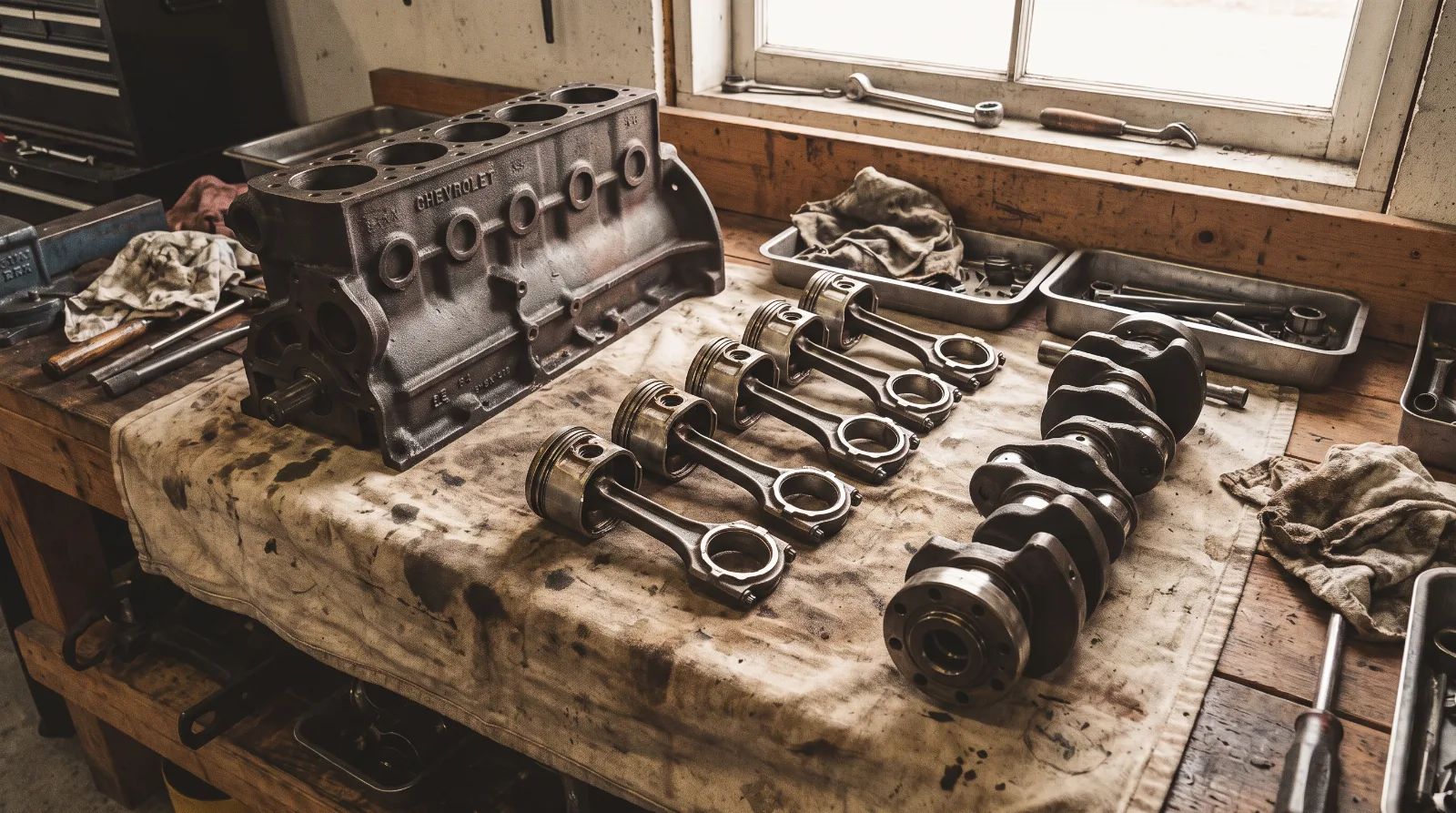
Rebuilding a Chevy 216
Rebuilding a 216 is not like rebuilding anything made after about 1955, and the difference is not the tools. It is that on most engines the botto...

The 1951 Chevrolet Apache
There is no 1951 Chevrolet Apache. The Apache name belongs to the generation of Chevrolet trucks that came after the one built in 1951, and it do...
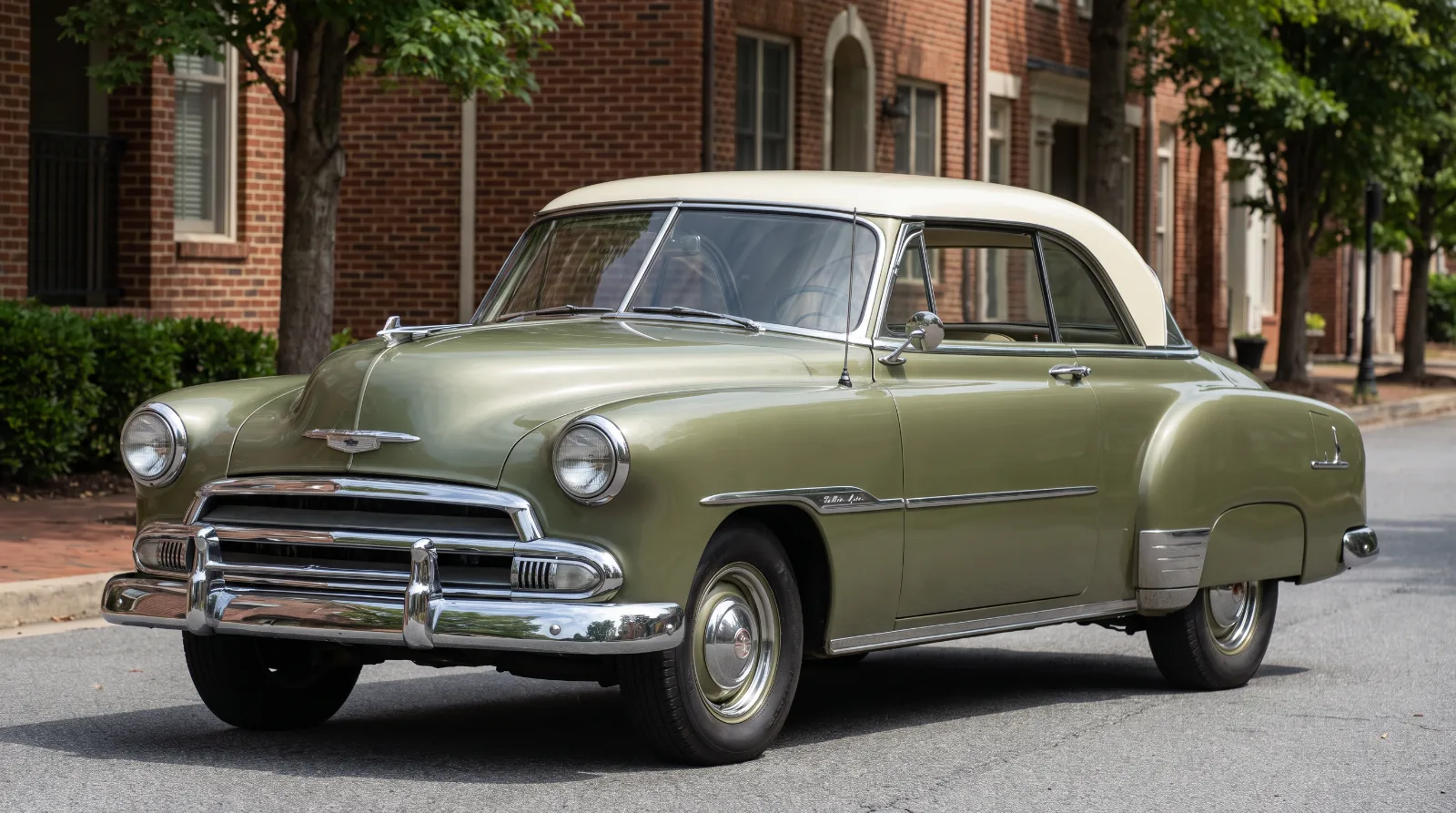
The 1951 Chevrolet Impala
There is no 1951 Chevrolet Impala. The name did not exist in 1951, the car did not exist in 1951, and nothing Chevrolet built that year was ever...