The 1951 Chevrolet Deluxe Cab
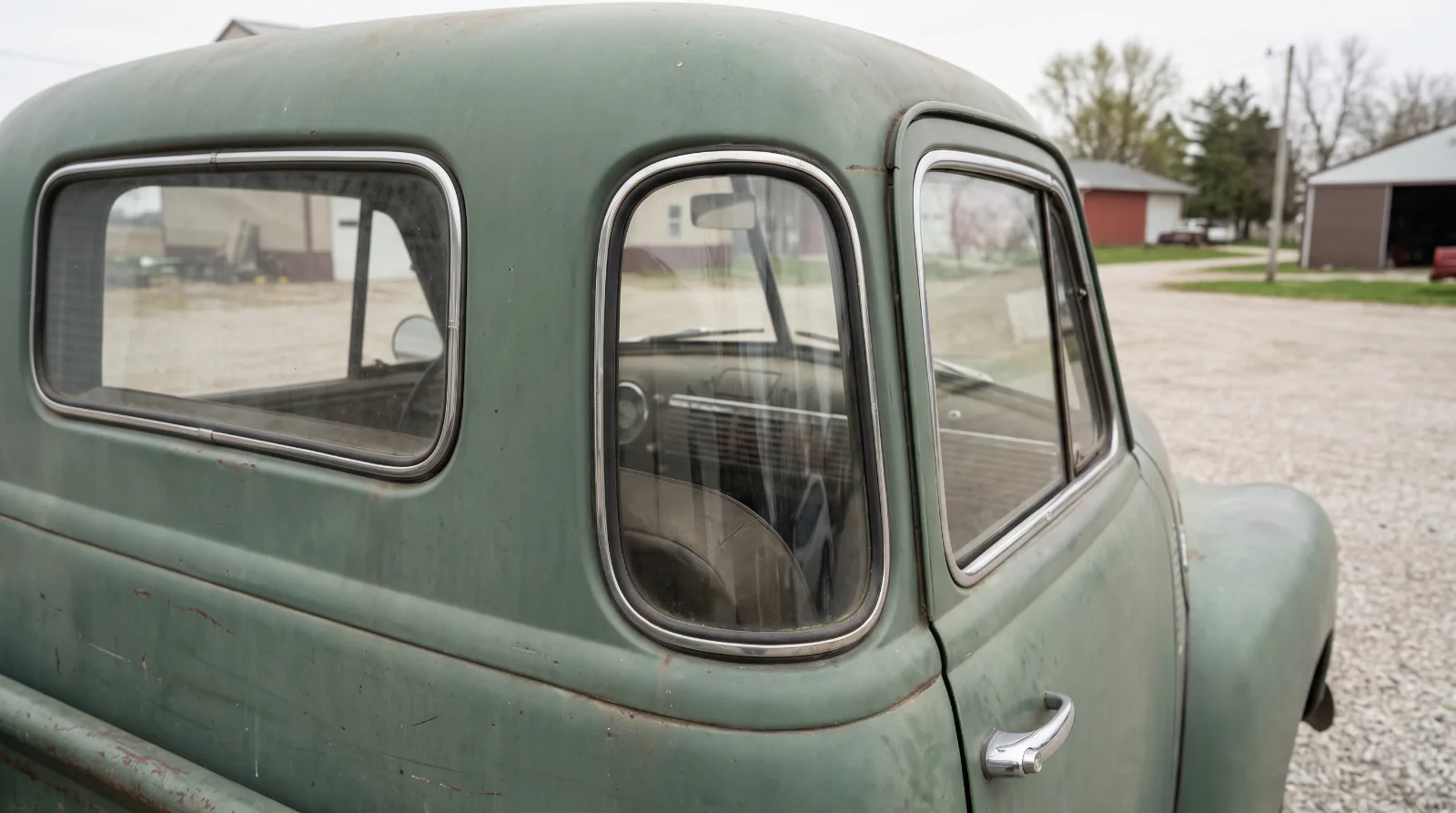
Two windows behind your shoulders. That is what separates a Deluxe cab from an ordinary one on a 1951 Chevrolet truck, and it is the reason a five window pickup costs more than a three window pickup in every advertisement you will ever read.
The story is a bit more interesting than the price tag suggests, because the corner windows were the visible part of a comfort argument Chevrolet had been making since 1947, and 1951 happens to be the last year you could buy the whole argument with all its chrome intact.
What the Deluxe cab actually was
Chevrolet's Advance Design cab is normally described as a three window cab: a windscreen and a door glass each side. The Deluxe cab adds a small window in each rear corner, which is where the five window name comes from. Those corner windows were an option, and they were standard equipment on the Deluxe cab.
The purpose was not styling. It was to get rid of the blind spot behind the driver's shoulder, which on a truck with a load in the back is exactly where you cannot see and exactly where you need to. The side effect, and the reason people want them now, is that a five window cab feels far lighter inside than a three window one.
The cab itself was already the selling point of the whole design. Advance Design gave Chevrolet a wider cab than what came before, with more head room and more leg room, seating for three across, and better insulation than the trucks it replaced. Chevrolet had worked out that the man buying the truck sat in it all day.
| Standard cab | Deluxe cab | |
|---|---|---|
| Windows | Three | Five, corner windows added |
| Rear blind spot | Present | Largely gone |
| Corner windows | Optional extra | Standard equipment |
| Cab shell | Same | Same |
| Value today | Lower | Consistently higher |
Why 1951 is the year to want
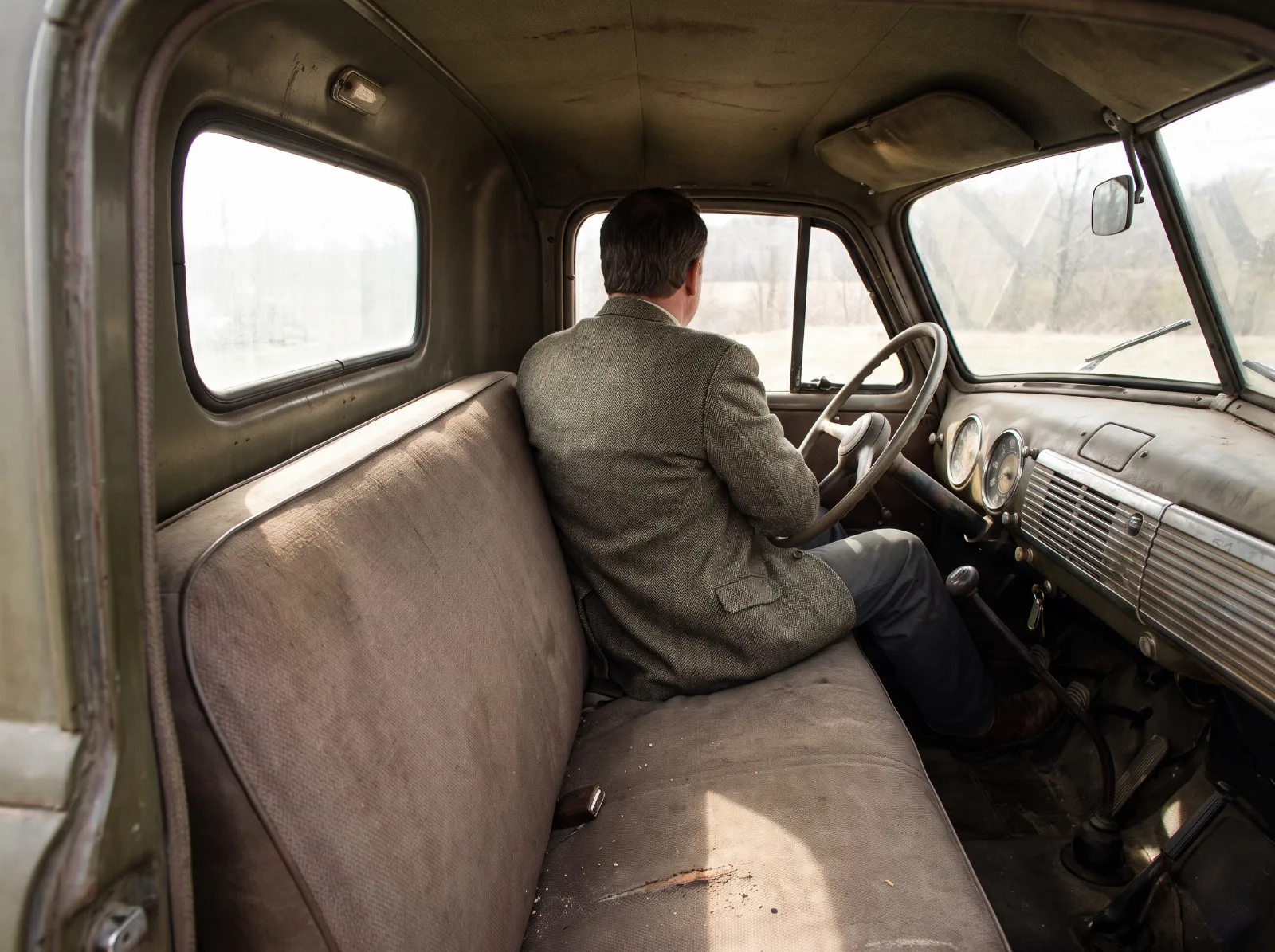
Because of what happened next. In 1952 and 1953 the Korean War took the bright metal off these trucks. Hubcaps, bumpers and grilles came painted rather than chromed, and the small chrome pieces inside the cab disappeared with them. The chrome window handle knobs and the chrome wiper knob are last seen in 1951.
So a 1951 Deluxe cab is the last one that leaves the factory with the full complement of brightwork, and it is the last one with the 80 mile an hour speedometer, and it is the only one with vent windows in the doors alongside the old pull down outside handles. That combination exists for one model year and never again.
None of which made the slightest difference to a farmer in 1951. All of it makes a difference to what the truck is worth now, which is the usual joke of this hobby.
"A three window cab that has never been welded is worth more to me than a five window cab that has been rebuilt twice. The windows are a day's work to fit. The rust is not."
— Earl Dawson
Buying one, and the honest warning
Corner windows can be added. The panels are there, the glass and the rubbers are reproduced, and a competent shop will cut and fit them. That means a proportion of the five window trucks on the market were not five window trucks when they left the factory, and there is nothing in the serial number to tell you either way, because the cab option is not recorded there.
This is not automatically a scandal. A well done conversion is a nicer truck to sit in and nobody is harmed by it. It becomes a problem when it is sold as original at an original price, and the way to check is to look at the metal rather than the glass: original corner window openings have factory pressings and factory spot welds around them, and a conversion does not.
The other thing to accept before you start is that the corner windows are two more places for water to get in, and water in a cab corner goes into the bottom of the cab and then into the floor. A neglected five window cab rots in exactly the places that cost most to repair. That is the trade for the view.
Check this first
- The metal around the corner windows, inside and out. Factory pressings and factory welds, or somebody's angle grinder.
- The bottom of the cab corners. This is where a five window cab pays for itself in reverse.
- Whether the brightwork is chrome or painted. Chrome is right for 1951 and painted belongs to 1952 and 1953.
- The wiper knob and window handle knobs. Chrome on a 1951, and among the first things to get swapped.
- Whether the cab suits the chassis. All the cabs interchange, so the two are not necessarily born together.
- The corner window rubbers. Perished rubber is cheap to fix and expensive to ignore.
Where this fits
The cab is the reason people want these trucks, and the truck under it is the 1951 Chevrolet 3100, with the whole range in the Advance Design trucks. The pickup that carries this cab is in the five window pickup, and the heavier versions are the three quarter ton and the one ton. What is inside it is in the truck interior and the truck gauges, and the order of a full job is in the truck restoration.
Sources and notes
- 1952 Chevrolet 3100, Horsepower Enterprises - the five window cab formally known as the Deluxe cab, conceived to eliminate the blind spots, the corner windows offered as an option but standard with the Deluxe cab, and the wider Advance Design cab with more head and leg room.
- Advance Design 1947-1955, Classic Chevy Trucks - the cabs being the same for pickups and larger trucks throughout the era, and brightwork eliminated across 1952 and 1953 because of Korean War shortages, leaving painted hubcaps, bumpers and grilles.
- Comprehensive history of 1947-1955 first series Advance Design, Deves Technical Network - chrome window handle knobs and the chrome wiper knob discontinued after 1951, the door vent windows introduced that year, and 1951 as the only year combining vent windows with pull down outside handles.
- Chevrolet Advance Design, Wikipedia - all light truck cabs interchanging across the range while the cab over engine cabs did not, and 1951 as the last year for the 80 mile an hour speedometer and the chrome knobs.
- Five window glory, Kevin Alan Mau - the five window Deluxe cab described as the design that erased the rear blind spots and made the cab feel airy and open.
- 1951 Chevy truck parts, Chevs of the 40s - the 1951 changes inside the cab, including the cowl vent removed in favour of door vent windows and the seat adjuster changed from a cable to a rod under the cushion.
More from the garage
Rebuilding a Chevy 216
Rebuilding a 216 is not like rebuilding anything made after about 1955, and the difference is not the tools. It is that on most engines the botto...
The 1951 Chevrolet Apache
There is no 1951 Chevrolet Apache. The Apache name belongs to the generation of Chevrolet trucks that came after the one built in 1951, and it do...
The 1951 Chevrolet Impala
There is no 1951 Chevrolet Impala. The name did not exist in 1951, the car did not exist in 1951, and nothing Chevrolet built that year was ever...