The 1951 Chevrolet Generator and Regulator
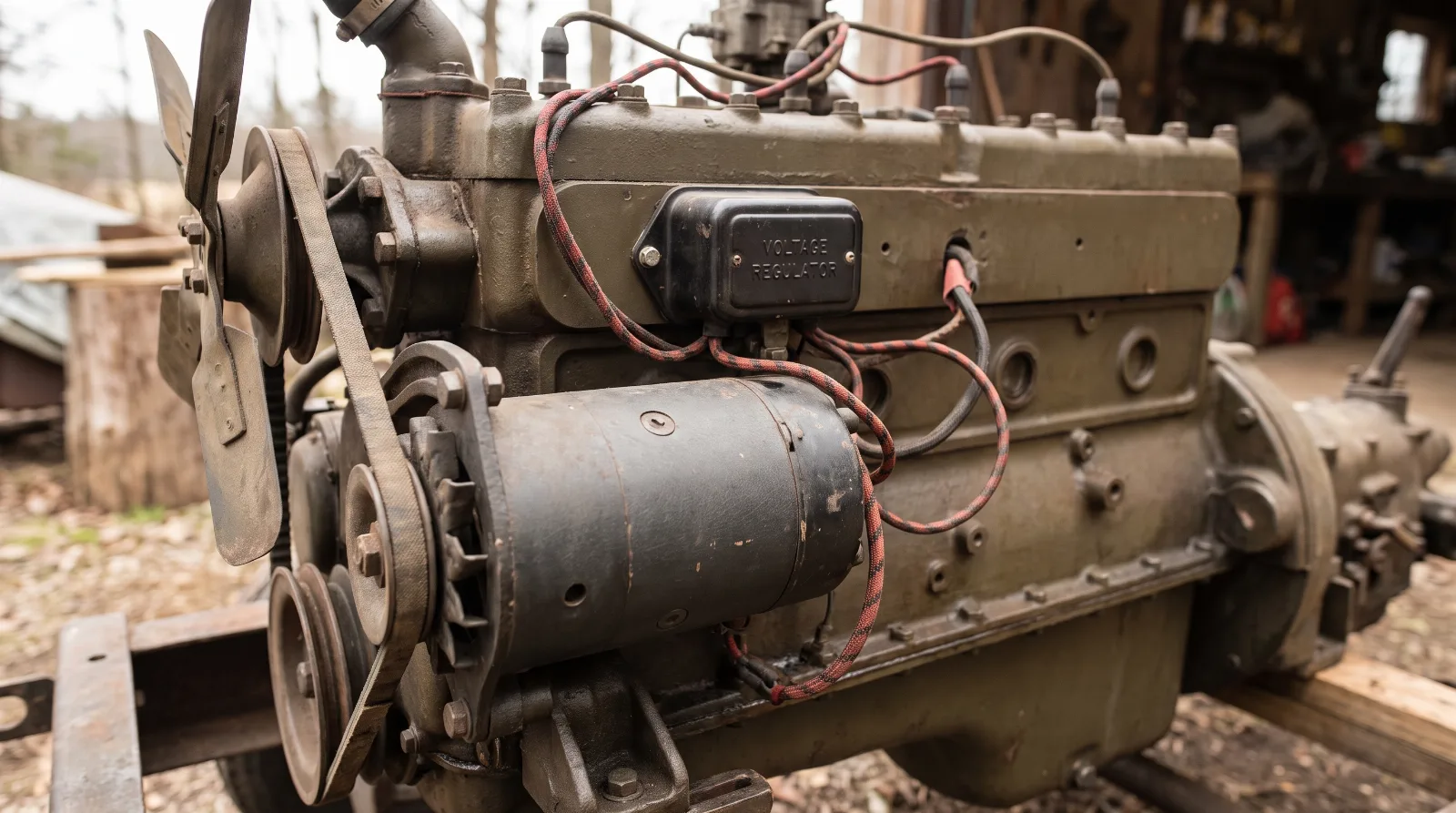
A 1951 Chevrolet charges its battery with a generator and a regulator, not an alternator. Those are different animals, they fail in different ways, and there is one procedure attached to the generator that nobody born after about 1970 has ever heard of. Skip it and you can damage a perfectly good generator in the first ten seconds of running.
It is called polarizing, and it takes about two seconds once you know it exists.
Generator, not alternator
The quickest way to know what you are looking at: if the car has an alternator, it is negative ground and it has been converted, because alternators are nearly always negative ground and a 1951 Chevrolet did not have one. A generator is the round unit with a belt, mounted on the side of the engine, wired back to a regulator box.
The regulator is the part people underestimate. It is not one device. Early automotive generators used a mechanical regulator built from one, two or three relays plus resistors, all in one tin, working together to keep the generator's output in hand. That is why a regulator fault can present in several different ways and why guessing at it is a poor use of an afternoon.
Polarizing, and why it exists
A generator does not carry a permanent magnet strong enough to decide its own polarity. It relies on a small amount of residual magnetism left in the field from the last time it ran. In effect the generator remembers which way round it was, and it will charge in whatever direction that memory tells it to.
Which is fine until something disturbs the memory: a new or rebuilt generator, a new regulator, disconnected leads, a battery fitted the wrong way round even briefly, or a unit that has sat for years. Then the generator may try to charge backwards, fighting the battery instead of filling it.
Polarizing simply pushes a little current through the field coils in the correct direction to set that memory before you start the engine. The method depends on how the field is grounded:
| Field type | What you do |
|---|---|
| Externally grounded field | With the ignition off, momentarily bridge the BAT terminal on the regulator to the ARM or GEN terminal. You will see a small spark. That is the point of it |
| Internally grounded field | Disconnect the field wire and briefly touch it to the BAT terminal on the regulator |
Momentarily is the operative word in both cases. This is a touch, not a connection you leave made.
"Every rebuilt generator I have ever fitted got polarized before the key went anywhere near on. It takes two seconds and it is the cheapest insurance in the whole car. The people who skip it are the people who bring the generator back."
— Earl Dawson
The polarity trap on a Chevrolet
The aftermarket around six volt charging is built for positive ground vehicles, because most six volt vehicles were positive ground. Chevrolet was not. General Motors used negative ground, and a 1951 Chevrolet is six volt negative ground.
That matters most when somebody decides to fit an alternator. A six volt positive ground alternator is one of the most heavily listed parts in this space and it is the wrong part for your car. Connected backwards, an alternator does not sulk, it dies, with a large spark to mark the moment. The whole polarity question is set out in 6 volt positive ground, and it is worth reading before you buy any charging part at all.
Diagnosing a charging fault
Work in this order and you will save yourself money, because the expensive part is rarely the guilty one.
Check this first
- Grounds and cables. Six volt systems are unforgiving of resistance. Clean, fat, tight. More six volt charging complaints come from here than from anywhere else.
- Belt tension. A slipping belt looks exactly like a failing generator on the ammeter and costs nothing to correct.
- Which way the ammeter moves. Discharge while running points at the charging side. A needle that reads backwards points at polarity instead.
- Whether it has been polarized since anything was disturbed. New generator, new regulator, disconnected leads or long storage all call for it.
- Which way the wipers run. A permanent magnet motor runs backwards on reversed polarity. It is a free polarity test sitting on the windscreen.
- Whether somebody has fitted an alternator. If so the car is negative ground and half converted. Find out what else was changed.
Where this fits
The generator and regulator are one branch of a system that the whole car depends on. The circuits themselves are in the 1951 wiring diagram, the polarity question that governs every part you buy is in 6 volt positive ground, and what the dash tells you about all of it is in the 1951 gauges. If you have decided to leave six volt behind, the job is laid out in a 6 volt to 12 volt conversion.
Sources and notes
- Working with a positive ground, Auto Restorer - generators holding a magnetic field residue that acts as a memory of their last polarity, repolarization passing current through the field coils to align it, the externally grounded field method of momentarily bridging BAT to ARM or GEN on the regulator with a visible spark, the internally grounded field method of touching the disconnected field wire to BAT, an alternator meaning the system is negative ground, and an alternator connected backwards being ruined instantly.
- Changing your electrical system from positive to negative ground, Fifth Avenue Internet Garage - General Motors using negative ground while Ford preferred positive, diodes as one-way valves and the components that therefore care about polarity, and the ammeter simply reading backwards when reversed.
- Voltage regulator, Wikipedia - early automobile generators using a mechanical voltage regulator built from one, two or three relays and various resistors to stabilise the generator's output.
- Positive ground cars, Restore An Old Car - 1955 as effectively the last use of six volt electrics in American cars, and which components are and are not affected by polarity.
- Comprehensive history of the 1947-1955 first series Advance Design, DevesTechNet - the six volt electrical system on the 1951 Chevrolet light trucks alongside the cars.
- 1947-1959 Chevy truck model years identification guide, Classic Industries - the 1955 first series as the final Chevrolet series with a six volt system.
More from the garage
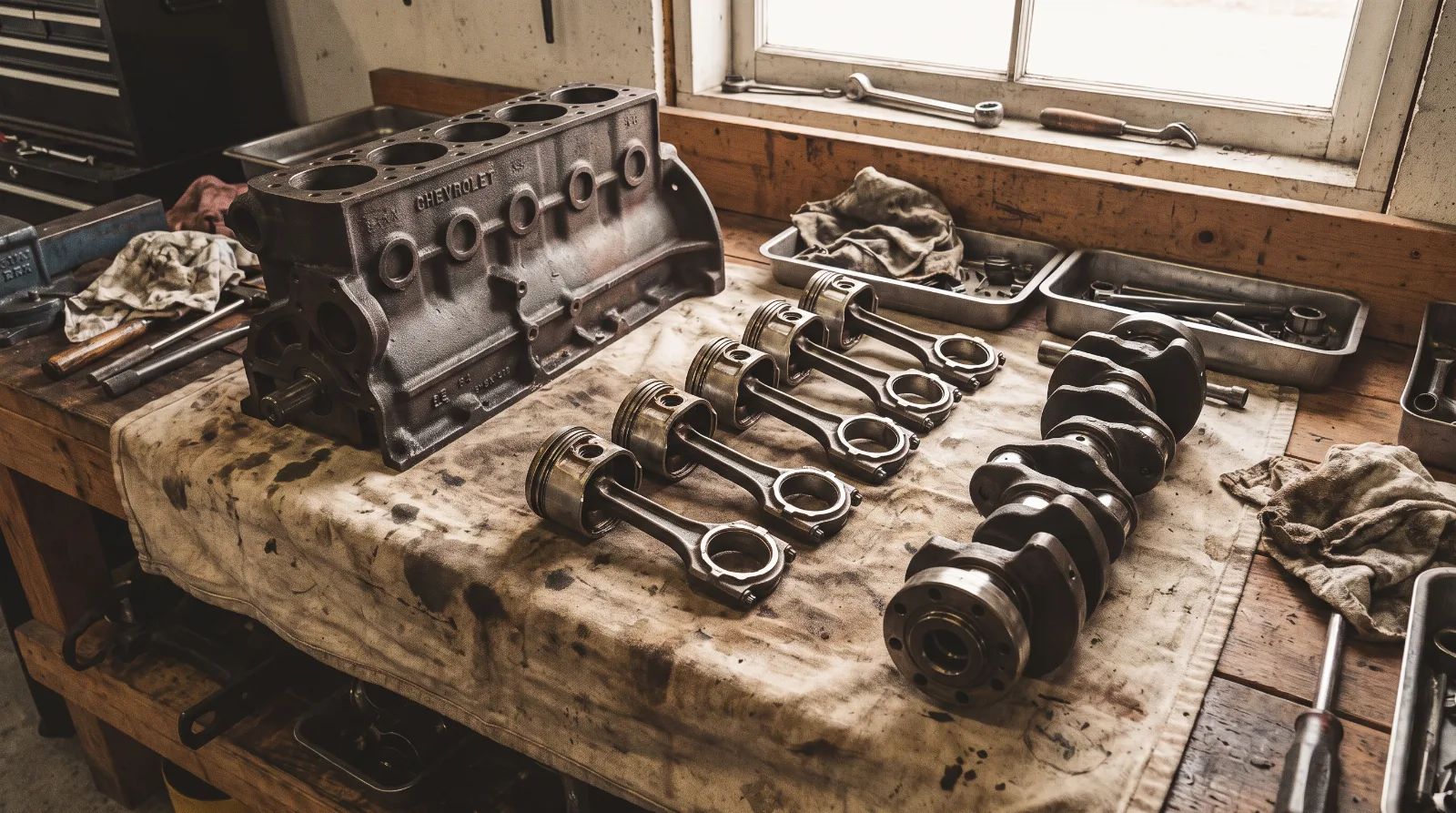
Rebuilding a Chevy 216
Rebuilding a 216 is not like rebuilding anything made after about 1955, and the difference is not the tools. It is that on most engines the botto...

The 1951 Chevrolet Apache
There is no 1951 Chevrolet Apache. The Apache name belongs to the generation of Chevrolet trucks that came after the one built in 1951, and it do...
The 1951 Chevrolet Impala
There is no 1951 Chevrolet Impala. The name did not exist in 1951, the car did not exist in 1951, and nothing Chevrolet built that year was ever...