The 1951 Chevrolet Truck Bed
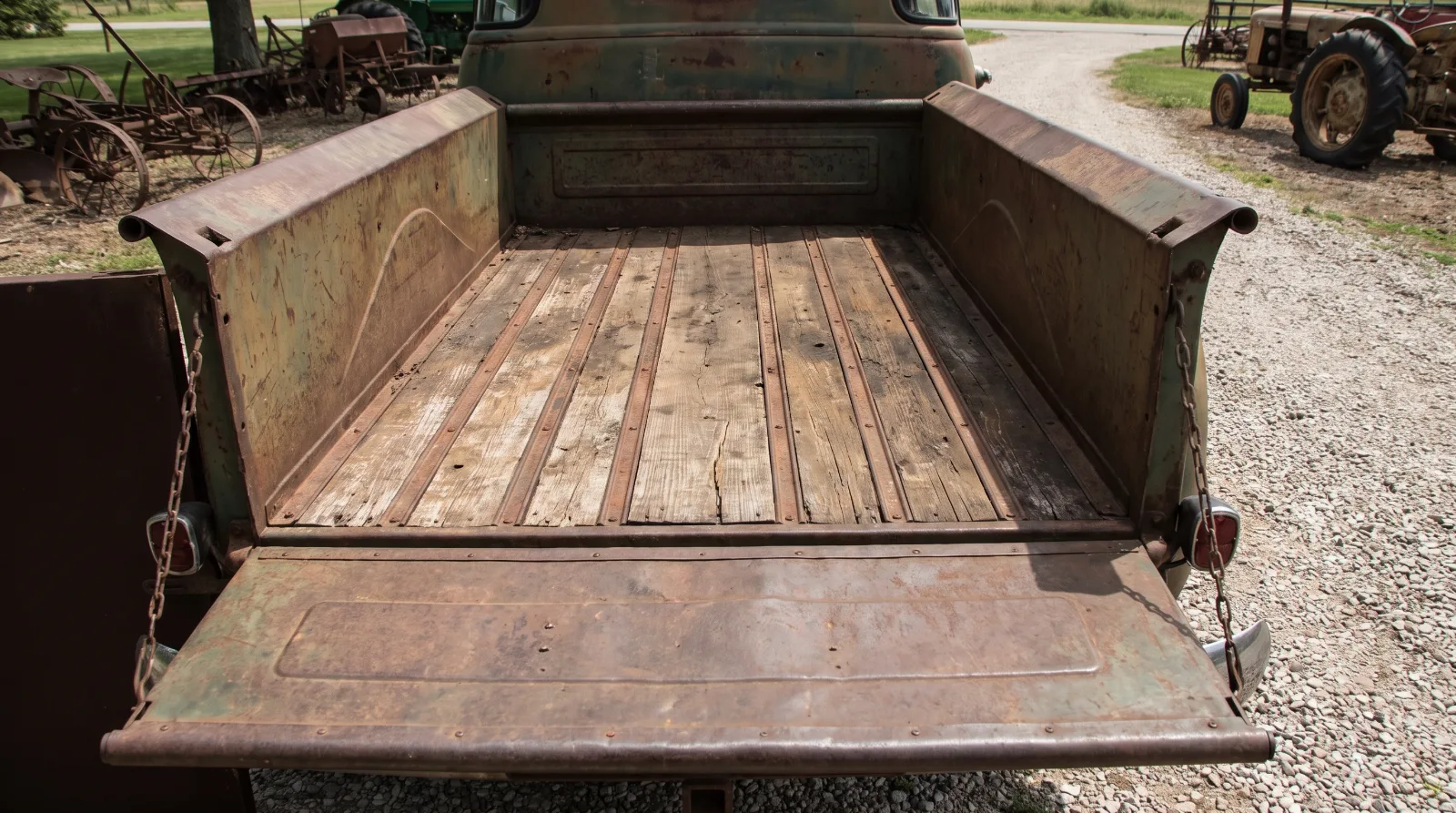
The bed of a 1951 Chevrolet pickup is a wooden floor held down by steel strips, sitting in a steel box. It is the part of the truck that did the work, it is the part that is usually rotten, and it is the part with a change in the middle of the model year that catches people out every single time.
Nine boards or eight, and both are correct for 1951. Get that wrong and the wood you ordered does not fit the truck you own.
The nine board and the eight board
From 1947 until early 1951 the bed floor of a Chevrolet stepside is made of nine boards running front to back. Partway through 1951 the design changes to eight, and that arrangement carries on for decades afterwards.
The nine board floor is the more interesting of the two, because the boards are not all the same width. Reading across from one side to the other they run 4-1/4, 5, 5-1/2, 5-1/2, 6-3/8, 5-1/2, 5-1/2, 5 and 4-1/4 inches, symmetrical about the widest board in the middle. Each board is nominally an inch of timber, which measures three quarters of an inch when it is finished, and the original wood was yellow pine.
The length for the half ton short bed is a shade over six feet four and seven eighths inches. The boards are routed along their edges, with an outer slot about a sixteenth deep and an inner slot about an eighth, so that the steel strips sit down into them properly rather than resting on top.
| Item | Detail |
|---|---|
| 1947 to early 1951 | Nine boards |
| Late 1951 onward | Eight boards |
| Nine board widths | 4-1/4, 5, 5-1/2, 5-1/2, 6-3/8, 5-1/2, 5-1/2, 5, 4-1/4 in |
| Thickness | 3/4 in finished |
| Original species | Yellow pine |
| Short bed board length | About 6 ft 4-7/8 in |
| Edge detail | Outer slot 1/16 in, inner slot 1/8 in |
What actually fails
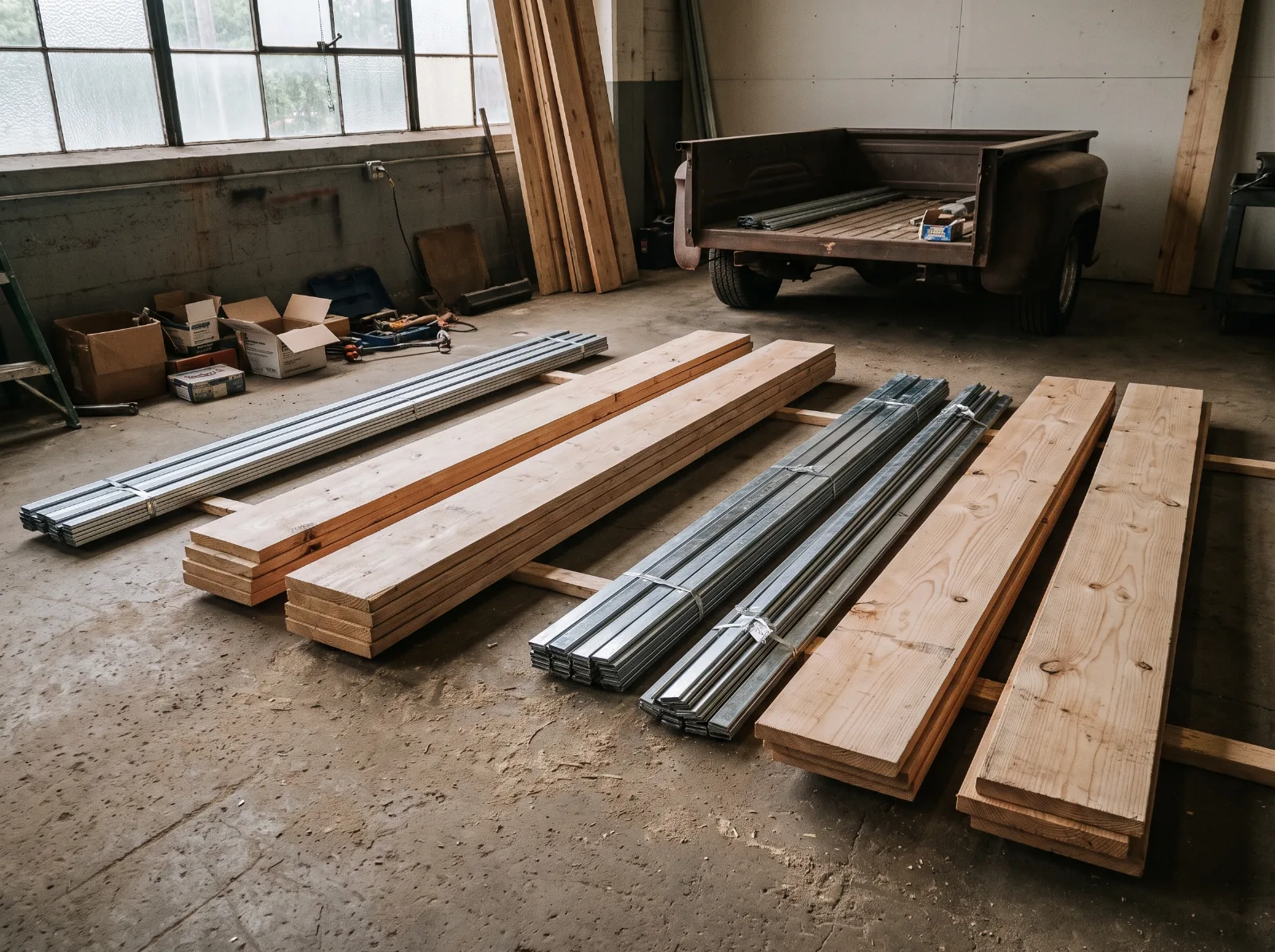
The wood, obviously. Seventy five years of weather on softwood in a truck that spent its life outside. Most beds have been replaced at least once, and a great many have been replaced with something the previous owner had in the shed, which is why board widths on a truck you are looking at often bear no relation to the list above.
The steel strips. They hold the boards down and they take the abuse of whatever got dragged across the floor. They pit, they bend, and the countersunk fasteners in them seize solid. Reproductions are available in painted steel, stainless and polished stainless, and the choice is a matter of what the truck is for.
The cross sills underneath. The part nobody photographs. Water comes through the boards, sits on the sills, and rots them from the top down. A bed with beautiful new wood screwed onto rotten sills is a common and expensive discovery.
The bed sides and the wheel arches. Steel, thin, and the lowest points on the vehicle. If the truck was ever used as a truck, look here first.
"Everybody wants to talk about what wood they are going to use. Oak, walnut, something oiled. Then you get underneath and the sills the wood is going to bolt to have not been there since about 1979."
— Earl Dawson
Doing the job properly
Original was yellow pine, and original was painted rather than varnished. Modern kits are usually offered in oak or pine with a choice of finish, and a show truck with a mirror finish oak floor is a perfectly honest thing to build as long as nobody claims it is factory. If you want factory, you want pine and you want paint.
The sequence that saves the most grief is to strip the bed completely, deal with the sills and the sides while everything is out and accessible, then fit the wood last. Fitting the wood first and then discovering the sills is the way most people do it and the reason most people do it twice.
Fasteners are the small detail that decides whether the finished floor looks right. The strips sit down into the routed slots and the bolt heads sit flush, which means the routing has to be right on the replacement boards and the strips have to be straight. Reproduction wood comes routed. Wood you cut yourself does not.
Check this first
- Count the boards. Nine or eight, and it decides everything you order.
- Measure the widths against the original list. A floor of nine identical boards is somebody's repair, not a factory bed.
- Look at the cross sills from underneath. This is the real condition of the bed.
- Check the bed sides at the bottom and around the wheel arches. Thin steel at the lowest point of the truck.
- See whether the strips are original. Bent, pitted or missing strips are cheap, seized fasteners are time.
- Look at the tailgate separately. It is its own restoration and it is often the wrong one for the truck.
Where this fits
The bed sits behind the cab of the half ton pickup, and the longer versions belong to the 3600 three quarter ton and the 3800 one ton. The whole range is in the trucks of that year, the cab in front of it is in the five window cab with its trim in the truck interior, and where bed work falls in the order of a full job is in restoring one of these trucks. Suppliers are in the parts sources, and the closed bodied alternatives that never had a wooden floor at all are in the closed bodies.
Sources and notes
- Classic Chevy truck bed wood dimensions, ChevyTrucks.org - the nine board floor from 1947, the board widths of 4-1/4, 5, 5-1/2, 5-1/2, 6-3/8, 5-1/2, 5-1/2, 5 and 4-1/4 inches, the three quarter inch finished thickness in yellow pine, the board length of about six feet four and seven eighths inches, the routed outer and inner slots, and early 1951 having nine boards while late 1951 has eight.
- Chevrolet Advance Design, Wikipedia - the mid year change from a nine board bed to an eight board bed during 1951.
- 1951 Chevy truck parts, Chevs of the 40s - the bed changing from nine boards to eight in mid year, and the truck bed categories catalogued as bed metal, bed wood, components, tailgates and fuel fillers.
- Comprehensive history of 1947-1955 first series Advance Design, Deves Technical Network - the bed construction changing from a nine board to an eight board pattern during 1951, alongside the other changes of that model year.
- Car of the week, 1951 Chevrolet 3100 pickup, Old Cars Weekly - the 116 inch wheelbase half ton this bed belongs to, its 196.6 inch overall length and its load ratings.
- 1947-1959 Chevy truck model years identification guide, Classic Industries - the bed wood changing from nine board to eight board type halfway through the 1951 model year, among the other identification points for that year.
More from the garage
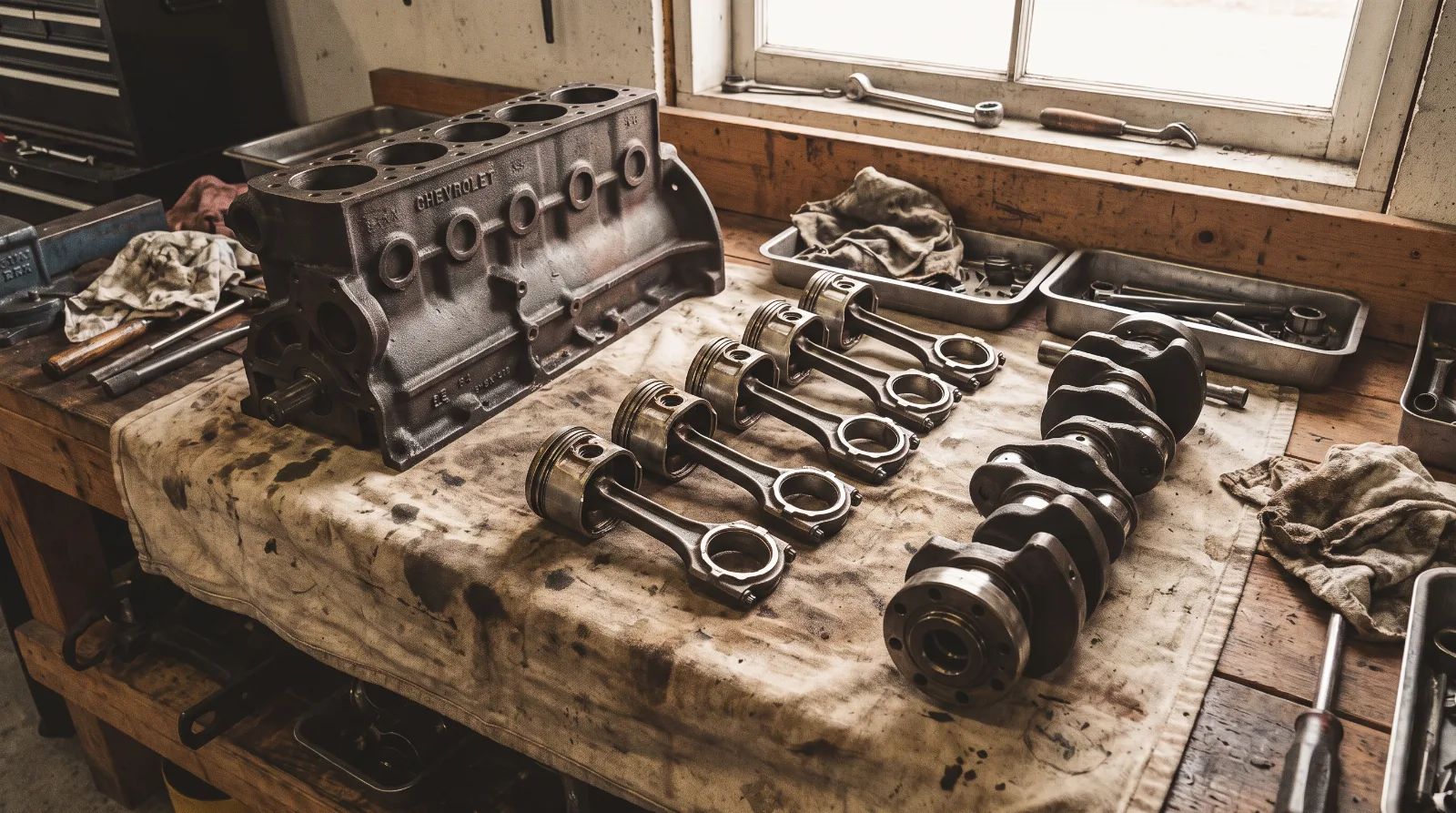
Rebuilding a Chevy 216
Rebuilding a 216 is not like rebuilding anything made after about 1955, and the difference is not the tools. It is that on most engines the botto...
The 1951 Chevrolet Apache
There is no 1951 Chevrolet Apache. The Apache name belongs to the generation of Chevrolet trucks that came after the one built in 1951, and it do...
The 1951 Chevrolet Impala
There is no 1951 Chevrolet Impala. The name did not exist in 1951, the car did not exist in 1951, and nothing Chevrolet built that year was ever...