1951 Chevrolet Disc Brake Conversion
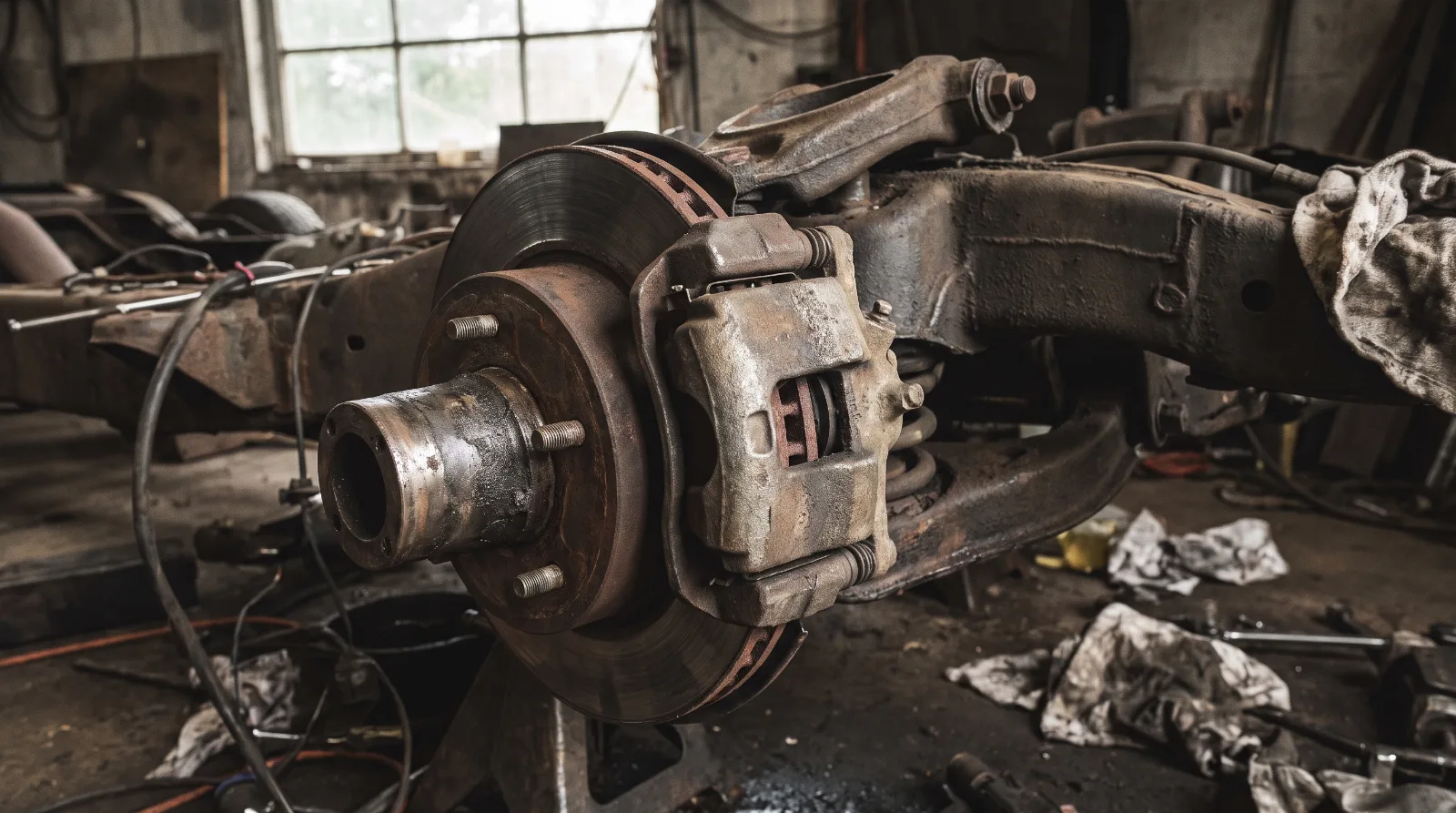
Front disc brakes are the first modification most people make to a 1951 Chevrolet, and it is worth saying at the start that it is usually not the modification that makes the car safest. That title belongs to a dual reservoir master cylinder, which costs a fraction as much and addresses the failure that actually strands people.
That said, there are good reasons to fit discs, the kits are mature, and on the right kit the original spindles stay in the car. So here is what the conversion involves, what it buys you, and where people get caught.
What you are replacing, and what it is not short of
The stock system is four eleven inch drums, hydraulically operated, with no assistance and manual star wheel adjusters. On a car of around 3,400 pounds running 6.70 by 15 tyres, that is not underbraked in a single stop. A well set up drum system on a 1951 Chevrolet stops the car perfectly respectably from the speeds the car was designed to reach.
What drums are poor at is repetition and water. Come down a long hill using the brakes and the shoes heat the drums, the drums expand away from the shoes, and the pedal gets longer. Drive through standing water and the linings stay wet inside a closed drum for a surprising distance. Discs deal with both, because the friction surface is out in the air and the pad is squeezed onto it rather than pushed out at it.
| Original drums | Typical conversion | |
|---|---|---|
| Front friction surface | 11 in drum, 2-3/8 in lining | 11 in vented rotor |
| Actuation | Wheel cylinder | Single piston caliper, about 2-1/2 in |
| Bolt pattern | 5 on 4-3/4 in | 5 on 4-3/4 in, retained |
| Spindles | Original | Original on the right kit |
| Adjustment | Manual, four star wheels | Self adjusting |
| Wheel diameter | 15 in | 15 in minimum on most kits |
The kits, and what separates them
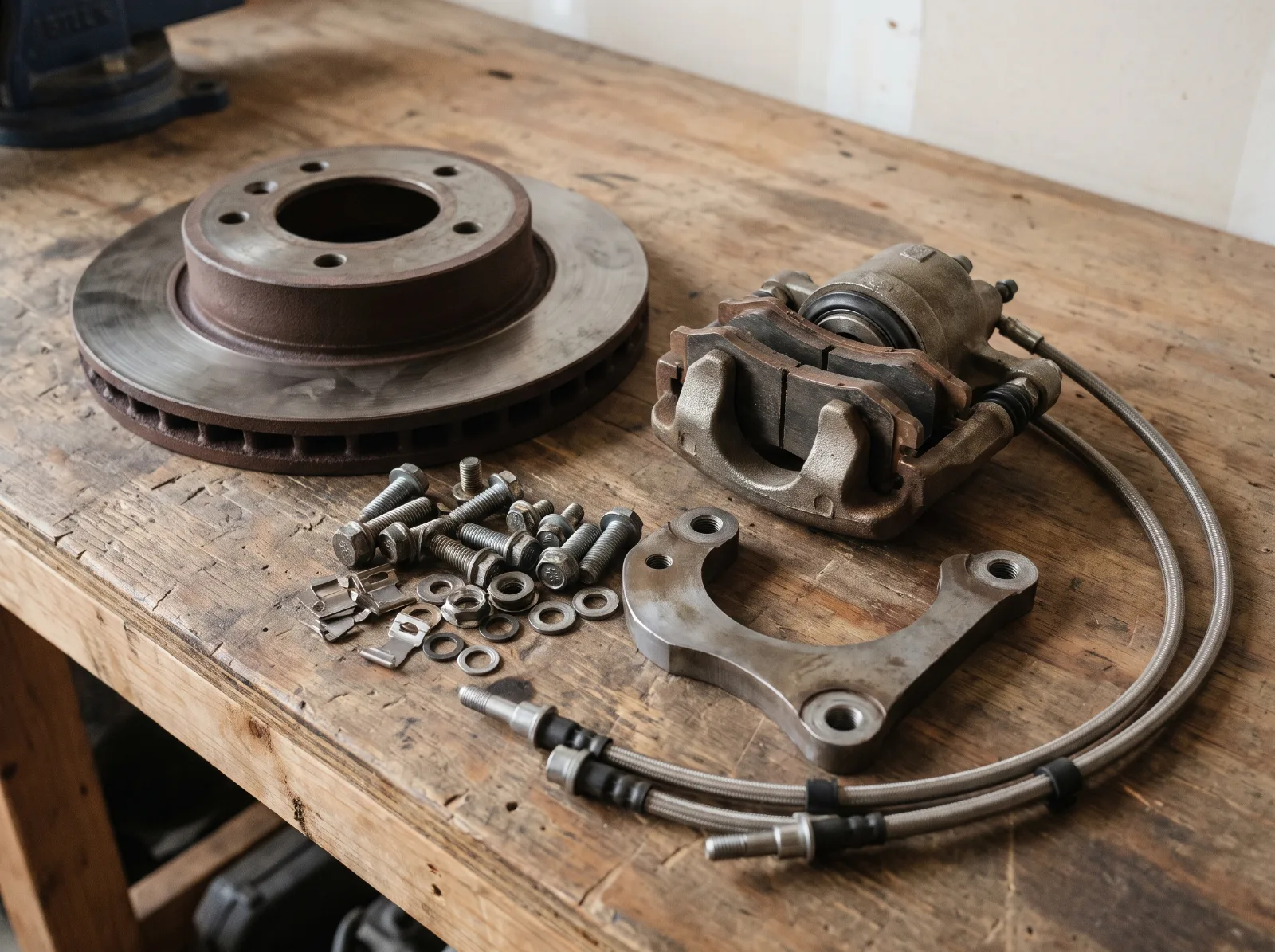
Eleven inch vented rotor, single piston caliper. The mainstream choice for a passenger car. It bolts to the stock spindle, keeps the five on 4-3/4 inch bolt pattern so your wheels and hubcaps still fit, and uses a caliper piston of around two and a half inches. Nothing exotic, everything available at any parts counter for the next thirty years, which is a real argument in its own right.
Nine and a quarter inch Mustang II style rotor with GM metric calipers. Smaller, lighter, and aimed mainly at tube style front ends rather than a stock car. It fits inside smaller wheels, which is why people reach for it, but on a three thousand pound sedan the larger rotor is the better answer.
Wilwood, ten and three quarter inch rotors on aluminium hubs. Two piston or four piston calipers, noticeably better hardware, noticeably more money. These require a fifteen inch wheel as a minimum, and if you are running steel wheels rather than alloys you need the shims the manufacturer specifies, because a steel wheel clamped straight onto an aluminium hub does not end well.
Across all of them, the two things to check before ordering are wheel clearance and spindle machining. Some kits go on the stock spindle untouched. Others need minor machine work at the spindle, which is a shop visit rather than a driveway job, and finding that out after the parts arrive is a bad afternoon.
"Half the disc conversions I have seen on these cars were bought to fix a problem the owner never diagnosed. Adjust the drums, replace the fluid, put a dual master on it, then drive it a month. If you still want discs after that, at least you are buying them for a reason."
— Earl Dawson
The parts of the job nobody puts on the box
The calipers and rotors are the easy half. The hydraulics are where the conversion is won or lost.
A disc and drum system is not balanced the same way as a four drum system. The front needs more pressure and no residual pressure held in the line, the rear still wants residual pressure to keep the wheel cylinder cups seated, and the split between the two has to be set. That is what proportioning valves and residual pressure valves are for, and a conversion done without them either locks the rears early or gives you a car that dives on the nose and does nothing at the back.
This is also the natural moment to leave the single circuit behind. If the master cylinder is coming out anyway, fitting a dual reservoir unit is a small amount of extra work for the one change that means a burst line takes half the car's braking instead of all of it. Doing the conversion and leaving the original single circuit master cylinder in place is, honestly, the wrong way round.
Then there are the small things. Fresh fluid, because putting new parts on top of forty year old fluid wastes both. Flexible hoses, because they swell shut on the inside where nobody looks. And the pedal itself, which on a manual disc setup gets heavier at low speed and takes a week of driving to stop feeling wrong.
Check this first
- Whether your drums are actually adjusted. Four star wheels, no money, and it changes the pedal completely.
- Your wheels. Fifteen inches is the minimum on most kits, and hubcap clearance is a separate question from wheel clearance.
- Whether the kit is for a stock car spindle or a tube axle. The wrong one will not steer to full lock.
- Whether the kit needs the spindle machined. Decide before you order, not after.
- What the kit includes on the hydraulic side. Master cylinder, proportioning valve and residual valves are the difference between a job and a half job.
- Whether you would rather spend the money on a dual master cylinder alone. On many cars that is the honest answer.
Where this fits
The system you are replacing, and everything you can do to it for almost no money, is in the 1951 Chevrolet brakes. The spindles and king pins the kit bolts to are in the suspension, and the whole set of running gear is laid out in the 1951 Chevrolet chassis. If you are working through a list of sensible modernisations, the other one worth arguing about is in the 6 volt to 12 volt conversion. Where all of it sits in the order of a full job is in the order of a full job.
Sources and notes
- Bolt-on brake kits for 1949-1954 Chevy spindles, Speedway Motors - the eleven inch vented rotor and single piston caliper kits in five on 4-3/4 and five on 4-1/2 patterns, the 9.25 inch Mustang II style alternative, the Wilwood 10.75 inch kits with aluminium hubs and a fifteen inch minimum wheel, the shims required with steel wheels, the note that stock spindles require minor machine work on some kits, and the warning that the mid size kits are for tube axles and will not work with stock steering arms.
- Brake drum, front or rear, Chevs of the 40s - the eleven inch drum with a 2-3/8 inch lining surface on the five on 4-3/4 inch bolt pattern that a conversion has to preserve.
- 1951 Chevrolet Styleline De Luxe Series 2100 JK specifications, Classic Car Database - the eleven inch hydraulic drums front and rear, the 3,380 pound weight of the De Luxe convertible and the 6.70 x 15 tyres that set what the brakes are being asked to do.
- 1951 Chevy car parts, Chevs of the 40s - disc brakes catalogued alongside drums, master cylinders, hoses, lines and overhaul kits for the 1951 car, and the brake linings redesigned that year.
- Brakes, master cylinders, Chevs of the 40s - master cylinders, adapter kits and mounting hardware catalogued for these cars and trucks, including the boosted and conversion options.
- Classic car brake fluid, Restore An Old Car - glycol fluid absorbing moisture year on year, and silicone belonging only in a freshly cleaned system, which is what makes a conversion the right moment to decide.
More from the garage
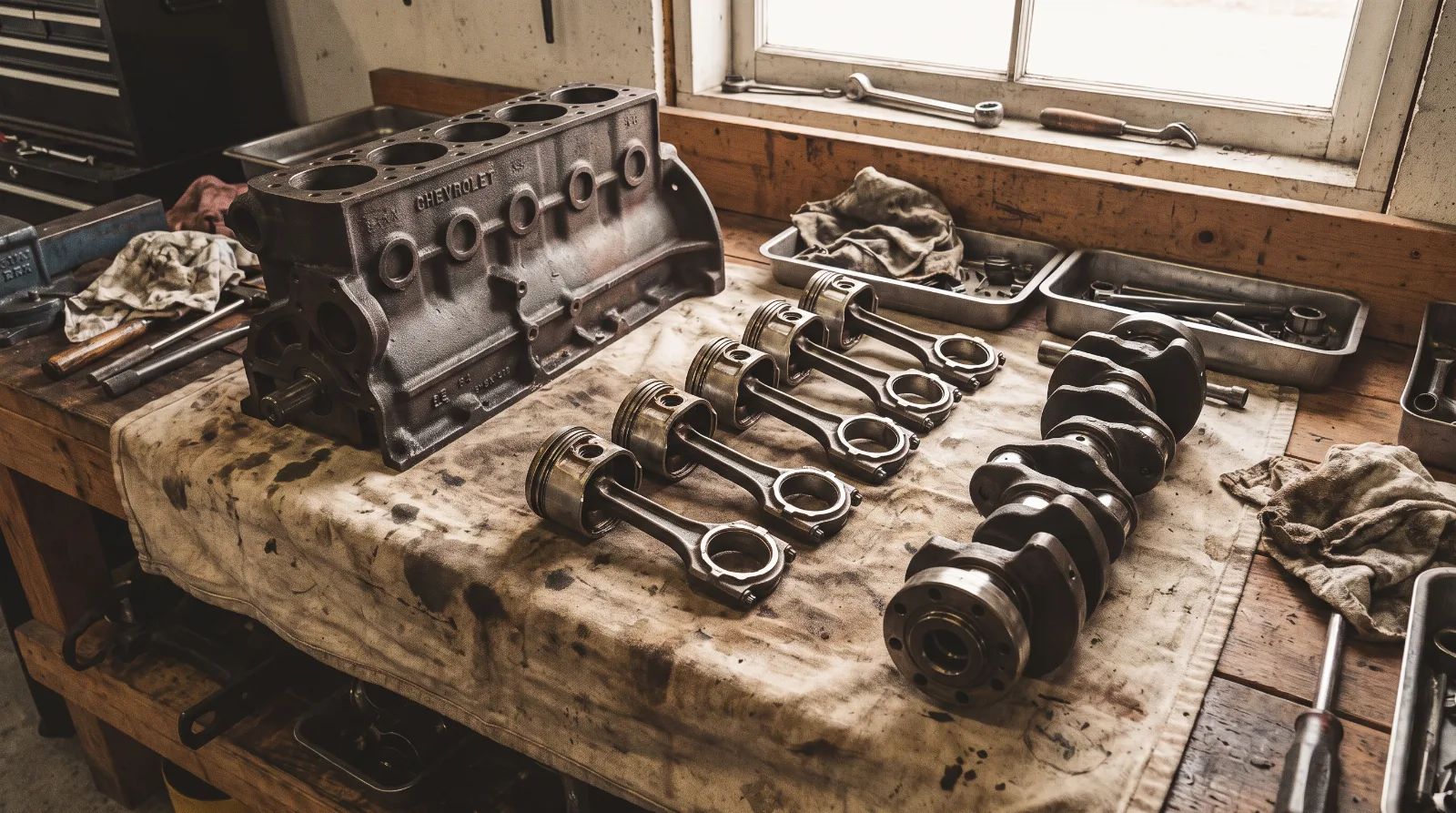
Rebuilding a Chevy 216
Rebuilding a 216 is not like rebuilding anything made after about 1955, and the difference is not the tools. It is that on most engines the botto...
The 1951 Chevrolet Apache
There is no 1951 Chevrolet Apache. The Apache name belongs to the generation of Chevrolet trucks that came after the one built in 1951, and it do...
The 1951 Chevrolet Impala
There is no 1951 Chevrolet Impala. The name did not exist in 1951, the car did not exist in 1951, and nothing Chevrolet built that year was ever...