1951 Chevrolet Steering
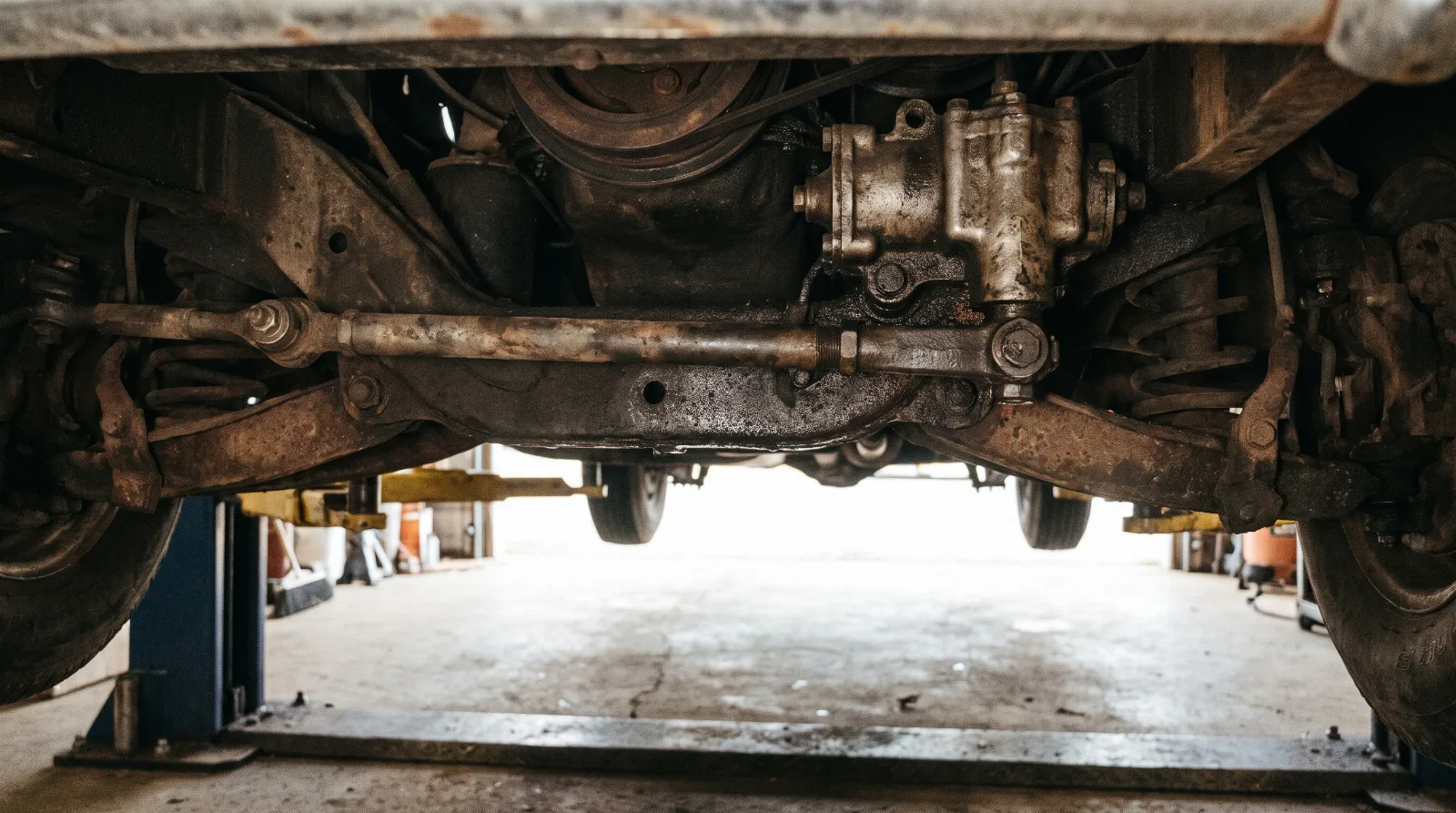
Ask ten owners what is wrong with the steering on their 1951 Chevrolet and nine will say the box is worn out. Get under the car and check, and most of the time the box is fine. The play is in the linkage, and specifically in one part of it that costs less than a set of tyres to put right.
This is worth getting straight before anybody spends money, because the wrong diagnosis here leads to a car that is still vague on centre and now stiff at full lock, which is a worse car than the one you started with.
What the system is
A worm and roller steering gear at the base of the column, a pitman arm off the bottom of it, and a linkage across the front of the car with an idler arm at the far end supporting it. No power assistance of any kind: Chevrolet did not offer power steering until 1953, so a 1951 car is manual and always was.
The wheel sits at the top of a column that also carries the gearchange, because Chevrolet moved the shifter to the column in 1948 and left it there. That is why the column on this car is a thicker, busier assembly than you might expect, and why work at the top of it turns into transmission linkage work whether you wanted it to or not.
| Item | 1951 Chevrolet |
|---|---|
| Steering gear type | Worm and roller |
| Power assistance | None, first offered for 1953 |
| Linkage support | Idler arm on bushings, not bearings |
| Column | Carries the three speed shift linkage |
| Gearbox adjustments | Three, in a fixed order |
| Idler arm repair | Pivot pin kit, 1949 to 1954 |
Why it is nearly always the idler arm
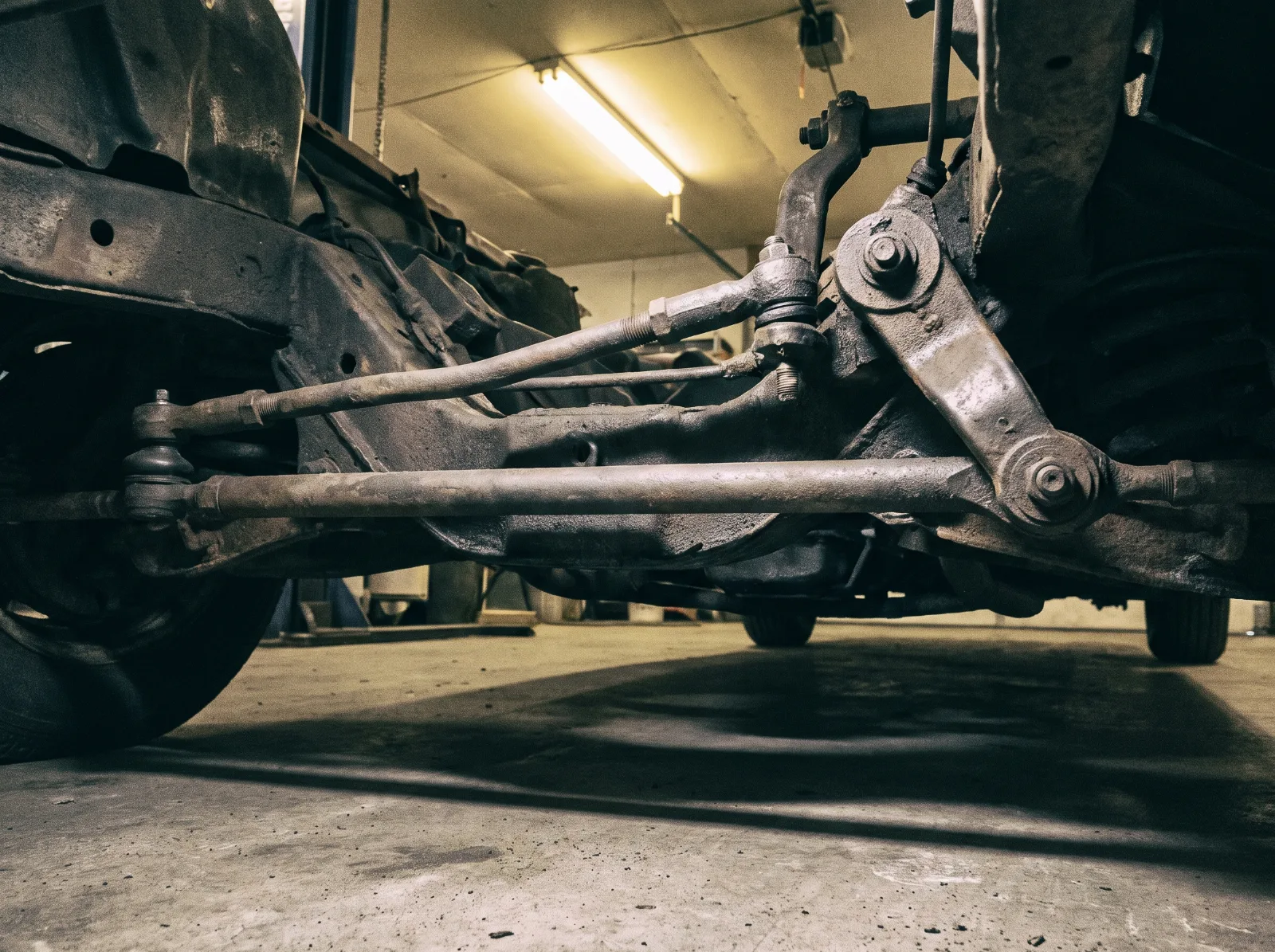
The idler arm is the third arm in the linkage, the one on the passenger side that holds up the far end of the centre link. It pivots on a pin running in bushings, and those bushings wear exactly the way king pins wear, for exactly the same reason: somebody stopped greasing the car in about 1971.
When the pin and bushings are gone, the arm flops up and down. You feel that at the wheel as slack, and the slack is worst on centre where you notice it most. It reads exactly like a worn gearbox from the driver's seat, which is why the misdiagnosis is so common.
The test takes half a minute. Get under the front of the car, take hold of the idler arm, and move it by hand. It should pivot and nothing else. If it lifts, drops, or rattles, that is your steering problem and the box is innocent. A pivot pin repair kit covers 1949 through 1954 and puts it right.
"I have watched people rebuild a perfectly good steering box, put it back in, and drive away with exactly the same wander they had before. Nobody ever wants the answer to be the cheap part."
— Earl Dawson
Adjusting the box, and the order that matters
If the linkage checks out and there is still play, then the box gets attention, and it has to be done in sequence. The service procedure is three adjustments, and they go worm shaft end play first, then pitman shaft end play, then backlash between the worm and the sector roller. Skip a step or change the order and you have not adjusted the box, you have just moved the problem.
The feel you are after on the worm bearings is a preload of roughly half a pound of pull at a spoke of the steering wheel, with no lash at the worm bearings themselves. More than that and you are loading the bearings for nothing and the wheel starts to bind.
Backlash is adjusted at centre, and the adjustment wants a light touch rather than a firm one. The gear is cut so that it is tightest straight ahead and looser off centre, which is deliberate: that is where the car spends its life. Wind the adjuster in until the wheel is tight on centre and the car will fight you at full lock, because you have taken up clearance that was designed in.
And here is the part the forums are unanimous about: if the play will not come out after all three adjustments are done properly, the answer is not another half turn. It is a worn sector shaft or worn bushings inside the housing, and the box needs rebuilding rather than tightening. Adjusters exist to take up wear in the gear teeth, not to hide a shaft rattling in its bore.
Check this first
- The idler arm, by hand, before anything else. Thirty seconds and it settles most arguments about steering on this car.
- Tie rod ends and the centre link. Have somebody rock the wheel while you watch each joint for lost motion.
- King pins, at the same time. Play at the top and bottom of the wheel reads as steering slop but is a suspension job.
- Whether the box is full. Gearboxes that have leaked dry get blamed for wear they do not have.
- Tyre pressures and front alignment. A car that wanders is not always loose, sometimes it is simply out.
- How the car behaves at full lock. Binding there after somebody has been at the adjuster is the classic sign of an over tightened box.
Where this fits
Steering shares its wear items with everything else at the front of the car, so it is laid out with the rest of the running gear in the running gear. The king pins and control arm bushings that produce half of the symptoms blamed on steering are in the front and rear suspension, and if the front drums are coming off anyway then the drum brakes belong in the same weekend. The linkage at the top of the column is part of the three speed manual. Where front end work sits in a full job is in the restoration sequence.
Sources and notes
- 1951 Chevrolet Styleline De Luxe Series 2100 JK specifications, Classic Car Database - the worm and roller steering gear listed for the 1951 car, alongside the coil sprung independent front end it steers.
- Steering adjustments, Vintage Chevrolet Club forum - the three adjustments in order, worm shaft end play then pitman shaft end play then backlash, the half pound pull at a wheel spoke, and the warning that remaining play after correct adjustment means worn shafts or bushings rather than more tightening.
- Steering box, 1950 Chevy coupe, Vintage Chevrolet Club forum - the idler arm as the primary wear point, its pin and bushings wearing like king pins, the hundred thousand mile life of a greased bushing arm, and the roller bearing Corvette arm as a swap.
- Steering, idler arm, Chevs of the 40s - the idler arm pivot pin repair kit catalogued for all 1949 to 1954 Chevrolet cars.
- A look at the 1953-1954 Chevrolet, Old Cars Weekly - power steering listed as a new option for 1953, which is what makes a 1951 car manual by definition.
- Steering, worm gear, Chevs of the 40s - the worm gear and shaft catalogued as a first design part for 1949 and 1950 cars, and the worm bearings and races spanning 1937 to 1954.
More from the garage
Rebuilding a Chevy 216
Rebuilding a 216 is not like rebuilding anything made after about 1955, and the difference is not the tools. It is that on most engines the botto...
The 1951 Chevrolet Apache
There is no 1951 Chevrolet Apache. The Apache name belongs to the generation of Chevrolet trucks that came after the one built in 1951, and it do...
The 1951 Chevrolet Impala
There is no 1951 Chevrolet Impala. The name did not exist in 1951, the car did not exist in 1951, and nothing Chevrolet built that year was ever...