The 1951 Chevrolet Truck VIN Plate
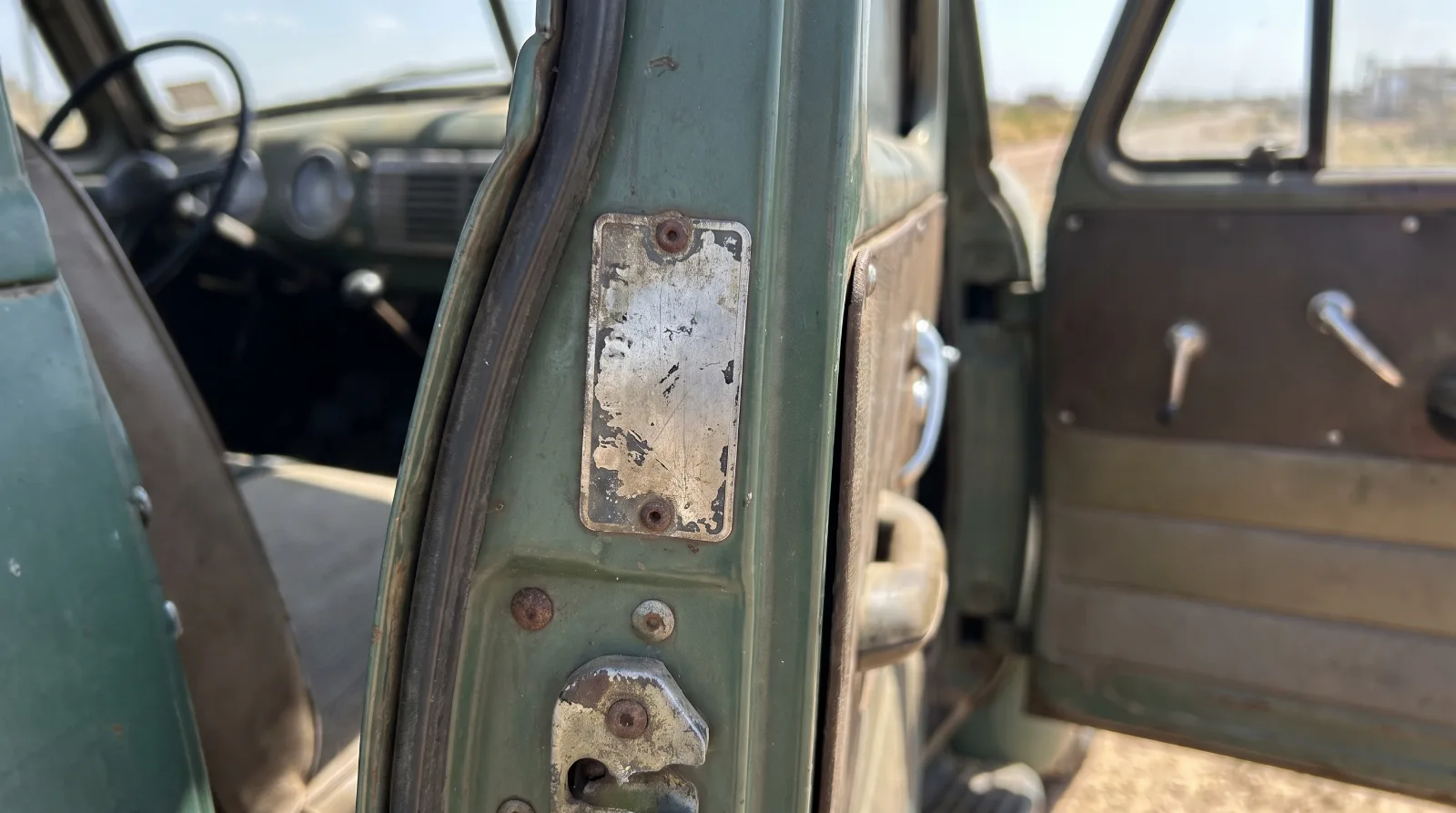
On a 1951 Chevrolet truck the plate you want is on the left front body hinge pillar. Open the driver's door and it is there, riveted to the pillar, usually under a coat or three of whatever colour the truck has been since.
What is stamped on it is not a VIN in the modern sense. It is a short code that tells you the plant, the year, the series, the month and the sequence, and once you know the order of those five things the plate stops being a mystery.
Where it is, and the exception
Left hand front body hinge pillar, on every ordinary truck of this era. The one exception is the models built with a cowl and no windscreen, sold as a chassis for somebody else to put a body on, where the plate goes on the left hand cowl side inner panel instead.
There is nothing stamped in the frame. Frame numbers on Chevrolets start in 1955, so if the pillar plate has gone there is no second chassis identity waiting to be found underneath. What there is instead is the engine number on the block, and that is not the same thing at all, which is a distinction that has caused a great deal of confusion at registration offices.
| Position | Meaning | 1951 |
|---|---|---|
| First | Assembly plant | 1 Flint, 2 Tarrytown, 3 St Louis, 5 Kansas City, 6 Oakland, 8 Atlanta, 9 Norwood |
| Second | Model year | J |
| Third | Series | P half ton, R three quarter, S one ton |
| Fourth | Month | A January through L December |
| Remainder | Plant sequence | Starts at 001001 |
Reading one, character by character
The plant. A digit, and it is the first thing on the plate. Chevrolet was building these in Flint, Tarrytown, St Louis, Kansas City, Oakland, Atlanta and Norwood among others, and a truck that has spent its life in one state was very often built in another.
The year. A letter, J for 1951. The sequence runs through the surrounding years in order, which means a plate with no paperwork still dates the truck in one character.
The series. The letter that says what the truck is. P is the 3100 half ton on the 116 inch wheelbase, R is the 3600 three quarter ton at 125 inches, and S is the 3800 one ton at 137 inches. This is the character that matters most, because it is the one that tells you whether the badges on the bonnet are telling the truth.
The month. A letter again, A through L for January through December. Autumn dates on the previous calendar year are normal for a model year and are not a sign of anything wrong.
The sequence. Runs from 001001 at each plant. A low number means the truck was early at one particular factory, and nothing more than that.
"Seller told me the plate proved it was a numbers matching truck. There is no such thing on one of these. The plate proves what the truck is, which is worth plenty, and it proves nothing whatever about the engine sitting in it."
— Earl Dawson
What it proves and what it does not
It proves the year, the plant, the load rating and roughly when in the year the truck was built. That is enough to catch the most common misrepresentation on Advance Design trucks, which is a three quarter ton chassis being sold as the more desirable half ton, or a later truck wearing 1951 badges.
It does not record the cab. There is nothing on the plate that says whether the truck left the factory as a three window or a five window Deluxe cab, which is exactly the option people pay a premium for. That has to be judged from the metal around the corner windows.
It does not record the engine either. Chevrolet did not tie the engine number to the serial number on trucks of this age, and since the light trucks all used the same 216 six through 1953 there is no external clue in the engine bay to help you. Trucks get engines changed, and on a working vehicle that was normal maintenance rather than a scandal.
And it does not record the bed. Nine boards or eight is a mid year change with no paper trail, so the floor tells you and the plate stays silent.
Check this first
- Left front hinge pillar, door open, torch at an angle. Paint hides these stampings completely under direct light.
- The third character against the badges. P, R or S has to agree with 3100, 3600 or 3800 on the bonnet.
- The second character. J for 1951, and it is where most misreadings start.
- Whether the paperwork quotes the engine number. Old titles frequently do, and it explains most apparent mismatches.
- How the plate is fastened. Original rivets, or something somebody found in a drawer.
- The cowl side inner panel, if the pillar is bare. On cowl and chassis models that is where the plate lives.
Where this fits
The truck the plate identifies is what the half ton is, or one of its heavier brothers, the middle one of the three and the one ton 3800, all of them under the truck side of 1951. The option the plate refuses to record is in the cab with the corner windows and the other mid year change it stays silent about is in the bed floor. The badges that corroborate it are in the hood emblems, the car equivalent of the whole exercise is in the 1951 serial numbers, and where this falls in a restoration is in the order of a truck restoration.
Sources and notes
- Serial number decoder, Advance Design Chevy trucks 1947-1954, Greg Wapling - the plate on the left front body hinge pillar and on the left cowl side inner panel for cowl less windscreen models, the structure of plant, year, series and month followed by a plant production number starting at 001001, the plant codes for Flint, Tarrytown, St Louis, Kansas City, Oakland, Atlanta and Norwood, the month letters A through L, and the JP, JR and JS series codes for 1951.
- Chevrolet Advance Design, Wikipedia - the 1951 serial codes given as JP half ton, JR three quarter ton and JS one ton, the wheelbases of 116, 125.25 and 137 inches, and the hood side emblems carrying the load rating from late 1949.
- 1951 serial number location, Vintage Chevrolet Club forum - the plate visible with the door open, frame numbers beginning only in 1955, and the point that the number on an old title is frequently the engine number rather than the serial number.
- Chevrolet model identification 1946-1954, The Old Car Manual Project - the same plant code list and the J year letter for 1951, used across cars and trucks alike.
- Car of the week, 1951 Chevrolet 3100 pickup, Old Cars Weekly - the 116 inch wheelbase half ton with its 216.5 cubic inch six, which is what a JP plate is describing.
- 1947-1959 Chevy truck model years identification guide, Classic Industries - the 216 cubic inch babbitt bearing engine used in pickups from 1937 to 1953, which is why the engine bay gives no year clue on its own.
More from the garage
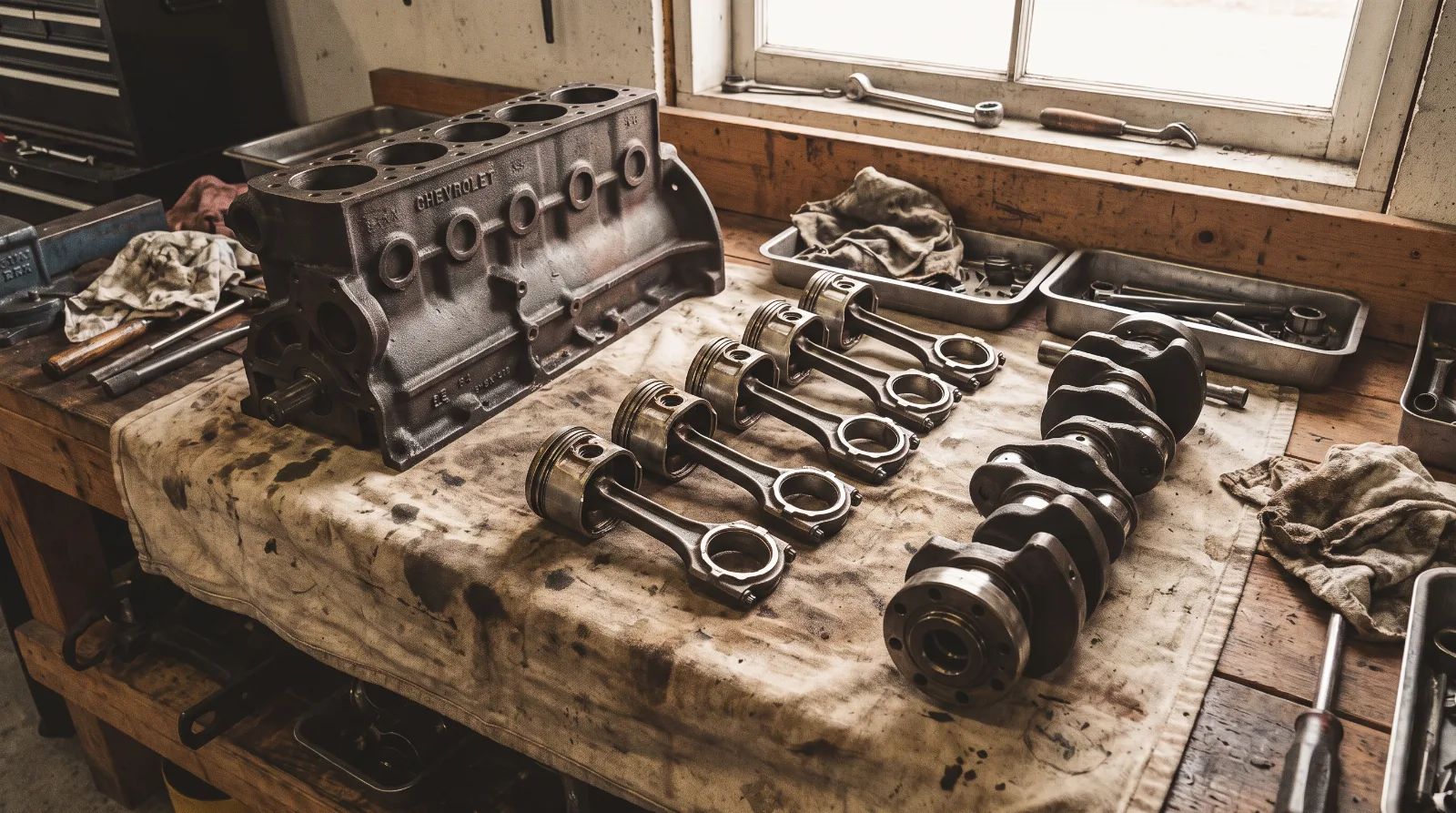
Rebuilding a Chevy 216
Rebuilding a 216 is not like rebuilding anything made after about 1955, and the difference is not the tools. It is that on most engines the botto...

The 1951 Chevrolet Apache
There is no 1951 Chevrolet Apache. The Apache name belongs to the generation of Chevrolet trucks that came after the one built in 1951, and it do...
The 1951 Chevrolet Impala
There is no 1951 Chevrolet Impala. The name did not exist in 1951, the car did not exist in 1951, and nothing Chevrolet built that year was ever...