1951 Chevrolet Truck Gauges
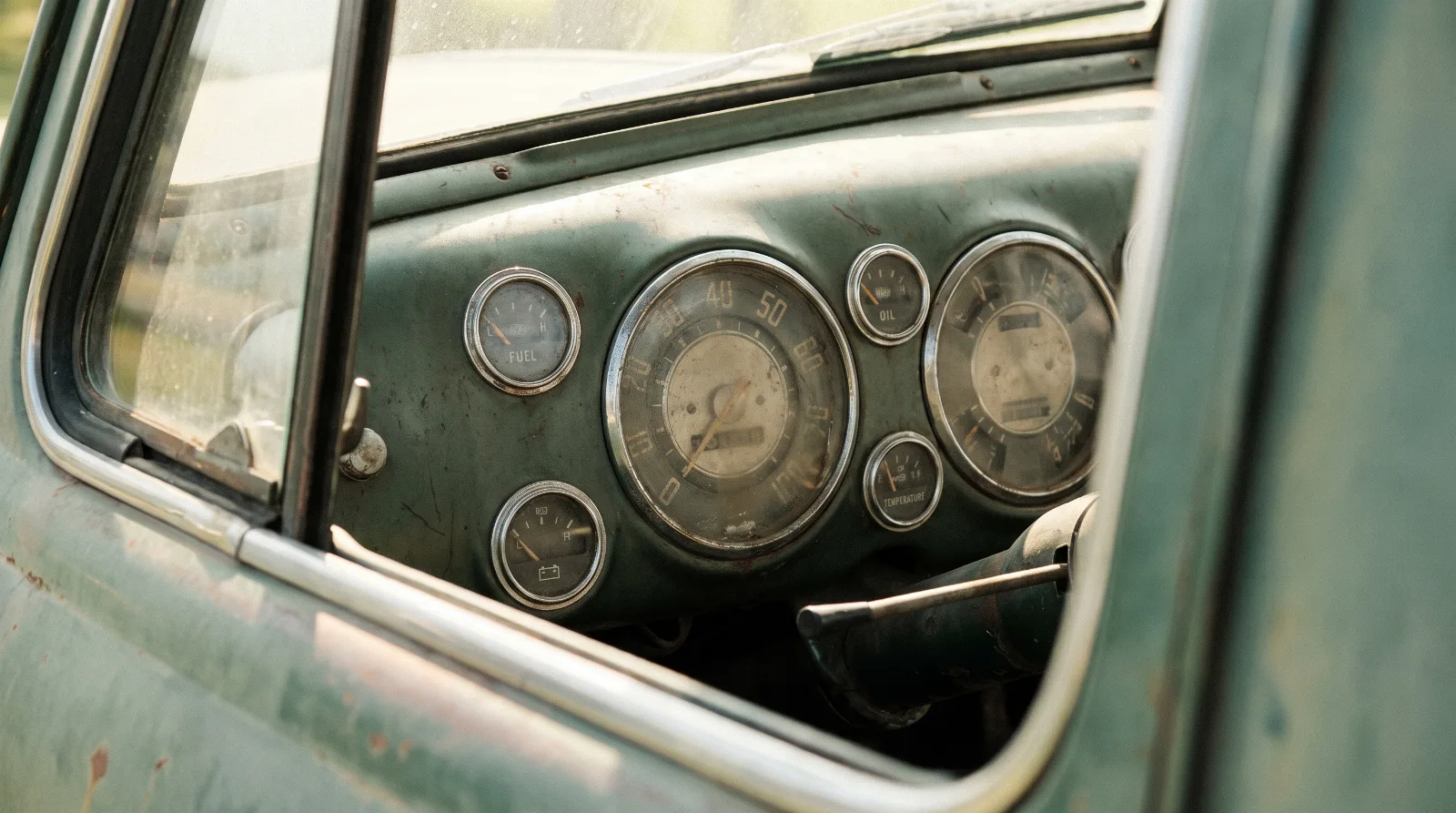
Four instruments in front of the driver of a 1951 Chevrolet truck, and three of them are not electrical at all. The speedometer is driven by a cable, the temperature gauge is a sealed tube of alcohol, and the oil pressure gauge has engine oil at full pressure piped into the cab behind the dashboard.
Once you know that, most of what goes wrong with these gauges stops being mysterious and starts being obvious.
What each one is
Oil pressure. A Bourdon gauge, which is a flattened tube bent into a curve. Put pressure inside it and it tries to straighten, and that movement drives the needle. To make it work, a narrow pipe carries oil at engine pressure from the block, through the bulkhead, to the back of the instrument. It is entirely mechanical and it is entirely reliable until a joint lets go, at which point you have hot oil inside the cab.
Temperature. A rigid thin copper capillary running from the engine to the gauge, sealed, with alcohol inside. Heat expands the alcohol and moves the pointer. The bulb, the tube and the instrument are one component and cannot be separated, which is why a kinked or crushed capillary means a new gauge rather than a new sender.
Fuel. The one that behaves like a modern gauge, more or less. A moving magnet meter driven by a sender in the tank with a variable resistance of nought to thirty ohms, nought being empty and thirty being full.
Ammeter. Not a voltmeter and not a warning light. It shows current flowing into or out of the battery, and to do that the wiring carries over thirty amps to the instrument and back out again, through the dashboard, in a six volt system where currents are high by definition.
| Gauge | How it works | What kills it |
|---|---|---|
| Oil pressure | Bourdon tube, live oil line to the dash | Leaking joint at the ferrule |
| Temperature | Sealed copper capillary, alcohol filled | Kinked or broken tube, and it is one piece |
| Fuel | Moving magnet, sender 0 to 30 ohms | Sender and earth, more often than the gauge |
| Ammeter | Full battery current through the dash | Loose terminals, and it is a fire risk |
| Speedometer | Cable driven, reads to 80 mph in 1951 | Cable, and a dry drive at the gearbox |
The two that deserve respect
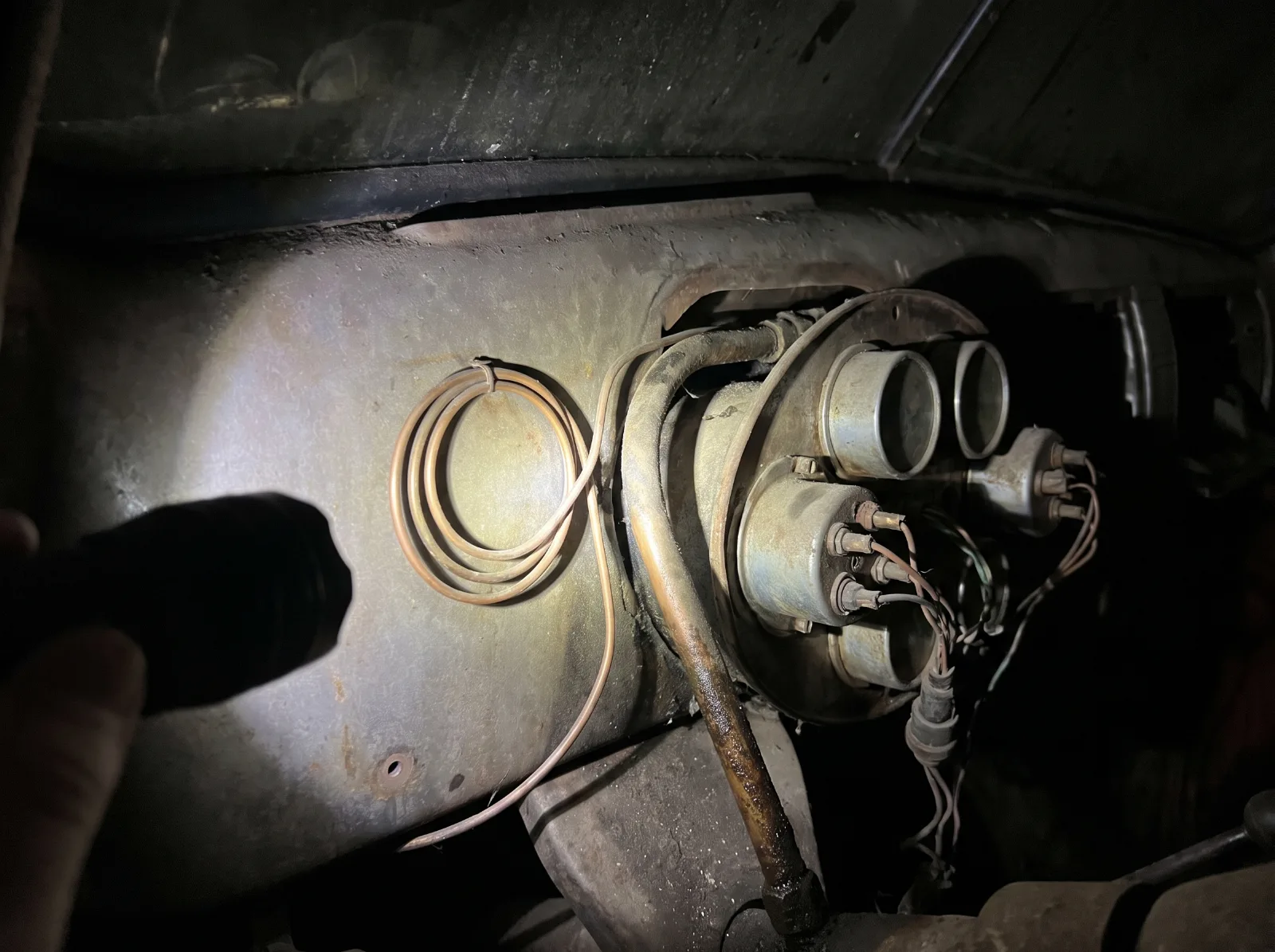
The oil pressure line and the ammeter are the two parts of this dashboard that can genuinely hurt you, and both get ignored because they usually work.
The oil line fails at a joint, normally where a ferrule has been disturbed and reseated badly. When it goes it does not weep, it sprays, and it sprays engine oil at full pressure under the dash and onto your legs. Anybody who has had the instrument cluster out and put it back should treat that line as a job in its own right rather than something that came along for the ride.
The ammeter is the other one. Every amp the generator makes and every amp the starter circuit does not take goes through those two terminals behind the dash. A loose nut there heats up, and there is nothing above it but a wiring loom and a headlining. It is the reason people fit a voltmeter instead, and while that is not correct it is not an unreasonable thing to do to a truck you intend to drive.
"Man tells me his gauge is broken. I ask him when he last had the dash apart. Two months ago, he says, to fit a radio. The oil line was the only thing he did not think he had touched."
— Earl Dawson
Diagnosing them, in the right order
Start by remembering which ones are mechanical, because it eliminates most of the wiring you were about to test. If the temperature gauge is dead, no amount of work on the loom will help, because there is no loom involved. If the oil pressure gauge reads nothing, look for oil rather than for a bad earth.
The fuel gauge is the one where electrical fault finding is actually appropriate, and there the sender and its earth are far more often the problem than the instrument. Nought to thirty ohms is a small range, so a poor earth at the tank throws the reading a long way before it stops working altogether.
The speedometer is a cable, a drive at the gearbox and a head. A needle that waves about is almost always a dry or kinked cable, and it is the cheapest thing on this list to put right.
Check this first
- Which gauges are mechanical. Three of the four, and it saves you testing wiring that does not exist.
- The oil line and its fittings, before you drive it. Especially if the dash has been apart recently.
- Both ammeter terminals, for tightness. Thirty amps through a loose nut behind a dashboard.
- The temperature capillary along its whole length. A kink anywhere and the instrument is finished.
- The fuel sender earth at the tank. Far more likely than a failed gauge.
- The speedometer face. 80 miles an hour on a 1951, and 90 tells you the cluster came from something later.
Where this fits
The instruments sit in the dash of the half ton pickup and everything else inside the cab is in the cab trim. The car versions of these same instruments are in the instruments, and the system feeding them is in the wiring diagram and the six volt question. The whole truck range is in the light truck range, and where dash work falls in a full job is in restoring one of these trucks.
Sources and notes
- 1947-53 Chevy truck gauges, 1952chevytruck.com - the four instrument cluster, the Bourdon tube oil pressure gauge fed by a narrow pipe of engine oil to the dash and its habit of leaking at a joint, the sealed copper capillary temperature gauge filled with alcohol, the moving magnet fuel gauge with a nought to thirty ohm sender, and the ammeter carrying over thirty amps through the dashboard as a fire risk.
- Chevrolet Advance Design, Wikipedia - 1951 as the last year for the 80 mile an hour speedometer, the chrome window handle knobs and the chrome wiper knob.
- Comprehensive history of 1947-1955 first series Advance Design, Deves Technical Network - the speedometer maximum increasing from 80 to 90 miles an hour partway through 1952, and the chrome knobs discontinued after 1951.
- 1951 Chevy truck parts, Chevs of the 40s - the dashboard and instrument gauge categories catalogued for the 1951 truck, covering speedometer, temperature and oil gauges, cables, knobs and panels.
- Car of the week, 1951 Chevrolet 3100 pickup, Old Cars Weekly - the 216.5 cubic inch six and column shifted three speed these instruments were reporting on.
- 1947-1959 Chevy truck model years identification guide, Classic Industries - the 80 mile an hour speedometer listed among the 1951 identification points, alongside the vent windows and turndown door handles.
More from the garage
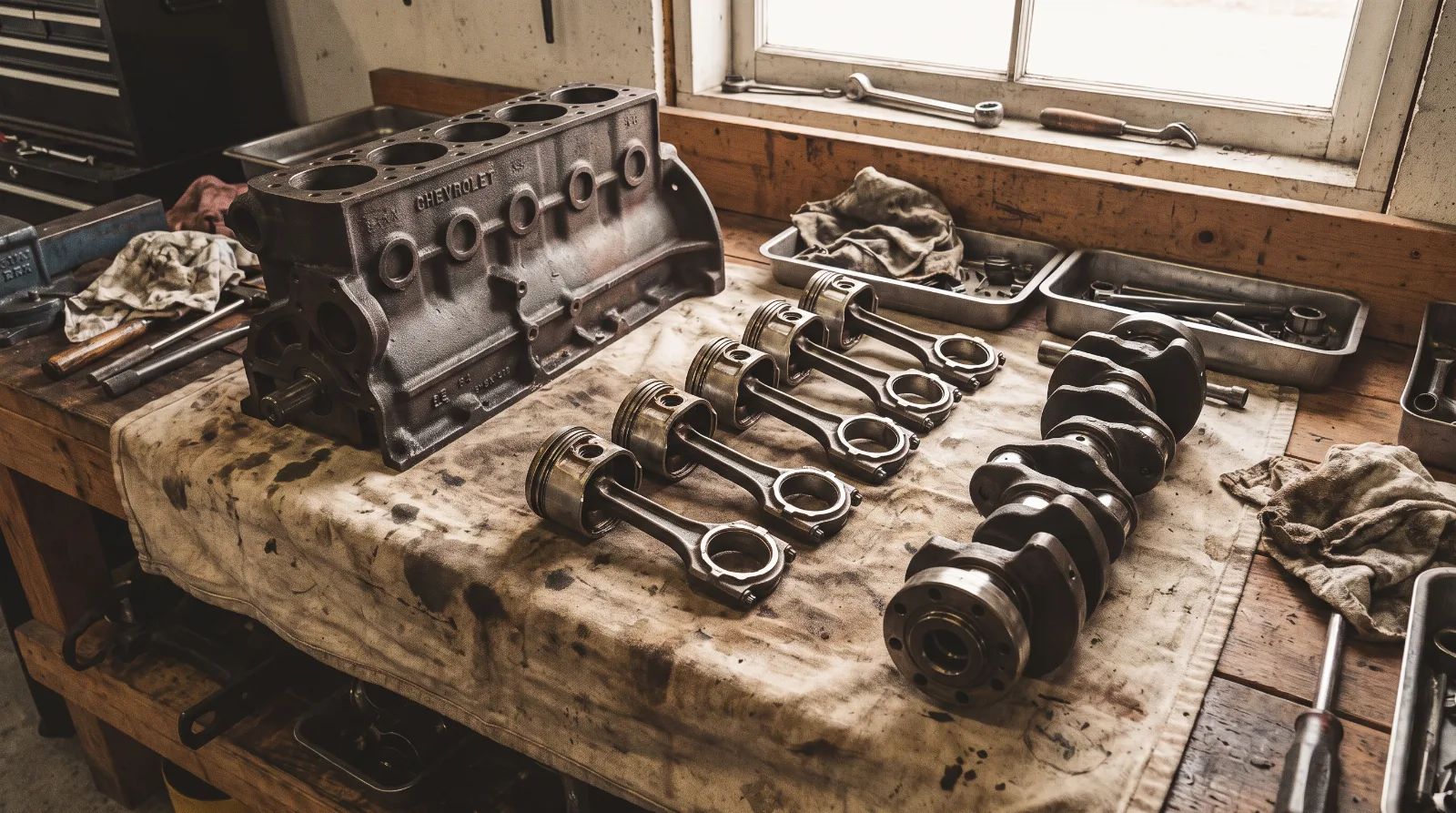
Rebuilding a Chevy 216
Rebuilding a 216 is not like rebuilding anything made after about 1955, and the difference is not the tools. It is that on most engines the botto...

The 1951 Chevrolet Apache
There is no 1951 Chevrolet Apache. The Apache name belongs to the generation of Chevrolet trucks that came after the one built in 1951, and it do...
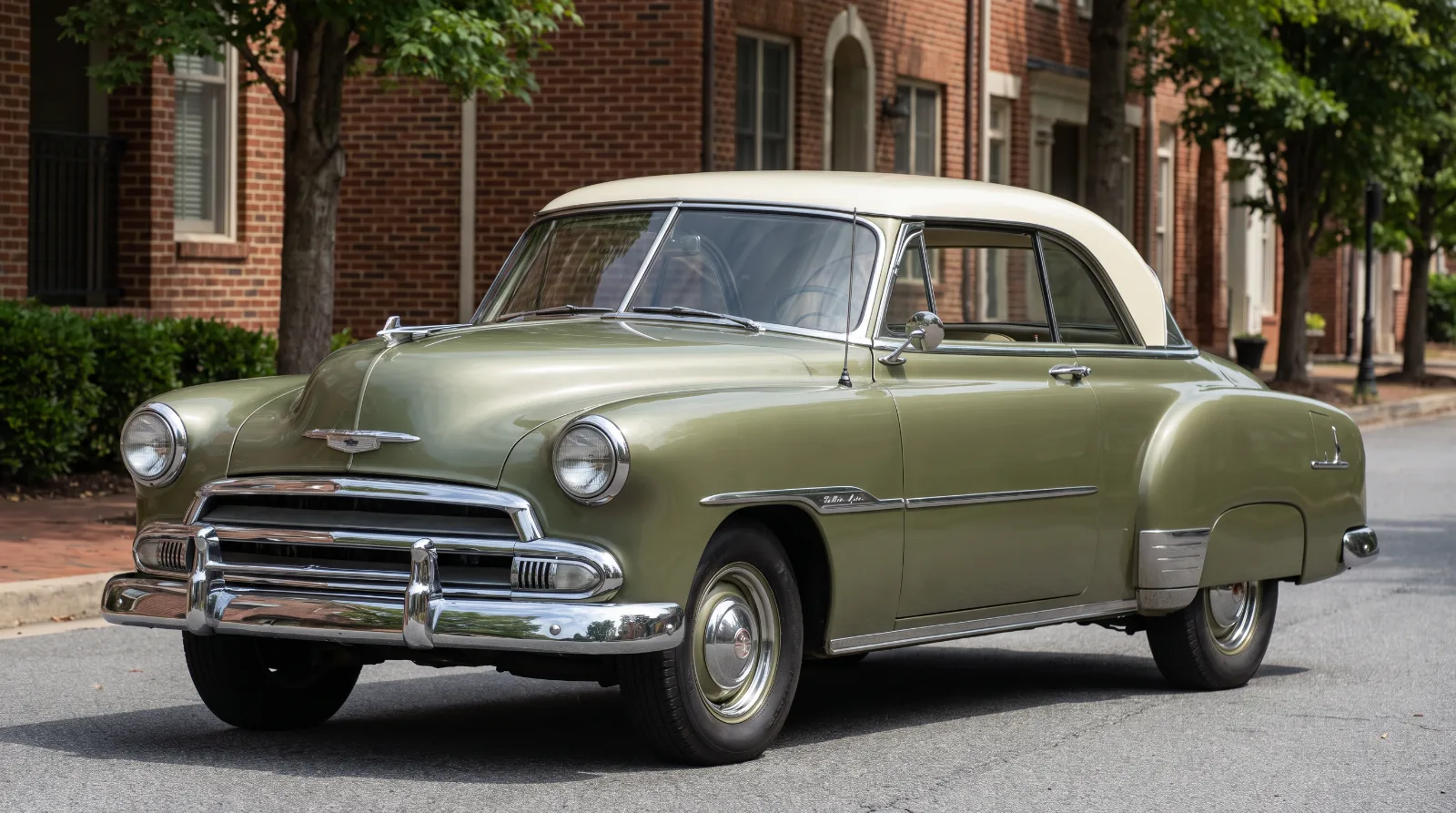
The 1951 Chevrolet Impala
There is no 1951 Chevrolet Impala. The name did not exist in 1951, the car did not exist in 1951, and nothing Chevrolet built that year was ever...