The 1951 Chevrolet Rear Axle
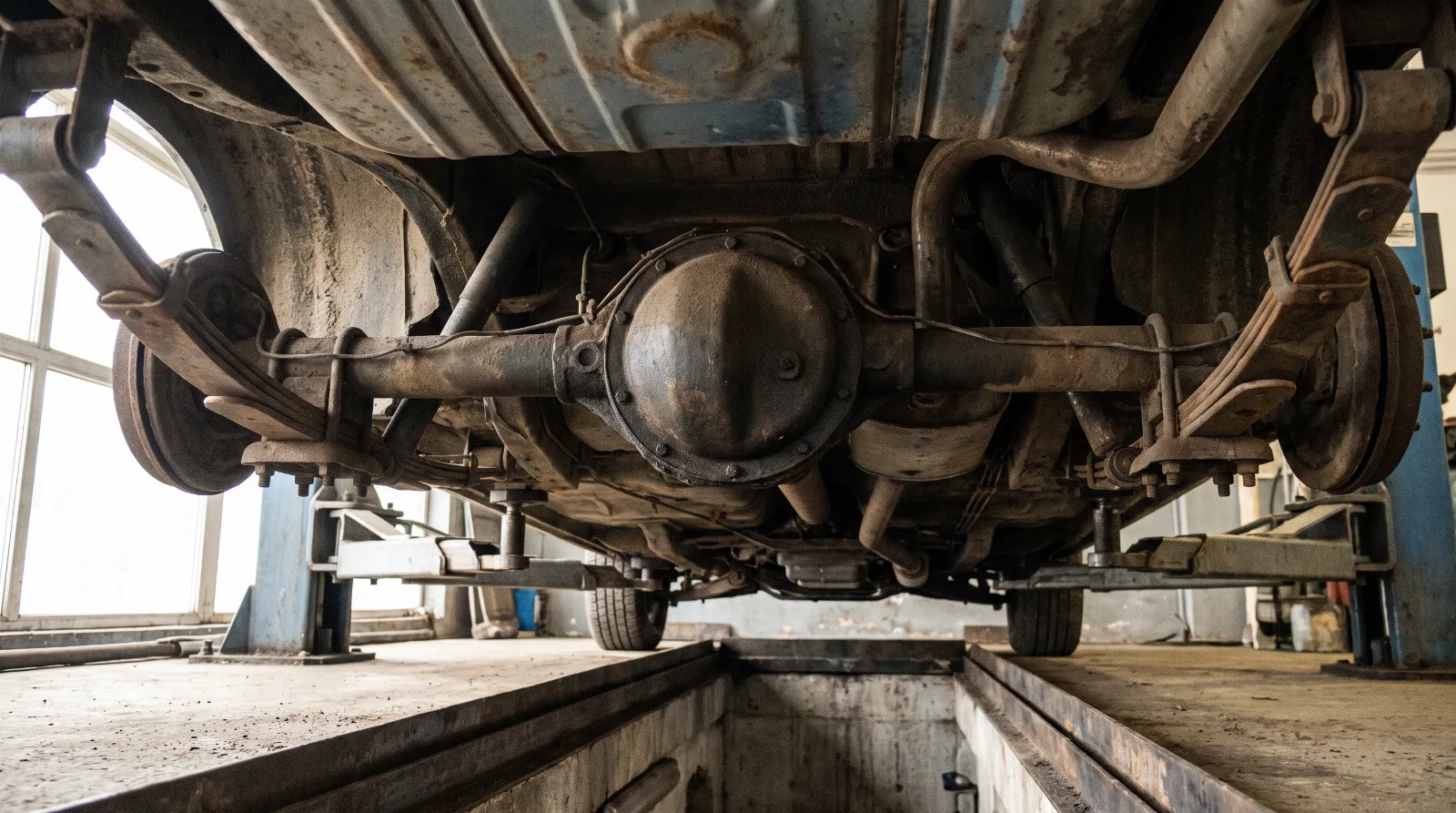
The rear axle is the part of a 1951 Chevrolet that decides what the car is for. Not the engine, which makes the same 92 horsepower either way, and not the body. The ratio in the differential is what makes one car pleasant at 55 on a two lane road and another one a noisy, busy thing that you are glad to park after twenty miles.
There are only two numbers to know, and which one is in your car depends on something the previous owner may never have mentioned.
What is back there
A semi-floating axle with a hypoid final drive, sitting inside a torque tube that runs forward to the back of the transmission. Semi-floating means the axle shaft carries the weight of the car as well as driving the wheel, which is normal for a passenger car and the reason a broken shaft on one of these is a memorable event. Hypoid means the pinion sits below the centreline of the ring gear, which is what allowed a lower floor and a lower propeller shaft in the first place.
Standard ratio with the three speed manual is 4.11 to 1. Cars built with Powerglide got 3.55 instead, because the automatic multiplied torque at the bottom end and Chevrolet wanted the driveline quieter and less harsh behind it.
| Item | Figure |
|---|---|
| Axle type | Semi-floating |
| Final drive | Hypoid |
| Ratio, three speed manual | 4.11:1 |
| Ratio, Powerglide | 3.55:1 |
| Drive | Torque tube, single universal joint |
| Tyres | 6.70 x 15 |
| Engine speed at 60 mph, 4.11 | About 3,070 rpm |
| Engine speed at 60 mph, 3.55 | About 2,680 rpm |
What the ratio actually costs you
Four hundred revolutions per minute does not sound like much on paper. In a car with a 216 cubic inch six, splash lubrication in the bottom end and no sound deadening to speak of, it is the difference between a car you take on a long day out and one you keep for local runs.
At sixty miles an hour the 4.11 has the engine turning around 3,070 rpm. The same car with 3.55 gears is doing about 2,680. The 216 is a long stroke, gently tuned engine that was never meant to live at high revolutions for hours, and everything about it is happier at the lower number.
The trade is real, though, and people who swap ratios without thinking about it get caught. Taller gears mean the car is slower away from a stop and less willing on a hill, and with only three forward speeds and no synchromesh on first, there is nowhere to hide. A 4.11 car with the manual is the right combination for what the car was sold to do. The 3.55 exists because an automatic was making up the difference at the bottom.
"Everybody wants taller gears until they have got them. Then they are hunting for second on every rise and wishing they had left it alone. Change the gears for the driving you actually do, not for the driving you talk about doing."
— Earl Dawson
Changing the ratio, and the traps in it
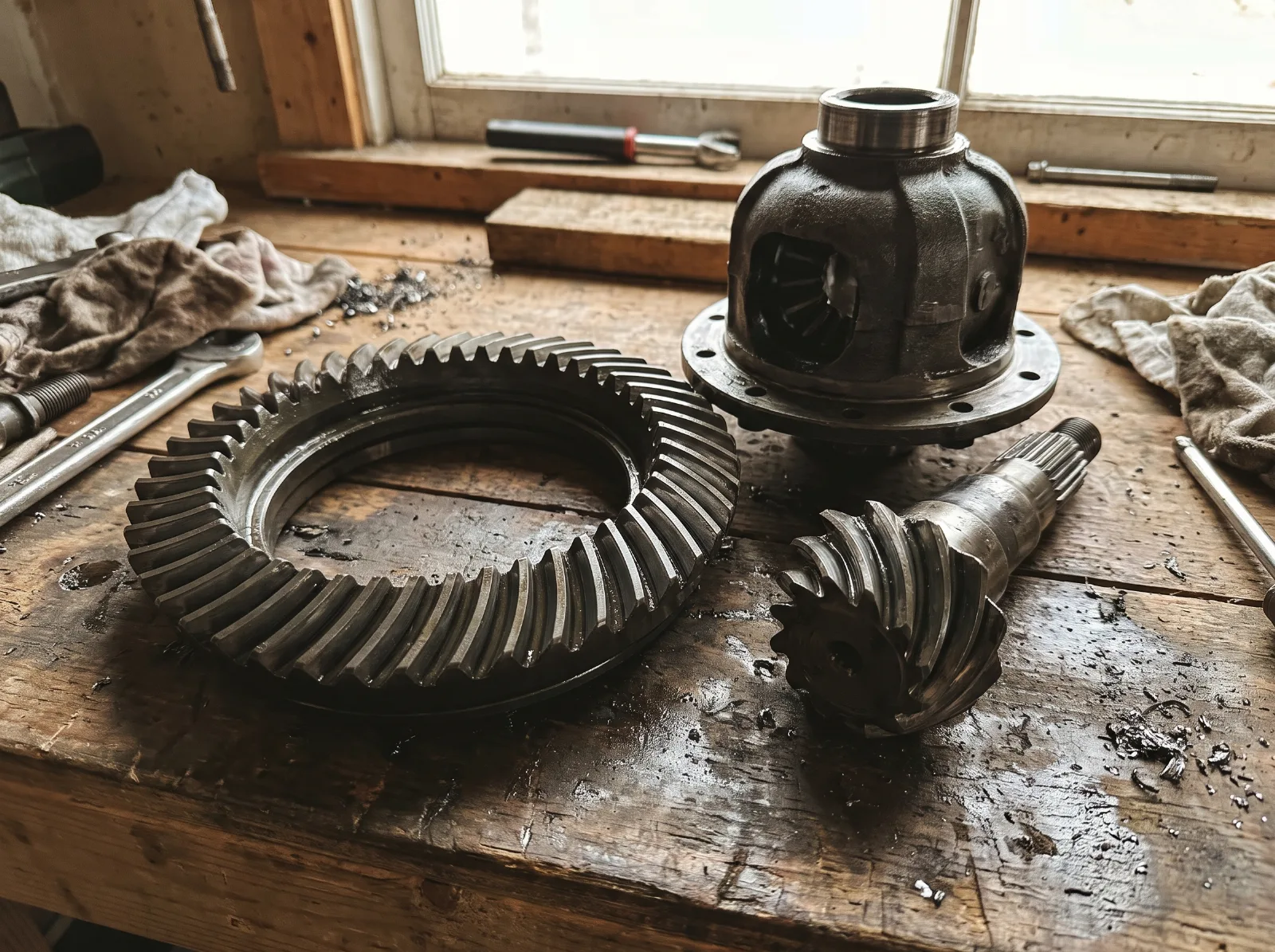
This is where torque tube cars stop being like anything modern. You cannot simply buy a ring and pinion and drop it in, because on these units the ring gear bolts to a differential case that is matched to it. Take the gears out of a Powerglide rear end and the case has to come with them. People find this out halfway through a Saturday.
The alternative is to swap the whole torque tube assembly, which is genuinely easier when it fits, and the catch is length. The unit is not the same from year to year. The 1937 to 1939 assemblies interchange with each other, the 1941 to 1954 assemblies interchange with each other, and 1940 stands on its own because the shaft and tube are a different length. For a 1951 car that is good news: anything from 1941 through 1954 is a candidate, which is a wide net to fish in.
Later years are worth knowing about too. The 1953 and 1954 manual transmission cars used a 3.70 ratio, which sits between the two 1951 figures and is arguably the most useful gear of the three for a car that gets driven on modern roads without being asked to keep up with them.
Whatever route you take, the bearings come out and get inspected while the unit is apart. It is the one chance you get, and going back in later means the same afternoon under the car all over again.
Check this first
- Which ratio is actually in the car. Jack one rear wheel, mark the tyre and the propeller shaft, and count. It takes five minutes and it tells you what you own.
- Whether the car has Powerglide. That is the fastest guess at the ratio, and it should agree with what you counted.
- The pinion seal and the back of the tube. Oil there is a seal, and it also means the level has been dropping.
- Noise on drive against noise on overrun. A hypoid unit that howls on one and not the other is telling you about pinion depth and preload.
- The oil level, before anything else. A great many condemned rear ends were simply run dry.
- Play at the wheel flange. A semi-floating shaft carries the load, so a worn bearing there is not something to drive on.
Where this fits
The axle is the last link in a driveline that is unusual by modern standards from the gearbox back, and the part that makes it unusual is explained in the enclosed driveline. What sits in front of it is either the three speed manual or the two speed automatic, and which one the car has is what set the ratio at the factory. The springs that carry it are in the springs and king pins, the drums on its ends in the drum brakes, and the rest of the running gear is laid out in the running gear, the engine turning all of it is the Chevy 216, and the full set of numbers is in the 1951 specifications.
Sources and notes
- 1951 Chevrolet Styleline De Luxe Series 2100 JK specifications, Classic Car Database - the semi-floating hypoid rear axle at 4.11 to 1 with the three speed manual, and the 6.70 x 15 tyres it turns.
- Secrets of the Chevy Powerglide 1950-73, Mac's Motor City Garage - the rear axle ratio reduced from 4.11:1 to 3.55:1 on Powerglide cars to manage driveline noise and harshness.
- Change 4.11 ring gear and pinion to 3.55, Vintage Chevrolet Club forum - the requirement to use the differential case the ring gear bolts to, the torque tube length groups of 1937 to 1939 and 1941 to 1954 with 1940 on its own, the 3.70 ratio in 1953 and 1954 manual cars, and the engine speeds of roughly 3,066 and 2,677 rpm at 60 mph on 4.11 and 3.55.
- Rear axle parts, Chevs of the 40s - the rear axle catalogued as bearings, bushings, differential parts, gaskets and ring and pinion sets, and ring and pinion conversion kits offered as bolt in for the earlier years.
- Chevrolet Stovebolt engine, Wikipedia - the 216 cubic inch six and its output, which is the engine speed all of these ratios are asking about.
- 1951 Chevy car parts, Chevs of the 40s - Powerglide listed as an option for the year, and the rear axle categories catalogued for the 1951 car.
More from the garage
Rebuilding a Chevy 216
Rebuilding a 216 is not like rebuilding anything made after about 1955, and the difference is not the tools. It is that on most engines the botto...
The 1951 Chevrolet Apache
There is no 1951 Chevrolet Apache. The Apache name belongs to the generation of Chevrolet trucks that came after the one built in 1951, and it do...
The 1951 Chevrolet Impala
There is no 1951 Chevrolet Impala. The name did not exist in 1951, the car did not exist in 1951, and nothing Chevrolet built that year was ever...