1951 Chevrolet Truck V8 Swap
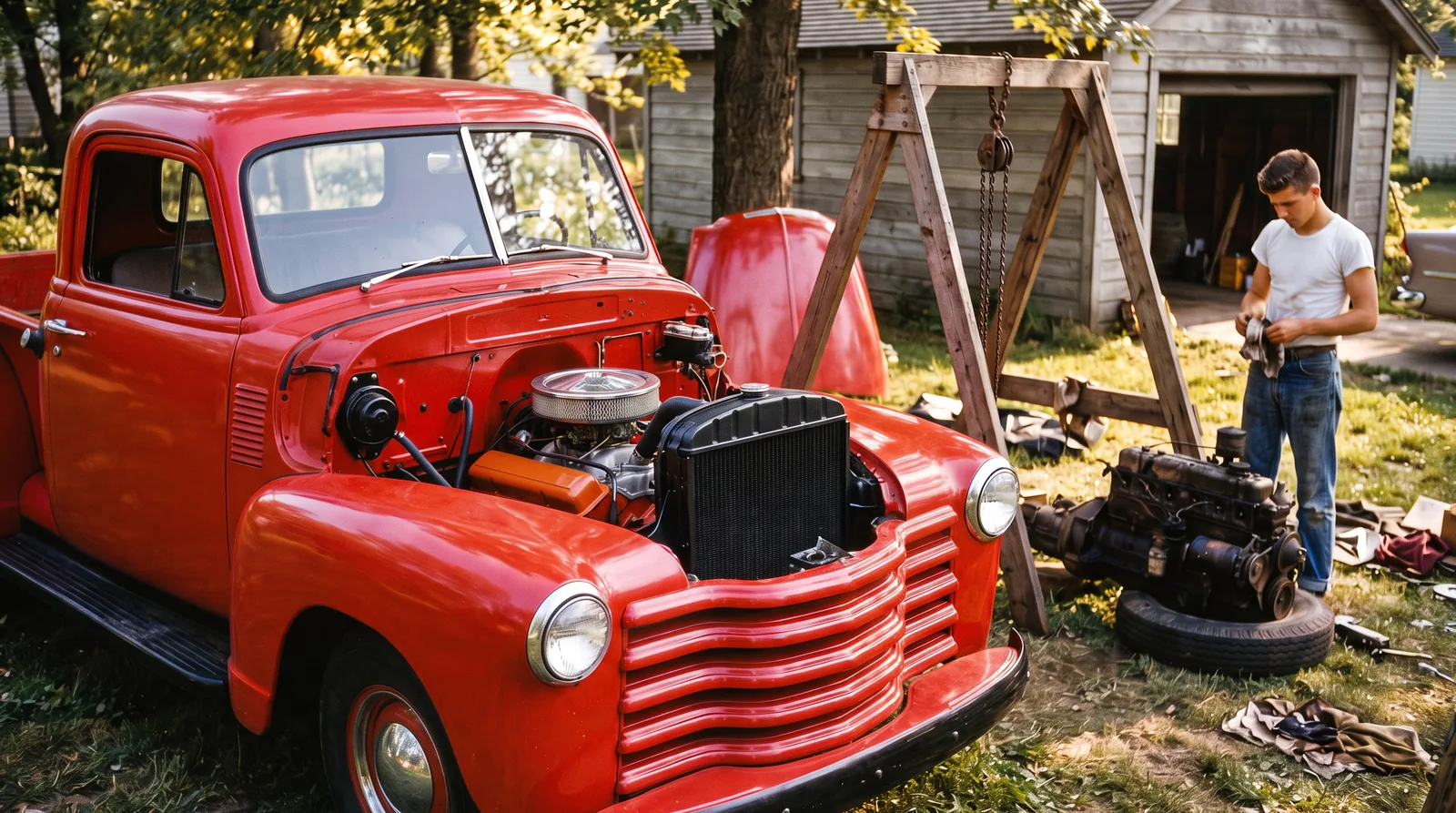
A small block Chevrolet V8 in an Advance Design pickup is the most common engine swap in the American hobby, and it is common for good reasons. The engine is cheap, it is understood by everybody, parts are everywhere, and it makes the truck do things the 216 was never going to do.
It is also a bigger job than the phrase bolt in kit suggests, and the parts of it that catch people out are not the engine mounts.
What actually bolts in
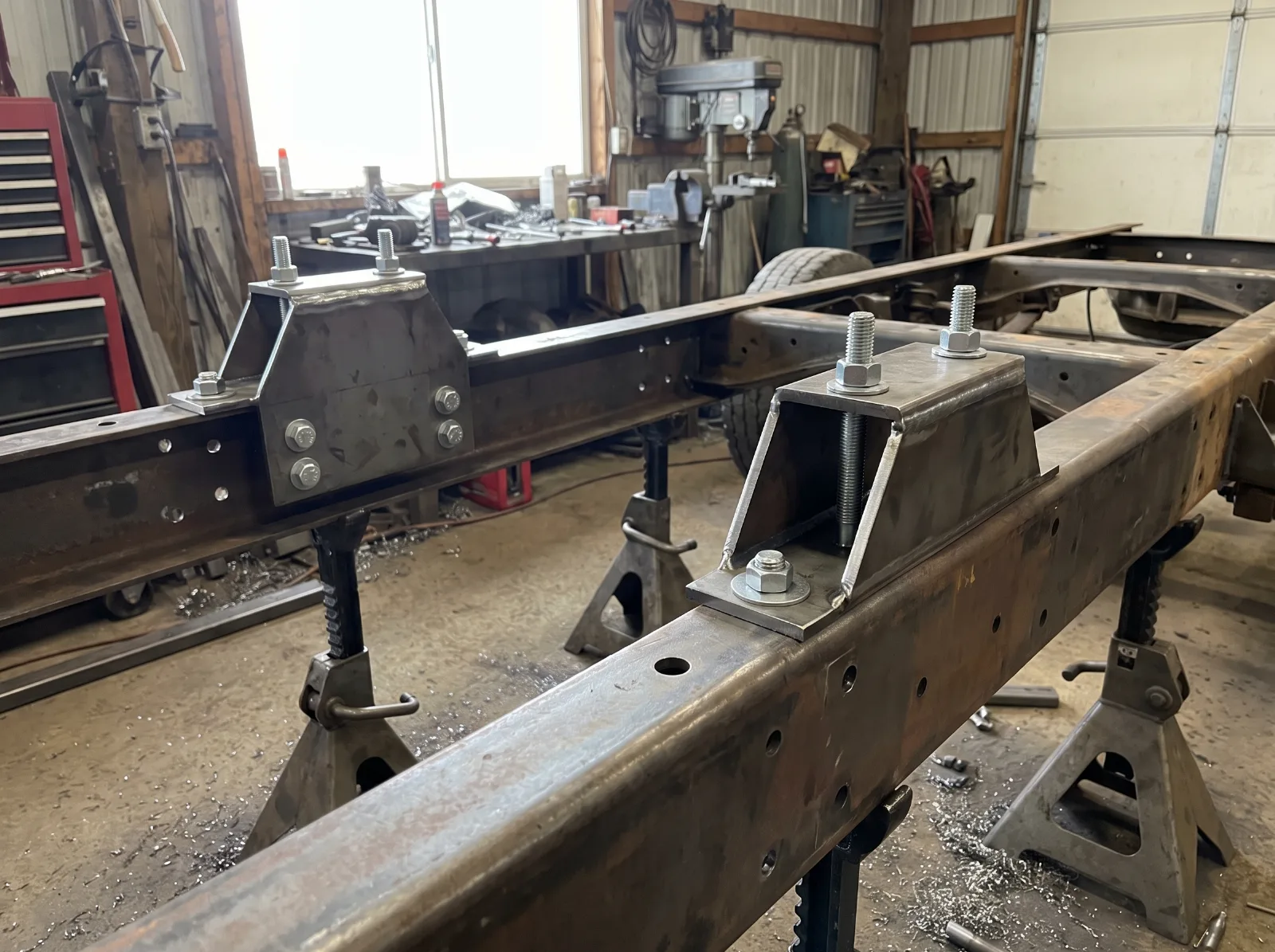
Mounting kits exist for exactly this swap and they are mature products. A typical kit for a 1940 to 1954 Chevrolet or GMC half ton supplies frame adapters, side engine mounts, a cushion set, bolts and instructions, and it suits either the original suspension or a period aftermarket front end. It covers the ordinary small block family, the 283 through 400, and the V6 with the distributor at the back.
The word bolt on is doing some work, though. Fitting the adapters means drilling the frame, two holes through the top lip and two through the bottom lip on each side, taking three eighths bolts. That is not difficult and it is not reversible, which is worth thinking about on a truck that is otherwise original.
| Item | What is involved |
|---|---|
| Engine mounts | Kit of frame adapters, mounts, cushions and bolts |
| Frame | Four holes drilled per side, 3/8 in bolts |
| Firewall | Modification needed for a larger distributor |
| Steering | Original gear must be moved or changed on 1948 to 1954 |
| Driveline | Torque tube has to go, or the gearbox has to suit it |
| Electrics | Six volt system will not run a modern V8 sensibly |
| Brakes | Single circuit drums, unchanged by more power |
The three things that turn a weekend into a winter
The steering. The V8 is wider than the six and the exhaust wants to go where the steering box is. Moving or changing the box drags the column, the linkage and the alignment into the job, and on a truck with a worn front end you are effectively doing the whole front of the vehicle at once.
The driveline. The original truck drives through a torque tube, and a modern gearbox behind a V8 does not. That means an open propeller shaft, which means the rear springs are suddenly being asked to control axle wrap that the tube used to take into the frame, and it means the axle has to be located and the pinion angle set. This is where most of the fabrication in a V8 swap actually lives.
The electrics. A 1951 truck is six volt. A modern V8 with an alternator, an electric fuel pump and a starter that expects twelve volts is not going to cooperate. The swap almost always drags a twelve volt conversion behind it, and that is a whole separate job with its own decisions about the gauges, the wiper motor and the heater.
"They budget for the engine and the mounts. Nobody budgets for the steering box, the driveshaft and rewiring the whole truck, and those three cost more than the V8 did."
— Earl Dawson
The argument for leaving it alone
I am not against the swap. A V8 truck that has been done properly is a genuinely usable vehicle and there are a great many of them, and the trucks that got done in 1974 are now part of the history themselves.
But the case for the original engine is stronger than it used to be. The 216 is a low stressed, simple, quiet engine that suits the character of the truck, parts for it are still made, and a truck that has never been cut is worth more every year while a truck that has been cut is worth what somebody thinks of the workmanship. The number of untouched Advance Design trucks is only going one way.
The honest middle path is to decide what the truck is for before you order anything. If it is going to tow, sit at seventy on a motorway, or be used daily, the swap makes sense and you should budget for the whole of it. If it is going to do what these trucks mostly do now, which is short trips on nice days, the original driveline does that perfectly well and keeps every option open.
Check this first
- What the truck will actually be used for. The answer decides the whole project and nothing else does.
- The steering gear clearance. On a 1948 to 1954 it has to move or change, and that is in the kit instructions.
- The condition of the frame before you drill it. Four holes per side into a rusty rail is not a foundation.
- What you intend to do about the torque tube. This is the real fabrication in the job.
- Whether you are going twelve volt, and what happens to the gauges. Three of the four are mechanical, which helps.
- The brakes. More power on a single circuit drum system is the part nobody budgets for.
Where this fits
The engine you would be removing is in the 216, and what it is like to live with is in the 216 figures. The truck is what the half ton is, from the whole truck line, and where this decision falls in the order of a rebuild is in the truck rebuild. The floor behind the cab is in the bed floor. The driveline the swap has to deal with is in the tube that drives it and the axle and its ratios, the electrical half is in the six to twelve volt conversion, and the brakes that will need attention afterwards are in the 1951 brakes and going to discs.
Sources and notes
- CP-1160 small block Chevy V8 engine mounting kit for 1940-1954 Chevy and GMC half ton pickup, Chassis Engineering - the kit contents of bolt on frame adapters, side engine mounts, cushion set, bolts and instructions, the two holes drilled through the top lip and two through the bottom lip of the frame for three eighths bolts, the firewall modification needed for a larger distributor, the requirement that the original steering gear be moved slightly or changed on 1948 to 1954 trucks, and the engine range covered from 283 to 400 cubic inches.
- Car of the week, 1951 Chevrolet 3100 pickup, Old Cars Weekly - the standard 216.5 cubic inch six of 92 horsepower and the column shifted three speed that a swap replaces, and the 3,120 pound weight it was moving.
- Chevrolet Advance Design, Wikipedia - the light truck range and its shared cabs and drivetrain, which is what makes these swaps so widely documented.
- 1947-1959 Chevy truck model years identification guide, Classic Industries - the 216 cubic inch babbitt bearing low oil pressure engine used in pickups from 1937 through 1953, which is the engine under discussion.
- 1951 Chevy truck parts, Chevs of the 40s - motor mounts, transmission mounts and the engine and driveline categories catalogued for these trucks, including the conversion parts.
- Engine motor mounts, Chevs of the 40s - small block V8 mounting options catalogued alongside the original six cylinder mounts for these chassis.
More from the garage
The 1951 Chevrolet Apache
There is no 1951 Chevrolet Apache. The Apache name belongs to the generation of Chevrolet trucks that came after the one built in 1951, and it do...
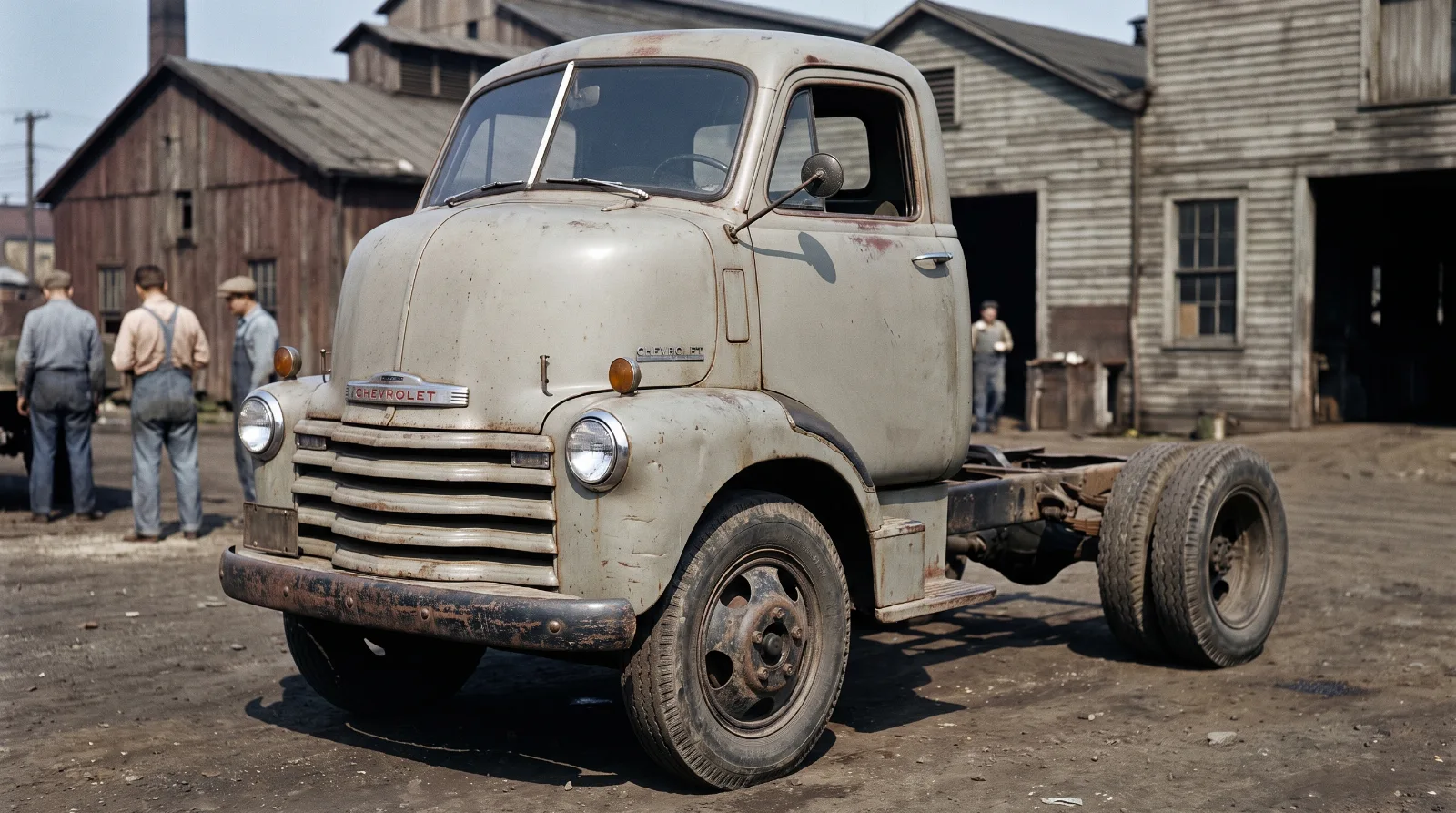
The 1951 Chevrolet COE
Take the Advance Design cab, put it on top of the engine instead of behind it, and you get one of the strangest looking vehicles Chevrolet ever s...
1951 Chevrolet Truck Restoration
An Advance Design truck is one of the easiest old vehicles in the world to restore and one of the easiest to get wrong, and the two facts have th...