The 1951 Chevrolet Canopy Express
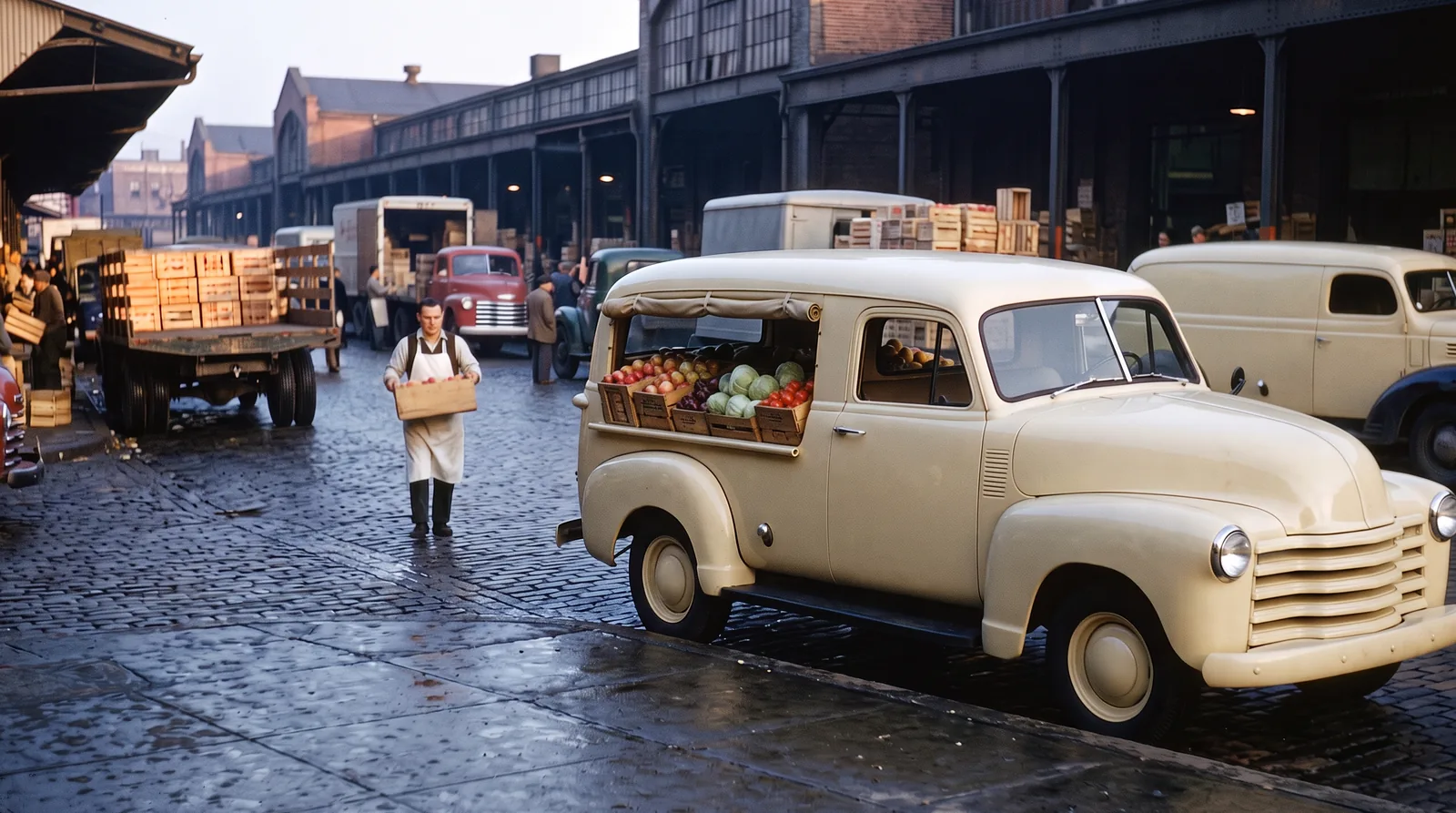
Before the supermarket, somebody had to bring the groceries to the street. That is what the Canopy Express was for: a panel truck with the sides left open, a roof over the load, and canvas curtains that rolled down when it rained or when the driver went home.
Chevrolet built them in reasonable numbers and almost none survive. It is the rarest body style of the Advance Design range and, by a distance, the one you are least likely to see.
What it was
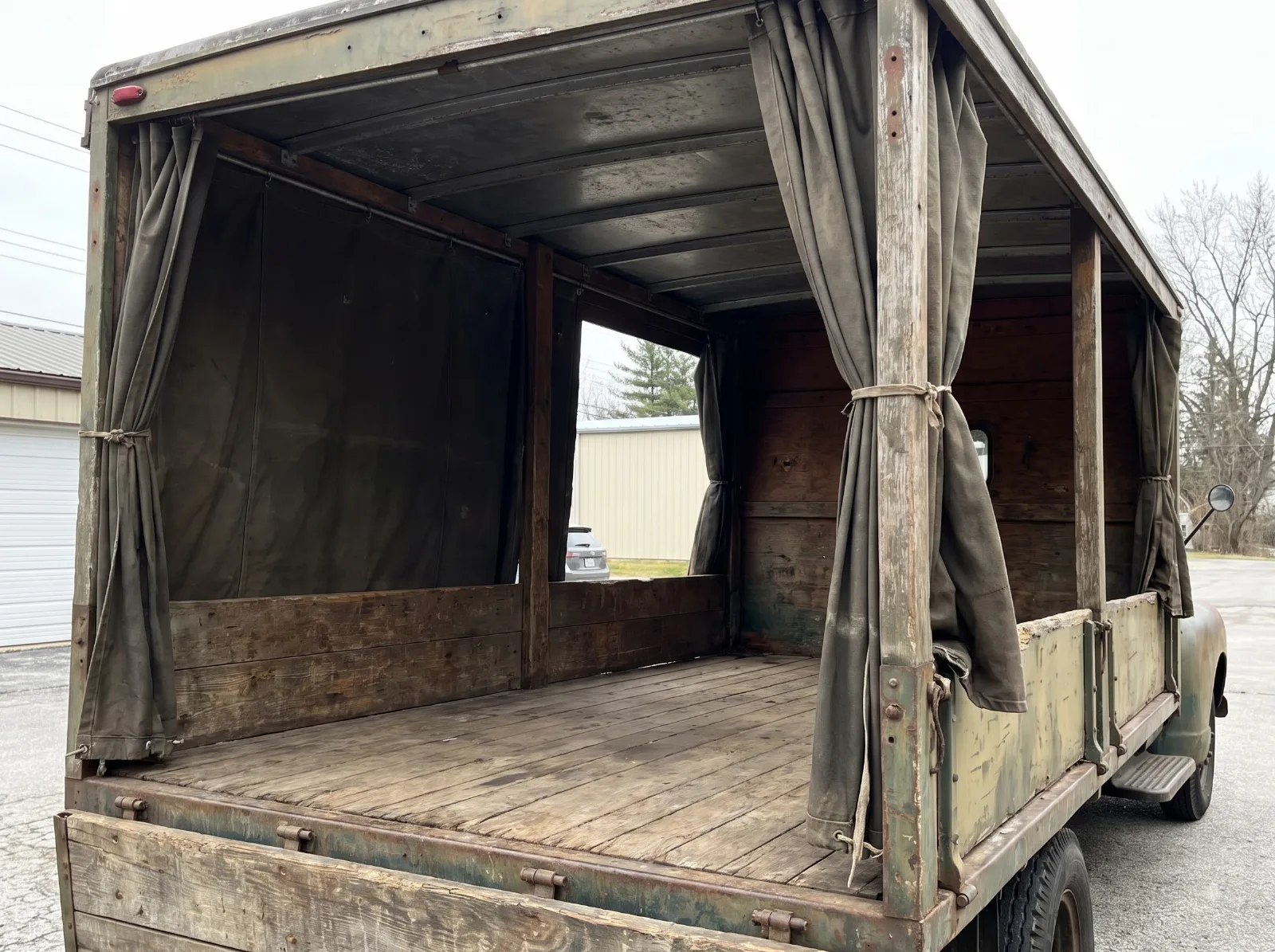
Take the panel truck, which is the closed van version of the Advance Design light truck, and remove the sheet metal from the sides of the body. What is left is a roof supported on posts, an open load space you can reach into from either side, and removable canvas to close it up.
That configuration exists for one reason: selling from the vehicle. The Canopy Express was built to take consumables to the neighbourhood buyer at a time when the large grocery store had not arrived, and its whole design is about a man being able to serve a customer from the kerb without opening a door.
Tradesmen took to them for a different reason. A plumber or an electrician with a mixed inventory could reach any part of the load from outside without climbing in, and could see what was there at a glance. That is a real advantage over a panel truck and it is why they lasted in trade use after the grocery round died.
| Item | Detail |
|---|---|
| Based on | Advance Design panel truck |
| Sides | Open, with removable canvas |
| Built for | Kerbside delivery and selling |
| Also bought by | Plumbers, electricians, market traders |
| Survival | Perhaps a hundred from thousands built |
| Reputation now | Most valuable Advance Design body style |
Why almost none are left
Three reasons, and they compound.
Nobody wanted them second hand. A used car dealer taking a trade in has to sell it to somebody, and the market for an open sided delivery vehicle was small even when they were new. They went cheap, then they went for scrap.
They rot from the floor. The drainage on the load floor was never adequate for a body that is open to the weather on both sides, so water gets in, sits, and takes the floor out. On a body that is already unusual, a rotten floor is enough to end it.
They were converted. An open sided body is very easy to turn into something else, and a great many became flatbeds, tow trucks or panel trucks with the sides welded back in.
What that leaves is a body style of which thousands were made every year and of which, by one experienced estimate, perhaps a hundred remain. They are now about the most valuable of all the Advance Design bodies, which is quite a promotion for a vehicle that spent its life smelling of potatoes.
"I have seen two in fifty years and one of them was a panel truck that somebody had cut the sides out of. You can tell, because the factory posts are not where a man with a plasma cutter would have put them."
— Earl Dawson
Buying and restoring one
The mechanical half is easy and cheap, because underneath it is a light Advance Design truck like any other. The engine, the gearbox, the axles, the brakes and the front suspension are all the ordinary parts, all reproduced, all available from the same suppliers who serve the pickups.
The body is where the difficulty lives. Very little specific to the Canopy Express is reproduced, the roof structure and the posts are unlike anything else in the range, and the canvas is a job for somebody who makes covers rather than somebody who trims cars. Expect to fabricate.
The one thing worth checking before anything else is whether the vehicle in front of you actually is one. Because the conversion out of a panel truck is straightforward, and because the value is now high, the incentive runs the wrong way. Look at how the posts meet the roof and the floor, look for factory pressings and factory spot welds, and look underneath at the floor structure rather than at the paint.
Check this first
- Whether the sides were ever closed. A converted panel truck is a nice vehicle and not a Canopy Express.
- The floor, from underneath. This is the standard failure and it is structural.
- The roof and the posts. Almost nothing here is reproduced and everything here is what makes it rare.
- Whether any original canvas or hardware survives. Even fragments are worth having as patterns.
- The cab, on the usual points. It is an ordinary Advance Design cab and it rots in the ordinary places.
- What you plan to do with it. An open sided vehicle is a summer proposition and always was.
Where this fits
The Canopy Express is the open sided cousin of the panel truck, and the rest of the closed bodied family is in the Suburban and the sedan delivery. Underneath it is the same light truck as the half ton, from the truck range. The cab is in the Deluxe cab, the mechanical parts come from the same sources as in the truck parts, and the heavier commercial end of the range is in the COE.
Sources and notes
- 1953 Chevrolet Canopy Express, Jim Carter Truck Parts - the Canopy Express created to deliver consumables to the neighbourhood buying public before large grocery stores arrived, its derivation from the panel truck with open sides and removable canvas, its adoption by plumbers and electricians and market traders, the estimate that perhaps a hundred remain out of thousands produced annually, and the reasons they vanished, from low second hand value to theft through the canvas and floor rust from poor drainage.
- Chevrolet Advance Design, Wikipedia - the same basic design family used for all of Chevrolet's trucks including the Suburban, panel trucks, canopy express and cab overs.
- COE, Jim Carter Truck Parts - the survival pattern of commercial Advance Design vehicles, where the ones that lasted were stored between seasons rather than run daily.
- Car of the week, 1951 Chevrolet 3100 pickup, Old Cars Weekly - the shared light truck mechanical specification of a 216.5 cubic inch six and a column shifted three speed on a 116 inch wheelbase.
- 1951 Chevy truck parts, Chevs of the 40s - the mechanical and cab parts catalogued for the 1951 light trucks, which is the half of a Canopy Express restoration that is straightforward.
- Comprehensive history of 1947-1955 first series Advance Design, Deves Technical Network - the 1951 changes that apply to this body as much as to a pickup, including the door vent windows and the loss of the driver's side cowl vent.
More from the garage
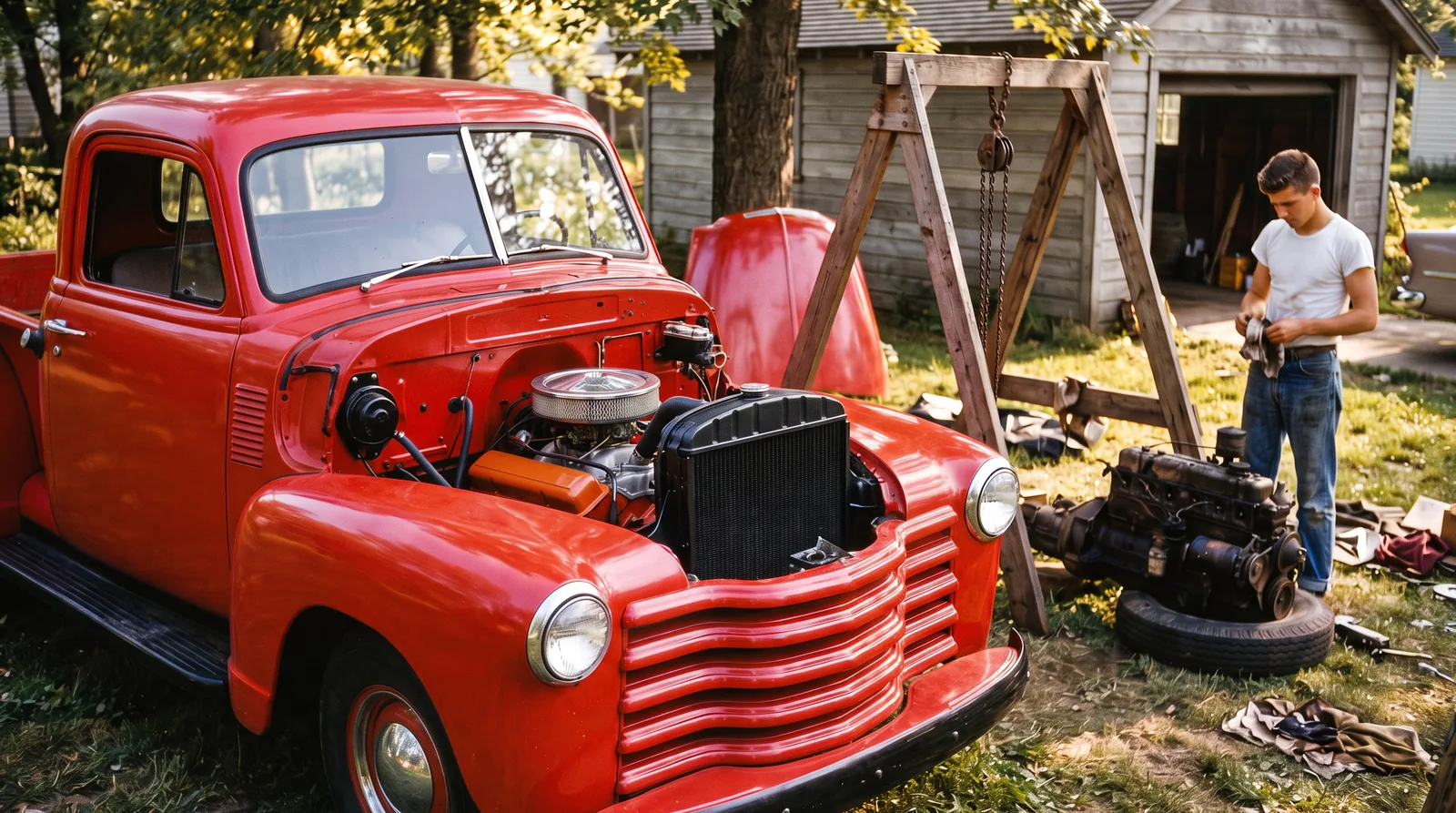
1951 Chevrolet Truck V8 Swap
A small block Chevrolet V8 in an Advance Design pickup is the most common engine swap in the American hobby, and it is common for good reasons. T...

The 1951 Chevrolet Apache
There is no 1951 Chevrolet Apache. The Apache name belongs to the generation of Chevrolet trucks that came after the one built in 1951, and it do...
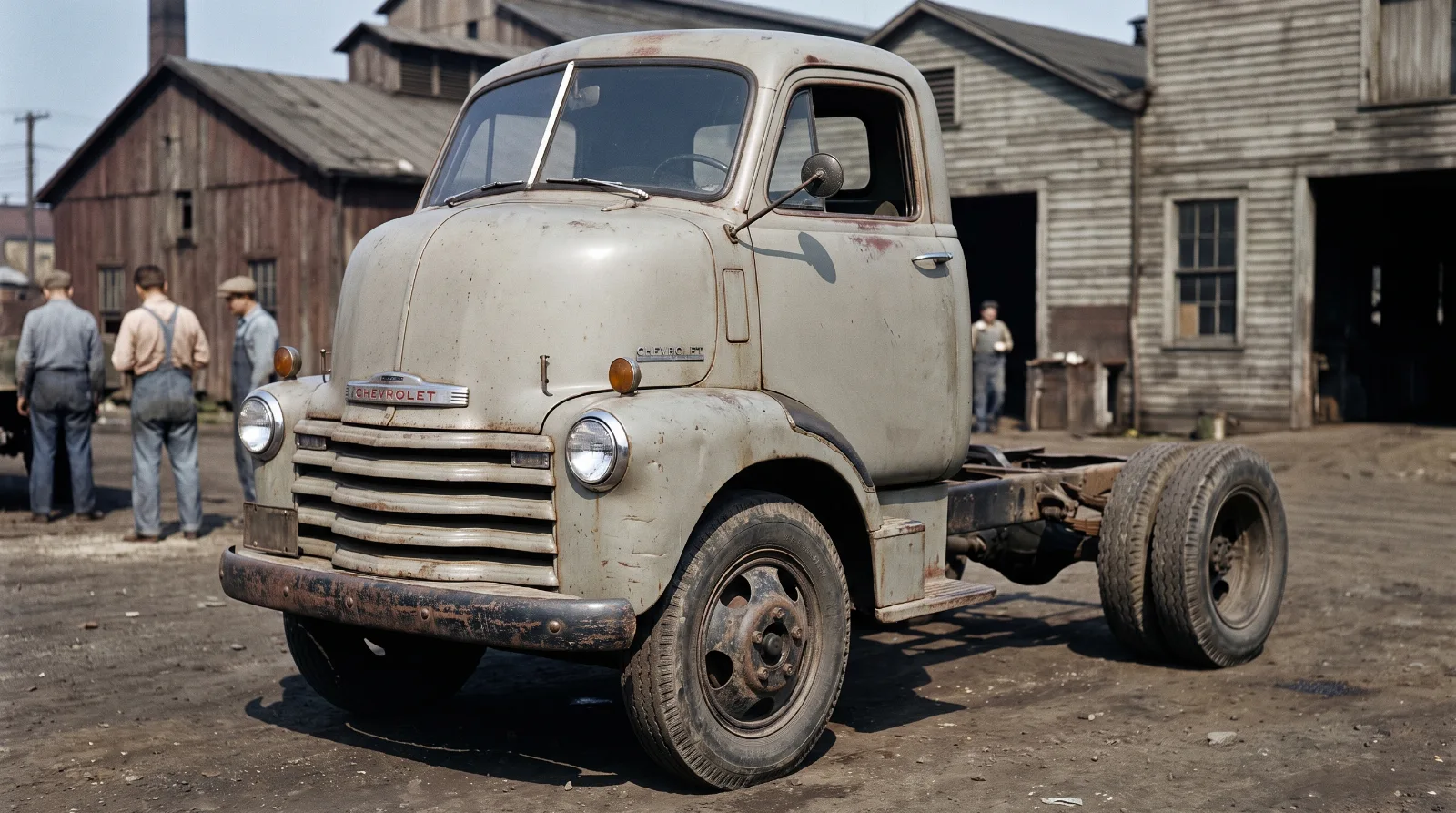
The 1951 Chevrolet COE
Take the Advance Design cab, put it on top of the engine instead of behind it, and you get one of the strangest looking vehicles Chevrolet ever s...