Chevy 235 Exhaust Manifolds and Fenton Headers
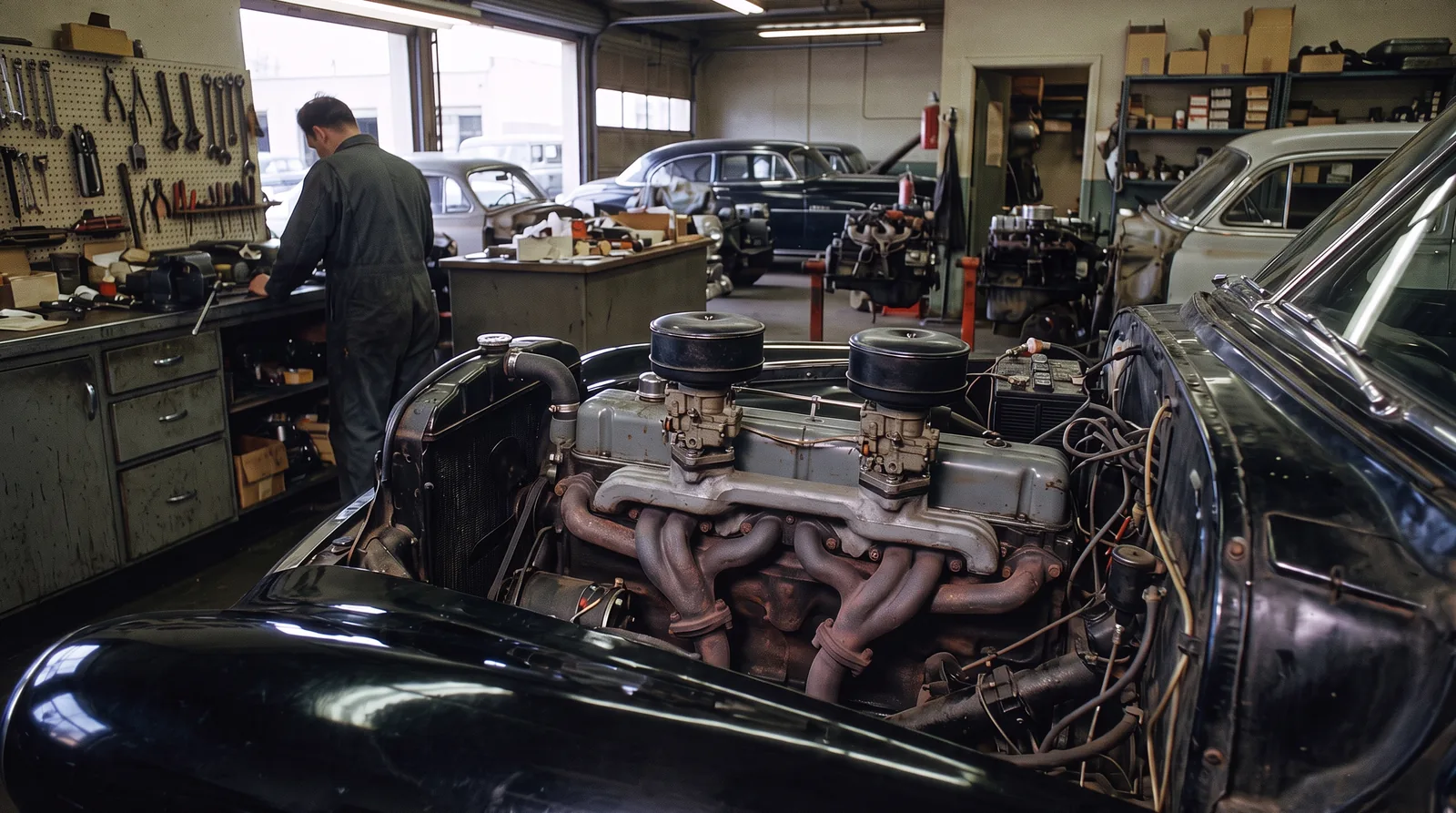
Before anyone bolts Chevy 235 headers onto a 1951 car, I ask them one question: what are you going to do about intake heat? Most have not thought about it, because the stock exhaust manifold does a job nobody sees. It carries the heat control valve that warms the intake on a cold engine, and when you take it off, that job goes with it. This article covers the stock exhaust manifold on the 1951 sixes, the heat riser, Fenton-pattern cast headers and split manifolds, how they fit a 1951 car, and where these exhaust setups leak. For the engine itself, see the 235 engine.
The stock exhaust manifold and what it does
On the 216 and the early 235 the exhaust and intake manifolds are separate castings bolted together, and the pair mounts to the head as one assembly. The shop manual says the exhaust manifold is designed "to reduce back pressure to a minimum." The siamesed head limits what any manifold can do, though. Stock Chevy six heads have four exhaust ports for six cylinders, so some cylinders share a port.
A 1951 car can carry either engine, and the exhaust manifolds do not swap between them. The 216 goes with the manual transmission. The 235 came with Powerglide, and the shop manual supplement describes its exhaust manifold as "similar but not interchangeable" with the 216 part, with larger throats. Its intake has a larger round cross section, the gaskets are new, and a special threaded stud of about 1 in, threaded into each end of the head, aligns the manifold assembly. If you are swapping intake manifolds or exhaust manifolds on a 1951, start by confirming which engine is in the car.
Downstream, the stock 1949 to 1951 car system is simple: a single exhaust pipe, an oval reverse-flow muffler, and a tail pipe that exits below the rear bumper on the left. The tail pipe support is vertical.
The heat riser, and why it matters more than the pipes
Inside the stock exhaust manifold sits the thermostatic heat control valve, the part most people call the heat riser. When the engine is cold it directs hot exhaust against the center of the intake, and it closes as the engine warms. The spring is wound about half a turn to slip over its anchor pin.
The manual lists what happens when it sticks. Stuck with the heat on: poor performance, overheating and detonation. Stuck with the heat off: poor running, particularly while the engine warms up. The cure it gives is kerosene with a little baking soda on the shaft, and a new spring if the old one is distorted. A longtime member of the club forum adds that the shaft should have at least 1/8 in of front to back play, and that it should be tapped back and forth with a brass or other soft hammer. I learned that the hard way on a Fleetline years ago, when I put a wrench on a frozen shaft and twisted it right off.
Chevy 235 headers: the Fenton pattern and split manifolds
The headers you will find listed for a 1951 six are the cast Fenton pattern. The reproductions sold today are cast iron, carry the Fenton lettering and are described as made with the manufacturer's authority. They split the exhaust into two pipes, and the seller notes that "One of the two headers perfectly lines up with the rear original GM single exhaust pipe." The same seller says that means half of the GM exhaust system can still be used, which is handy on a 1951 car: the stock single pipe can stay on the rear outlet.
Fitment, as two retailers list it, is the 1937 to 1962 Chevy six, car or truck. One of them names the 216, 235 and 261 and warns that "Minor modifications to headers, intakes or linkage may be required." Neither listing says whether one casting suits both the small-port 216 and the larger-port 235, so ask before you buy. Neither gives clearance notes for a 1951 car specifically.
On the history, the listings run out quickly. One calls Fenton headers a "popular 1950's custom engine modification" with a "distinctive sound," which is sales copy, not history. I have no reliable dates for the original company, so I will not invent any.
Split manifolds are the other name you will meet. The same retailer describes the Fenton castings as giving you a split manifold without extra work, so in the sellers' language both mean two outlets in place of the stock single outlet. One example on record is a 1951 Chevrolet 3100 truck offered at RM Sotheby's California sale in 2014 with an Offenhauser split manifold on a rebuilt 1955 235. That is the later 235, not the engine a 1951 truck left with.
| Setup | Outlets | Intake heat | Fitment as listed | On a 1951 car |
|---|---|---|---|---|
| Stock 216 exhaust manifold | One | Built-in heat control valve | 216 | Manual-transmission cars |
| Stock 235 exhaust manifold | One | Built-in heat control valve | 1950 to 1951 Powerglide 235, not interchangeable with 216 | Powerglide cars, larger throats |
| Fenton-pattern cast headers | Two | None; warming kit recommended | 1937 to 1962 216/235/261, car or truck, minor modifications may be required | Rear outlet lines up with the stock single pipe |
| Other split manifolds | Two | None; heat must be supplied | No current listing found | Second pipe must clear the 5/8 in kick-up area |
Fitting headers on a 1951 car
The big job is not the bolts. With split manifolds or headers you have to supply heat to the intake yourself, with a fabricated heat box using exhaust or coolant. One Fenton seller says plainly that the headers do not add heat to the intake manifold and recommends a warming kit; another lists a separate Fenton intake heat kit for 1950 to 1962. The Offenhauser dual intakes bolt to the heat box of the stock exhaust manifold, which is exactly the piece headers delete.
"Headers on a six are the easy half of the job. The hard half is the cold morning after, when you find out what the heat riser was doing for you all those years."
— Earl Dawson
Sellers pair Fenton headers with dual intakes; one lists its Fenton dual intake as "the perfect companion" for the headers. The pair sits at the front of the usual upgrades. Just plan the heat before the second carburetor arrives, not after.
If you run a second pipe, route it through the same tight spots as the stock pipe. The floor pan clearance at the kick-up is the one to measure. I have seen a dual setup on a Styleline that rattled against the floor on every bump because nobody checked it with the car on its wheels.
Where exhaust manifolds and headers leak
Check this first
- Soot on the manifold. In one club forum thread on a 216, a leak left a soot line along the exhaust manifold. A member's fix was to free the bolts that hold the manifolds together, refit the assembly to the head snug, and tighten the manifolds together last.
- Manifold bolt torque. The 1949 car manual gives 15 to 20 ft-lb for the clamp bolts and 25 to 30 ft-lb for the stud nuts; the truck manual gives 15 to 20 for the center clamp and 25 to 30 for the end clamps.
- Warm retorque. The manual calls for retightening the manifold bolts on a warm engine at tune-up.
- The heat control valve. The manual says to check it at every tune-up. Stuck with the heat on it causes overheating and detonation; stuck with the heat off, poor running while warming up.
- Intake ring seating. A longtime club forum member notes that a twisted intake ring will keep the manifold from seating against the head.
My view, after a lot of these: keep the stock exhaust manifold on a driver unless you have a reason and a heat plan. If you want the sound and the look of a split exhaust, a set of Fenton-pattern headers with a proper heat box is a reasonable job on a 1951. Do the heat box first, check the floor clearance second, and torque everything twice. The two sixes these fit are compared in the 1951 engines.
Sources and notes
- Engine assembly 6-4, 1949 Chevrolet Passenger Car Repair Manual, Old Car Manual Project - the exhaust manifold's purpose and how the heat control valve works and fails.
- 1950-1951 Passenger Car Supplement, page 13, Old Car Manual Project - why the Powerglide 235 exhaust manifold does not interchange with the 216 part.
- Exhaust system, 1949 Chevrolet Passenger Car Repair Manual, Old Car Manual Project - the stock pipe, muffler, tail pipe and the 5/8 in floor pan clearance.
- 1937-1962 Fenton Cast Iron Headers, Jim Carter Truck Parts - what the reproduction headers are, the rear outlet fit and the missing intake heat.
- Fenton Manifolds, The Filling Station - header fitment, the modifications warning, the sales description and the intake heat kit.
- '40 chevy engine "blow-by", VCCA Chat forum - owner advice on heat riser shaft play, intake rings and manifold leaks.
- 1951 Chevrolet 3100 "Rat Rod", RM Sotheby's California 2014 - the Offenhauser split manifold on a later 235 in a 1951 truck.
More from the garage
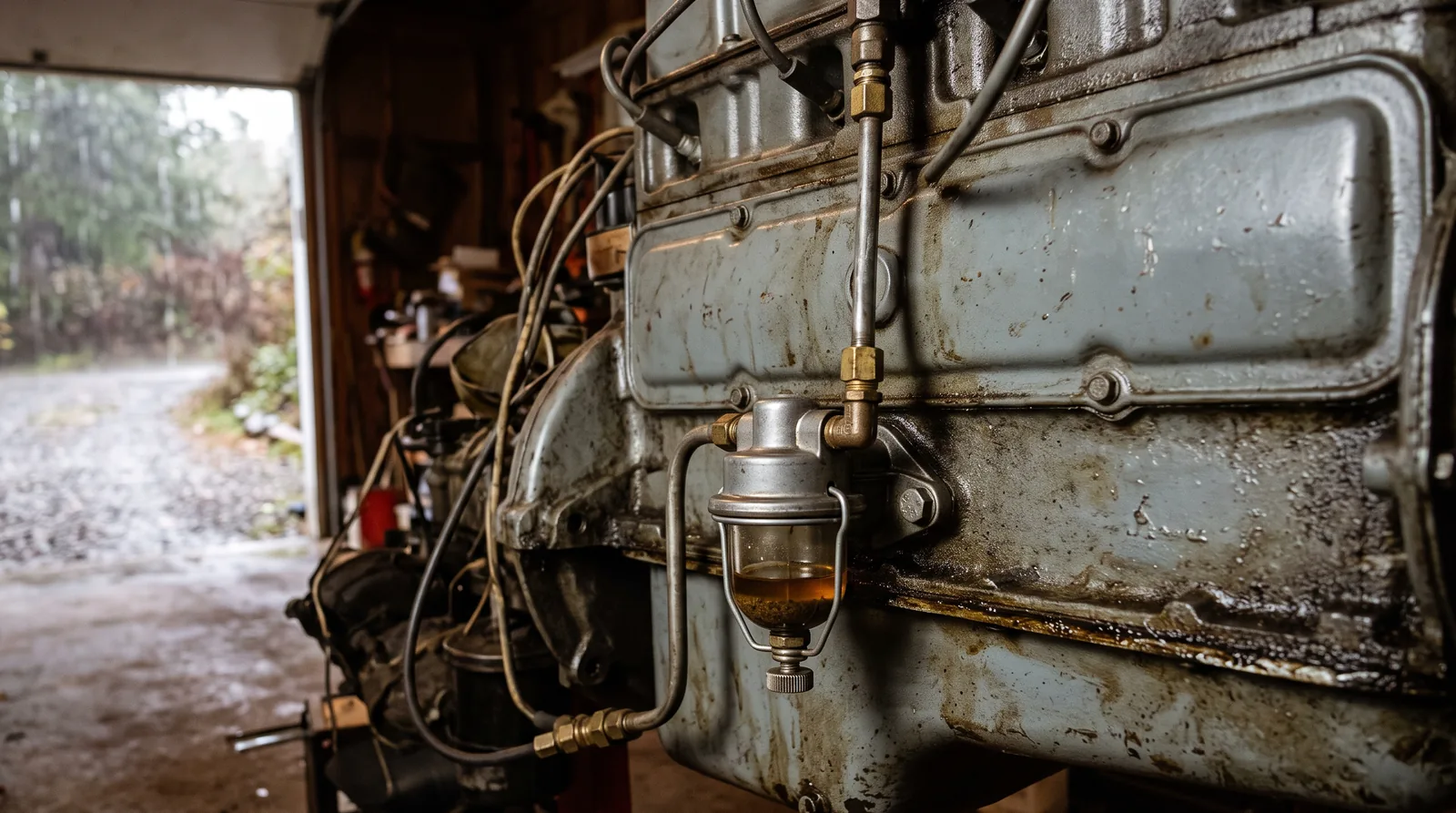
The Chevy 235 and 216 Fuel Pump
Where the 1951 six's mechanical fuel pump sits, what the optional vacuum booster does, the factory tests, rebuild kits and what ethanol really do...
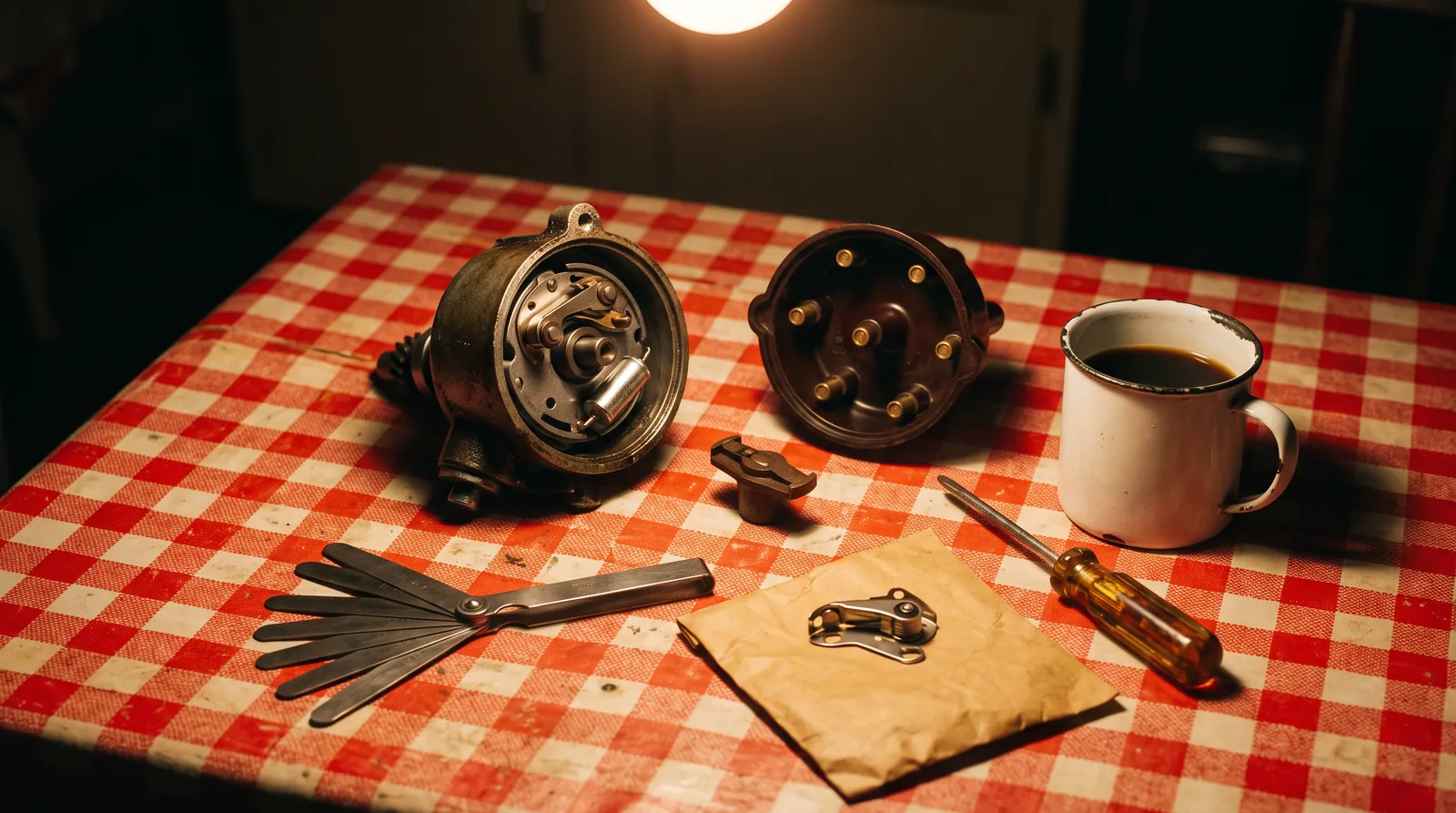
Chevy 235 Distributor, Points and HEI
The Delco-Remy distributor on the 1951 216 and 235: points, condenser, vacuum control, octane selector, 6 volt modules and why HEI needs 12 volts...
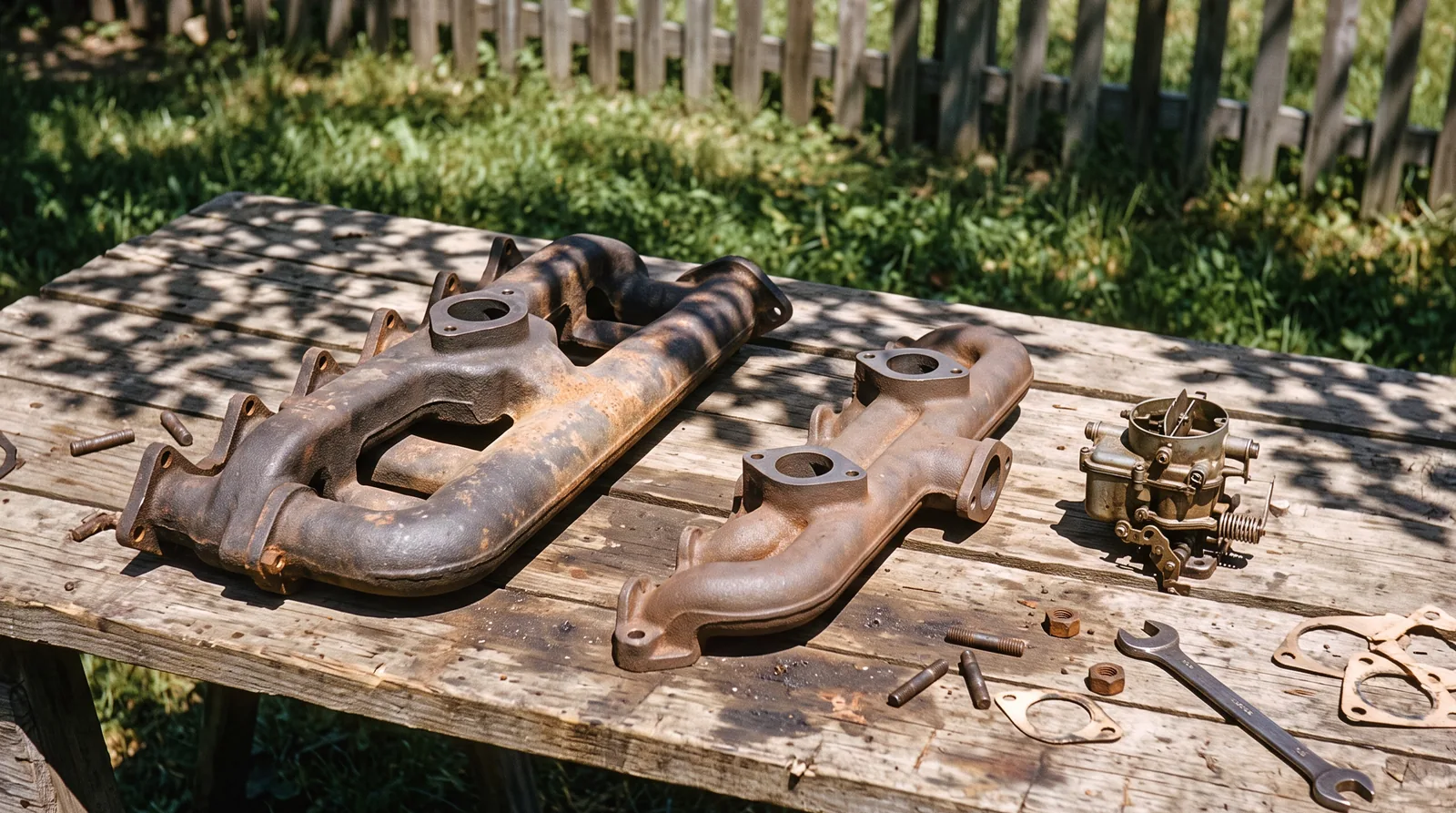
Chevy 216 and 235 Intake Manifolds: Stock and Dual-Carb Setups
Stock 216 and early 235 intake manifolds on a 1951 Chevrolet, the dual one-barrel intakes that fit each, and how to keep intake heat.